
by Denise Olivares-Molina | Sep 1, 2026 | 2026 Housing Market, 2026 Mortgage Rate, Advice for Sellers, Affordability, For Sellers, Forecasts, Homeowner Information, Housing Market, Housing Market Insights, Housing Market Shifts, Housing Market Updates, Mortgage Rates, Protect Your Investment, Real Estate Finances
A recent survey from Talker Research asked Americans to pick one word to describe how 2026 has felt so far. The winner? Stressful. And honestly, there’s been a lot going on.
So, it’s understandable if you’ve been putting off buying or selling a home until things settle down. But you may be waiting on something that’s already happened. While everything else has felt shaky, the housing market has become one of the steadiest things out there. Look at the data.
Home Prices Have Leveled Out
After years of fast increases, data from the National Association of Realtors (NAR) shows home prices have been remarkably steady for the past 4 years (see graph below):
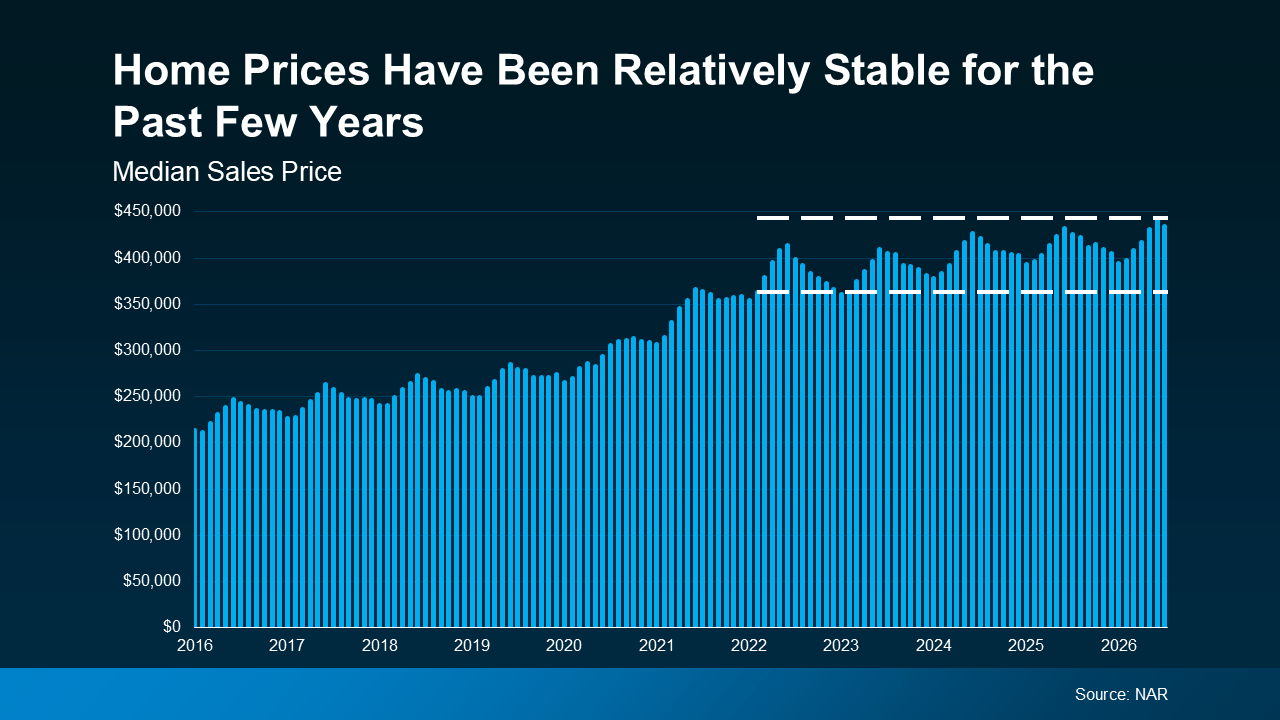 And experts say that’s what to expect going forward, too. As Selma Hepp, Chief Economist at Cotality, explains:
“In 2026, we expect home prices to remain broadly stable, with modest appreciation at a national level.”
No wild swings. Just slow, steady growth. That’s a healthy market. Of course, that pace can vary a bit depending on where you live. But nationally, steady growth like this makes it easier to plan your budget, whether you’re buying or selling.
The Supply of Homes for Sale Has Steadied
For years, the supply of homes for sale was a moving target. It dropped fast during the pandemic and has been climbing pretty reliably ever since. Now, that pace of growth has slowed down. According to Realtor.com, inventory today is very close to where it was this time last year (see graph below):
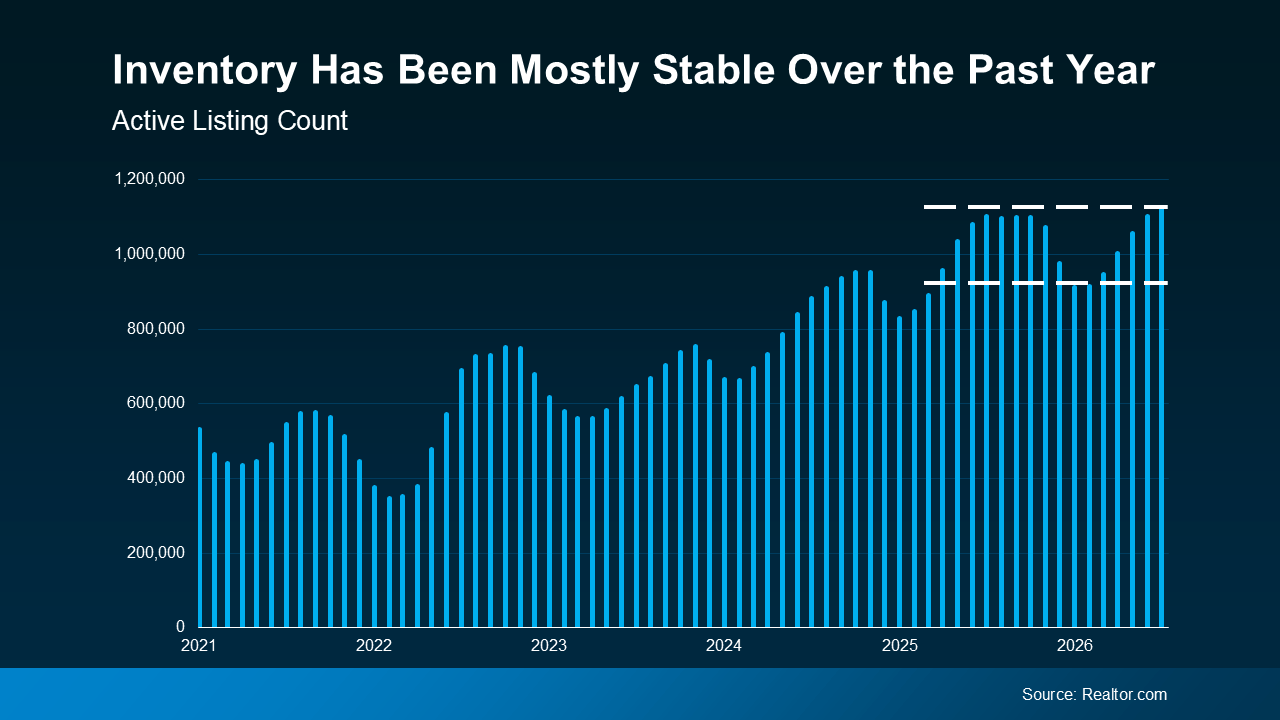 That’s helpful no matter which side you’re on. When the number of homes for sale isn’t changing much, you know what you’re walking into – how many options you’ll have as a buyer, and how much competition you’ll face as a seller.
Mortgage Rates Found Their Range
Yes, rates jumped dramatically back in 2022. But since then, Freddie Mac data shows they’ve stayed between 6% and 7% for the better part of the last 3 or so years (see graph below):
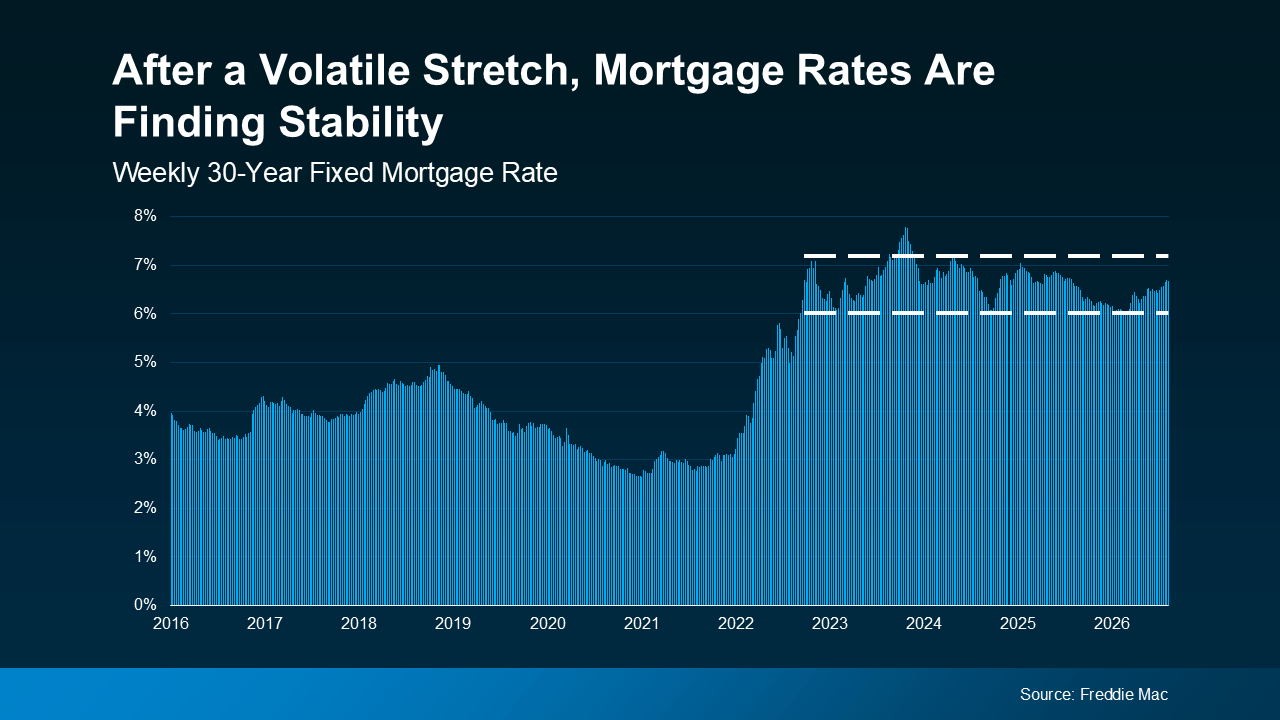 Yes, there was one brief spike above that threshold, but overall, rates have stayed in that range for a while now. That predictability helps when you’re planning a move.
And now that this seems to be a longer-term trend, people have accepted it as the new normal. Buyers have gotten comfortable purchasing in that range, and sellers have gotten just as comfortable listing in it.
That comfort’s important because when both sides know what to expect, they keep making moves. In other words, the market isn’t frozen waiting for something to change. It’s moving calmly.
Bottom Line
The rest of the world may feel unpredictable right now, but the housing market doesn’t have to. Prices, inventory, and rates have all found solid ground.
If stability is what you’ve been waiting for, it’s already here. Let’s connect if you want to talk through what that means for your move.
Thank You For Reading
Denise Olivares-Molina

by Denise Olivares-Molina | Jan 26, 2026 | Advice for Sellers, For Sellers, Foreclosures, Home value, Homeowner Information, Housing Market, Housing Market Shifts, Housing Market Updates, Market Trends, Market Updates, Military Operation, Mortgage Information, Mortgage Rates, Real Estate Finances, Real Estate Market, Real Estate Tips, Real Estate Trends in 2026, Weekly
If you’ve seen headlines saying foreclosure activity has been climbing for 10 straight months, it’s easy to assume that’s a sign of trouble for the housing market. But when you look at the full picture, a few simple truths become clear:
- Today’s foreclosure numbers are in line with what’s considered normal
- High home equity is keeping most homeowners in a strong financial position
- None of the data points to a big wave of distressed sales that’ll crash the market
Foreclosure Filings Are Up 32%, But That Doesn’t Mean the Market’s in Trouble
If you peel the layers all the way back, what everyone is actually worried about is that we’re headed for a repeat of what happened in 2008. Back then, riskier lending practices and an oversupply of homes for sale brought home prices down and led to a significant increase in foreclosures. A lot of people felt the impact. But this isn’t the same situation.
Yes, ATTOM data shows foreclosure filings are up 32% year-over-year. And that increase is going to sound dramatic. But context matters, and it doesn’t mean we’re headed for another crash. And the numbers prove it. Take a look at where we were during the last crash (the red in the graph below). And where we are now (the blue):
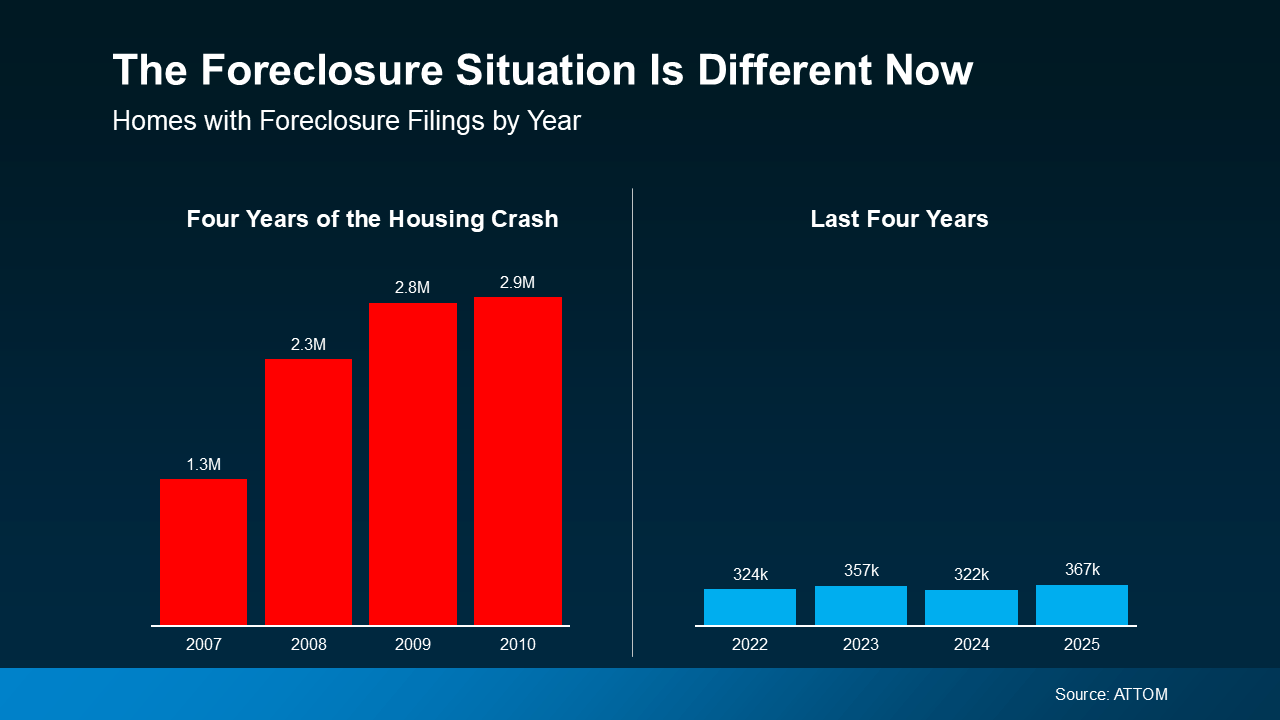 Even with the uptick lately, we are still nowhere near crash levels – far from it. This isn’t a return to crisis levels. What it is, is a return to normal.
The graph below shows foreclosure filings going all the way back to early 2005. The lead up to, and the aftermath of, the crash is there in red. Those are the years when foreclosure filings went above the 1 million mark each year.
Now, look at the right side and scan back to the 2017–2019 range (the last truly normal years for housing). You’ll see we’re actually just starting to fall back in line with what’s typical for the market, even with the increase lately:
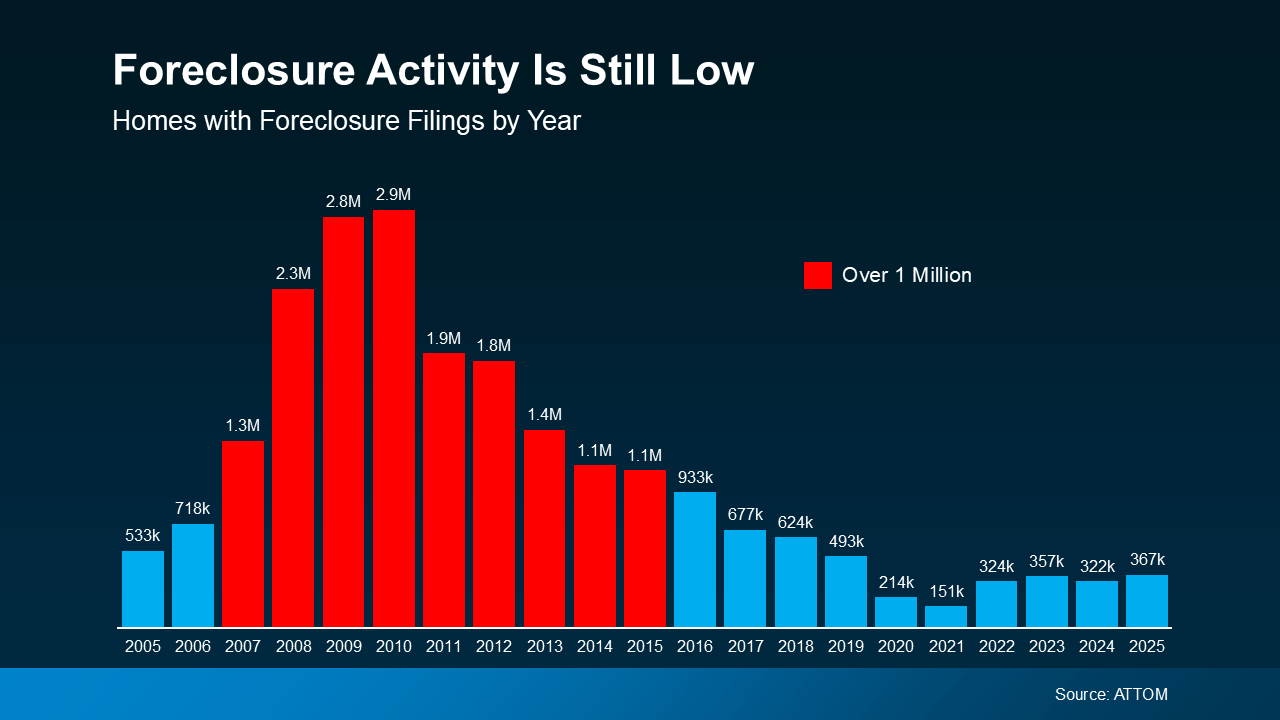 Rob Barber, CEO at ATTOM, explains it well:
“Foreclosure activity increased in 2025, reflecting a continued normalization of the housing market following several years of historically low levels . . . While filings, starts, and repossessions all rose compared to 2024, foreclosure activity remains well below pre-pandemic norms and a fraction of what we saw during the last housing crisis . . . today’s uptick is being driven more by market recalibration than widespread homeowner distress, with strong equity positions and more disciplined lending continuing to limit risk.”
The word “normalization” in that quote is extra important. While economic and financial pressures are putting a strain on some homeowners, this isn’t a flood of distressed homes. No matter what the headlines may have you believe, this isn’t a large-scale crisis.
Today’s increase isn’t a sign of trouble. It’s a return to normal.
Why This Isn’t a Repeat of 2008
Even though the last housing crash still shapes how a lot of people interpret today’s news, the reality is, this is a different market:
- Lending standards are stronger
- Borrowers are more qualified
- And homeowners have far more equity
And that equity piece is especially important. Over the last five years, home prices have risen significantly. For many people, their house is worth far more than they paid for it. That means most homeowners have a strong financial cushion to fall back on, if needed.
Basically, if someone faces hardship today, they often have the option to sell, and maybe even walk away with money in their pocket, instead of going through foreclosure. That’s a major contrast to 2008, when many homeowners owed more than their home was worth.
Bottom Line
Foreclosure activity may be rising, but it’s still well within a normal range – and nowhere close to the danger zones of the past. But the headlines are doing more to terrify than clarify. And that’s exactly why having a trusted real estate expert you can call on is so important.
When you hear something in the news or see something on social about housing that worries you, please reach out so you have the context to understand what’s really happening and how it impacts you (if at all).
Thank You For Reading
Denise Olivares-Molina

by Denise Olivares-Molina | Feb 6, 2025 | Buying Tips, For Buyers, Home Prices, Mortgage Rates
In today’s housing market, smaller homes are making a big impact. As homebuyers look for more affordable, efficient, and flexible living spaces, homebuilders are responding with innovative designs that offer everything buyers want—without the extra square footage. The trend of smaller homes is gaining traction, and it’s not just about downsizing. It’s about maximizing opportunities in ways that align with modern lifestyles and preferences. Let’s explore why smaller homes are becoming so popular and what buyers love about this growing trend.
1. Affordability Without Compromise
As home prices continue to rise, many buyers are finding it difficult to enter the housing market without breaking the bank. Smaller homes provide an ideal solution, offering affordability without compromising on comfort or quality.
- Lower Purchase Price: Smaller homes are typically less expensive to buy, which allows buyers to either save on their initial down payment or put extra funds toward upgrades or other goals, like renovations or travel.
- Reduced Utility Costs: With a smaller footprint, the costs of heating, cooling, and maintaining a home are significantly lower. This makes smaller homes more budget-friendly in the long run, especially in terms of energy savings and overall maintenance.
- Cost-Effective Maintenance: Smaller homes are often easier to maintain, both in terms of repairs and landscaping. Fewer rooms and less exterior space mean lower upkeep costs for homeowners.
2. Efficient Design with Big Style
The appeal of smaller homes isn’t just about their size; it’s about how efficiently the space is used. Homebuilders are becoming masters at designing smaller homes that don’t feel cramped. These homes often feature smart layouts and multifunctional designs, which make them feel much more spacious than their square footage suggests.
- Open Floor Plans: Many smaller homes incorporate open-concept designs that eliminate walls and create a flow between the living, dining, and kitchen areas. This design choice helps create a sense of space and airiness, even in a compact home.
- Multifunctional Rooms: Builders are making every room count. From flexible spaces that can serve as home offices or guest rooms to built-in storage that maximizes every inch, smaller homes are designed to adapt to different needs. This flexibility allows homeowners to use their space however they choose, whether it’s for working from home, exercising, or hosting guests.
- Natural Light and Vertical Space: Large windows, skylights, and high ceilings are common features in smaller homes, which enhance the feeling of openness. The careful use of natural light can make even the smallest space feel bright and inviting.
3. Sustainability and Eco-Friendliness
As sustainability becomes more important to homebuyers, smaller homes naturally align with eco-conscious values. Their compact size means a lower environmental impact, and builders are taking it a step further with energy-efficient features and environmentally friendly materials.
- Lower Carbon Footprint: Smaller homes use fewer resources to build, consume less energy, and generate fewer emissions. This makes them an attractive option for buyers who want to reduce their environmental footprint.
- Energy-Efficient Features: Many homebuilders are incorporating energy-efficient appliances, better insulation, solar panels, and smart home technologies into smaller homes. These green features not only help reduce the home’s environmental impact but also lower utility costs for homeowners.
- Sustainable Materials: Smaller homes are often constructed using sustainable building materials, such as recycled wood, energy-efficient windows, and low-VOC paints, all of which contribute to a healthier living environment and lower environmental impact.
4. Location Flexibility and Urban Appeal
Smaller homes open up possibilities for buyers to live in areas that might otherwise be out of reach. As housing prices in urban areas continue to climb, smaller homes provide an opportunity to own property in desirable locations without sacrificing lifestyle or convenience.
- Urban Infill Development: Homebuilders are increasingly developing smaller homes in urban areas, especially in walkable neighborhoods with access to public transit, shops, and restaurants. This allows buyers to live in vibrant, city-centered communities while keeping costs down.
- Mixed-Use Communities: Smaller homes are often part of mixed-use developments, where residential units are integrated with retail spaces, cafes, and other amenities. This kind of setup offers buyers the convenience of city living while minimizing the need for long commutes or car ownership.
- Easier Access to Outdoor Spaces: For those who prefer outdoor living, smaller homes may offer more affordable access to desirable locations near parks or nature reserves, without the upkeep of large yards or sprawling properties.
5. The Appeal of Minimalism and Lifestyle Freedom
The shift toward smaller homes is also tied to the broader trend of minimalism. Many buyers are prioritizing quality over quantity and embracing the freedom that comes with owning less space—and less stuff.
- Less Clutter, More Purpose: Smaller homes encourage homeowners to be more intentional with their possessions. The reduced space forces a more thoughtful approach to what stays in the home and what goes, leading to a simpler, more fulfilling lifestyle.
- Freedom for Experiences: By spending less on a home, buyers have more freedom to spend on experiences like travel, hobbies, or entertainment. With fewer expenses tied up in the house, homeowners can focus on what truly enriches their lives.
- Simplified Living: A smaller home often means fewer things to manage, which leads to a more streamlined life. This simplicity appeals to those who value quality time, less stress, and the ability to live in the moment.
Conclusion
Smaller homes offer more than just a way to save money—they provide buyers with bigger opportunities. Whether it’s the affordability, sustainability, flexibility, or minimalist lifestyle, smaller homes are meeting the needs of today’s homebuyers in ways that larger homes simply can’t. By embracing efficient designs, energy-saving features, and adaptable spaces, homebuilders are creating homes that fit modern living while offering the potential for a more intentional and fulfilling lifestyle.
If you’re considering buying a home, a smaller home may offer the perfect balance of size, cost, and convenience—without sacrificing the things that matter most. Smaller homes are proving that less can be more, and they’re making a big impact on the way we live, work, and play.
