
by Denise Olivares-Molina | Sep 1, 2026 | 2026 Housing Market, Advice for Buyers, Agent Value, Buyer Tips, Buyers, Buying A Home, Buying Myths, Buying Tips, First-Time Buyers, First-Time Investors, For Buyers, Home Prices, Housing Market, Housing Market Insights, Housing Market Shifts, Housing Market Updates, Real Estate Finances, Real Estate Market, Real Estate Market 2026, Real Estate Myths, Real Estate Tips, Weekly
Lately, headlines have floated an eye-catching idea about tapping into your 401(k) to cover a down payment on a home. Maybe you’ve caught the buzz and wondered whether that money could get you into a home faster, especially with affordability as tough as it is.
Here’s what you need to remember. Pulling from your retirement savings is a big decision, so take time to weigh all your options first and be sure to talk with a financial expert before you do anything.
Why Dipping into a 401(k) Can Be Tempting
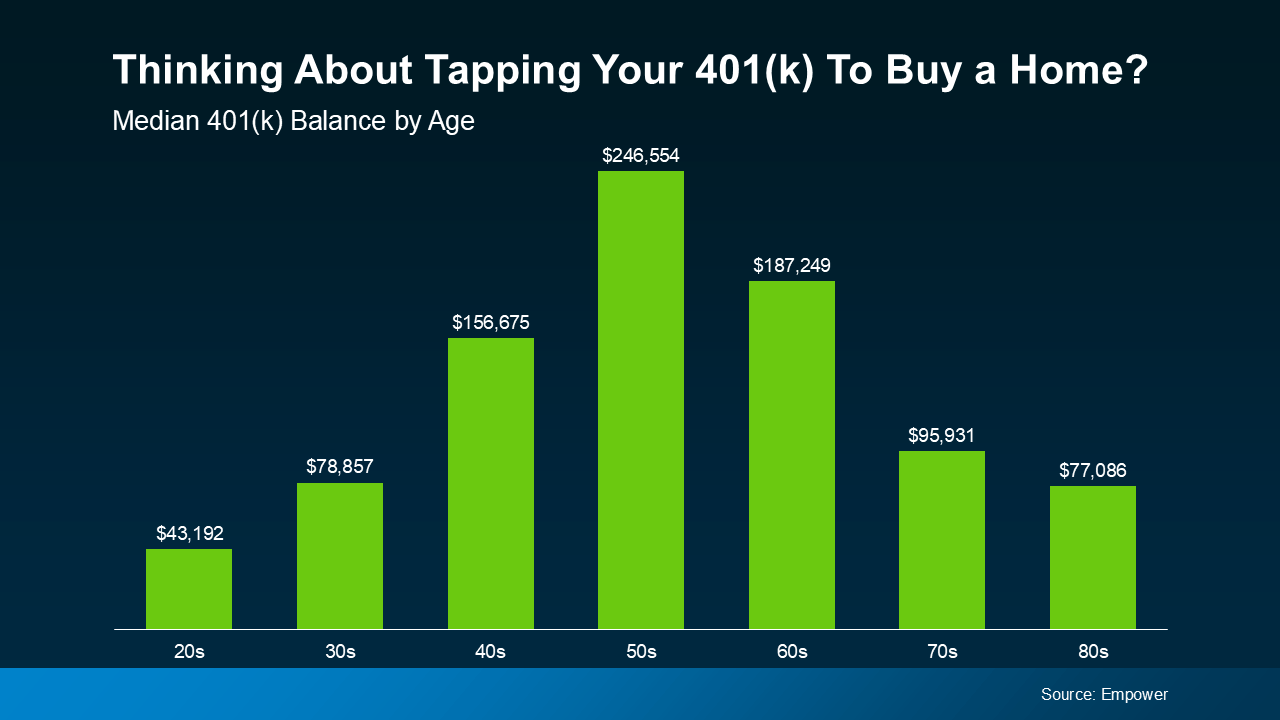
Data from Empower shows many Americans have built up considerable retirement savings. The median 401(k) amount for anyone in their 40s-60s is six figures (see graph below):
 And when you’ve got a good chunk saved and your dream home is right there, reaching for it can feel like an easy call.
But dipping into your retirement savings to buy a home could cost you a penalty and set back your finances later on. That’s why it’s a good idea to explore other options for your down payment first. As Redfin says:
“If you’re struggling to save enough for a down payment, you may be wondering if tapping into your 401(k) is the right option. While it’s possible, doing so comes with significant risks, like early withdrawal penalties and lost investment growth.“
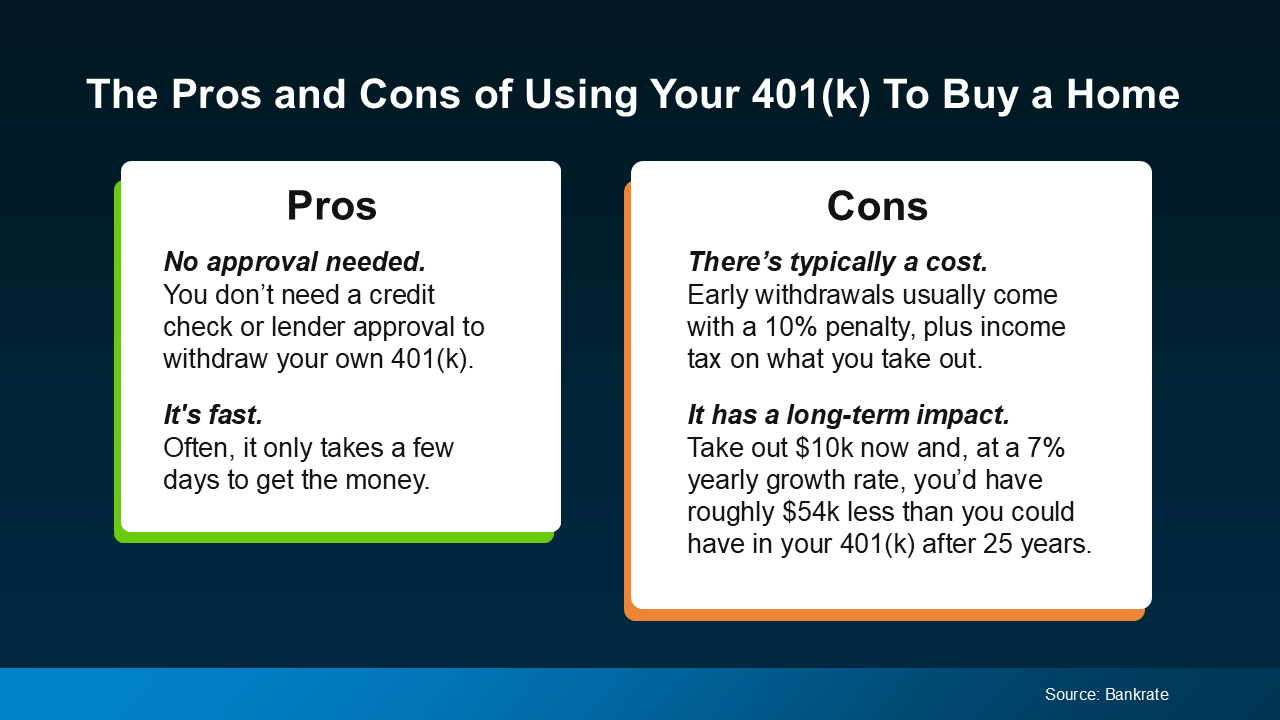
Before you decide, have a financial advisor help you compare the upsides to the risks. Bankrate points to a few of each (see visual):
Other Options Worth Exploring First
Your 401(k) isn’t the only way to finance a home purchase. Redfin outlines a few other options to look into before you decide what to do:
-
Low and No-Down Payment Loans: FHA loans, for example, allow qualified buyers to put down as little as 3.5% of the home’s price, depending on their credit scores.
-
Down Payment Assistance Programs: Many national and local programs can help reduce what you pay toward your down payment or closing costs.
Make a Plan Before You Make a Move
No matter which route you take, talk with a financial expert first. The buyers who come out ahead build a solid plan with the right professionals before starting their journey to homeownership. As NerdWallet puts it:
“Even if you’re convinced a 401(k) loan is the way to go, it’s important to understand the risks at the outset.“
Bottom Line
Affordability is definitely a challenge, but that doesn’t mean tapping your 401(k) is your only way in if you want to buy.
If you’re considering using your 401(k) savings for a down payment, weigh all your options and talk with a trusted financial advisor before you make any decisions. They’ll help you make a plan to fit your goals and your budget.
Thank You For Reading
Denise Olivares-Molina
by Denise Olivares-Molina | Aug 21, 2026 | Uncategorized
Real estate decisions can have a major impact on your finances, lifestyle, and long-term plans. Whether you are buying your first home, selling a property, or simply exploring your options, having a clear strategy can make the process easier to manage.
The real estate market can change over time, but some basic principles remain useful. Understanding your budget, researching the market, preparing your property, and making informed decisions can help you move forward with greater confidence.
1. Know Your Budget
Before looking at homes, determine what you can comfortably afford. Consider your income, savings, monthly expenses, mortgage payment, property taxes, insurance, maintenance, and other homeownership costs.
A realistic budget can help you focus on properties that fit your financial situation rather than simply choosing the highest purchase price you may qualify for.
2. Get Your Financing Ready
If you are planning to buy, getting pre-approved for a mortgage can help you understand your potential borrowing range and prepare for the purchase process.
Compare loan options, interest rates, fees, and terms carefully. Understanding the full cost of financing can help you make a more informed decision.
3. Research the Local Market
Real estate conditions can vary significantly from one location to another. Look at recent sales, available inventory, asking prices, and other local market factors before making a decision.
Understanding local conditions can help buyers set realistic expectations and help sellers develop a more informed pricing strategy.
4. Look Beyond the Purchase Price
The cost of a home includes more than the sale price. Buyers should consider property taxes, insurance, utilities, maintenance, potential repairs, and other ongoing expenses.
A home with a lower purchase price may not always have the lowest overall cost. Looking at the bigger financial picture can help you compare properties more effectively.
5. Prioritize the Home’s Condition
Before purchasing a property, pay attention to its overall condition. A professional home inspection can help identify potential issues involving major systems and components.
Understanding the condition of the property can help you plan for repairs and evaluate whether the home fits your budget and expectations.
6. Avoid Unnecessary Renovations
If you are selling your home, you may not need to complete a major renovation before listing. Simple improvements such as decluttering, cleaning, fresh paint, improved lighting, and basic maintenance can make a noticeable difference.
Focus on improvements that address visible issues and help present the property in a clean and well-maintained condition.
7. Price Your Home Carefully
Pricing is one of the most important parts of a successful home sale. A price that is too high can reduce buyer interest, while pricing based on current market conditions can help attract serious attention.
Review comparable properties and current market activity when determining a listing strategy. A real estate professional can also provide a comparative market analysis to help you understand local pricing.
8. Make Your Listing Stand Out
Most buyers begin their home search online, so strong presentation matters. Clear descriptions, accurate information, and high-quality property photography can help potential buyers understand what a home offers.
Focus on objective property features and avoid descriptions that suggest preferences for particular types of people or households. Keeping marketing focused on the property and its features also supports Fair Housing compliance.
9. Think About Your Long-Term Goals
A real estate decision should fit more than your immediate needs. Consider how a property could support your financial and lifestyle goals over time.
For buyers, this may mean considering future maintenance, affordability, and flexibility. For sellers, it may mean thinking about timing, equity, and the next stage of their plans.
10. Work With the Right Professionals
Real estate transactions involve many details, including contracts, financing, inspections, disclosures, negotiations, and closing requirements.
Working with qualified professionals can help you understand the process and make informed decisions. Depending on your situation, this may include a real estate professional, lender, inspector, attorney, tax professional, or other appropriate advisor.
Final Thoughts
Successful real estate decisions start with preparation. Knowing your budget, understanding the local market, evaluating property conditions, and thinking about long-term costs can help you avoid unnecessary surprises.
Whether you are buying, selling, or simply planning, taking the time to understand your options can help you make decisions with greater clarity and confidence.

by Denise Olivares-Molina | Aug 17, 2026 | Advice for Homeowners, Advice for Sellers, For Sellers, Home Prices, Home Selling Strategy, Homeowner Information, Housing Market, Housing Market Insights, Real Estate Finances, Real Estate Investing, Real Estate Market, Real Estate Market 2026, Real Estate Tips, Real Estate Trends in 2026
That spare room on the main floor. The finished basement with a kitchenette and its own entrance. The bonus room you’ve been using for storage.
To you, it’s extra space. But to a growing pool of buyers, it’s the reason they’d pick your house. Here’s why. Multi-generational homebuying is on the rise.
Millions of Families Are Living Multi-Generationally
The number of multi-generational households is climbing. That’s when 3 or more generations live under one roof. And data shows those households grew from 3.2 million to almost 4 million between 2014 and 2024, according to Realtor.com.
And each year, more people are shopping for a larger home that fits their combined needs.
While the appetite for this type of house is rising across the board, data from USAFacts shows multi-generational living is more common in some states than others. The darker the state in the map below, the more common it is in that area (see map below):
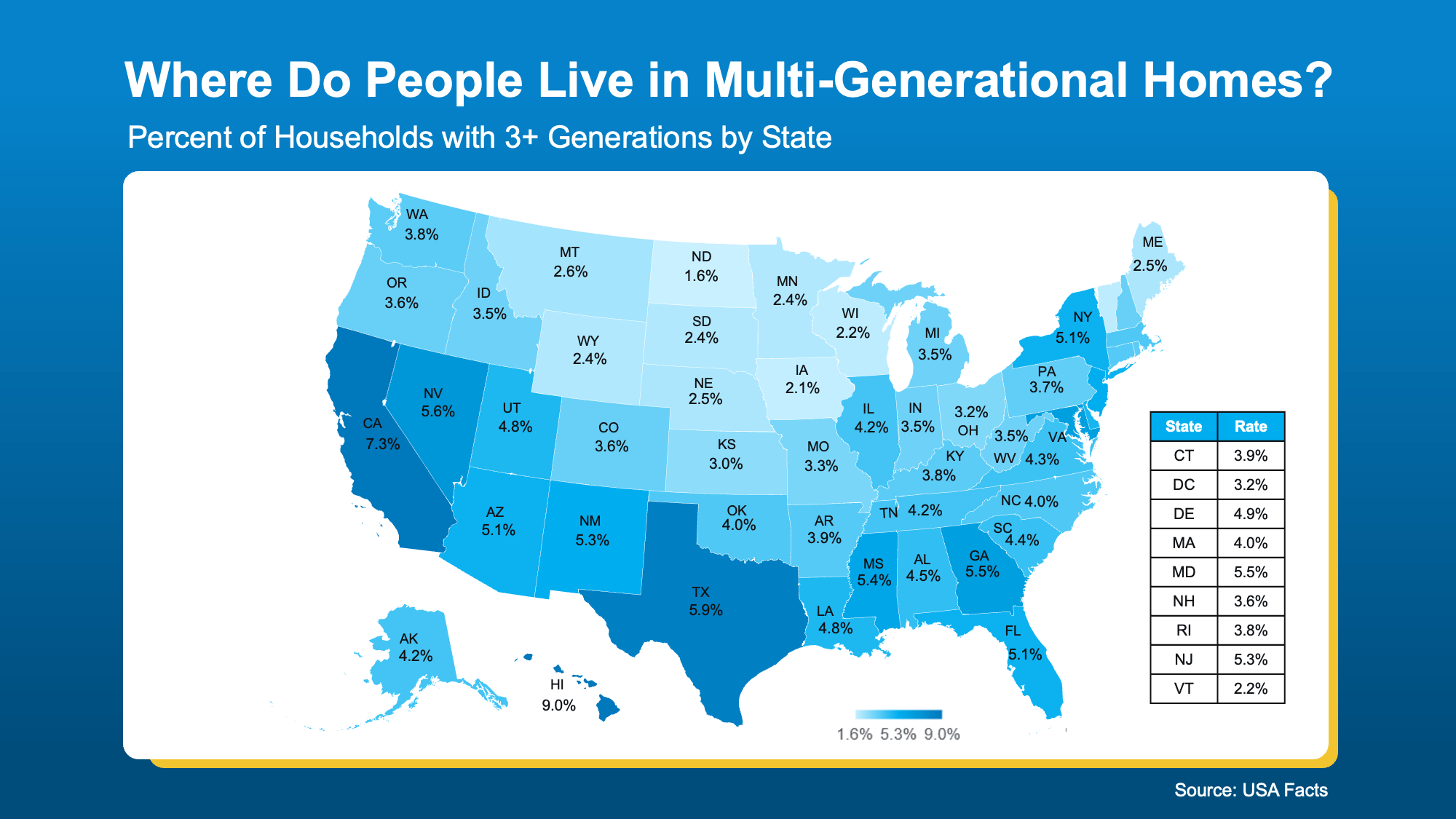
Where does your state fall? Depending on where you are, the pool of buyers looking for a house like yours could be even bigger than you’d think. But the overall bottom line is this.
There’s a real market out there for larger homes with room for multiple generations under one roof, especially since affordability is still so tight. And if you own a house like that, it’s in demand.
Multi-Generational Houses Sell at a Premium
And that extra room carries real value with the right buyer. According to Realtor.com, in 2025 the median asking price for a multi-generational house was $709,000 – roughly 65% higher than the $429,900 median for a standard house.
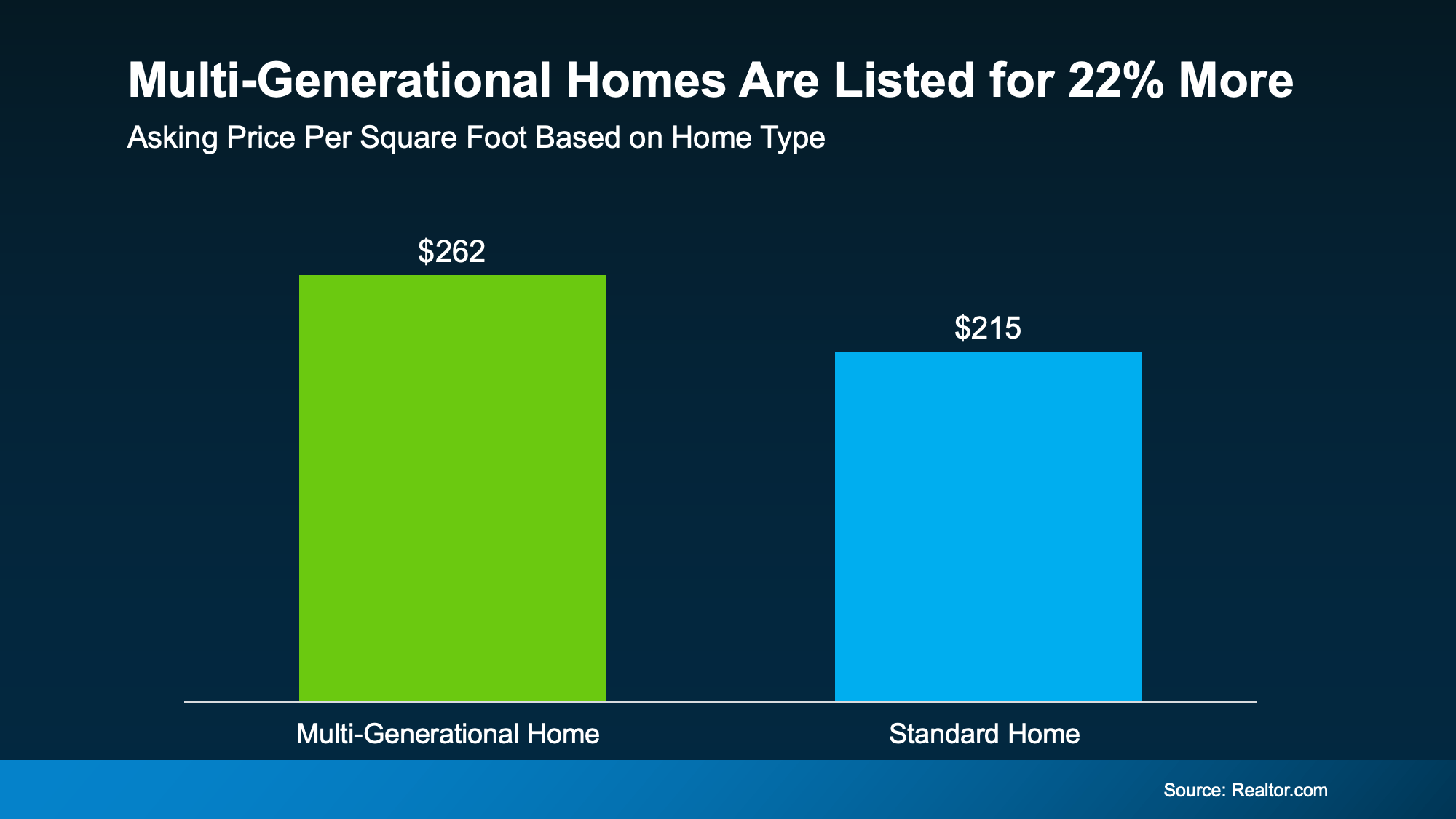
Some of that is simply size. But compare multi-generational homes to regular homes with the same amount of square footage, and they still come out on top – $262 per square foot versus $215.
That’s a 22% premium you could command for special features like in-law suites, second kitchens, and separate entries (see graph below):
When you sell, this could help you walk away with more money in your pocket, especially when your agent highlights your home’s multi-generational-friendly features in your listing.
And Buyers Aren’t Getting Sticker Shock
And even with slightly higher price tags, buyers aren’t flinching. Multi-generational houses drew 13.5% more online views than standard ones, and they still sold just as fast – in about 59 days – per the same Realtor.com report.
Hannah Jones, Senior Economic Research Analyst at Realtor.com, explains:
“The strong demand and steep premiums we are seeing in inventory-constrained markets point to a real mismatch between what buyers are looking for and what is actually available. For sellers in these markets, this type of home can be a significant asset.”
Basically, when buyers want something that’s very specific, the house that checks the box tends to stand out.
Bottom Line
Your multi-generational-friendly, or simply larger-than-average, house might meet criteria a lot of buyers can’t find in a standard one. That’s what gets attention. And offers. So, let’s chat about what it could get you in our market right now.
Thank You For Reading
Denise Olivares-Molina

by Denise Olivares-Molina | Aug 17, 2026 | Advice for Buyers, Buyers, First Time Home Buyers, First-Time Buyers, First-Time Investors, For Buyers, Market Trends, Market Updates, Real Estate Finances, Real Estate Goals, Real Estate Investing, Real Estate Market, Real Estate Market 2026, Real Estate Tips, Real Estate Trends in 2026, Weekly
Pregunte por ahí y casi todos los compradores de viviendas quieren saber si hay alguna manera de conseguir una mejor oferta. Y casi todos los vendedores quieren saber si todavía obtendrán el precio máximo por su propiedad.
Lo interesante es que… ambos pueden tener razón exactamente al mismo tiempo. Todo depende de dónde viva.
Eso se debe a que el mercado inmobiliario actual ya no se mueve en una sola dirección. Algunos mercados favorecen claramente a los compradores. Otros todavía favorecen a los vendedores. Pero la mayoría se encuentra en un punto intermedio.
Y saber en qué mercado se encuentra realmente puede cambiar por completo la estrategia que utilice para comprar o vender (y qué expectativas debería tener). Vamos a desglosarlo.
Un número le dice quién tiene el poder de negociación
Entonces, ¿cómo sabe en qué mercado se encuentra? Hay un número que cuenta la historia más rápido que cualquier otra cosa: los meses de inventario de viviendas en venta. Es la señal más clara de quién tiene la ventaja y qué estrategia necesitará. Piénselo de esta manera.
Imagine que a partir de hoy no se pusieran a la venta más casas. Los meses de inventario nos dicen cuánto tiempo tomaría vender todo lo que está actualmente en el mercado según la demanda de hoy.
En términos generales, si los meses de inventario son:
-
Menos de 4 meses: Los vendedores suelen tener la ventaja.
-
De 4 a 6 meses: Compradores y vendedores están en mayor igualdad de condiciones.
-
Más de 6 meses: Los compradores generalmente pueden negociar una mejor oferta.
En este momento, los datos de la Asociación Nacional de Agentes Inmobiliarios (NAR, por sus siglas en inglés) indican que ese número es de 4.6, lo que sitúa al mercado general nuevamente en territorio equilibrado (vea el gráfico a continuación):
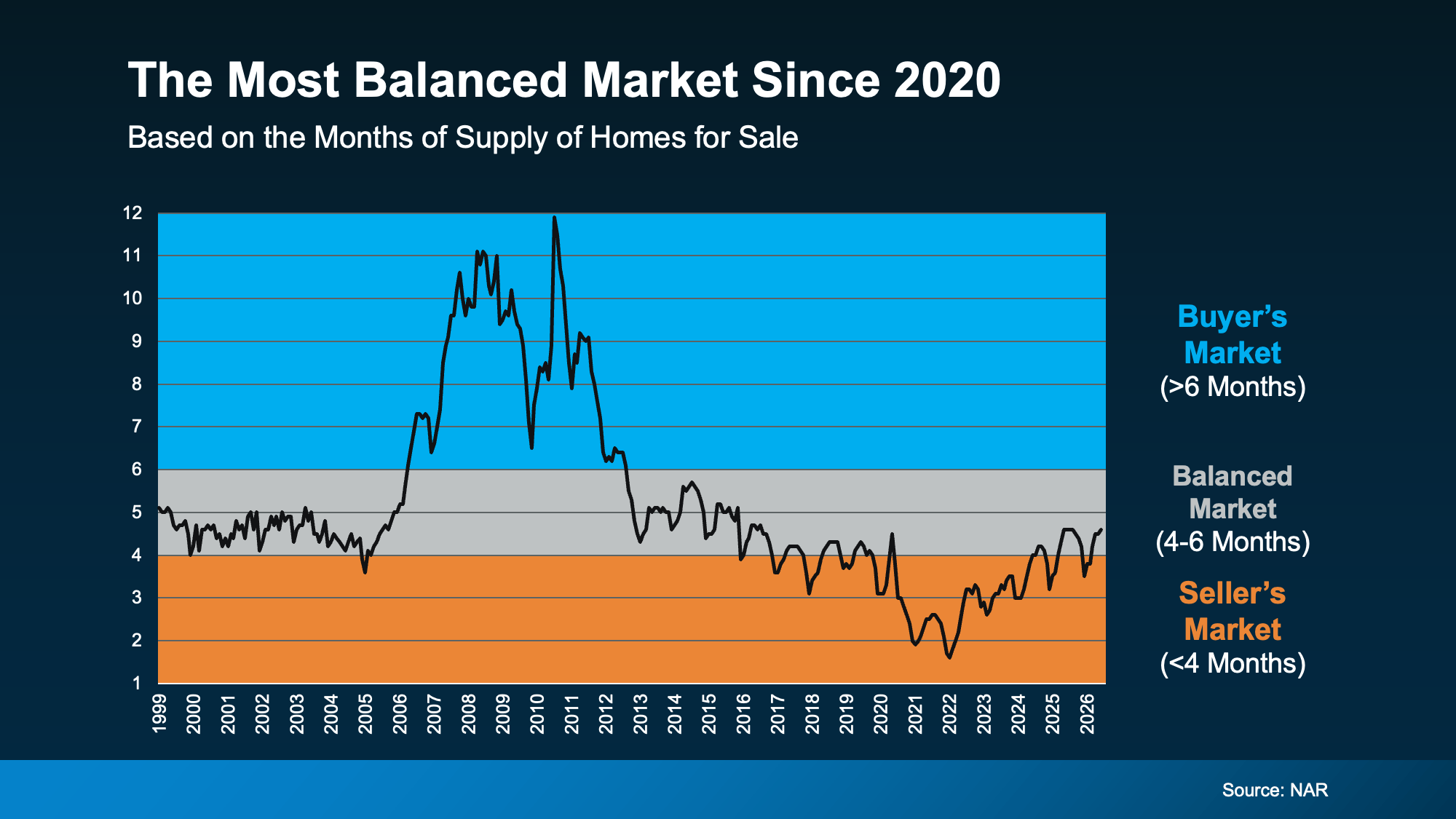
Eso significa que, en su conjunto, el mercado finalmente ha regresado a un rango mucho más equilibrado después de años de estar inclinado a favor de los vendedores. Aunque pueda parecer que la balanza se ha inclinado solo un poco, es suficiente para hacer una verdadera diferencia en la estrategia que necesitará para su mudanza, al menos en la mayoría de los lugares.
La historia de dos mercados: Por qué “equilibrado” no significa lo mismo en todas partes
Los datos de Redfin ayudan a arrojar luz sobre cómo se distribuye esto en todo el país. Desglosa qué ciudades se inclinan en una dirección u otra (vea el gráfico a continuación).
-
Algunos mercados dan a los compradores más poder de negociación. Esos están en azul.
-
Algunos todavía favorecen a los vendedores. Ese es el naranja.
-
Otros se encuentran en un punto intermedio. Esos son grises.
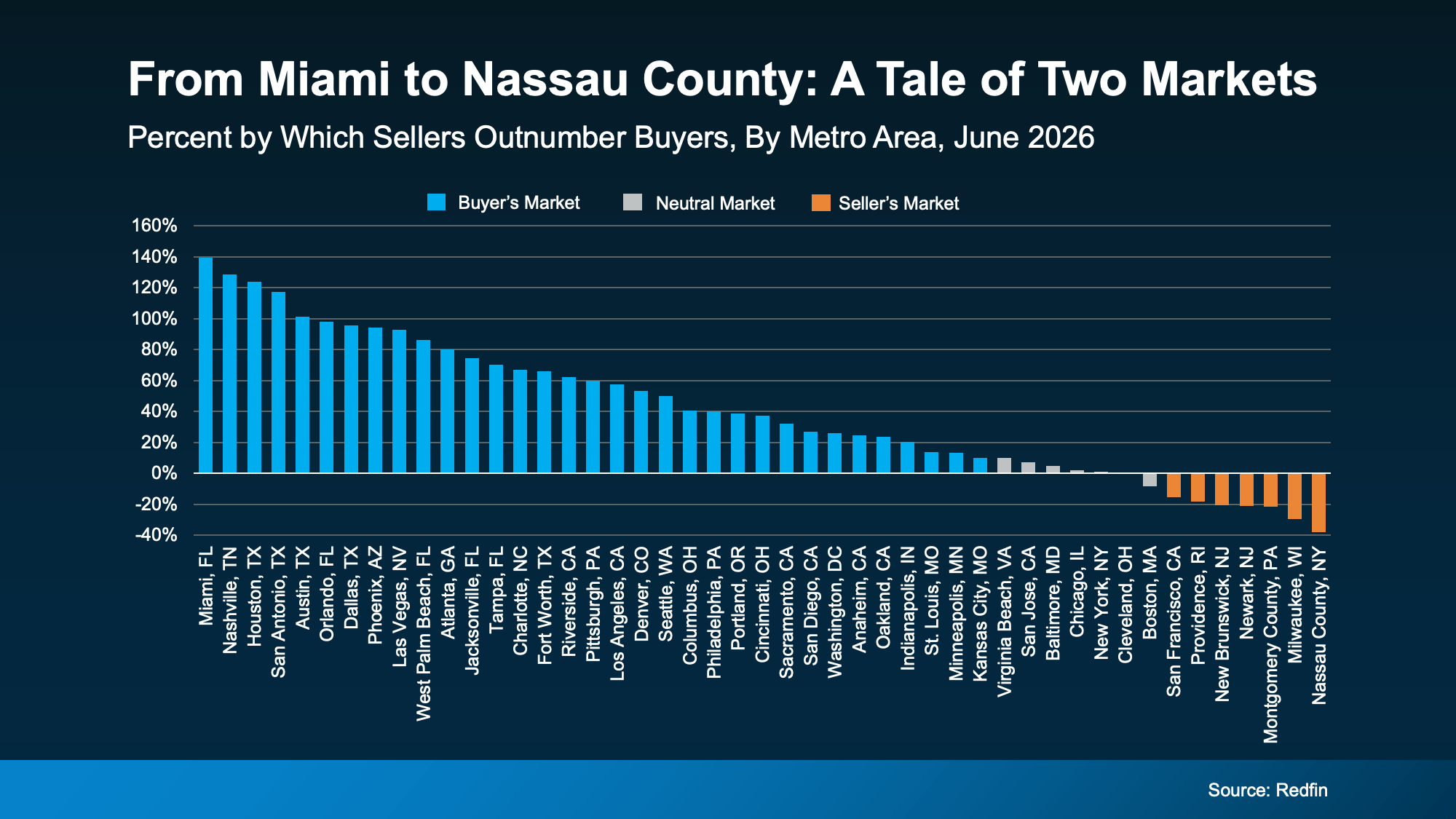
¿Nota algo? Muchos más lugares están experimentando condiciones más favorables para los compradores en este momento. De hecho, este es el mercado más favorable para los compradores que hemos visto en casi 6 años.
Pero no asuma que los compradores tienen la ventaja en todas partes.
Todavía hay ciudades donde los vendedores mantienen el poder. Y si se encuentra en una de ellas, su enfoque para vender o comprar se verá completamente diferente al que tendría en un mercado que se inclina hacia los compradores.
El mayor error que puede cometer en este momento
Por eso, el mayor error no es pensar que finalmente es un mercado de compradores. Y tampoco es pensar que sigue siendo un mercado de vendedores. Es hacer cualquier suposición sin hablar primero con un agente experto.
El mercado actual es increíblemente local. En un mercado, un comprador podría estar obteniendo miles de dólares en concesiones por parte de un vendedor. Y un propietario podría tener que considerar bajar su precio.
Pero en otro, un comprador podría estar estresado por tener que presentar su mejor oferta, o podría perder la casa frente a otro comprador. Y un vendedor podría seguir viendo una fuerte demanda y precios subiendo poco a poco.
El mismo mercado inmobiliario general.
Experiencias muy diferentes.
La verdad es que lo que está sucediendo en su propio vecindario afecta todo, desde cómo ponerle precio a su casa hasta cómo hacer una oferta o negociar reparaciones o concesiones. Y por eso, el conocimiento local de un agente importa hoy más que nunca.
Su plan tiene que basarse en su vecindario, y solo un agente tiene la experiencia para hacerlo bien.
En resumen
Este mercado no es igual para todos.
Si se pregunta quién tiene la ventaja donde vivimos, hablemos. Le mostraré exactamente cómo se ven los números en nuestro mercado, y qué estrategia le brinda la mejor oportunidad de conseguir lo que desea.
Gracias Por Leer,
Denise Olivares-Molina

by Denise Olivares-Molina | Aug 17, 2026 | Advice for Buyers, Buyers, First Time Home Buyers, First-Time Buyers, First-Time Investors, For Buyers, Market Trends, Market Updates, Real Estate Finances, Real Estate Goals, Real Estate Investing, Real Estate Market, Real Estate Market 2026, Real Estate Tips, Real Estate Trends in 2026, Weekly
Ask around and almost every homebuyer out there wants to know if there’s a way to get a better deal. And just about every seller wants to know if they’ll still get top dollar.
The interesting thing is… both can be right at the exact same time. It just depends on where you live.
That’s because today’s housing market isn’t moving in one direction anymore. Some markets clearly favor buyers. Others still favor sellers. But most are sitting somewhere in the middle.
And knowing which market you’re actually in can completely change the strategy you use to buy or sell (and what expectations you should have). Let’s break it down.
One Number Tells You Who’s Got Leverage
So how do you know which market you’re in? There’s one number that tells the story faster than anything else: the months’ supply of homes for sale. It’s the clearest signal of who’s got leverage – and what strategy you’ll need. Think of it like this.
Imagine no additional homes were listed starting today. Months’ supply tells us how long it would take to sell everything that’s currently on the market based on today’s demand.
Generally speaking, if months’ supply is:
-
Fewer than 4 months: Sellers usually have the advantage.
-
4 to 6 months: Buyers and sellers are on more equal footing.
-
More than 6 months: Buyers can usually negotiate for a better deal.
Right now, the National Association of Realtors (NAR) data says that number is 4.6 and that puts the overall market back in balanced territory (see graph below):
That means, as a whole, the market has finally moved back into a much more balanced range after years of being tilted in sellers’ favor. While that may look like the scales have tipped only slightly, it’s enough to make a real difference in what strategy you’ll need for your move – at least in most places.
The Tale of Two Markets: Why ‘Balanced’ Doesn’t Mean the Same Thing Everywhere
Redfin data helps shed some light on how this shakes out across the country. It breaks down which cities are leaning in either direction (see graph below).
-
Some markets give buyers more leverage.Those are in blue.
-
Some still favor sellers. That’s the orange.
-
Others fall somewhere in between. Those are gray.
Notice anything? A lot more places are seeing more buyer-friendly conditions right now. In fact, this is the most buyer-friendly market we’ve seen in nearly 6 years.
But don’t take that as buyers have the upper hand everywhere.
There are still cities where sellers still have the power. And if you’re in one of them, your approach to selling or buying looks completely different than it would in a buyer-leaning market.
The Biggest Mistake You Can Make Right Now
That’s why the biggest mistake isn’t thinking it’s finally a buyer’s market. And it isn’t thinking it’s still a seller’s market either. It’s making any assumption without talking to an expert agent first.
Today’s market is incredibly local. In one market, a buyer may be getting thousands of dollars in concessions from a seller. And a homeowner may have to consider dropping their price.
But in another, a buyer may be stressed about coming in with their best offer, or they may lose out on the home to another buyer. And a seller may still be seeing strong demand and prices inching higher.
Same overall housing market.
Very different experiences.
The truth is what’s happening in your back yard affects everything from pricing your house to making an offer to negotiating repairs or concessions. And that’s why an agent’s local knowledge matters more now than ever before.
Your plan has to be based on your neighborhood – and only an agent has the expertise to get that right.
Bottom Line
This market isn’t one-size-fits-all.
If you’re wondering who has the upper hand where we live, let’s talk. I’ll show you exactly what the numbers look like in our market – and what strategy gives you the best shot at getting what you want.
Thank You For Reading
Denise Olivares-Molina

by Denise Olivares-Molina | Aug 3, 2026 | Advice for Buyers, Advice for Homeowners, First-Time Buyers, For Buyers, Home value, Homeowner Information, Real Estate Tips, Tips for Buyers, Weekly
If buying a home is on your radar, you’ve probably been keeping an eye on mortgage rates and home prices. But don’t forget about homeowners insurance.
Homeowners insurance has always been part of owning a home. But over the past few years, it’s become a larger expense for many homeowners – something that’s especially frustrating when affordability already feels tight.
The good news? While premiums are still rising, the latest data shows those increases are beginning to slow. Here’s what buyers should know.
Home Insurance Costs Have Gone Up
You’ve probably heard stories from friends or family about their premiums going up. And that’s not really a surprise when you consider data from the Pew Research Center shows 71% of homeowners say their insurance costs have gone up over the past few years.
While no one likes rising costs, knowing what to expect can help you plan ahead. Your first insurance payment is typically included in your closing costs, but after that it’ll become part of your monthly housing expenses.
Getting an insurance quote early can help you build a more realistic budget and avoid surprises later.
Premiums Are Rising, But Not as Fast as They Were
Most of the headlines focus on how home insurance is getting more expensive. And that’s true. But here’s the part that’s easy to miss.
Insurance premiums are still rising.
But they’re not rising as fast as they were.
According to the latest report from Rate Insurance, 2025 saw the first slowdown in annual premium increases since 2019 (see graph below):

That doesn’t mean premiums are getting cheaper. It simply means the rapid increases of the past several years may finally be starting to ease – a small but welcome step in the right direction.
But what you’ll pay in one part of the country can look very different from what someone pays somewhere else.
Where You Buy Can Make a Big Difference
Insurance costs vary because some parts of the country experience more claims than others. That’s why it’s important to look at what’s happening locally.
Your premium will depend on things like where you’re buying, the home itself, and the coverage you choose.
Forbes data can give a rough idea of your state’s typical premiums. Check out the map below – the darker the blue, the higher the costs tend to be in that state:

Ways To Lower Your Costs
While you can’t control every cost that comes with buying a home, you can control how prepared you are. If you’re crunching the numbers and trying to find ways to save, Insurify and NerdWallet offer these tips that can help you get the best insurance price possible:
-
Shop Around – Compare quotes from multiple companies.
-
Bundle Policies – Combine home and auto to see if a bundle price is cheaper.
-
Ask If There Are Discounts – Don’t miss out on savings you may qualify for.
-
Highlight Upgrades – Features like a new roof or storm windows can cut costs.
-
Improve Your Credit – A stronger credit score can mean better premiums.
One of the smartest things you can do is get an insurance quote before you make an offer. That way, you’ll know what your monthly housing costs are likely to be before you commit.
An insurance professional can walk you through your options and help you find coverage that fits both your needs and your budget.
Bottom Line
Homeowners insurance has become a bigger part of the homebuying conversation. But it doesn’t have to become a bigger source of stress.
The key is knowing what to expect before you buy. Get an insurance quote early, factor it into your budget, and lean on trusted local professionals to help you make the most informed decision possible.
Thank You For Reading
Denise Olivares-Molina

by Denise Olivares-Molina | Jul 6, 2026 | Advice for Buyers, Down Payments, Economy, Real Estate Finances, Real Estate Market, Real Estate Tips, Real Estate Trends in 2026, Weekly
Saving for a down payment can feel like the hardest part of buying a home. And with affordability as tight as it’s been lately, it’s fair to wonder how anyone manages it right now. Here’s something you may not have seen coming.
Some people are getting their foot in the door with a smaller down payment.
According to Realtor.com, the typical buyer put down about $23,400 in early 2026 – that’s around $5,000 below what was typical the year before (a 19% drop year over year). That’s the lowest down payments have been since 2021 (see graph below):
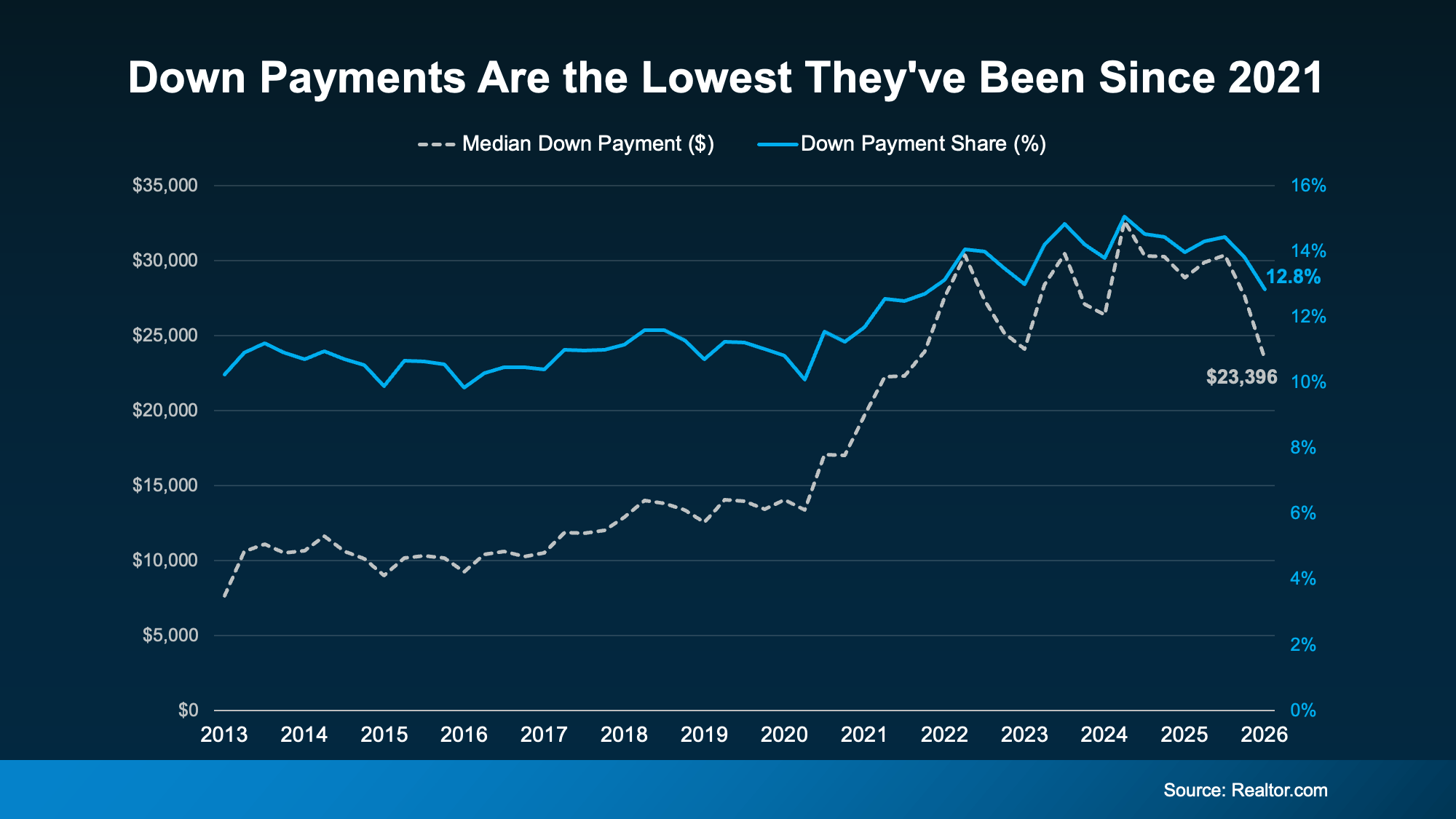
So why are buyers putting less money down, and how can you put less down, too? Here’s your answer.
Why Down Payments Are Getting Smaller
There are a few things driving the trend:
-
Less competition between buyers. Part of it comes down to a more balanced market. With buyers facing less competition than they did a few years ago, there’s less pressure to put a big sum down just to stand out.
-
More moderate home prices. Your down payment is a percentage of the purchase price. So, as price growth cools, the amount you need to put down may change too. In a lot of markets, prices have slowed or leveled off, and some areas are even seeing slight dips. That can translate into smaller down payments.
-
Buyers opting for loans with lower down payments. More buyers are also turning to government-backed loans, like FHA and VA, which often need little or no money down. FHA loans have made up more than 24% of purchase mortgages for five straight quarters, and VA loans recently hit their highest share in over a decade, according to Mortgage Professional America.
But even a smaller down payment is still a significant chunk of cash, and saving it can be hard. So where does the rest come from? For many buyers, two things make the difference: programs built to help, and a hand from loved ones.
Help You May Not Know You Qualify For
Down payment assistance is one of the most overlooked tools out there. Looking at the 10 largest U.S. metros, Urban Institute and Down Payment Resource found nearly 44% of recent buyers already qualified for a down payment program, but many of them closed on their loan without tapping the help (see chart below):
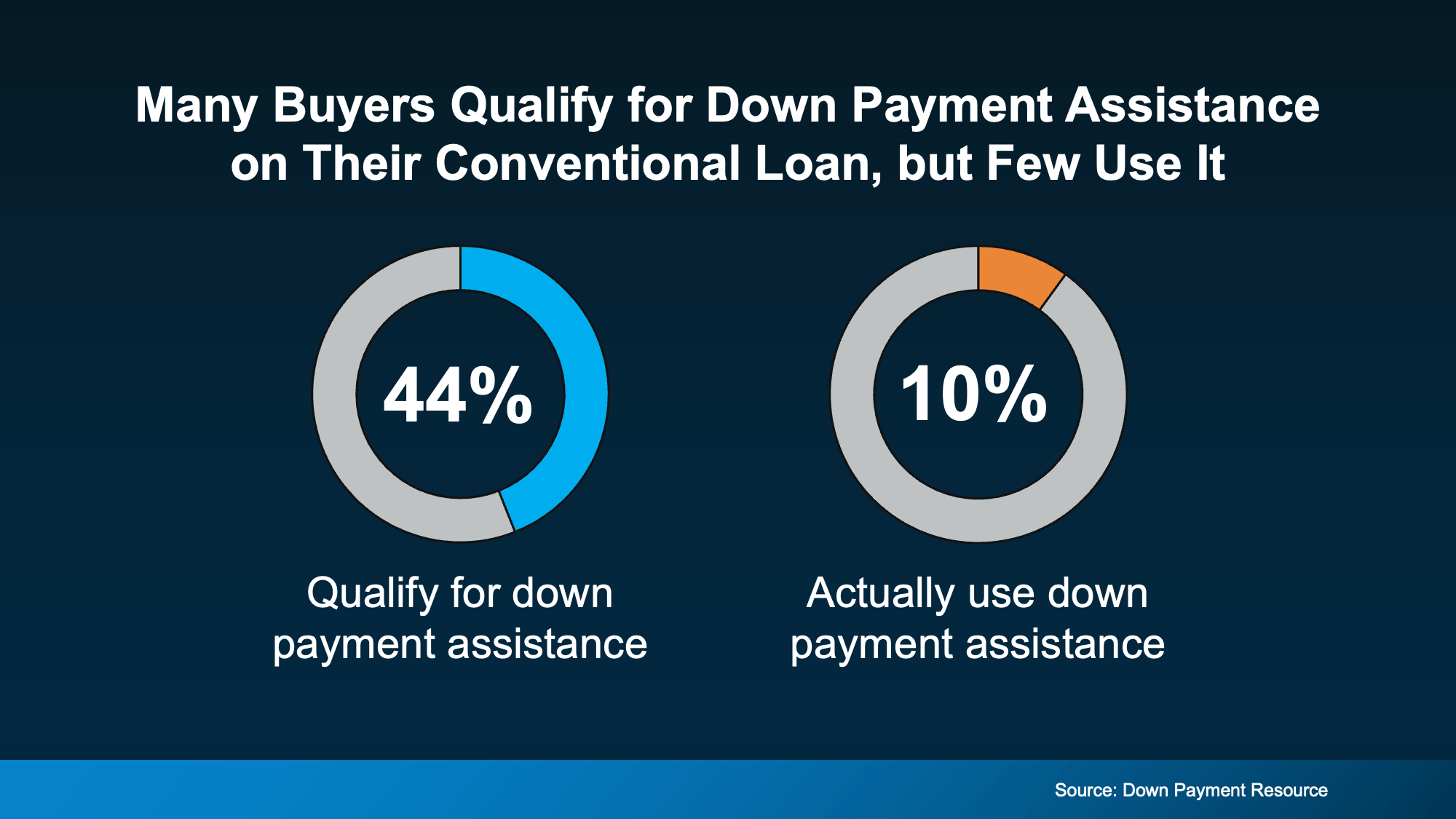
The options are broader than you might assume, too. According to Down Payment Resource:
-
There are more than 2,600 down payment assistance programs available
-
More than half (62%) are designed to help first-time buyers
-
38% have no first-time buyer requirement, so you may qualify even if you’ve owned before
-
62% are open to buyers earning $100,000 or more
A Boost from Loved Ones
For a growing number of buyers, help comes from closer to home. Research from Veterans United shows about 59% of parents have provided or plan to provide financial support to help their child buy a home.
That support most often goes toward the down payment, followed by help qualifying for a mortgage and covering closing costs. Chris Birk, VP of Mortgage Insight at Veterans United, puts it this way:
“For many families, helping a child buy a home has become less of an optional gesture and more of a practical response to today’s affordability challenges.”
If your loved ones are in a position to help, it can make a real difference in how soon you can buy.
Bottom Line
Down payments are smaller than they’ve been in years, and that opens the door for more buyers.
And with added help from assistance programs and a little help from loved ones, you may have more ways forward than you realized. Connect with a trusted lender to talk through your options.
Thank You For Reading
Denise Olivares-Molina
