
by Denise Olivares-Molina | Jul 6, 2026 | Advice for Buyers, Down Payments, Economy, Real Estate Finances, Real Estate Market, Real Estate Tips, Real Estate Trends in 2026, Weekly
Saving for a down payment can feel like the hardest part of buying a home. And with affordability as tight as it’s been lately, it’s fair to wonder how anyone manages it right now. Here’s something you may not have seen coming.
Some people are getting their foot in the door with a smaller down payment.
According to Realtor.com, the typical buyer put down about $23,400 in early 2026 – that’s around $5,000 below what was typical the year before (a 19% drop year over year). That’s the lowest down payments have been since 2021 (see graph below):
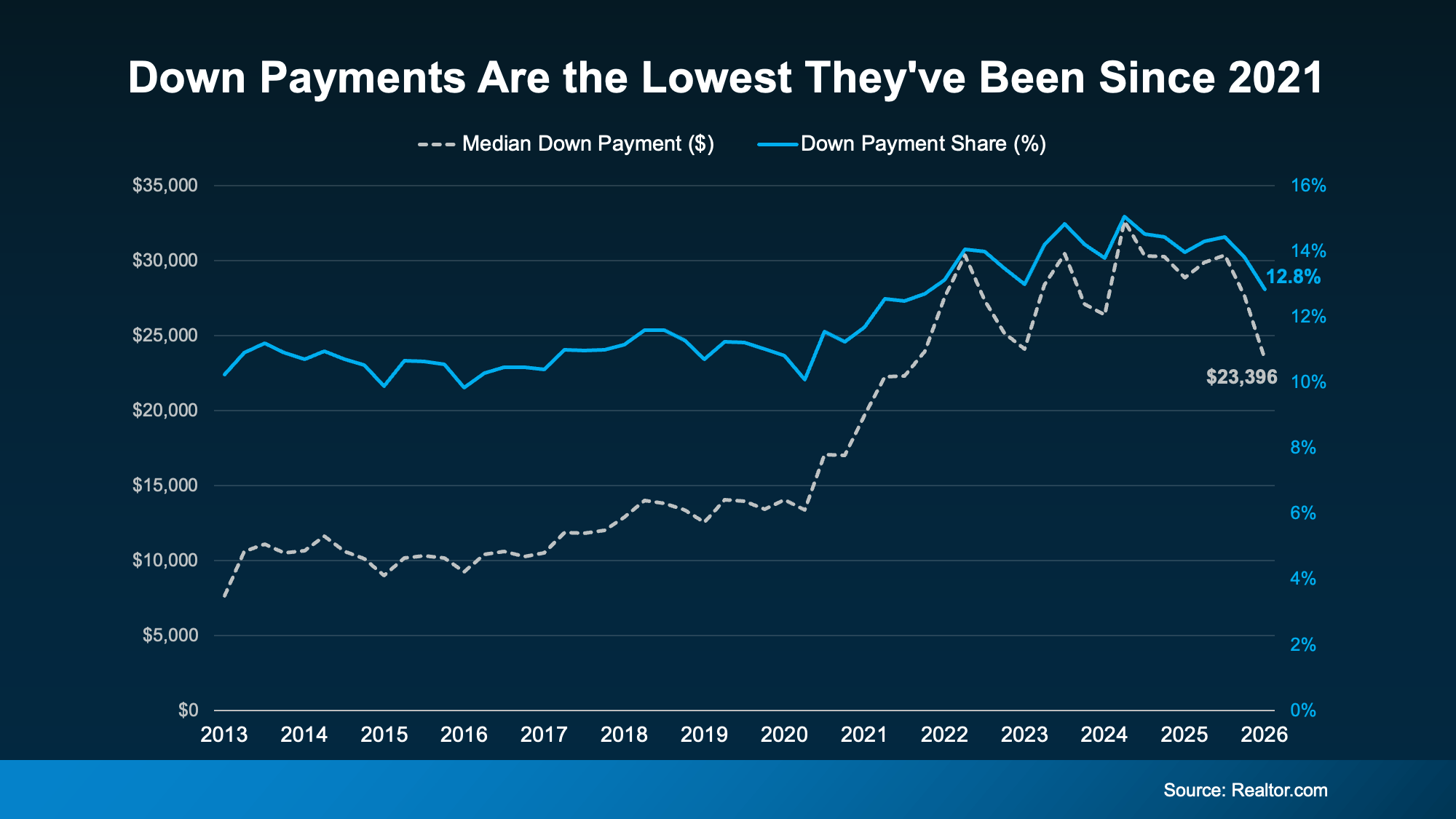
So why are buyers putting less money down, and how can you put less down, too? Here’s your answer.
Why Down Payments Are Getting Smaller
There are a few things driving the trend:
-
Less competition between buyers. Part of it comes down to a more balanced market. With buyers facing less competition than they did a few years ago, there’s less pressure to put a big sum down just to stand out.
-
More moderate home prices. Your down payment is a percentage of the purchase price. So, as price growth cools, the amount you need to put down may change too. In a lot of markets, prices have slowed or leveled off, and some areas are even seeing slight dips. That can translate into smaller down payments.
-
Buyers opting for loans with lower down payments. More buyers are also turning to government-backed loans, like FHA and VA, which often need little or no money down. FHA loans have made up more than 24% of purchase mortgages for five straight quarters, and VA loans recently hit their highest share in over a decade, according to Mortgage Professional America.
But even a smaller down payment is still a significant chunk of cash, and saving it can be hard. So where does the rest come from? For many buyers, two things make the difference: programs built to help, and a hand from loved ones.
Help You May Not Know You Qualify For
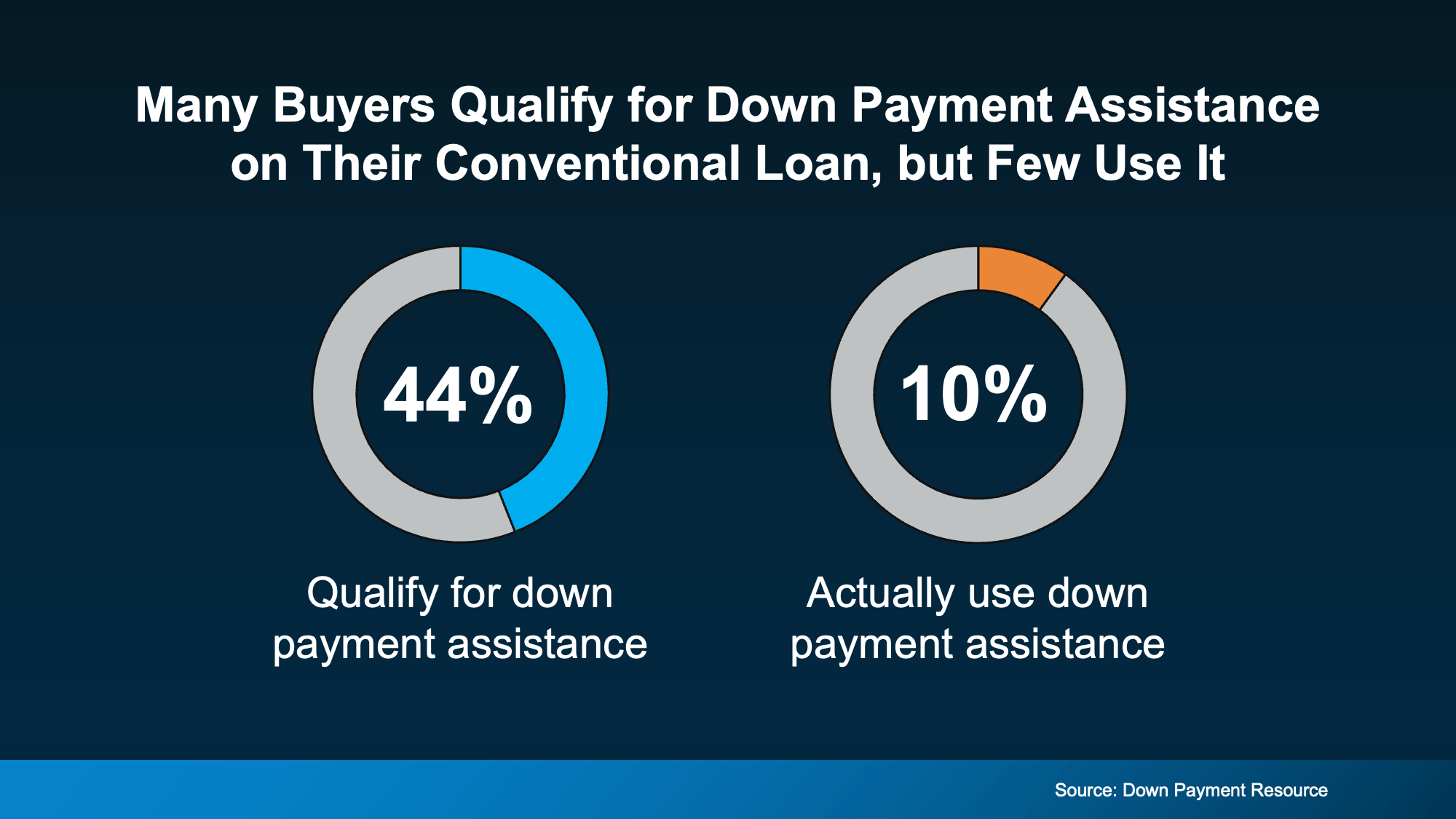
Down payment assistance is one of the most overlooked tools out there. Looking at the 10 largest U.S. metros, Urban Institute and Down Payment Resource found nearly 44% of recent buyers already qualified for a down payment program, but many of them closed on their loan without tapping the help (see chart below):
The options are broader than you might assume, too. According to Down Payment Resource:
-
There are more than 2,600 down payment assistance programs available
-
More than half (62%) are designed to help first-time buyers
-
38% have no first-time buyer requirement, so you may qualify even if you’ve owned before
-
62% are open to buyers earning $100,000 or more
A Boost from Loved Ones
For a growing number of buyers, help comes from closer to home. Research from Veterans United shows about 59% of parents have provided or plan to provide financial support to help their child buy a home.
That support most often goes toward the down payment, followed by help qualifying for a mortgage and covering closing costs. Chris Birk, VP of Mortgage Insight at Veterans United, puts it this way:
“For many families, helping a child buy a home has become less of an optional gesture and more of a practical response to today’s affordability challenges.”
If your loved ones are in a position to help, it can make a real difference in how soon you can buy.
Bottom Line
Down payments are smaller than they’ve been in years, and that opens the door for more buyers.
And with added help from assistance programs and a little help from loved ones, you may have more ways forward than you realized. Connect with a trusted lender to talk through your options.
Thank You For Reading
Denise Olivares-Molina

by Denise Olivares-Molina | Apr 27, 2026 | Advice for Buyers, Buyers, Buying A Home, Buying Myths, Buying Tips, Down Payments, For Buyers
Según Google Trends, las búsquedas en línea sobre información del pago inicial alcanzaron recientemente un máximo histórico. Y esa es una clara señal de que más compradores están tratando de averiguar cuánto necesitan ahorrar realmente antes de dar el paso (ver gráfico a continuación):
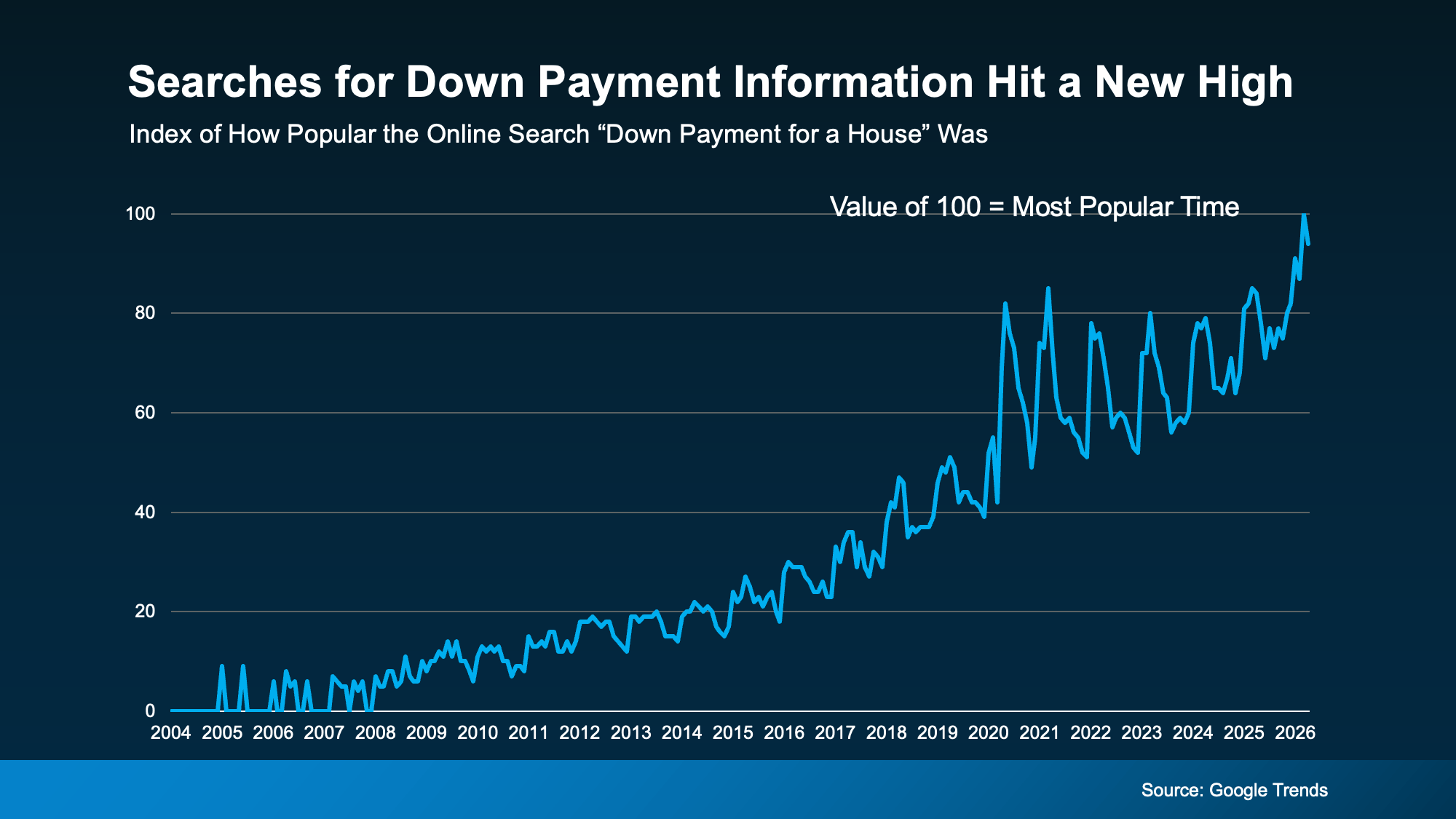
Si te preguntas lo mismo, siempre puedes recurrir a Internet en busca de respuestas. Pero, muchas veces, es mejor preguntarle a un experto local. Porque esto es lo que te diría un profesional.
El mito del pago inicial del 20 %
La idea de que necesitas un pago inicial del 20 % para comprar una casa es uno de los mayores conceptos erróneos en torno al proceso de compra de una vivienda. Y los datos desmienten este mito.
Aunque dar esa cantidad de dinero por adelantado tiene sus beneficios, la mayoría de los compradores primerizos dan mucho menos.
Esta es la razón. A menos que tu prestamista lo exija, por lo general no tienes que dar un pago inicial del 20 %. Incluso existen algunas opciones de préstamos diseñadas para ayudarte a adquirir una casa con un costo inicial mucho menor. Como explica Mortgage Reports:
“La cantidad que necesitas dar de pago inicial dependerá de una variedad de factores, incluyendo el tipo de préstamo y tus metas financieras. Si no tienes un gran pago inicial ahorrado, no te preocupes; hay muchas opciones disponibles y no necesitas dar el 20 % tradicional… muchos compradores de vivienda logran asegurar una casa con tan solo un 3 % o incluso sin ningún pago inicial en absoluto…”
Por ejemplo, los préstamos de la FHA permiten pagos iniciales de tan solo el 3.5 %, mientras que los préstamos del VA y del USDA ofrecen opciones de cero pago inicial para los solicitantes que califican, como los veteranos.
Y esas opciones son solo una de las razones por las que tantos compradores primerizos pueden comprar sin un pago inicial del 20 %.
Lo que los compradores realmente están pagando de anticipo
Entonces, si los compradores no están dando el 20 %, ¿cuánto dan en realidad?
Según la Asociación Nacional de Agentes Inmobiliarios (NAR, por sus siglas en inglés), la mediana del pago inicial para los compradores de vivienda por primera vez es de solo el 10 %. Eso es la mitad de lo que probablemente esperabas.
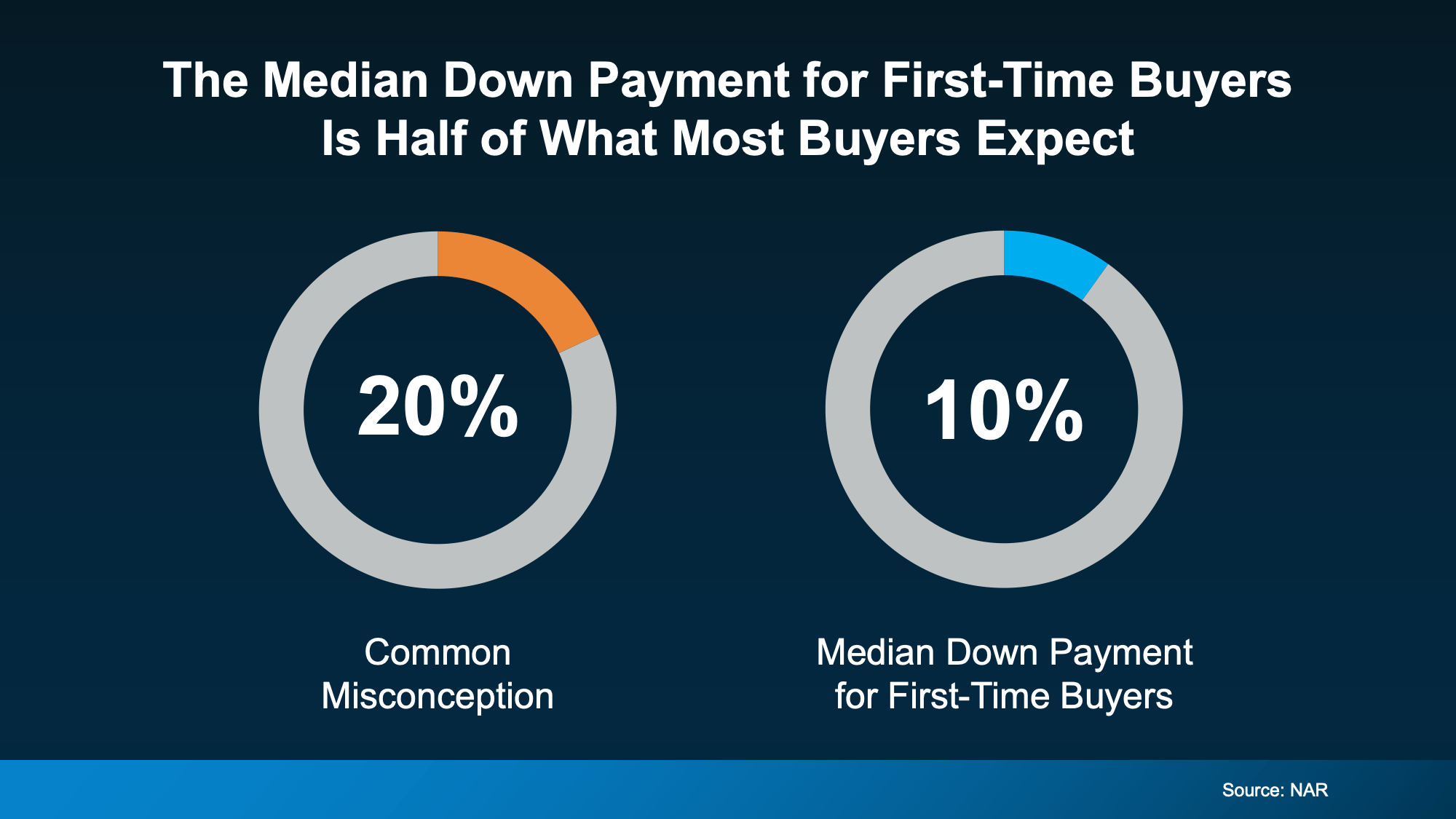
Eso significa que si tu objetivo es ahorrar el 20 % porque crees que es obligatorio, es posible que te estés fijando un plazo más largo de lo necesario.
Y aquí hay más buenas noticias. No solo es posible que puedas comprar con menos dinero de pago inicial del que pensabas, sino que también existen opciones para ayudarte a alcanzar tu meta de pago inicial aún más rápido.
Por qué deberías explorar los programas de asistencia para el pago inicial
Hay muchos programas diseñados para ayudarte a ahorrar para un pago inicial, y pueden hacer una gran diferencia en la rapidez con la que alcanzas tu objetivo de ahorro. Desafortunadamente, los compradores no se dan cuenta de cuántos existen o de que podrían calificar para recibir ayuda.
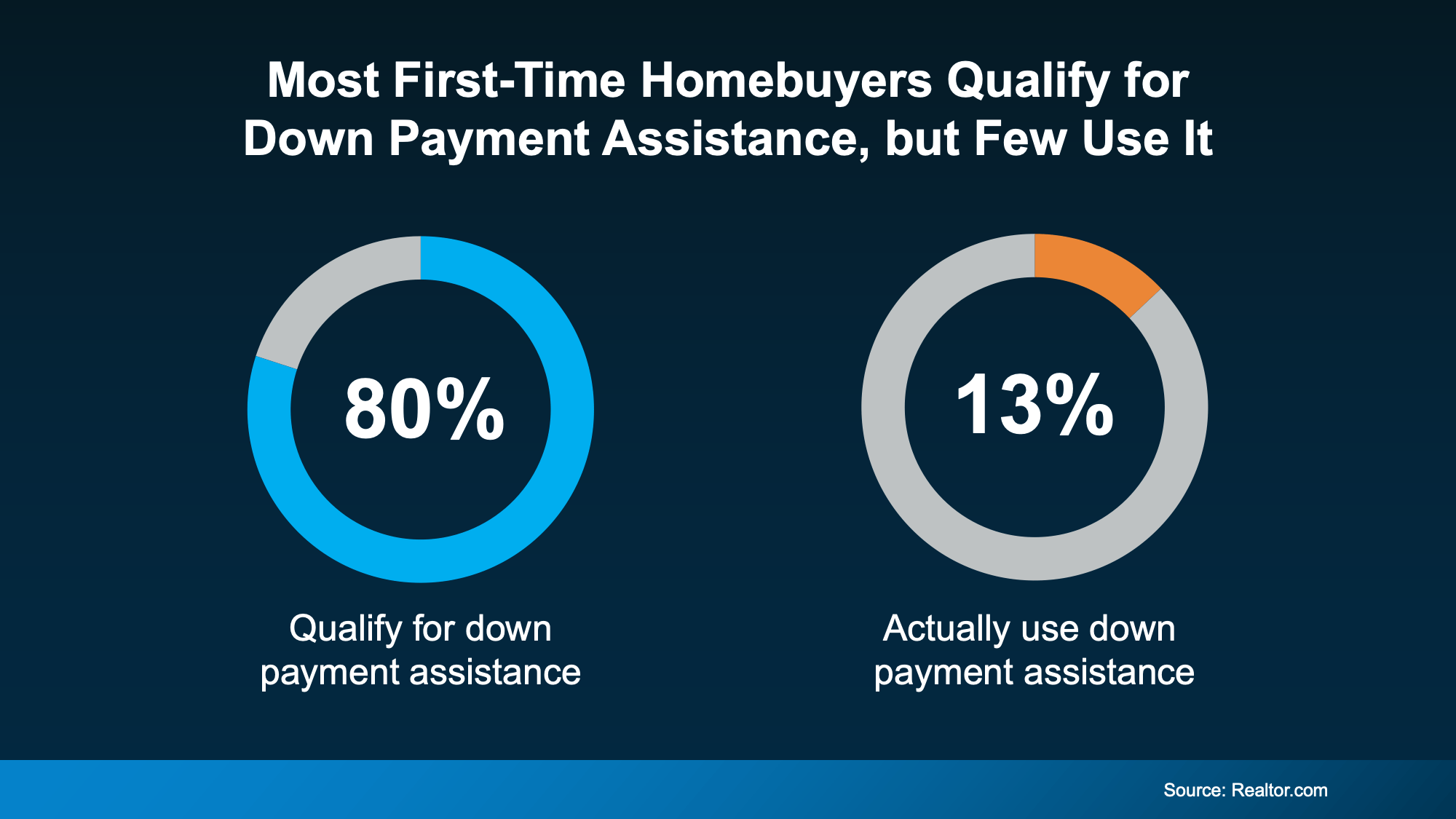
Las investigaciones de Realtor.com muestran que casi el 80 % de los compradores de vivienda por primera vez califican para la asistencia con el pago inicial (DPA, por sus siglas en inglés), pero solo el 13 % realmente la utiliza (ver gráfico a continuación):
Y ese es otro gran error que frena a los posibles compradores como tú.
En los EE. UU., hay más de 2,600 programas de propiedad de vivienda disponibles, y muchos de ellos ofrecen un apoyo financiero significativo. Como Informa Down Payment Resource:
“Con un beneficio promedio de $18,000, la asistencia para el pago inicial (DPA) sigue siendo una de las herramientas más esenciales para abordar los desafíos de asequibilidad de la nación. Los programas continúan ampliando su alcance, sirviendo a una gama más amplia de ingresos, tipos de propiedades y necesidades de los prestatarios, incluyendo compradores de primera generación, militares y compradores recurrentes.”
Imagina cuánto más podrían rendir tus ahorros con $18,000 adicionales que puedes usar para comprar. En algunos casos, incluso es posible combinar varios programas, dándole a lo que has ahorrado un impulso aún mayor.
En conclusión
La simple verdad es esta: la mayoría de los compradores primerizos no dan un pago inicial del 20 %. Y si has estado esperando para comprar hasta tener esa cantidad ahorrada, es posible que te estés fijando un plazo más largo de lo necesario.
Para descubrir cuánto necesitas ahorrar realmente y si calificas para recibir ayuda, comunícate con un prestamista de confianza que pueda guiarte a través de tus opciones. Es posible que puedas comprar antes de lo que pensabas.
Gracias por leer
Denise Olivares-Molina

by Denise Olivares-Molina | Apr 27, 2026 | Advice for Buyers, Buying A Home, Buying Myths, Buying Tips, Costs, Down Payments, First Time Home Buyers, For Buyers, Real Estate Finances, Weekly
According to Google Trends, online searches for down payment information recently hit an all-time high. And that’s a clear sign more buyers are trying to figure out what they really need to save before making a move (see graph below):
If you’re wondering the same thing, you can always turn to the internet for answers. But a lot of the time, it’s better to ask a local expert. Because here’s what a pro would tell you.
The 20% Down Payment Myth
The idea that you need 20% down to buy a home is one of the biggest misconceptions around the homebuying process. And the data debunks the myth.
While there are benefits to putting that much money down, most first-time buyers put down far less.
Here’s why. Unless it’s stated by your lender, you typically don’t have to have a 20% down payment. There are even some loan options designed to help you get into a home with a much smaller upfront cost. As the Mortgage Reports explains:
“The amount you need to put down will depend on a variety of factors, including the loan type and your financial goals. If you don’t have a large down payment saved up, don’t worry—there are plenty of options available, and you don’t need to put down the traditional 20% . . . many homebuyers are able to secure a home with as little as 3% or even no down payment at all . . .”
For example, FHA loans allow down payments as low as 3.5%, while VA and USDA loans offer zero down payment options for qualified applicants, like Veterans.
And those options are just one reason so many first-time buyers are able to buy without a 20% down payment.
What Buyers Are Actually Putting Down
So, if buyers aren’t doing 20%, how much do they actually put down?
According to the National Association of Realtors (NAR), the median down payment for first-time homebuyers is only 10%. That’s half of what you probably expected.
That means if you’re aiming to save 20% because you think you have to, you may be setting a timeline that’s longer than necessary.
And here’s some more good news. It’s not only that you may be able to buy with less money down than you thought, but there are also options to help you get to your down payment goal even faster.
Why You Should Look into Down Payment Assistance Programs
There are a lot of programs designed to help you save for a down payment – and they can make a big difference in how fast you hit your savings target. Unfortunately, buyers don’t realize how many there are, or that they may qualify for help.
Research from Realtor.com showsalmost 80% of first-time homebuyers qualify for down payment assistance (DPA), but only 13% actually use it (see chart below):
And that’s another big miss holding would-be buyers like you back.
In the U.S., there are over 2,600 homeownership programs available, many offering significant financial support. As Down Payment Resource shares:
“With an average benefit of $18,000, down payment assistance (DPA) remains one of the most essential tools for addressing the nation’s affordability challenges. Programs continue to expand in scope, serving a broader range of incomes, property types and borrower needs, including first-generation, military and repeat buyers.”
Imagine how much further your savings could go with an extra $18,000 you can use to buy. In some cases, you may even be able to stack multiple programs, giving what you’ve saved an even bigger boost.
Bottom Line
The simple truth is: most first-time buyers don’t put 20% down. And if you’ve been waiting to buy until you have that saved, you may be setting a timeline that’s longer than necessary.
To find out what you really need to save and if you qualify for any help, connect with a trusted lender who can walk you through your options. You may be able to buy sooner than you thought.
Thank You For Reading
Denise Olivares-Molina

by Denise Olivares-Molina | Oct 6, 2025 | Buyers, Buying A Home, Down Payments, First Time Home Buyers, First-Time Buyers, First-Time Investors, For Buyers, Home value, Homeowner Information, Housing Market Updates, Market Updates, New Home, Predictions, Pricing, Real Estate 2025, Real Estate Finances, Real Estate Investing, Real Estate Market, Tips for Buyers, Weekly
You want mortgage rates to fall – and they’ve started to. But is it going to last? And how low will they go?
Experts say there’s room for rates to come down even more over the next year. And one of the leading indicators to watch is the 10-year treasury yield. Here’s why.
The Link Between Mortgage Rates and the 10-Year Treasury Yield
For over 50 years, the 30-year fixed mortgage rate has closely followed the movement of the 10-year treasury yield, which is a widely watched benchmark for long-term interest rates (see graph below):
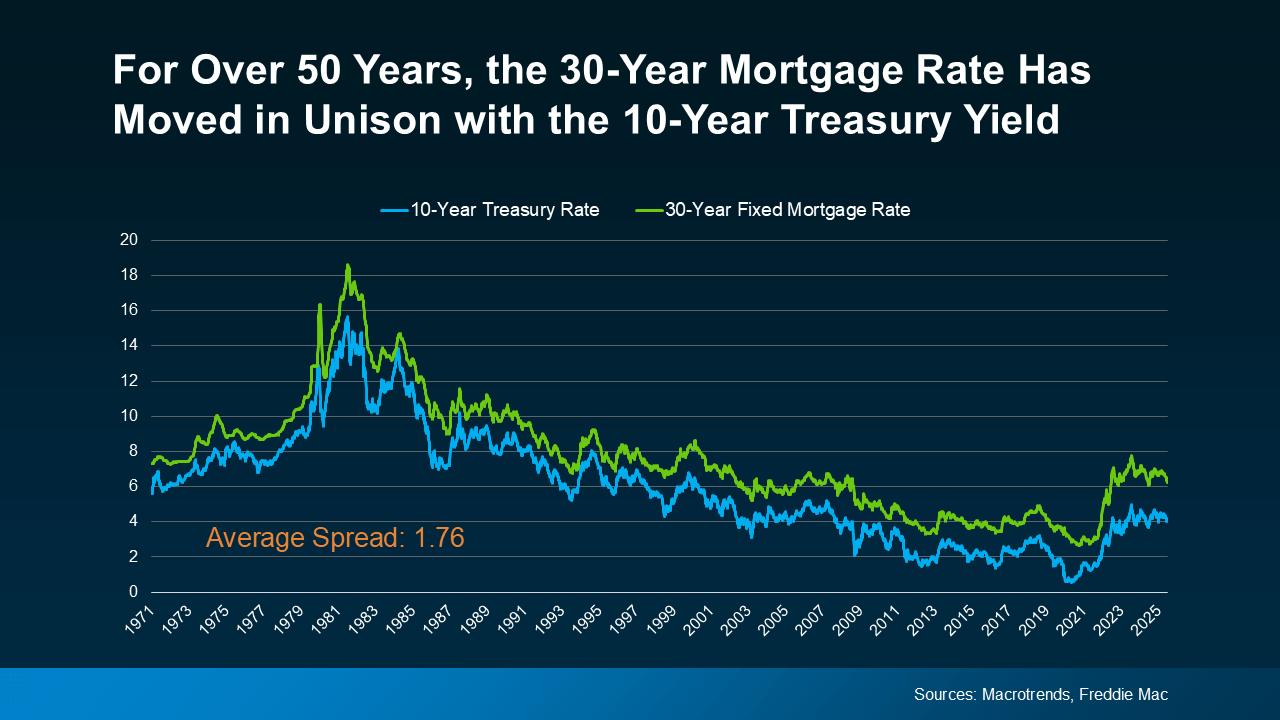 When the treasury yield climbs, mortgage rates tend to follow. And when the yield falls, mortgage rates typically come down.
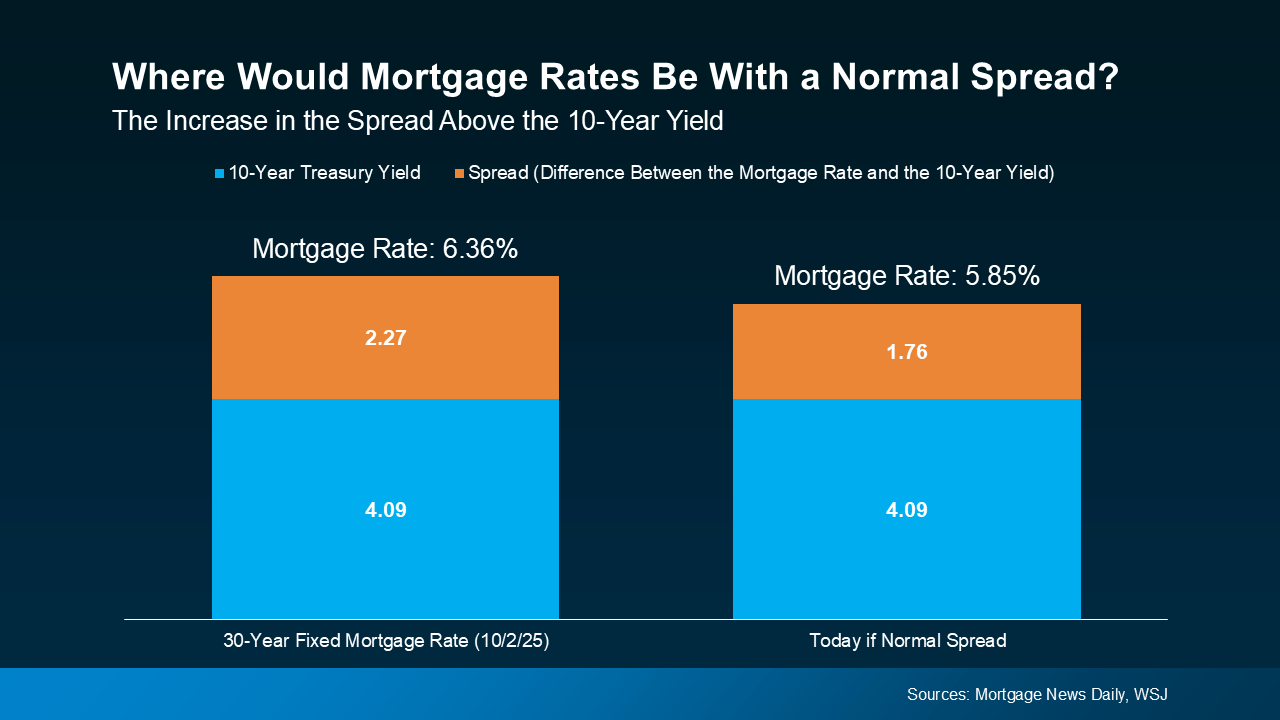
It’s been a predictable pattern for over 50 years. So predictable, that there’s a number experts consider normal for the gap between the two. It’s known as the spread, and it usually averages about 1.76 percentage points, or what you sometimes hear as 176 basis points.
The Spread Is Shrinking
Over the past couple of years, though, that spread has been much wider than normal. Why? Think of the spread as a measure of fear in the market. When there’s lingering uncertainty in the economy, the gap widens beyond its usual norm. That’s one of the reasons why mortgage rates have been unusually high over the past few years.
But here’s a sign for optimism. Even though there’s still some lingering uncertainty related to the economy, that spread is starting to shrink as the path forward is becoming clearer (see graph below):
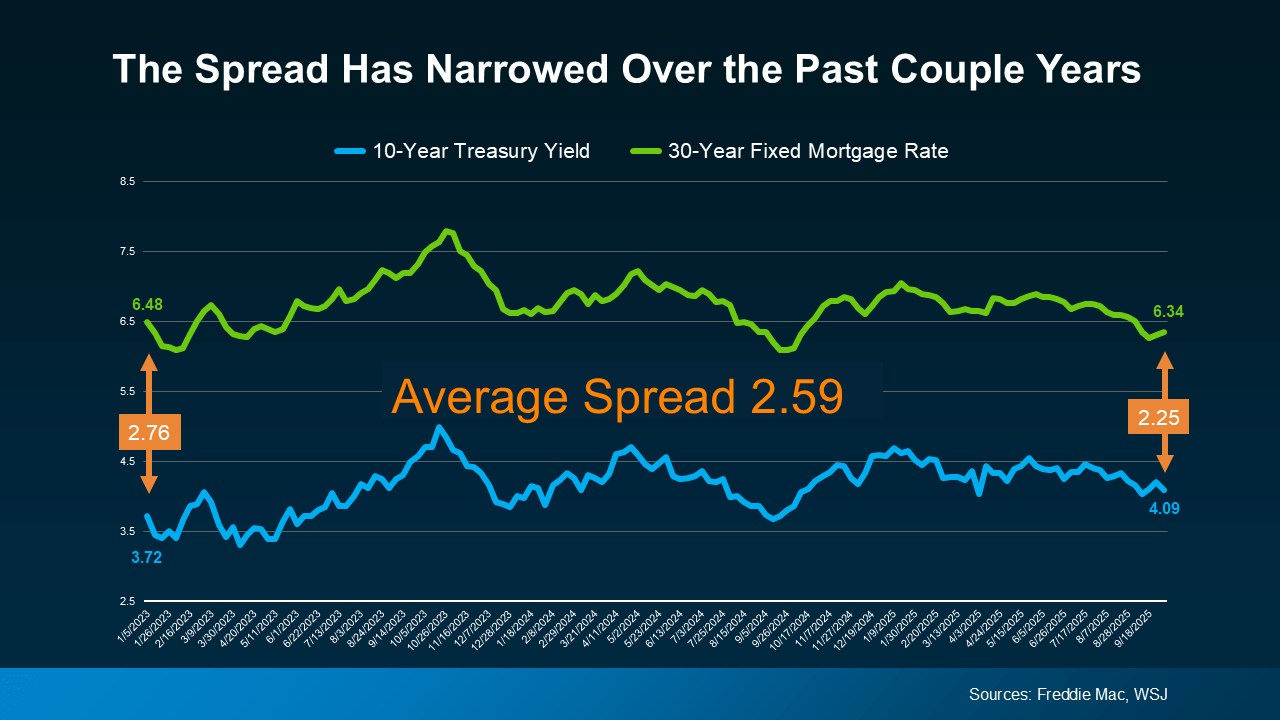 And that opens the door for mortgage rates to come down even more. As a recent article from Redfin explains:
“A lower mortgage spread equals lower mortgage rates. If the spread continues to decline, mortgage rates could fall more than they already have.”
The 10-Year Treasury Yield Is Expected To Decline
It’s not just the spread, though. The 10-year treasury yield itself is also forecast to come down in the months ahead. So, when you combine a lower yield with a narrowing spread, you have two key forces potentially pushing mortgage rates down going into next year.
This long-term relationship is a big reason why you see experts currently projecting mortgage rates will ease, with a fringe possibility they’ll hit the upper 5s toward the end of next year.
Here’s how it works. Take the 10-year treasury yield, which is sitting at about 4.09% at the time this article is being written, and then add the average spread of 1.76%. From there, you’d expect mortgage rates to be around 5.85% (see graph below):
 But remember, all of that can change as the economy shifts. And know for certain that there will be ups and downs along the way.
How these dynamics play out will depend on where the economy, the job market, inflation, and more go from here. But the 2026 outlook is currently expected to be a gradual mortgage rate decline. And as of now, things are starting to move in the right direction.
Bottom Line
Keeping up with all of these shifts can feel overwhelming. That’s why having an experienced agent or lender on your side matters. They’ll do the heavy lifting for you.
If you want real-time updates on mortgage rates, let’s connect so you have someone to keep you in the loop and help you plan your next move.
