
by Denise Olivares-Molina | Aug 3, 2026 | Advice for Sellers, For Sellers, Home Gain Statistics, Home Prices, Homeowner Information, Housing Market, Housing Market Insights, Housing Market Shifts, Housing Market Updates, Market Updates, Pricing, Real Estate Finances, Real Estate Goals, Real Estate Investing, Real Estate Market, Real Estate Market 2026, Real Estate Myths, Weekly
After more than a year of headlines talking about how home prices are going to crash, the latest data shows that price growth may be starting to pick back up again. And depending on whether you’re buying or selling, that shift means something different for you.
The Numbers May Be Starting To Turn
For the past couple of years, home price growth has been moderating – cooling from around 7% in mid-2024, according to Redfin (see graph below). But look at the right side of that graph. The pace of that growth appears to have hit its low point and started to turn.
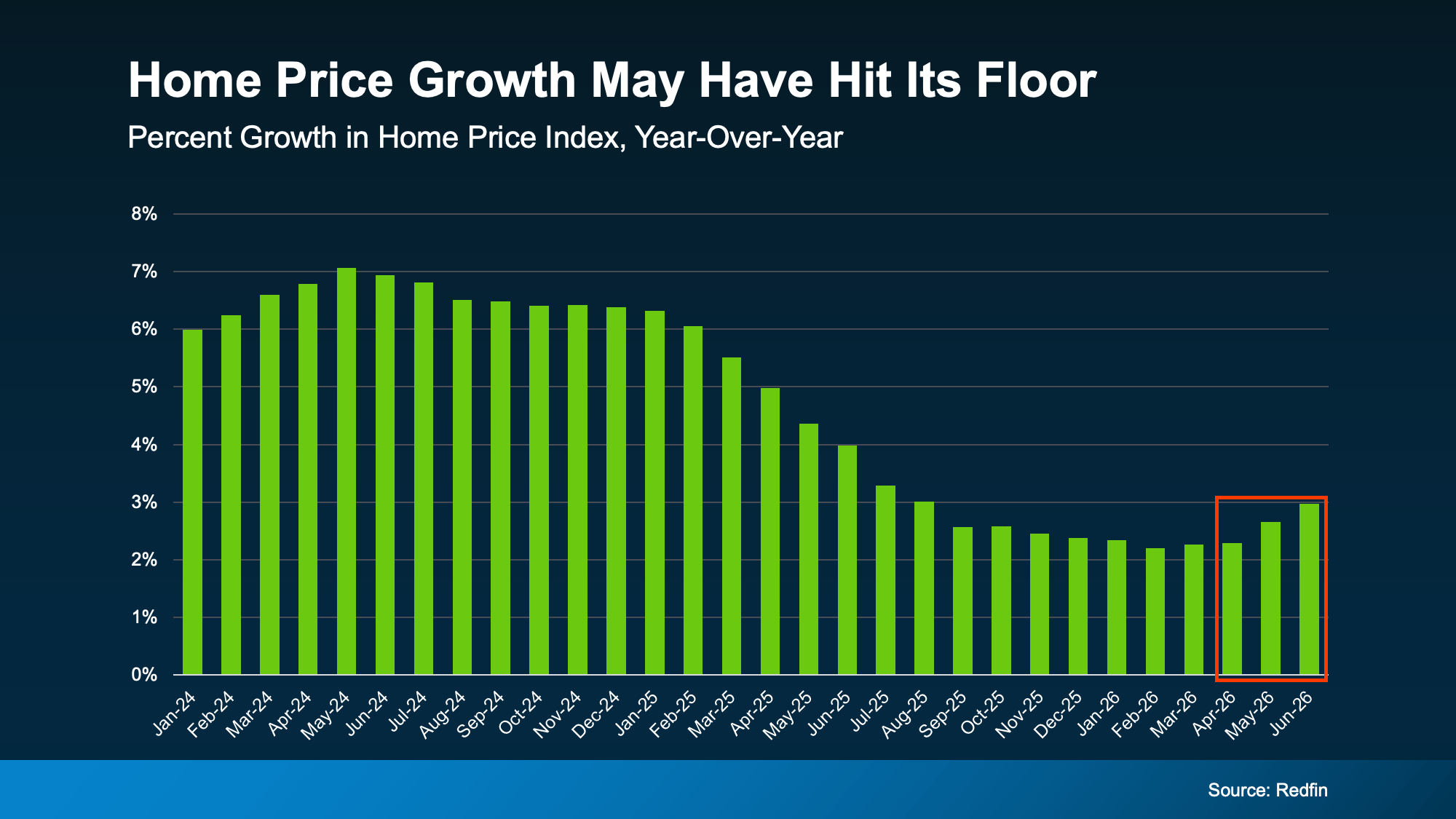
While a couple months of data doesn’t necessarily mean this will be a lasting trend, there are some other signs that this could continue.
For example, fewer markets are seeing prices decline. According to ResiClub and Zillow, about 36% of the 300 largest housing markets had falling prices as of the middle of last year. Since the start of this year, that share has been shrinking. Now? Only 23% are experiencing those mild dips (see graph below):
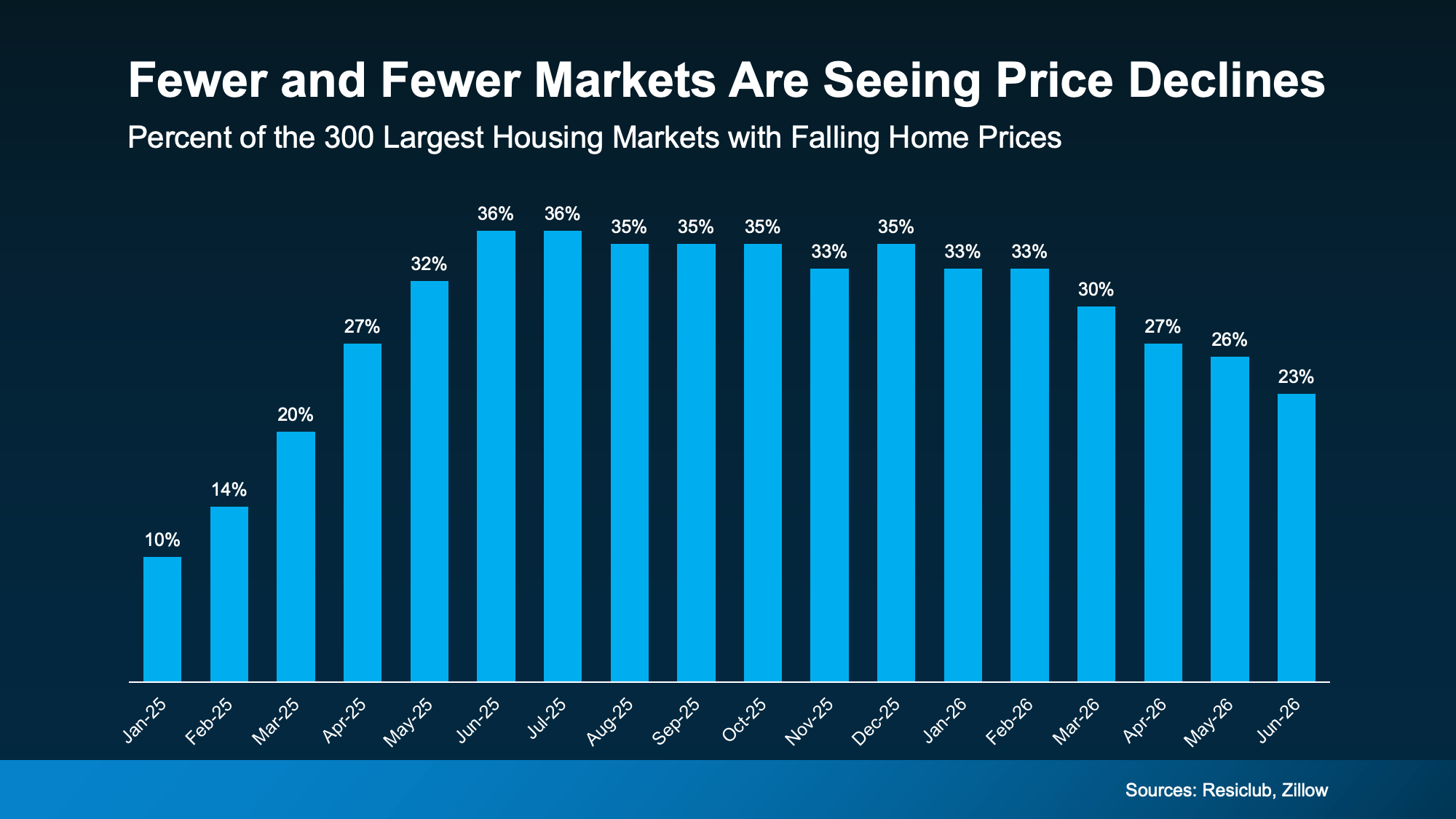
When fewer markets see prices falling, that means more markets are seeing prices rise again.
And forecasts suggest this shift has room to run. On average, experts project home prices will rise about 2.3% nationally this year. And for that to happen, price growth would have to pick up a bit in the second half of 2026.
But Remember, Real Estate Is Local
While it looks like national prices may be starting to pick back up a tiny bit, that doesn’t mean that’s what’s happening in your neighborhood.
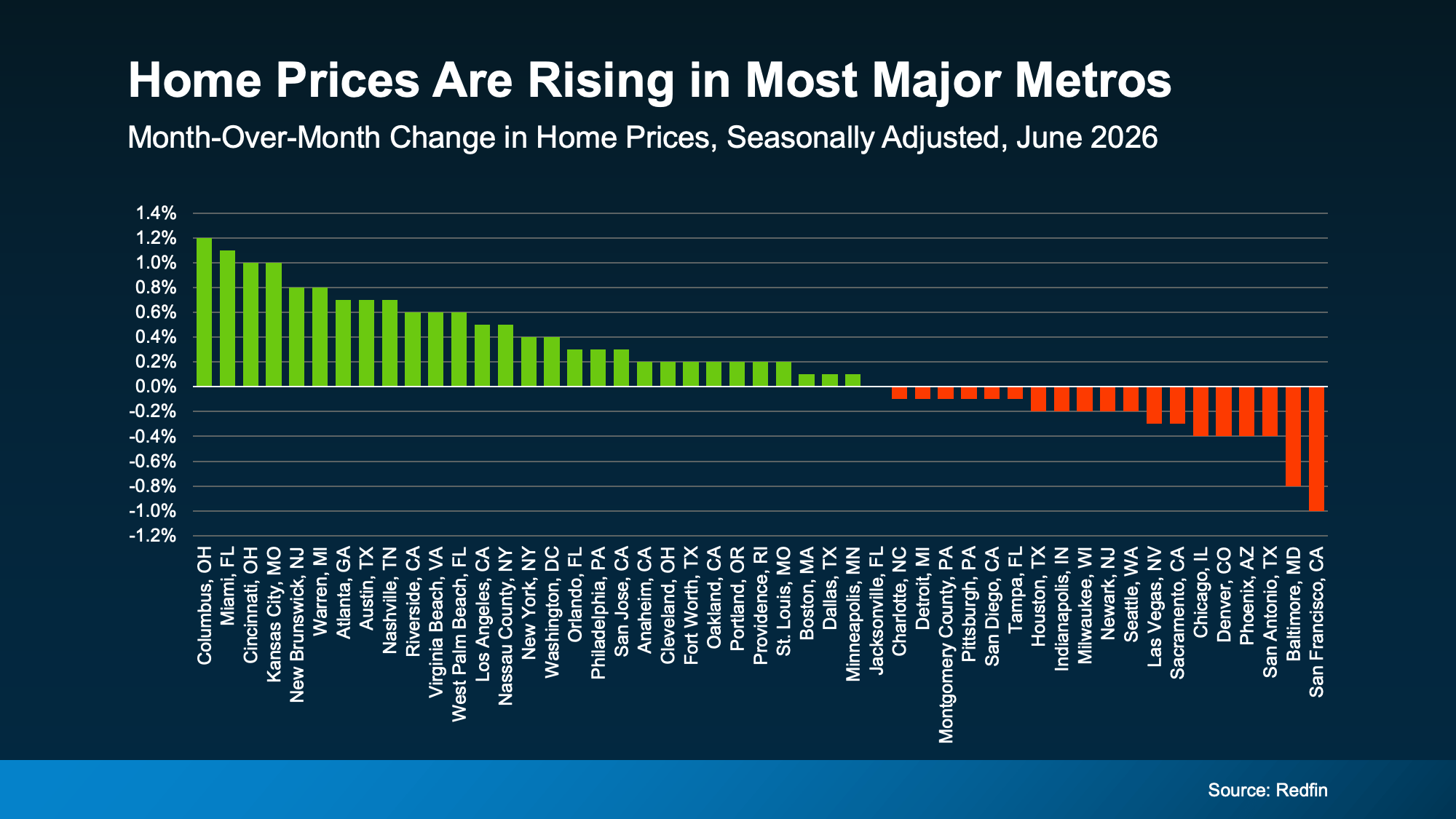
National home prices are really just an average of hundreds of local markets. Some are climbing faster. Others are still cooling. But one reason the national average may be looking up is because a growing number of metros may actually be net positive for prices this year.
Not long ago, the major metros were split about 50/50 – half seeing prices rise and half seeing them fall. Now, that balance looks like it’s starting to tip in a more positive direction. Just last month, more than half of the major metros saw prices go up, according to Redfin (see graph below):
As Selma Hepp, Chief Economist at Cotality, explains:
“. . . local markets continue to tell very different stories. Annual home price growth has changed little since the start of the year, but some markets, especially those supported by strong job and income growth in the West and more affordable Midwest markets, have seen notable acceleration in price gains.”
What This Means for You
Home price headlines can be confusing because they don’t always tell the full picture. Lean on an agent to understand what’s happening in your local market and what the early signs say for where prices may go from here.
That’s the best way to stay one step ahead of the market.
If you’re buying: slower price growth has worked in your favor. You’ve had more room to negotiate and a budget you could plan around. If price growth is picking up in your area, buying now may mean paying less than you would later this year.
If you own a home: you’ve been gaining equity all along, even while growth moderated. If growth keeps picking up, those gains could speed up, too. Lawrence Yun, Chief Economist at the National Association of Realtors (NAR), projects the typical homeowner will gain roughly $16,000 in housing wealth this year. And if you’re thinking about selling, this shift is a good early sign for you. Just remember, the market is still pretty balanced and buyer-friendly in a lot of areas right now.
Home price growth slowed way down, and now it’s showing early signs of picking back up. Whether you’re buying or selling, let’s connect so you can see exactly what prices are doing in our local market and what that means for your plans.
Bottom Line
Home price growth slowed way down, and now it’s showing early signs of picking back up. Whether you’re buying or selling, let’s connect so you can see exactly what prices are doing in our local market and what that means for your plans.
Thank You For Reading
Denise Olivares-Molina

by Denise Olivares-Molina | Jun 15, 2026 | Advice for Sellers, Cost-Saving Tips, Costs, For Sellers, Pricing, Pricing Strategy, Real Estate Finances, Seller, Sellers, Selling A Home, Selling Myths, Selling Tips, Tips for Sellers, Weekly
A few years ago, sellers could get away with saying “no” to just about everything.
No repairs.
No concessions.
No negotiation.
If buyers wanted the house, they pretty much had to take it on the seller’s terms. But now that inventory’s grown, negotiations are becoming a normal part of the process again.
That’s why one of the most important things sellers need to understand right now is this:
The goal isn’t to “win” every negotiation.
Sometimes, it’s worth meeting buyers where they are to get a deal done, fast. One example? Helping with a buyer’s closing costs.
Let’s break that down, so you know what to expect if it comes up in your sale.
What Are Buyer Closing Costs?
Closing costs are the extra expenses buyers pay on top of their down payment when they purchase a home. Freddie Mac gives some examples:
Typically, buyer closing costs range from about 2% to 5% of the home’s purchase price. So, on the typical $400,000 home, that could mean anywhere from $8,000 to $20,000 out of pocket.
And in today’s affordability-challenged market, that upfront cash can be a major hurdle for some buyers – even if they can comfortably afford the monthly mortgage payment itself.
That’s why more people are asking sellers for help.
And More Sellers Are Saying “Yes”
According to the latest data from Zillow, 67% of sellers reported paying some or all of the buyer’s closing costs in 2025 (see chart below):
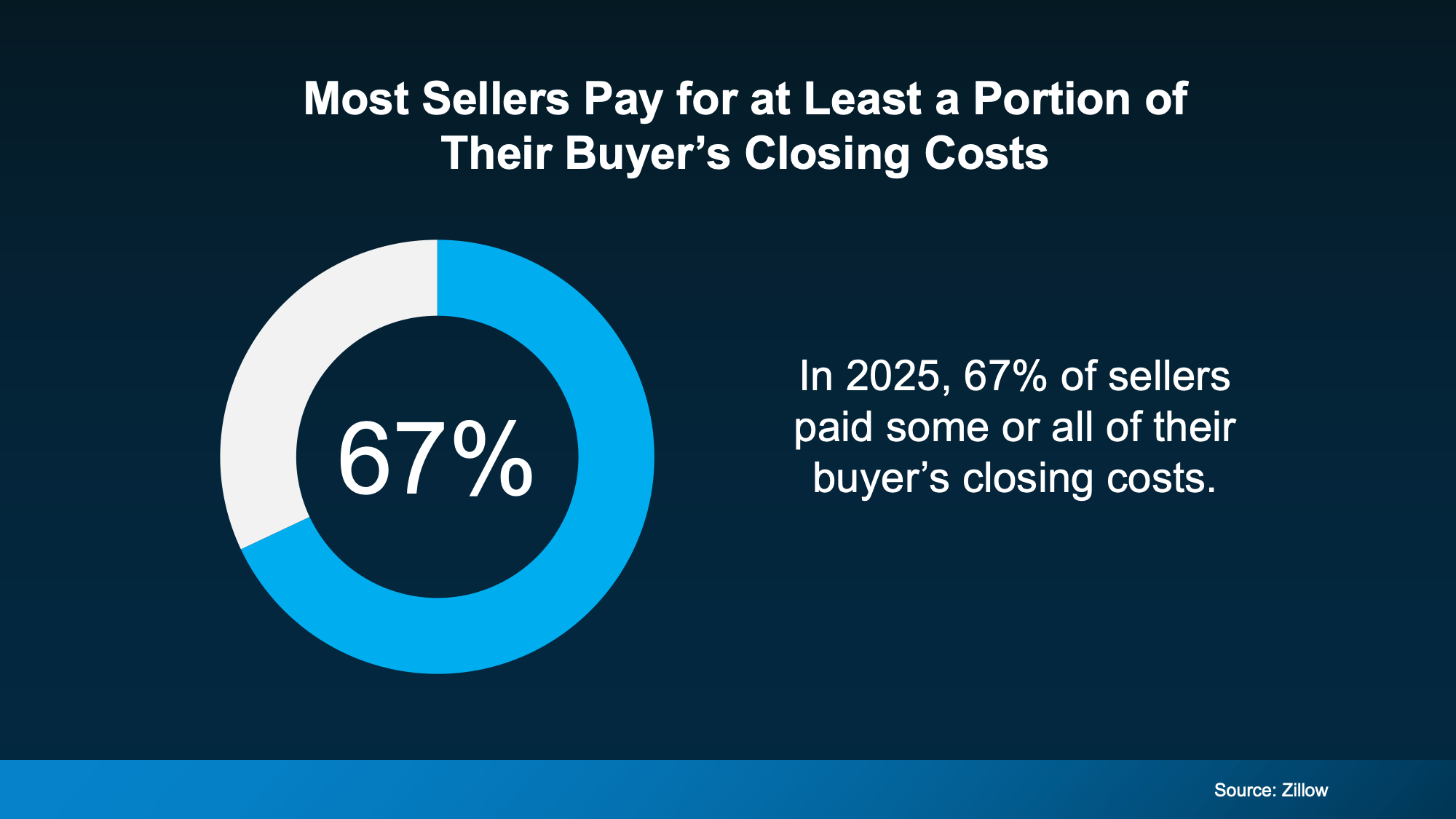
Now, that doesn’t mean every seller is doing it. And it definitely doesn’t mean every seller should. But it does show how common concessions have become as the market has shifted. And that’s important for you to know.
When Paying Closing Costs May Make Sense
This is where many sellers get stuck. They hear “help with closing costs” and immediately think: “Why should I pay for their expenses?”
But that’s not always the right way to look at it. You’ve got to consider who has the leverage in today’s market.
Redfin data shows there are more sellers than buyers active today. And that shifts the market dynamics (see graph below):
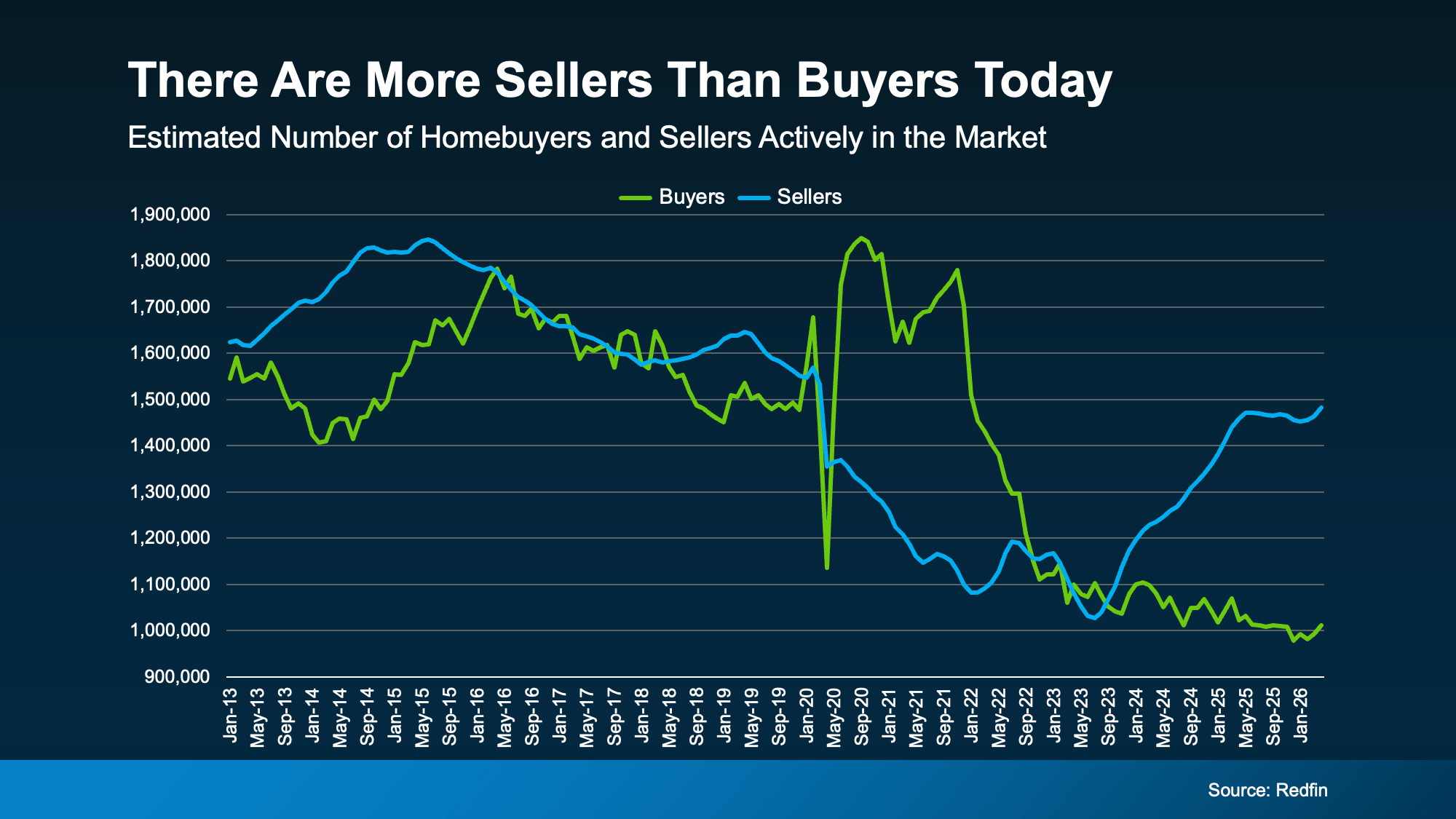
That doesn’t mean every market favors buyers. Far from it. In some areas, homes are still selling quickly and sellers have plenty of leverage. But in others, buyers have more room to negotiate than they’ve had in years.
That’s why local market conditions matter so much when you make your decision.
For example, helping with closing costs may be worth considering if:
-
There are a lot of homes for sale in your area
-
Your house has been sitting on the market longer than expected
-
You’ve had showings, but no offers
-
You’re motivated to move quickly
-
Or you’re trying to keep a deal together during negotiations
After all, if it’s the thing that helps bring a serious buyer across the finish line, it could be well worth it.
Other Concessions You Could Offer Instead
Just remember, being flexible doesn’t mean saying “yes” to every request. It means understanding which compromises actually help you accomplish your goals. Because there are always alternatives.
Redfin suggests considering other concessions if you’re not interested in helping with closing costs, like:
The right answer depends on what buyers in your market are asking for and what matters most to you. That’s exactly why working with an experienced local agent is so important.
Bottom Line
The sellers having the most success today are the ones who understand the market has changed and are adapting to meet it where it is.
Sometimes that means negotiating on closing costs. Sometimes it means offering something else. The key is knowing which concessions are worth it for our local market.
If you’re wondering what’s normal in our area, what’s worth negotiating, and where it makes sense to stand firm, let’s connect.
Thank You For Reading
Denise Olivares-Molina

by Denise Olivares-Molina | May 18, 2026 | Advice for Buyers, Buyers, Buying A Home, Buying Myths, First-Time Buyers, For Buyers, FSBOs, Home Prices, Home value, Housing Market, Pricing, Real Estate Finances, Real Estate Goals, Real Estate Investing, Real Estate Market, Weekly
Es uno de los mayores frenos que tienen algunos compradores en este momento: “¿Qué pasa si compro y los precios de las casas bajan?”.
Con todo lo que sale en las noticias, esa preocupación tiene cierto sentido. Nadie quiere tomar una decisión financiera importante en el momento equivocado. Pero esto es lo que es importante saber: no hay que quedarse estancado en los pocos lugares que están experimentando ligeras caídas en este momento. Cuando te alejas y miras el panorama completo, los precios de la vivienda suelen subir con el tiempo.
Lo que realmente muestran los datos
Echa un vistazo a la siguiente gráfica. Utiliza datos de Case-Shiller y Bilello para mostrar cómo han cambiado los precios de la vivienda año tras año, desde la década de 1950.
Aquí está la conclusión clave:
A excepción del colapso inmobiliario, los precios de la vivienda se han mantenido estables o han aumentado en casi todos los años durante décadas.
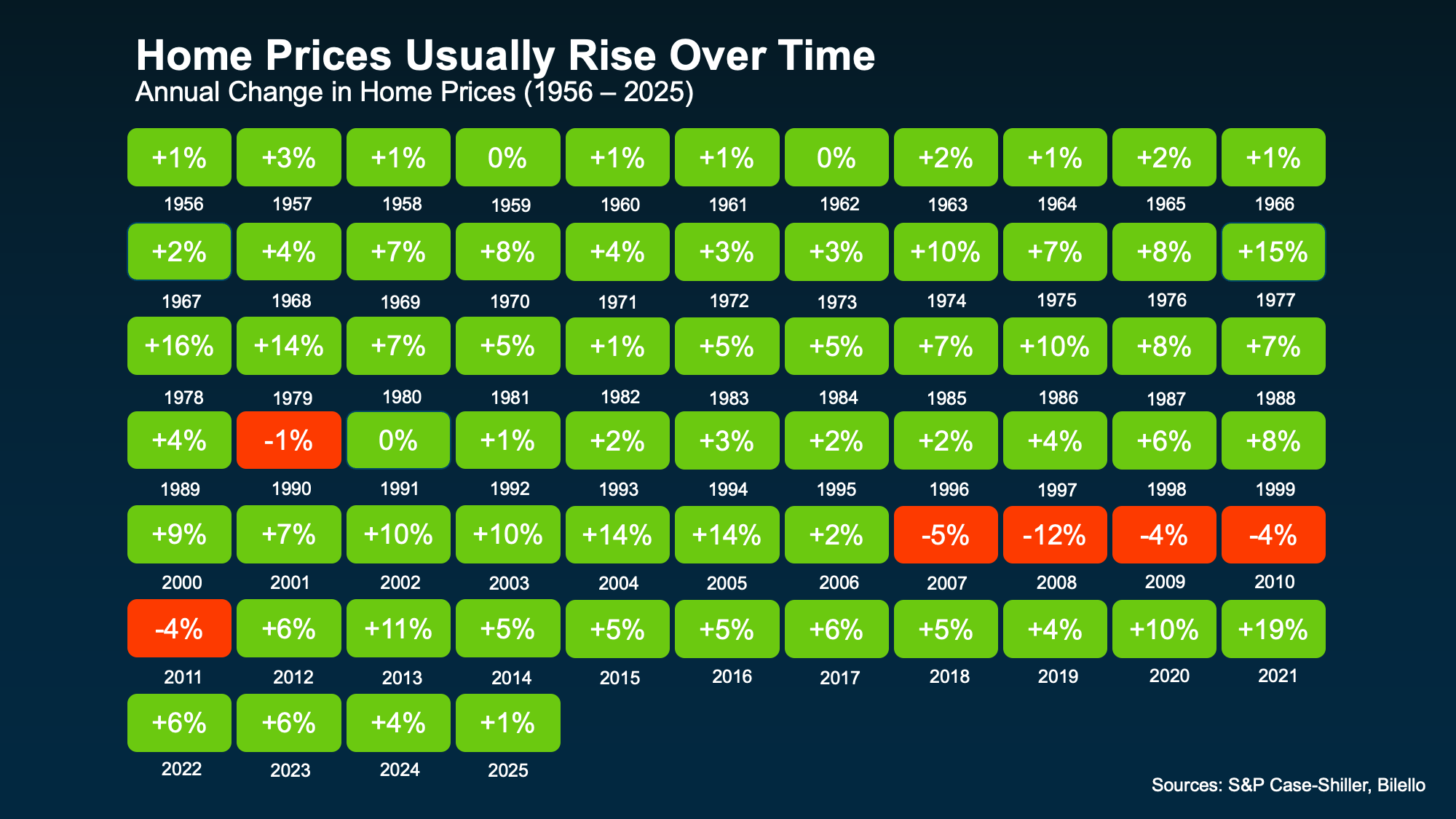
Esa es una trayectoria notablemente constante, y muestra algo que muchos titulares pasan por alto: aunque pueden ocurrir cambios a corto plazo, lo que realmente importa son las ganancias a largo plazo.
Por qué los precios tienden a subir con el tiempo
Hay algunas razones fundamentales por las que los precios suelen subir cada año:
-
Siempre hay personas que necesitan mudarse: La gente necesita un lugar donde vivir, y esa demanda nunca va a desaparecer por completo. Puede fluctuar, pero alguien siempre tendrá que mudarse a medida que ocurran grandes cambios en su vida. Por lo tanto, las viviendas siguen teniendo demanda.
-
Todavía no hay suficientes casas a la venta: Aunque el número de viviendas disponibles ha aumentado, a nivel nacional sigue habiendo una escasez de oferta en comparación con la cantidad de personas que quieren una casa. Esto mantiene una presión al alza sobre los precios.
-
La inflación influye: Con el tiempo, el costo de los bienes (incluidas las viviendas) aumenta de forma natural. Eso empuja el valor de las propiedades hacia arriba.
Qué significa esto para ti como comprador
Es fácil dejarse llevar por lo que podría pasar con los precios de la vivienda el próximo mes o el próximo año, especialmente si eres un comprador primerizo y te sientes un poco ansioso por asumir un compromiso financiero tan grande. Pero el panorama general es claro: los precios suelen subir.
Eso no significa que vayan a subir absolutamente todos los años en todos los mercados. El sector inmobiliario es local y puede haber altibajos a corto plazo; lo estamos viendo en algunos lugares ahora mismo. Incluso se puede notar en las pocas caídas anuales de la gráfica anterior.
Sin embargo, históricamente, las caídas han sido temporales.
Por eso, generalmente se recomienda comprar una casa solo si planeas quedarte en ella por un tiempo, normalmente al menos cinco años. Ese suele ser tiempo suficiente para ver cómo tu casa aumenta de valor y para poder superar cualquier cambio a corto plazo en el mercado.
Porque cuando logras hacer eso, ocurre algo poderoso: el aumento del valor de la vivienda incrementa tu patrimonio neto y, por extensión, te ayuda a generar riqueza.
La decisión correcta no se trata de adivinar el momento perfecto del mercado. Se trata de dar un paso que funcione para tu vida y mantenerte en él el tiempo suficiente para beneficiarte de la tendencia general.
En conclusión
Los precios de la vivienda tienen un largo historial de subidas a lo largo del tiempo. Y es por eso que comprar una casa se considera, por lo general, una inversión segura a largo plazo.
Por supuesto, esto no significa que tengas que comprar ahora mismo. Solo deberías mudarte cuando tenga sentido para ti y planees vivir allí durante un tiempo.
Pero si estás interesado, que esto te sirva de tranquilidad. Si quieres que hablemos sobre cómo se están comportando los precios en nuestro mercado local, tus objetivos o tus plazos, tengamos una breve conversación.
Gracias Por Leer
Denise Olivares-Molina

by Denise Olivares-Molina | May 18, 2026 | Advice for Buyers, Advice for Buyers and Sellers, Advice for Sellers, Affordability, Buyers, Buying A Home, Buying Tips, First-Time Buyers, For Buyers, FSBOs, Home value, Homeowner Information, Housing Market, Housing Market Shifts, Housing Market Updates, Investment, Investment Strategy, Pricing, Real Estate Finances, Real Estate Goals, Real Estate Investing, Real Estate Market, Weekly
It’s one of the biggest hold ups some buyers have right now: “What if I buy, and home prices go down?”
With everything in the news, that concern makes some sense. No one wants to make a big financial decision at the wrong time. But here’s what’s important to know. You don’t want to get hung up on the few places seeing slight declines right now.
When you zoom out and look at the full picture, home prices usually rise over time.
What the Data Really Shows
Take a look at the visual below. It uses data from Case-Shiller and Bilello to show how home prices have changed year by year going all the way back to the 1950s.
Here’s the key takeaway.
Outside of the housing crash, home prices have either held steady or increased in just about every year for decades (see visual below):
That’s a remarkably consistent track record. And it shows something a lot of headlines miss.
While short-term shifts can happen, it’s the long-term gains that really matter.
Why Prices Tend To Rise Over Time
There are a few core reasons prices usually go up each year:
- There are always people who need to move. People need a place to live, and that demand will never fully go away. It may ebb and flow, but someone will always have to move as big changes happen in their life. So, homes stay in demand.
- There still aren’t enough homes for sale. While the number of homes for sale has grown, nationally there’s still an undersupply based on how many people want a home. That keeps upward pressure on prices.
- Inflation has an impact. Over time, the cost of goods (including homes) naturally increases. That pushes home values higher.
What That Means for You as a Buyer
It’s easy to get caught up in what might happen with home prices next month or next year, especially if you’re a first-time buyer and you’re feeling a little anxious about making such a big financial commitment. But the big picture is clear. Prices usually rise.
That doesn’t mean prices will go up every single year in every market. Real estate is local, and there can be short-term ups and downs. We’re seeing that in some places right now. You can even see it in the few annual dips in the visual above.
But historically, the declines have been temporary.
That’s why it’s generally recommended to buy a home only if you plan to stay for a while – typically at least five years. That’s normally enough time to see your house grow in value. And, it’s enough so you can ride out any short-term changes in the market.
Because when you can do that, something powerful happens. Those rising home values grow your net worth, and by extension, help you build wealth.
The right decision isn’t about timing the market perfectly. It’s about making a move that works for your life and staying in it long enough to benefit from the bigger trend.
Bottom Line
Home prices have a long track record of going up over time. And that’s why buying a home is generally considered a safe long-term investment.
That certainly doesn’t mean you have to buy now. You should only move when it makes sense, and you plan to live there for a while.
But if you’re interested, let this reassure you. If you want to talk through what home prices are doing in our market, your goals, or your timelines, let’s have a quick conversation.
Thank You For Reading
Denise Olivares-Molina

by Denise Olivares-Molina | Apr 27, 2026 | Advice for Sellers, Economy, For Sellers, Home Prices, Home Selling Strategy, Home value, Homeowner Information, Housing Market, Housing Market Shifts, Housing Market Updates, Market Trends, Pricing, Real Estate Market, Real Estate Tips, Real Estate Trends in 2026, Seller, Sellers, Selling A Home, Selling Myths, Selling Tips, Tips for Sellers, Weekly
Hay mucha incertidumbre en este momento, lo que está generando algunos titulares dramáticos. Y si estás pensando en comprar una casa, eso puede hacerte sentir un poco menos seguro sobre tu decisión.
Un estudio reciente de CNBC preguntó a los compradores de vivienda qué es lo que más les preocupa, y tres temas surgieron una y otra vez:
Pero mucho de lo que podrías estar escuchando sobre estos temas se basa más en conceptos erróneos y no en hechos. Así que vamos a desglosarlo y a separar la realidad de la ficción.
Concepto erróneo #1: “Simplemente esperaré, porque las tasas hipotecarias van a caer drásticamente”
Una idea que circula en las redes sociales es que las tasas hipotecarias van a caer drásticamente pronto. Por lo tanto, es mejor esperar para comprar.
¿Pero es eso realmente lo que se espera?
Si bien las tasas hipotecarias han bajado un poco en las últimas semanas, los pronósticos no muestran una gran caída en el futuro cercano. El escenario más probable es que las tasas se mantengan en el rango bajo del 6% este año.
Y ese no es un gran cambio con respecto a donde están las tasas ahora (ver gráfico a continuación).
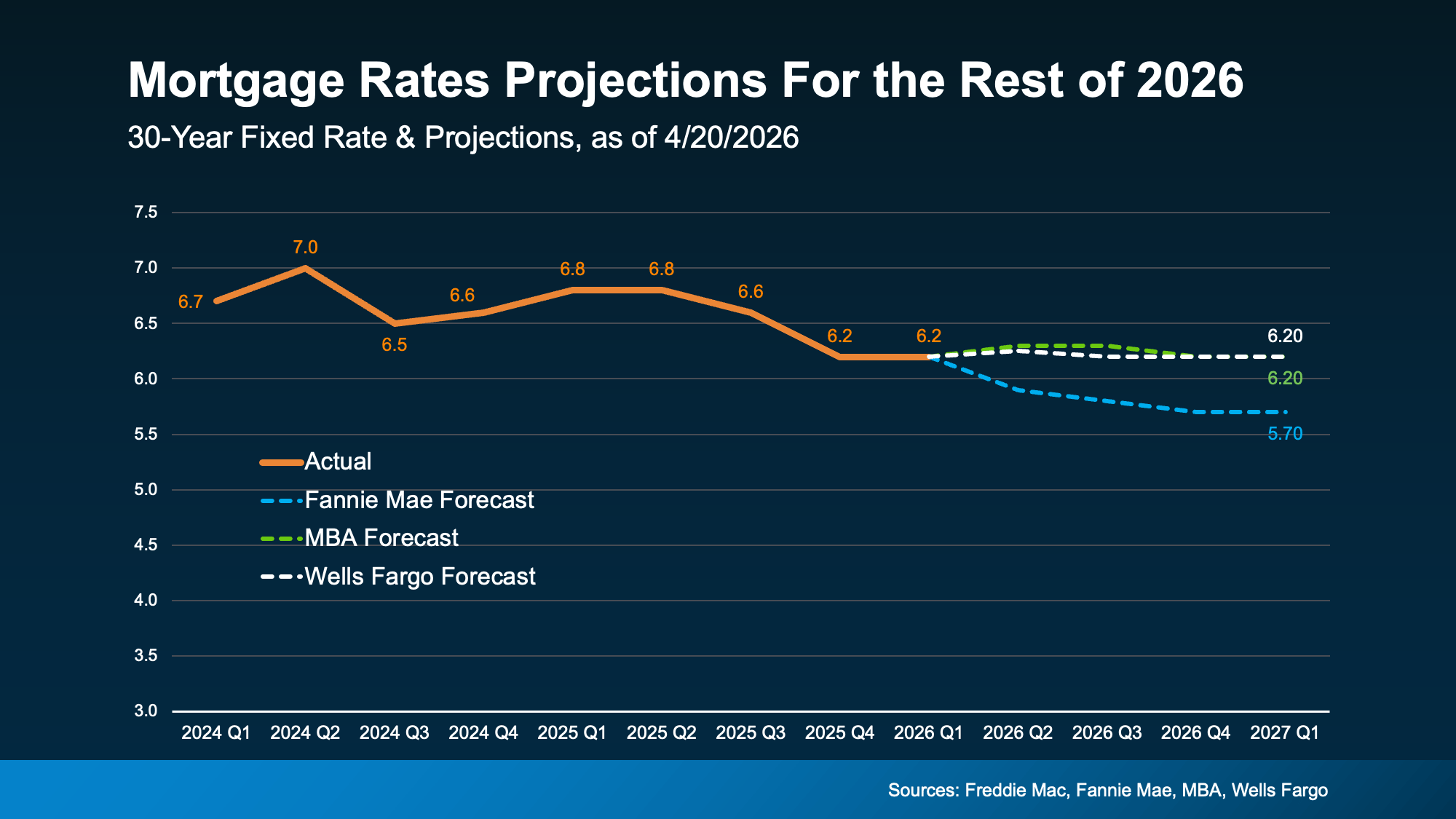
Por supuesto, esto depende del rumbo que tomen la inflación y la economía a partir de ahora. Pero, según lo que sabemos hoy, esperar una gran caída en las tasas podría no resultar como algunos esperan. Como explica U.S. News:
“No se espera que las tasas hipotecarias cambien mucho durante los próximos trimestres…”
Sin mencionar que, incluso con las tasas donde están hoy, la situación ya es más asequible que hace un año. Así que, aunque no cambien mucho, sigue siendo mejor de lo que era.
Concepto erróneo #2: “Hay demasiadas casas en venta en este momento”
Probablemente hayas escuchado que el inventario ha aumentado. Y a nivel nacional, es cierto. El número de casas en venta es un 8% mayor que en esta misma época el año pasado. Pero eso no es algo malo. De hecho, es una de las razones por las que los compradores tienen un poco más de respiro en este momento.
El problema es que los titulares están haciendo que algo bueno suene mal. Se centran en cómo este es el mayor inventario que hemos tenido desde 2019 o en la cantidad de casas que están construyendo los desarrolladores. Y eso puede hacer que parezca que la cantidad de casas en venta está aumentando demasiado y demasiado rápido.
Pero eso no es lo que muestra el panorama general.
Los datos de Realtor.com demuestran que, aunque el inventario ha subido en comparación con el año pasado, sigue siendo casi un 14% más bajo de lo que era durante el último mercado inmobiliario normal (2017-2019).
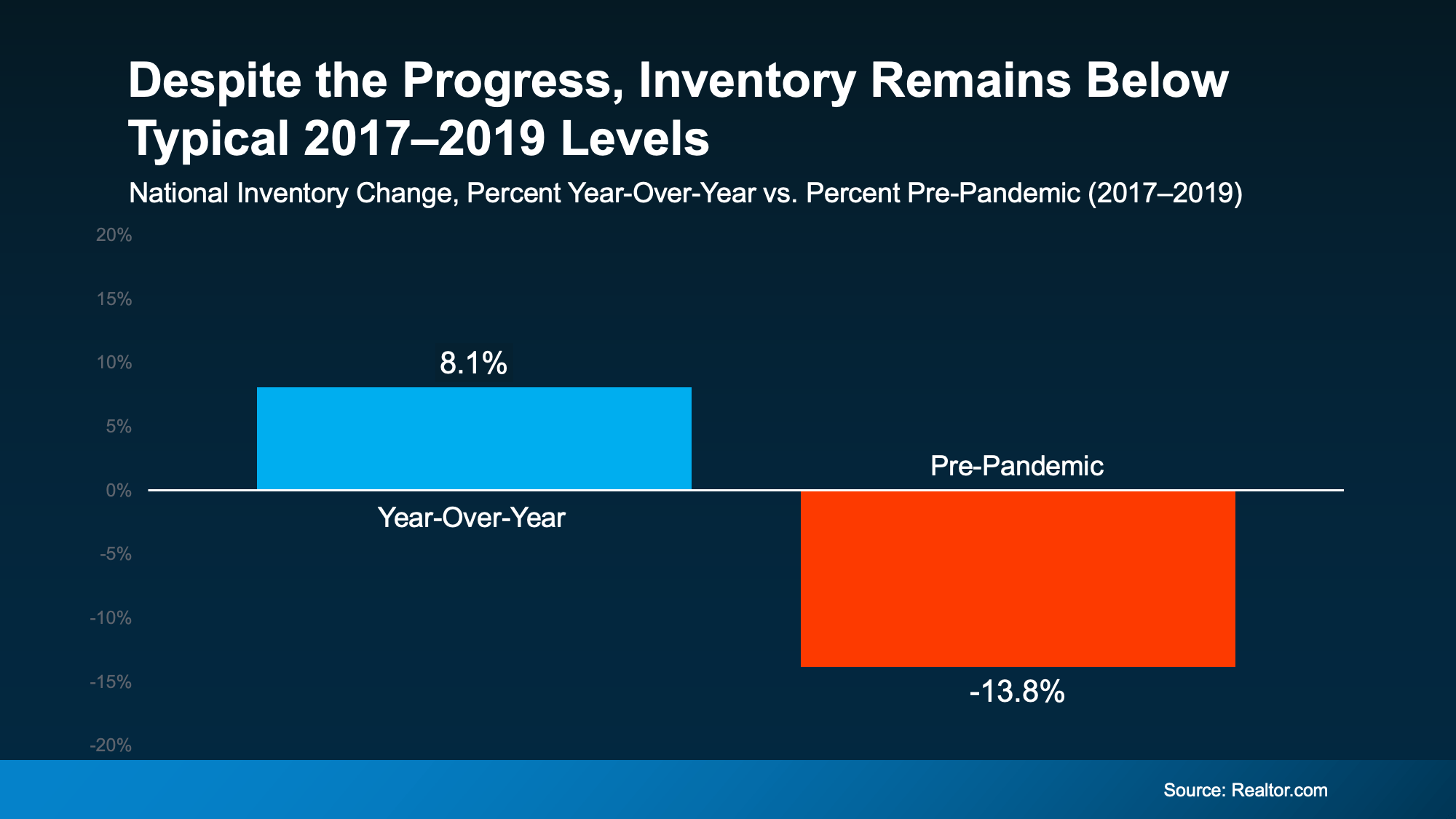
Si bien puede variar mucho dependiendo de dónde vivas, hoy solo 9 estados tienen más inventario que antes de la pandemia. Esa es una razón clave por la que todavía no hay suficientes casas en venta para desencadenar algo parecido al colapso del 2008.
Concepto erróneo #3: “Los precios de las viviendas están a punto de colapsar”
Probablemente también hayas visto este. La confusión proviene del hecho de que algunas áreas metropolitanas están experimentando ligeras caídas de precios. Algunos influencers se están dejando llevar por eso y afirman que los precios se están desplomando. Pero esa no es la realidad.
La mayoría de las áreas están viendo subir los precios, no bajar. Y esto se debe a que:
-
Muchos propietarios no están vendiendo porque no quieren renunciar a la baja tasa hipotecaria que aseguraron hace unos años. Y eso está limitando cuánto puede crecer el inventario.
-
Dado que el inventario sigue estando por debajo de las normas previas a la pandemia, no hay suficientes casas en venta para causar un colapso en los precios.
-
E incluso en mercados con más inventario, algunos vendedores están optando por retirar sus casas del mercado en lugar de reducir los precios.
Y esas son 3 grandes razones por las que los precios no se dirigen hacia un colapso.
Incluso en los mercados que experimentan caídas leves, estas bajas no son suficientes para anular las grandes ganancias que la mayoría de los propietarios han acumulado en los últimos 5 años (ver gráfico a continuación).
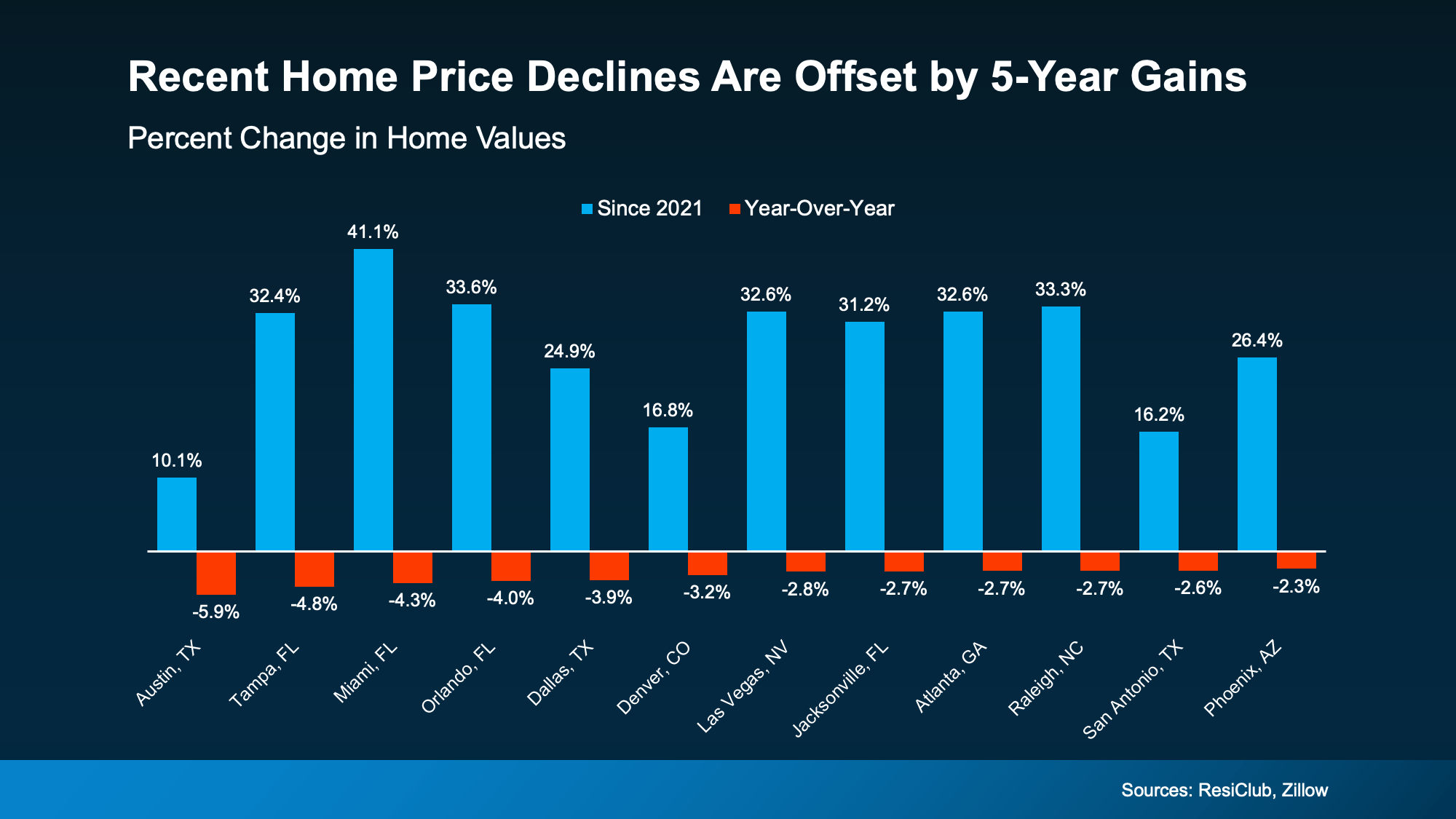
Eso no es un colapso. Es simplemente una moderación de los precios después de unos años récord.
En conclusión
Las publicaciones en línea van a hacer que las cosas suenen peor de lo que son. Si deseas una visión real y basada en datos de lo que verdaderamente está sucediendo en el mercado actual, apóyate en un agente de bienes raíces.
Conectémonos para que hoy tengas a alguien que te ayude a separar la realidad de la ficción.
Gracias por leer
Denise Olivares-Molina

by Denise Olivares-Molina | Mar 30, 2026 | 2026 Housing Market, 2026 Mortgage Rate, Advice for Buyers, Affordability, Costs, Current Trends, First Time Home Buyers, First-Time Buyers, For Buyers, Home Equity Loans, Home Prices, Home value, Housing Market Shifts, Housing Market Updates, Infographic, Interest Rates, Pricing, Real Estate Finances, Real Estate Market, Real Estate Tips, Real Estate Trends in 2026, Weekly
Mortgage rates have been volatile lately. And if you’re thinking about buying a home, that can make it harder to plan. But there are still things you can do to get the best rate possible in today’s market. It starts with having the right information.
So, what’s causing the bumps in rates? And what can you do about it? Let’s break it down.
Mortgage Rate Volatility Is Normal
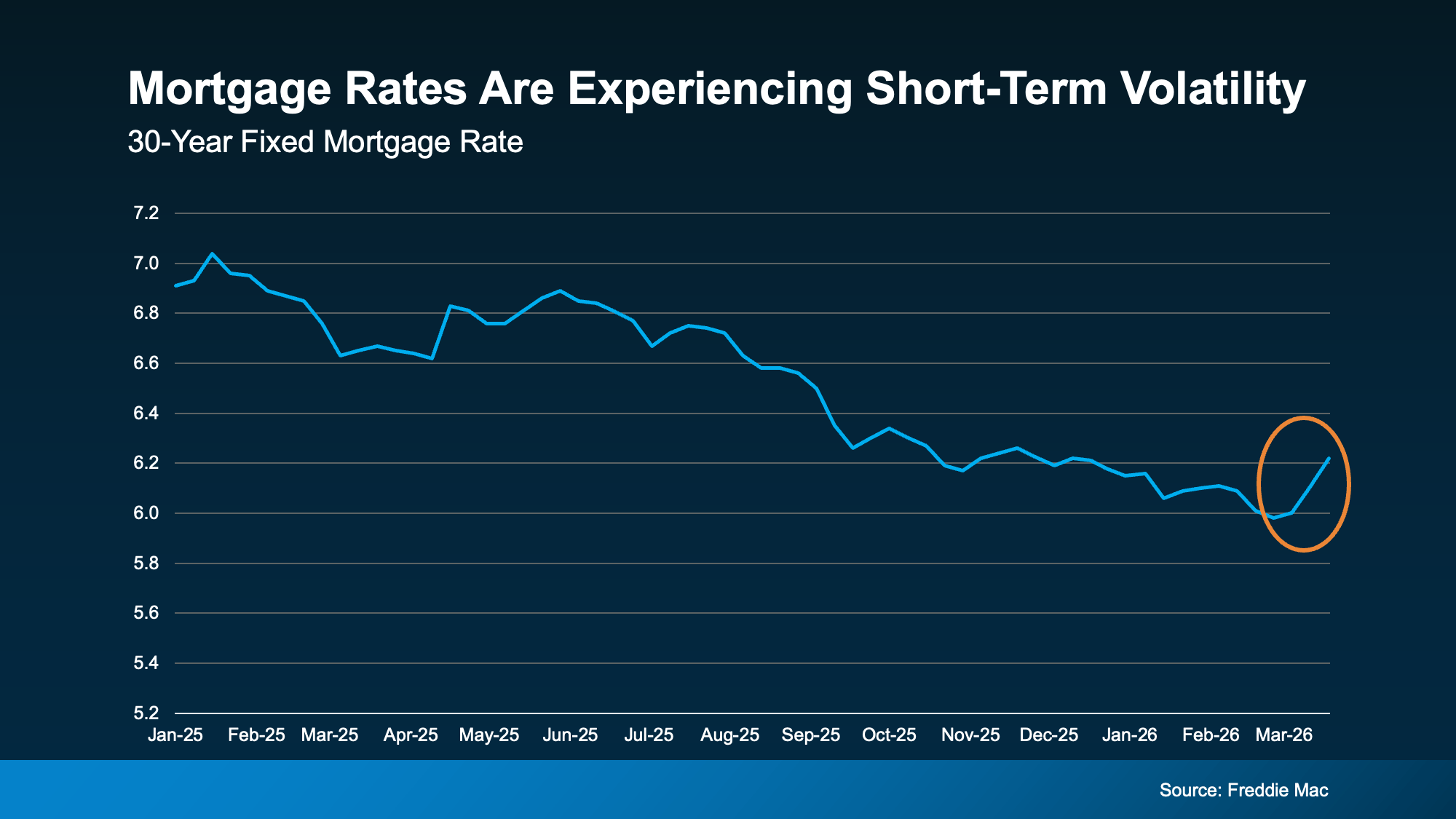
Data from Freddie Mac shows the recent volatility. After trending down for well over a year, there was a rise this month (see graph below):
While it’s easy to be distracted by the changes, here’s what you need to remember.
It’s normal for rates to bounce around a bit here and there. For example, if you look back at the graph, you’ll see that even within the past year there have been times like this when rates inched up. We’re in one of those moments right now and you need to be aware of that.
Especially when there’s economic uncertainty or big global events happening, volatility like this is expected. As Investopedia explains:
“Mortgage rates don’t move in isolation. When global events inject uncertainty into financial markets . . . that can ripple through to borrowing . . . mortgage costs can respond quickly to geopolitical developments. As long as uncertainty remains elevated, rate swings may continue.”
And that’s one of the reasons why trying to time the market isn’t a wise move.
You can’t control what happens with mortgage rates. But there are still things you can do to help you get the best rate possible in today’s market. And here’s where to focus your effort.
Your Credit Score
Your credit score plays a big role in the rate you qualify for. Even a small improvement can make a noticeable difference in your monthly payment. As Bankrate puts it:
“Your credit score is one of the most important factors lenders consider when you apply for a mortgage. Not just to qualify for the loan itself, but for the conditions: Typically, the higher your score, the lower the interest rates and better terms you’ll qualify for.”
So, make sure you do what you can to keep your credit score up. If you’re not sure what your score is or how you can improve it, talk to a trusted loan officer.
Your Loan Type
There are also different types of home loans – and each one can have unique requirements, benefits, and rates for qualified buyers. The Consumer Financial Protection Bureau (CFPB) explains:
“There are several broad categories of mortgage loans, such as conventional, FHA, USDA, and VA loans. Lenders decide which products to offer, and loan types have different eligibility requirements. Rates can be significantly different depending on what loan type you choose.”
That’s why it’s so important to explore your options with a lender. You may even want to talk to multiple lenders to see how the options vary.
Your Loan Term
The length of your loan matters too. Most lenders typically offer 15, 20, or 30-year loans. Freddie Mac offers this advice:
“When choosing the right home loan for you, it’s important to consider the loan term, which is the length of time it will take you to repay your loan before you fully own your home. Your loan term will affect your interest rate, monthly payment, and the total amount of interest you will pay over the life of the loan.”
Again, to figure out what makes the most sense for your budget and long-term goals, have a lender walk you through all your options.
Bottom Line
Thinking about buying right now? The best advice is to accept that you can’t control where rates are going to go from here.
What you can do is work with a trusted lender and take steps that’ll help you get the best rate possible.
So, if you want to move today, let’s make it happen. We just need to control the controllables and focus where it counts.
Thank you for reading
Denise Olivares-Molina
