
by Denise Olivares-Molina | Sep 1, 2026 | 2026 Housing Market, 2026 Mortgage Rate, Advice for Sellers, Affordability, For Sellers, Forecasts, Homeowner Information, Housing Market, Housing Market Insights, Housing Market Shifts, Housing Market Updates, Mortgage Rates, Protect Your Investment, Real Estate Finances
A recent survey from Talker Research asked Americans to pick one word to describe how 2026 has felt so far. The winner? Stressful. And honestly, there’s been a lot going on.
So, it’s understandable if you’ve been putting off buying or selling a home until things settle down. But you may be waiting on something that’s already happened. While everything else has felt shaky, the housing market has become one of the steadiest things out there. Look at the data.
Home Prices Have Leveled Out
After years of fast increases, data from the National Association of Realtors (NAR) shows home prices have been remarkably steady for the past 4 years (see graph below):
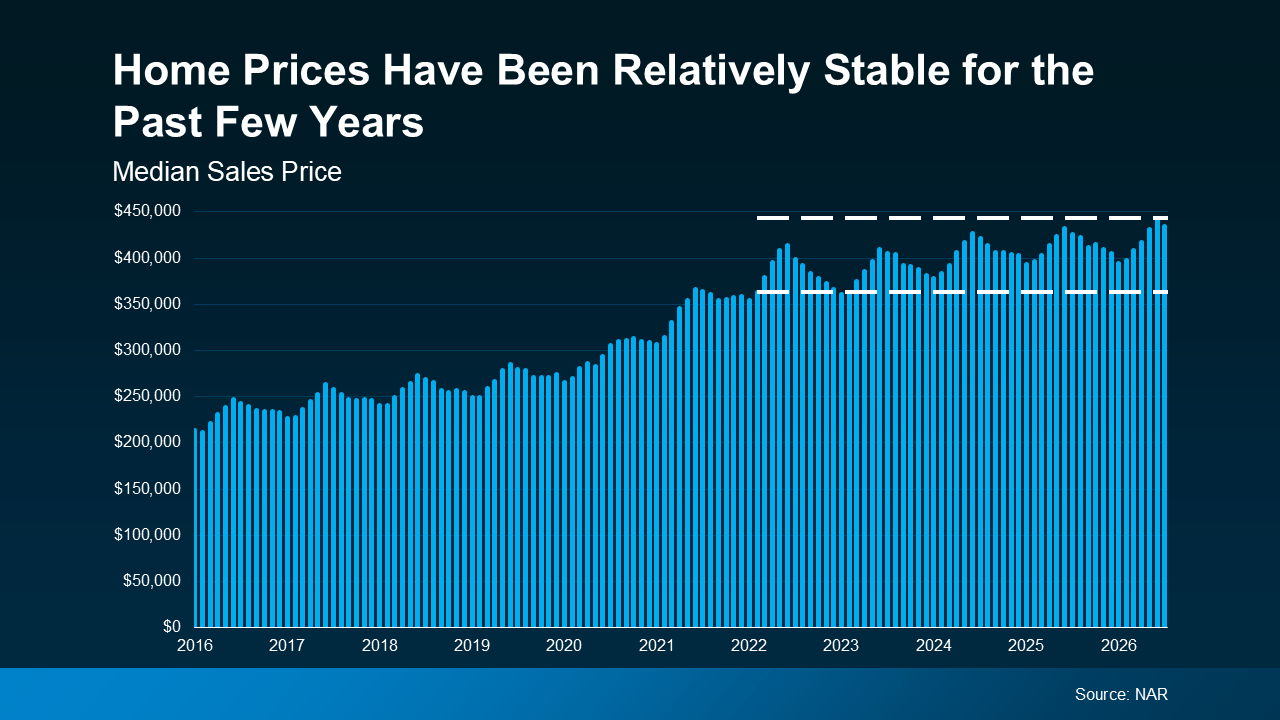 And experts say that’s what to expect going forward, too. As Selma Hepp, Chief Economist at Cotality, explains:
“In 2026, we expect home prices to remain broadly stable, with modest appreciation at a national level.”
No wild swings. Just slow, steady growth. That’s a healthy market. Of course, that pace can vary a bit depending on where you live. But nationally, steady growth like this makes it easier to plan your budget, whether you’re buying or selling.
The Supply of Homes for Sale Has Steadied
For years, the supply of homes for sale was a moving target. It dropped fast during the pandemic and has been climbing pretty reliably ever since. Now, that pace of growth has slowed down. According to Realtor.com, inventory today is very close to where it was this time last year (see graph below):
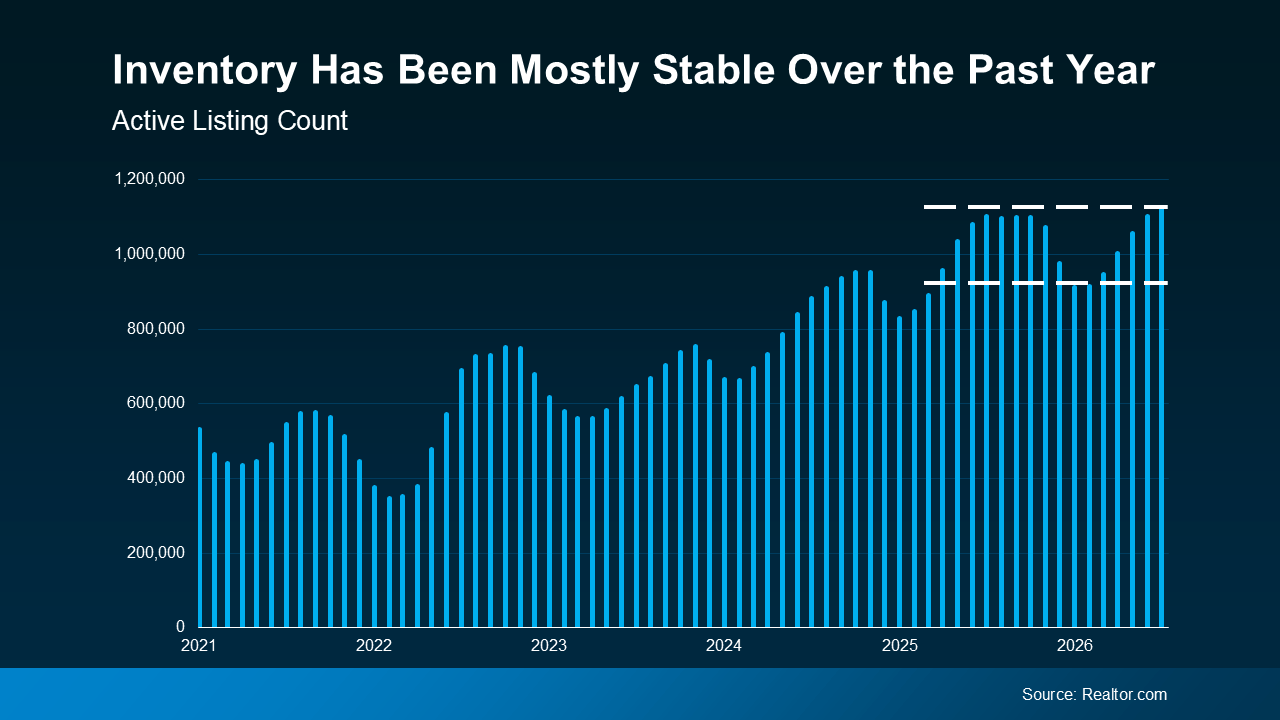 That’s helpful no matter which side you’re on. When the number of homes for sale isn’t changing much, you know what you’re walking into – how many options you’ll have as a buyer, and how much competition you’ll face as a seller.
Mortgage Rates Found Their Range
Yes, rates jumped dramatically back in 2022. But since then, Freddie Mac data shows they’ve stayed between 6% and 7% for the better part of the last 3 or so years (see graph below):
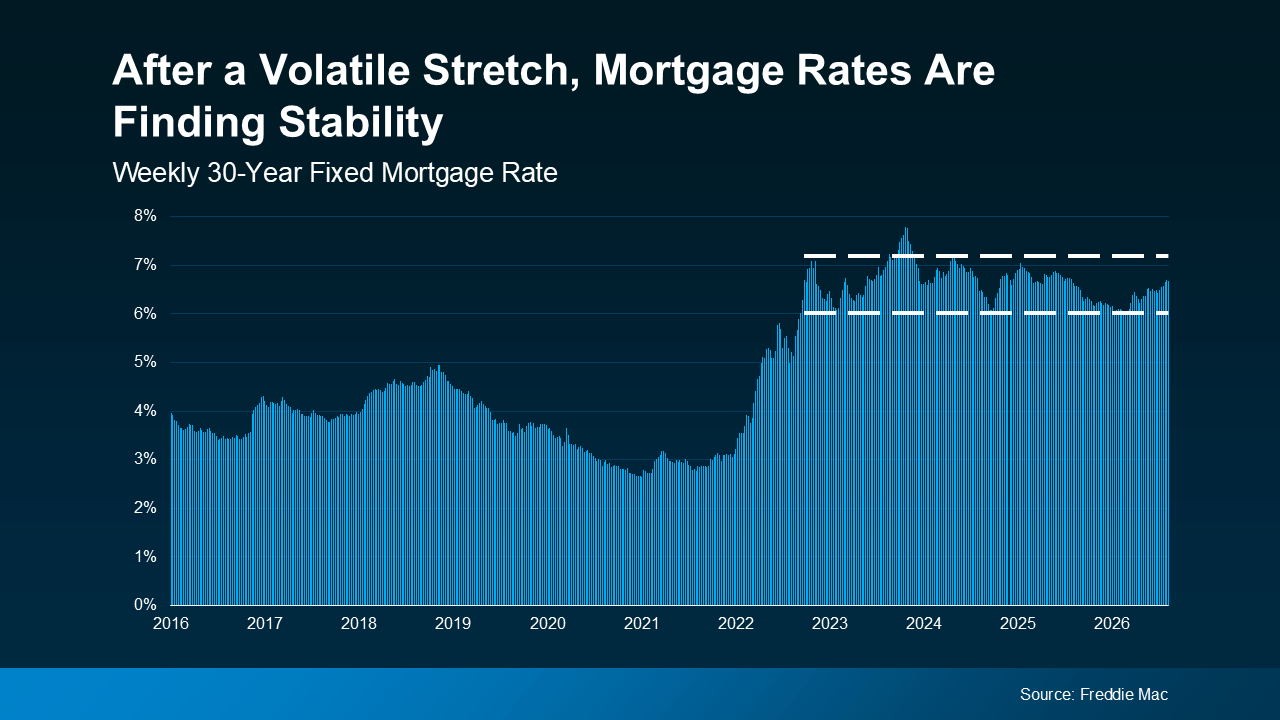 Yes, there was one brief spike above that threshold, but overall, rates have stayed in that range for a while now. That predictability helps when you’re planning a move.
And now that this seems to be a longer-term trend, people have accepted it as the new normal. Buyers have gotten comfortable purchasing in that range, and sellers have gotten just as comfortable listing in it.
That comfort’s important because when both sides know what to expect, they keep making moves. In other words, the market isn’t frozen waiting for something to change. It’s moving calmly.
Bottom Line
The rest of the world may feel unpredictable right now, but the housing market doesn’t have to. Prices, inventory, and rates have all found solid ground.
If stability is what you’ve been waiting for, it’s already here. Let’s connect if you want to talk through what that means for your move.
Thank You For Reading
Denise Olivares-Molina

by Denise Olivares-Molina | Jul 20, 2026 | Advice for Buyers and Sellers, Advice for Homeowners, Advice for Sellers, Affordability, For Sellers, Home Prices, Home Selling Strategy, Home value, Housing Market, Housing Market Insights, Housing Market Updates, Pricing Strategy, Seller, Sellers, Selling A Home, Selling Myths, Selling Tips, Weekly
If you’ve been thinking about selling, you’ve probably seen plenty of headlines suggesting buyers have just about disappeared. But there’s a big difference between a slow market and a stalled one.
Yes, mortgage rates are still higher than most people would like. Homes aren’t selling as fast as they were. And every week seems to bring another headline about buyers sitting on the sidelines. But here’s what you haven’t heard.
Despite everything going on, buyer demand has been remarkably resilient.
In fact, more sellers are getting to put up the “pending sale” sign now than during the last two years. What’s even more surprising is that they’re doing it at a time of year when activity usually starts to slow down.
And if you’re thinking about selling, that’s a trend worth paying attention to.
Buyers Are More Active Than You Think
One of the best ways to measure buyer demand is by looking at pending home sales. Those are homes that have gone under contract but haven’t closed yet. Think of them as a real-time pulse check on the market and whether buyers are still buying.
HousingWire Data shows more homes are going under contract than at the same time the past 2 years (see graph below):
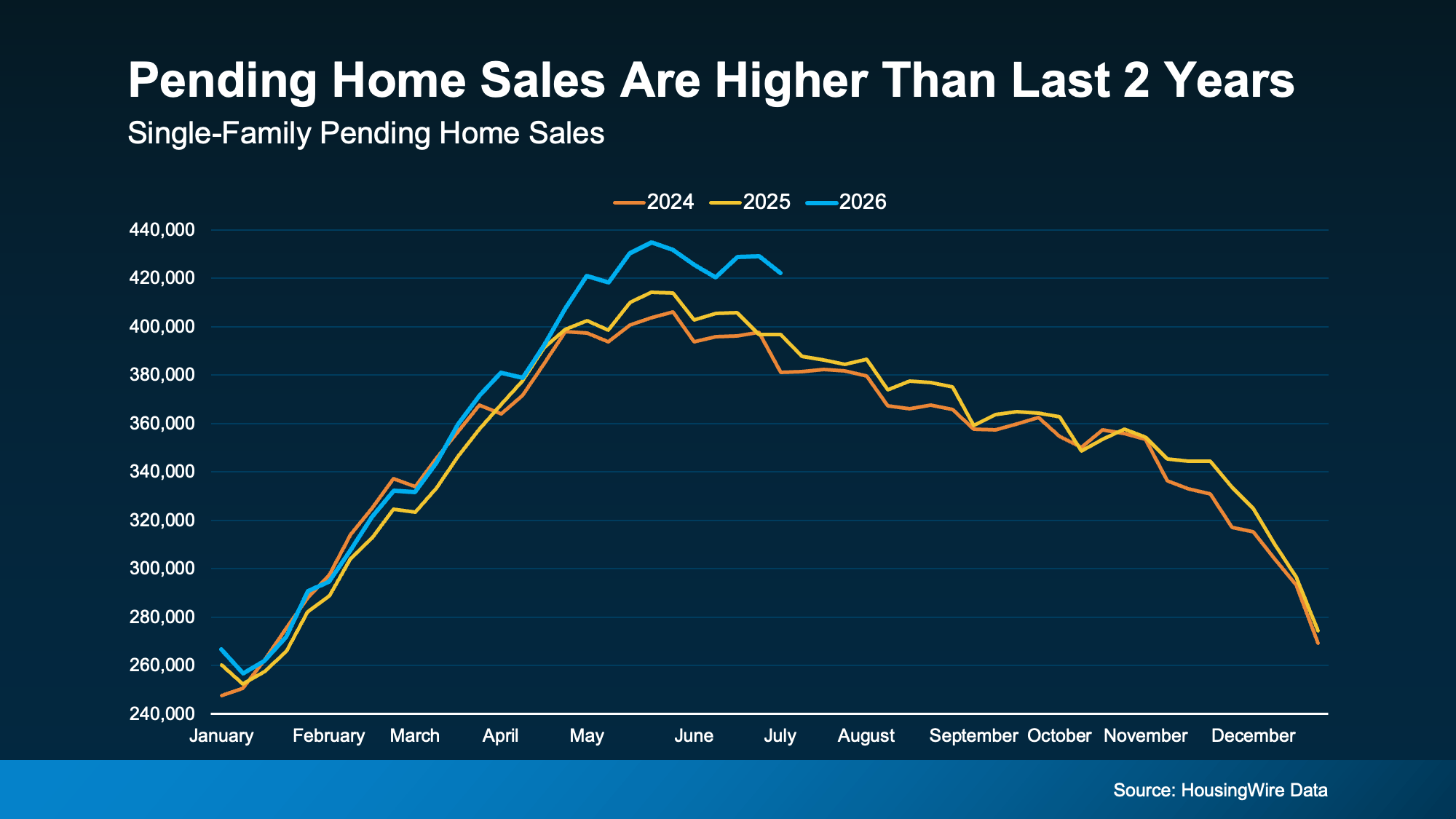
While it may come as a surprise, the numbers speak for themselves. It doesn’t mean buyers are everywhere, but it does mean they’re still active right now. And even if this ebbs and flows a bit in the weeks ahead, right now we’re still ahead of where we’ve been lately. That’s encouraging news if you’re thinking about selling because it tells us something important…
People haven’t stopped buying homes. Serious buyers are still making moves.
And a lot of these people are buying because they decided they can’t keep waiting. Whether it’s a growing family, a new job, retirement, or simply wanting a different home, life keeps moving… even when mortgage rates stay higher than we’d like. As Lawrence Yun, Chief Economist at the National Association of Realtors (NAR), explains:
“A late spring buyer rush—even with mortgage rates not budging—is an indication of pent-up housing demand and consumers’ acceptance of above-6% mortgage rates as the new normal.”
So, if you’ve been worried no one’s buying, this data should give you some confidence. Today’s buyers aren’t just casually browsing open houses on a Sunday afternoon, they’ve spent months waiting for rates to improve and now they realize they can’t wait anymore.
That means they have a purposeand a timeline. And that’s exactly the kind of motivated buyer you want to work with.
What This Means for Your Sale
Does that mean every house will sell instantly? No.
Today’s market is more balanced than it was a few years ago. So, you can’t just price your house however you want or skip preparing it for the market.
Now buyers have choices, and they’re willing to wait for the right home at the right price. But sellers who understand today’s market (and price and position their homes right) are still finding success. Because the idea that “no one’s buying right now” just isn’t supported by the data.
The buyers are there.
The opportunity is there.
The key is having the right strategy to capture it.
Bottom Line
This year’s housing market may be moving slower than many of us hoped. But, buyer demand is more resilient than the headlines suggest.
If you’re wondering whether there are enough buyers for your house, let’s connect. I’ll show you what’s happening in our local market and build a strategy that helps you take advantage of the momentum that’s already here.
Thank You For Reading
Denise Olivares-Molina

by Denise Olivares-Molina | May 18, 2026 | Advice for Sellers, Affordability, For Sellers, Home Prices, Home Selling Strategy, Home value, Homeowner Information, Housing Market, Housing Market Shifts, Housing Market Updates, Real Estate Finances, Real Estate Goals, Real Estate Investing, Real Estate Market, Real Estate Tips, Real Estate Trends in 2026, Weekly
La mayoría de los vendedores entran al mercado con una cifra en mente. Y, a menudo, es la que más cara les sale: su precio de salida (precio de lista).
Una encuesta de Realtor.com muestra que aproximadamente 8 de cada 10 vendedores (el 80%) esperan vender hoy al precio de salida o por encima de este. Pero aquí es donde las cosas se ponen interesantes.
En la realidad, solo unos 4 de cada 10 (aproximadamente el 40%) lo logran.
Esa es una gran brecha, y ahí es donde a muchos vendedores los pilla desprevenidos. Entonces, ¿a qué se debe esta desconexión? ¿Y cómo puedes prepararte para ser uno de esos 4 de cada 10 que obtienen el máximo valor por su dinero?
Analicémoslo en detalle.
¿Qué deberías esperar recibir realmente por tu casa?
Ese 40% puede sonar bajo al principio, pero no lo es.
Si miramos atrás hacia el último año típico para el mercado inmobiliario (2019), lo que realmente estamos viendo es un retorno a la normalidad (ver gráfico abajo). En todo caso, hoy en día un número ligeramente mayor de propietarios puede vender por encima del precio de lista en comparación con 2019:
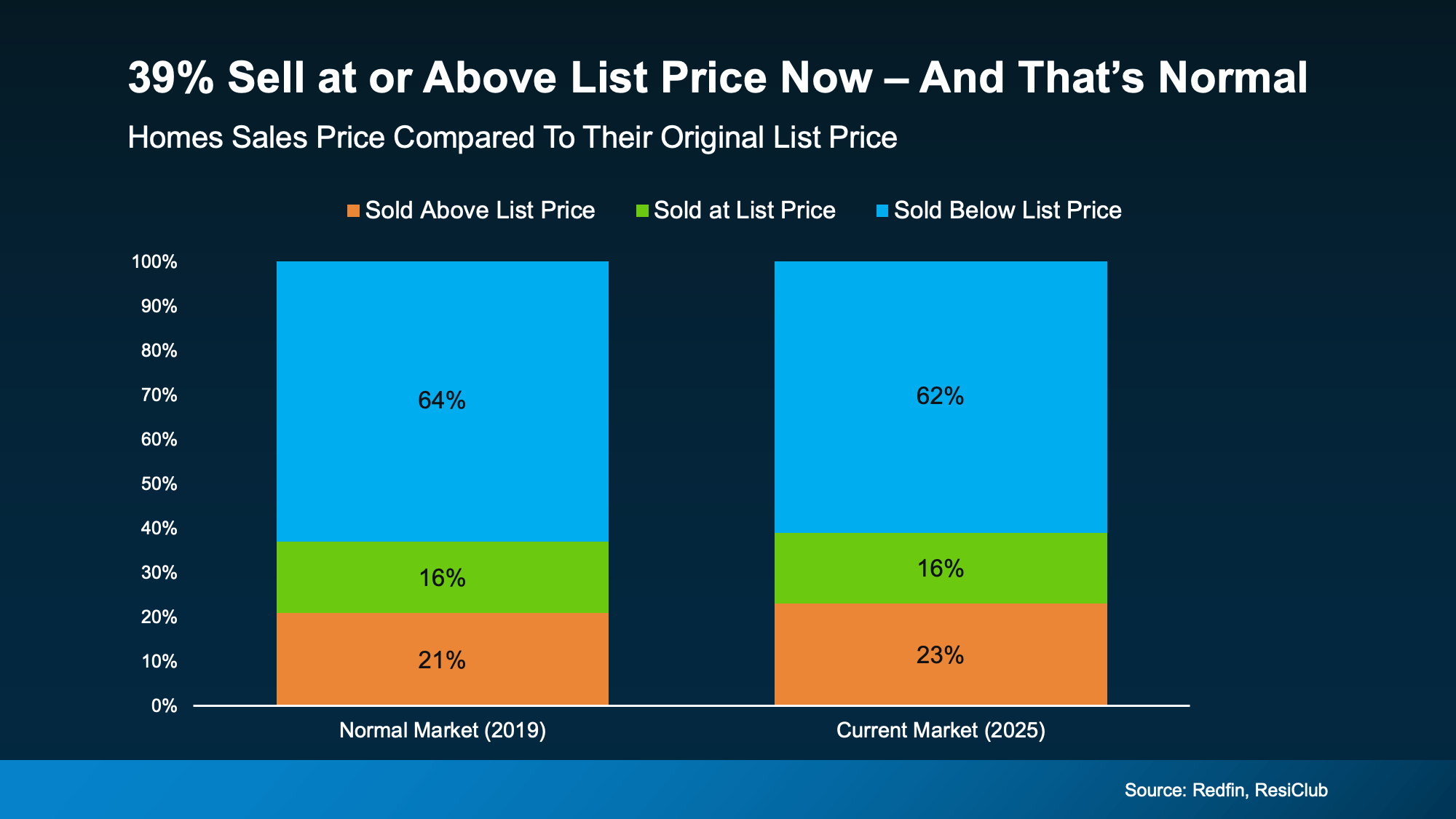
Solo da la sensación de ser bajo porque los últimos años fueron de todo menos típicos. Entre 2020 y mediados de 2022, la demanda de los compradores estaba por las nubes y la cantidad de casas en venta alcanzó mínimos históricos. Casi todo se vendía por encima del precio de salida.
Ahora, el mercado ha cambiado.
Hay más casas en venta. Los compradores tienen más opciones y eso significa que son más selectivos con la forma en que gastan su dinero.
En otras palabras, las reglas del juego han cambiado, y fijar precios como si todavía estuviéramos en 2021 es donde los vendedores se meten en problemas. Tienes que adaptarte al mercado tal y como está si realmente quieres sacar una gran tajada.
Qué pasa cuando el precio de una casa es demasiado alto
Esta es la realidad. Es fácil pensar que fijar un precio alto te da margen para negociar, pero normalmente hace todo lo contrario.
En este mercado, cuando tu casa tiene un precio superior al que esperan los compradores, estos no negocian: siguen de largo.
Porque los compradores se fijan primero en el precio. Y si tu casa no está en sintonía con opciones similares en tu zona, es posible que ni siquiera consigas que vayan a verla. Ahí es cuando las cosas empiezan a complicarse como una bola de nieve:
-
Un precio alto genera menos interés entre los compradores.
-
Menos interés se traduce en menos ofertas.
-
Y menos ofertas normalmente significan más tiempo estancado en el mercado.
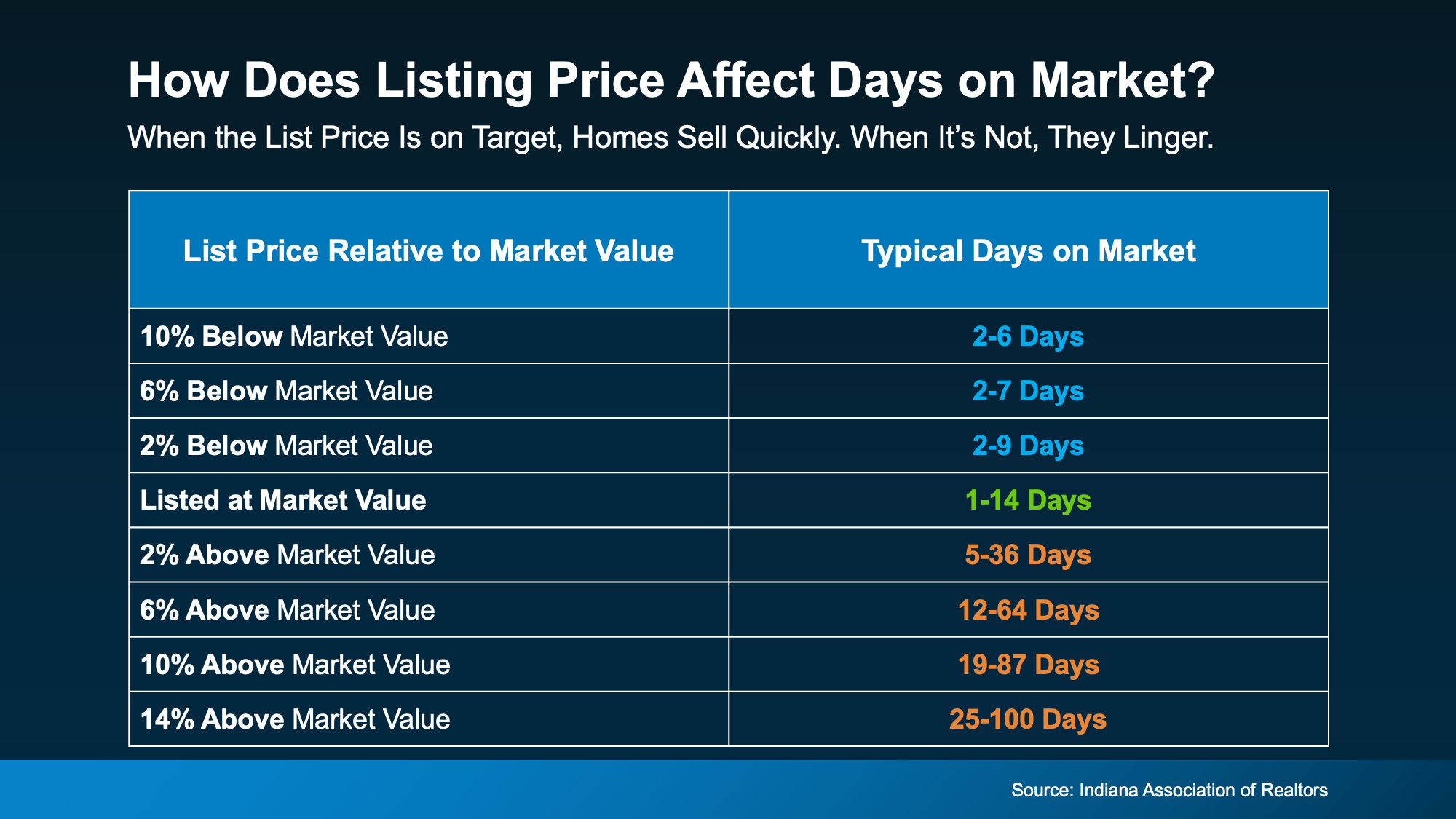
Echa un vistazo a esta tabla de la Asociación de Agentes Inmobiliarios de Indiana (Indiana Association of Realtors). Aunque estos datos son de un solo estado, la tendencia general se mantiene en muchos mercados del país. Muestra que las casas que salen a la venta a precio de mercado o por debajo de este se venden rápido. ¿Pero las casas con precios altos? Se eternizan. Y ese retraso tiene un coste muy real.
La trampa de la rebaja de precio (y cómo evitarla)
Cuando una casa pasa tanto tiempo sin recibir ofertas, muchos vendedores recurren a una reducción de precio. Según Realtor.com, el 16.7% de los vendedores está optando por esa vía hoy en día.
Pero aquí está el verdadero problema: incluso una rebaja de precio no garantiza la venta.
De hecho, algunos compradores verán una reducción como una señal de que algo va mal con la casa, aunque no sea así.
Por eso, los datos de la Asociación Nacional de Agentes Inmobiliarios (NAR, por sus siglas en inglés) muestran que cuanto más tiempo pasa una casa en el mercado, mayor tiende a ser esa rebaja para lograr atraer de nuevo a los compradores:
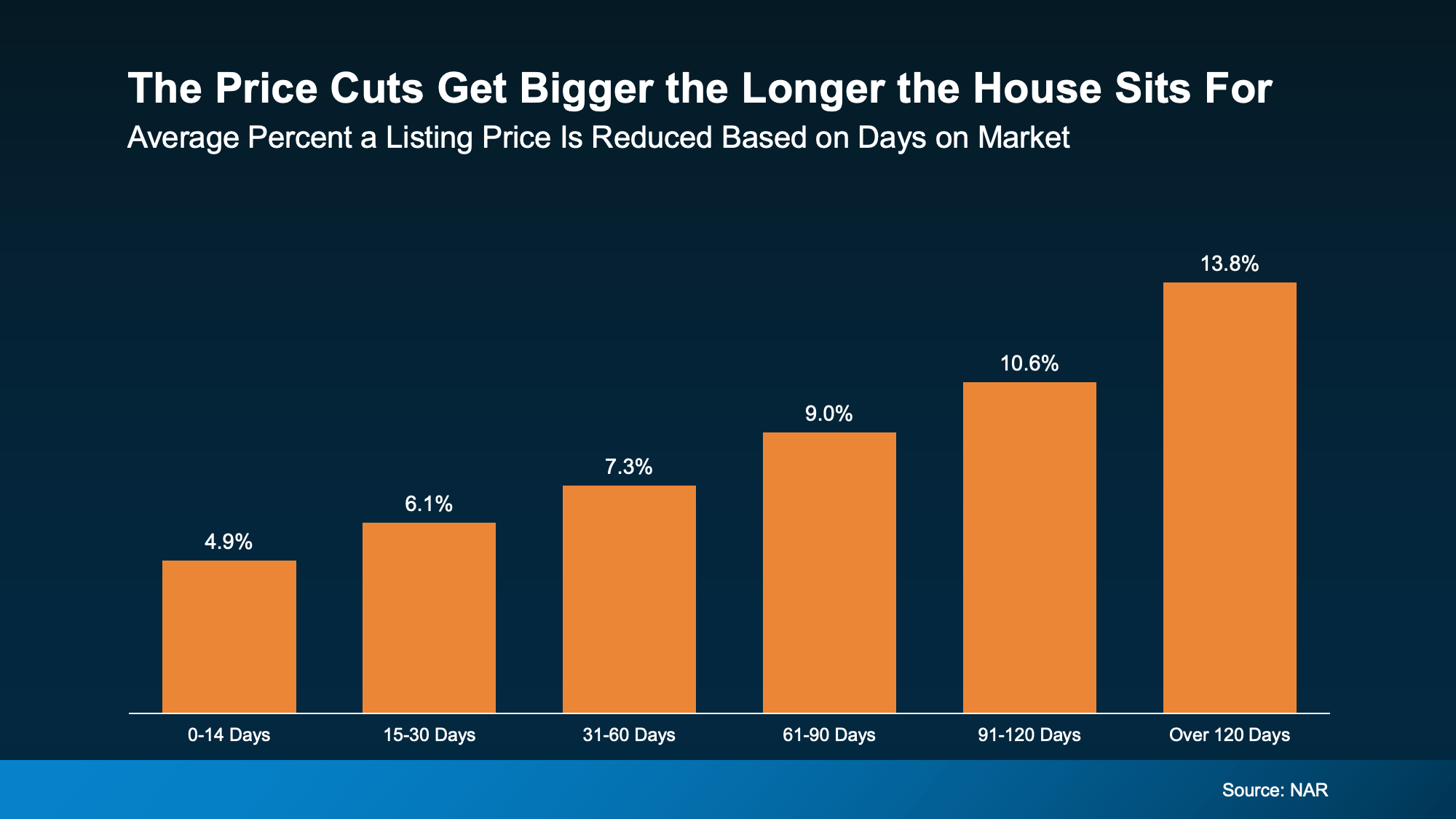
Así que lo que empezó como una estrategia para “dejar margen” para negociar puede terminar costándote más a largo plazo.
Por qué importa fijar el precio correcto desde el primer día
Aunque poner a la venta tu casa a precio de mercado (o incluso un poco por debajo) pueda sonar contradictorio si lo que buscas es ganar la mayor cantidad de dinero posible, la mayoría de las veces es, de hecho, la mejor estrategia.
Porque el objetivo no es simplemente publicar tu casa para ver qué precio cuela. Es fijar el precio de una manera que genere demanda desde el primer día.
La NAR lo explica a la perfección:
“Mientras que algunos vendedores están poniendo precios a sus casas más altos que nunca, una mentalidad más equilibrada (al estilo de ‘Ricitos de Oro’, ni mucho ni poco) es un mejor enfoque para evitar las rebajas de precio y el tiempo prolongado en el mercado”.
En otras palabras, existe un punto de equilibrio ideal. Si es demasiado alto, los compradores desaparecen. Si es demasiado bajo, dudarán del valor de la propiedad.
Pero justo en el medio, ahí es donde ocurre la magia.
Y ahí es donde entra en juego el agente inmobiliario adecuado.
Ellos te ayudan a entender qué están pagando realmente los compradores en este momento, cómo se compara tu casa con las demás y cómo fijar el precio para que destaque de inmediato. En el mercado actual, esa estrategia marca la diferencia entre:
-
Publicar un precio alto, ver cómo la casa se estanca y venderla por menos más adelante.
-
O fijar el precio correcto, generar competencia y posicionarte para ganar desde el principio.
En conclusión
Muchos propietarios piensan que pueden salir con un precio alto ahora y negociar después, pero es un error que les cuesta caro. Y es la razón por la que solo 4 de cada 10 vendedores están consiguiendo su precio de salida o más.
Si quieres formar parte de ese grupo, todo empieza por acertar con el precio desde el primer día.
Pongámonos en contacto para asegurarnos de que así sea.
Gracias Por Leer
Denise Olivares-Molina

by Denise Olivares-Molina | May 18, 2026 | Advice for Buyers, Advice for Buyers and Sellers, Advice for Sellers, Affordability, Buyers, Buying A Home, Buying Tips, First-Time Buyers, For Buyers, FSBOs, Home value, Homeowner Information, Housing Market, Housing Market Shifts, Housing Market Updates, Investment, Investment Strategy, Pricing, Real Estate Finances, Real Estate Goals, Real Estate Investing, Real Estate Market, Weekly
It’s one of the biggest hold ups some buyers have right now: “What if I buy, and home prices go down?”
With everything in the news, that concern makes some sense. No one wants to make a big financial decision at the wrong time. But here’s what’s important to know. You don’t want to get hung up on the few places seeing slight declines right now.
When you zoom out and look at the full picture, home prices usually rise over time.
What the Data Really Shows
Take a look at the visual below. It uses data from Case-Shiller and Bilello to show how home prices have changed year by year going all the way back to the 1950s.
Here’s the key takeaway.
Outside of the housing crash, home prices have either held steady or increased in just about every year for decades (see visual below):
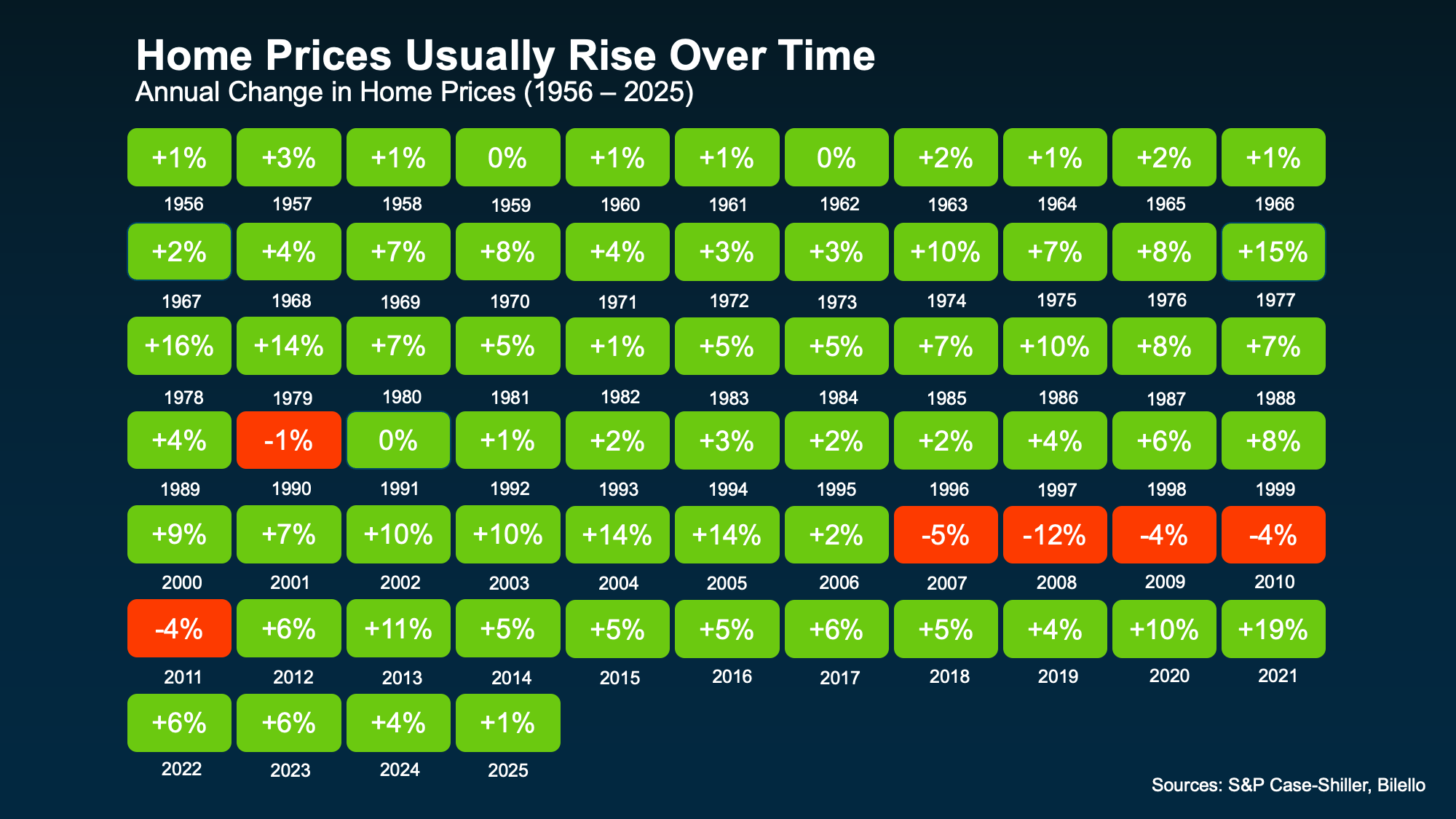 That’s a remarkably consistent track record. And it shows something a lot of headlines miss.
While short-term shifts can happen, it’s the long-term gains that really matter.
Why Prices Tend To Rise Over Time
There are a few core reasons prices usually go up each year:
- There are always people who need to move. People need a place to live, and that demand will never fully go away. It may ebb and flow, but someone will always have to move as big changes happen in their life. So, homes stay in demand.
- There still aren’t enough homes for sale. While the number of homes for sale has grown, nationally there’s still an undersupply based on how many people want a home. That keeps upward pressure on prices.
- Inflation has an impact. Over time, the cost of goods (including homes) naturally increases. That pushes home values higher.
What That Means for You as a Buyer
It’s easy to get caught up in what might happen with home prices next month or next year, especially if you’re a first-time buyer and you’re feeling a little anxious about making such a big financial commitment. But the big picture is clear. Prices usually rise.
That doesn’t mean prices will go up every single year in every market. Real estate is local, and there can be short-term ups and downs. We’re seeing that in some places right now. You can even see it in the few annual dips in the visual above.
But historically, the declines have been temporary.
That’s why it’s generally recommended to buy a home only if you plan to stay for a while – typically at least five years. That’s normally enough time to see your house grow in value. And, it’s enough so you can ride out any short-term changes in the market.
Because when you can do that, something powerful happens. Those rising home values grow your net worth, and by extension, help you build wealth.
The right decision isn’t about timing the market perfectly. It’s about making a move that works for your life and staying in it long enough to benefit from the bigger trend.
Bottom Line
Home prices have a long track record of going up over time. And that’s why buying a home is generally considered a safe long-term investment.
That certainly doesn’t mean you have to buy now. You should only move when it makes sense, and you plan to live there for a while.
But if you’re interested, let this reassure you. If you want to talk through what home prices are doing in our market, your goals, or your timelines, let’s have a quick conversation.
Thank You For Reading
Denise Olivares-Molina

by Denise Olivares-Molina | Mar 30, 2026 | 2026 Housing Market, 2026 Mortgage Rate, Advice for Buyers, Affordability, Costs, Current Trends, First Time Home Buyers, First-Time Buyers, For Buyers, Home Equity Loans, Home Prices, Home value, Housing Market Shifts, Housing Market Updates, Infographic, Interest Rates, Pricing, Real Estate Finances, Real Estate Market, Real Estate Tips, Real Estate Trends in 2026, Weekly
Mortgage rates have been volatile lately. And if you’re thinking about buying a home, that can make it harder to plan. But there are still things you can do to get the best rate possible in today’s market. It starts with having the right information.
So, what’s causing the bumps in rates? And what can you do about it? Let’s break it down.
Mortgage Rate Volatility Is Normal
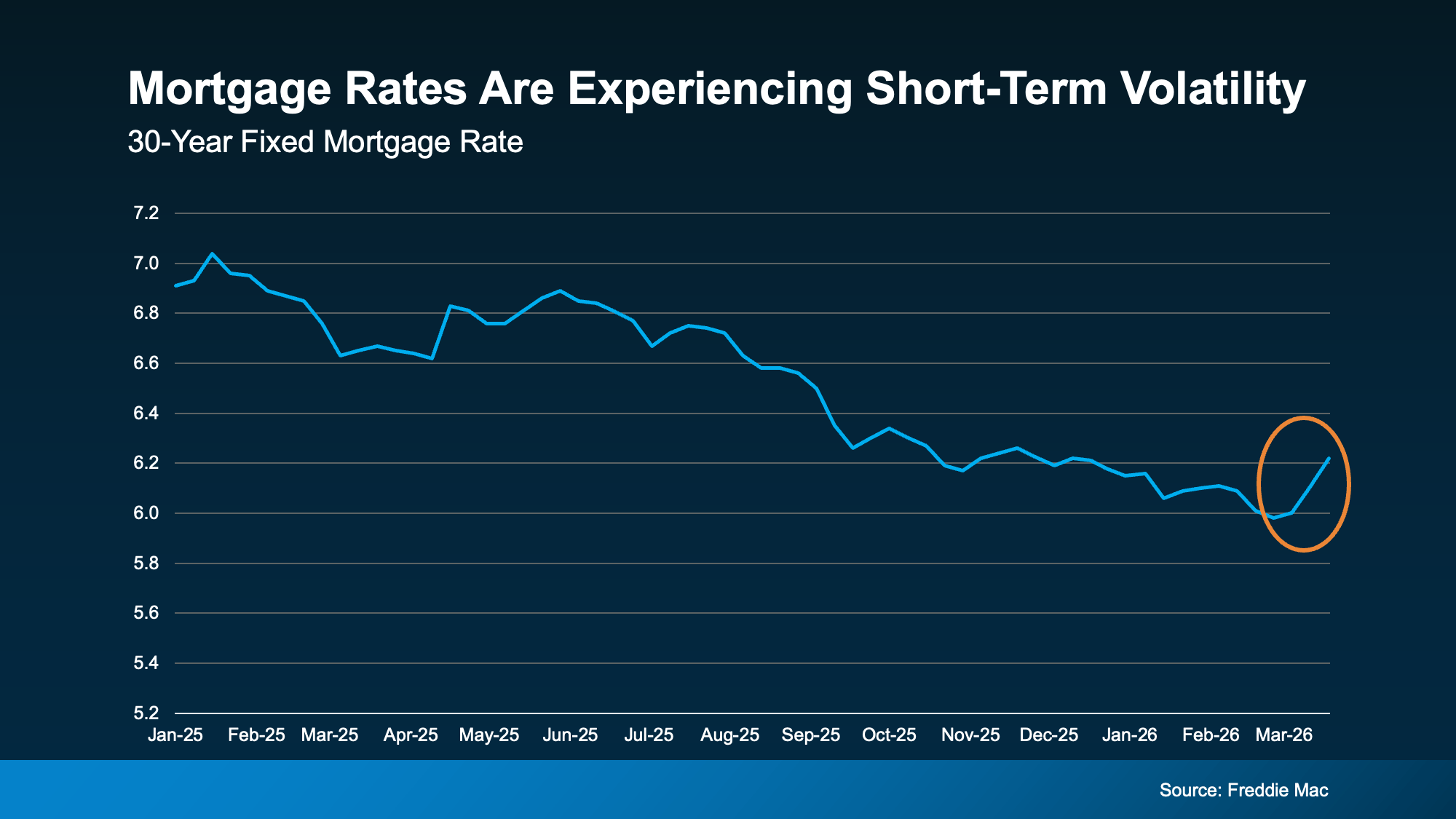
Data from Freddie Mac shows the recent volatility. After trending down for well over a year, there was a rise this month (see graph below):
While it’s easy to be distracted by the changes, here’s what you need to remember.
It’s normal for rates to bounce around a bit here and there. For example, if you look back at the graph, you’ll see that even within the past year there have been times like this when rates inched up. We’re in one of those moments right now and you need to be aware of that.
Especially when there’s economic uncertainty or big global events happening, volatility like this is expected. As Investopedia explains:
“Mortgage rates don’t move in isolation. When global events inject uncertainty into financial markets . . . that can ripple through to borrowing . . . mortgage costs can respond quickly to geopolitical developments. As long as uncertainty remains elevated, rate swings may continue.”
And that’s one of the reasons why trying to time the market isn’t a wise move.
You can’t control what happens with mortgage rates. But there are still things you can do to help you get the best rate possible in today’s market. And here’s where to focus your effort.
Your Credit Score
Your credit score plays a big role in the rate you qualify for. Even a small improvement can make a noticeable difference in your monthly payment. As Bankrate puts it:
“Your credit score is one of the most important factors lenders consider when you apply for a mortgage. Not just to qualify for the loan itself, but for the conditions: Typically, the higher your score, the lower the interest rates and better terms you’ll qualify for.”
So, make sure you do what you can to keep your credit score up. If you’re not sure what your score is or how you can improve it, talk to a trusted loan officer.
Your Loan Type
There are also different types of home loans – and each one can have unique requirements, benefits, and rates for qualified buyers. The Consumer Financial Protection Bureau (CFPB) explains:
“There are several broad categories of mortgage loans, such as conventional, FHA, USDA, and VA loans. Lenders decide which products to offer, and loan types have different eligibility requirements. Rates can be significantly different depending on what loan type you choose.”
That’s why it’s so important to explore your options with a lender. You may even want to talk to multiple lenders to see how the options vary.
Your Loan Term
The length of your loan matters too. Most lenders typically offer 15, 20, or 30-year loans. Freddie Mac offers this advice:
“When choosing the right home loan for you, it’s important to consider the loan term, which is the length of time it will take you to repay your loan before you fully own your home. Your loan term will affect your interest rate, monthly payment, and the total amount of interest you will pay over the life of the loan.”
Again, to figure out what makes the most sense for your budget and long-term goals, have a lender walk you through all your options.
Bottom Line
Thinking about buying right now? The best advice is to accept that you can’t control where rates are going to go from here.
What you can do is work with a trusted lender and take steps that’ll help you get the best rate possible.
So, if you want to move today, let’s make it happen. We just need to control the controllables and focus where it counts.
Thank you for reading
Denise Olivares-Molina

by Denise Olivares-Molina | Jan 13, 2026 | Advice for Sellers, Affordability, For Sellers, Home Buying, Home Care, Home Equity Loans, Home Gain Statistics, Home Preparation, Home Prices, Home value, Homeowner Information, Housing Market, Housing Market Shifts, Housing Market Updates, Investment, Investment Strategy, Investments, Pricing, Real Estate Finances, Real Estate Goals, Real Estate Investing, Real Estate Market, Real Estate Tips, Real Estate Trends in 2026, Seller, Sellers, Selling A Home, Selling Myths, Selling Tips, Weekly
¿Te preguntas qué esperar del mercado inmobiliario en 2026? No eres el único. Durante los últimos años, la asequibilidad ha sido la mayor barrera entre la mayoría de las personas y su próxima mudanza. Y muchos compradores y vendedores han estado conteniendo la respiración esperando que las cosas mejoren. ¿La buena noticia? Finalmente está sucediendo.
En 2025, la asequibilidad fue la mejor de los últimos 3 años. Y los expertos coinciden en que este impulso continuará en 2026. Esto se basa en su análisis de los factores clave que darán forma al mercado de la vivienda el próximo año: las tasas hipotecarias, el inventario y los precios de las viviendas.
Las tasas hipotecarias más bajas ya están aquí
Las tasas hipotecarias ya han bajado desde su punto máximo. Según algunos cálculos, cayeron casi un punto porcentual completo en el último año. Y eso es algo importante, aunque no lo parezca. Pero, ¿qué tan bajo llegarán? ¿Y deberías esperar a que bajen más? Aquí tienes la respuesta.
Los pronósticos sugieren que se mantendrán prácticamente donde están ahora y oscilarán en el rango bajo del 6% a lo largo de 2026 (ver gráfico a continuación):
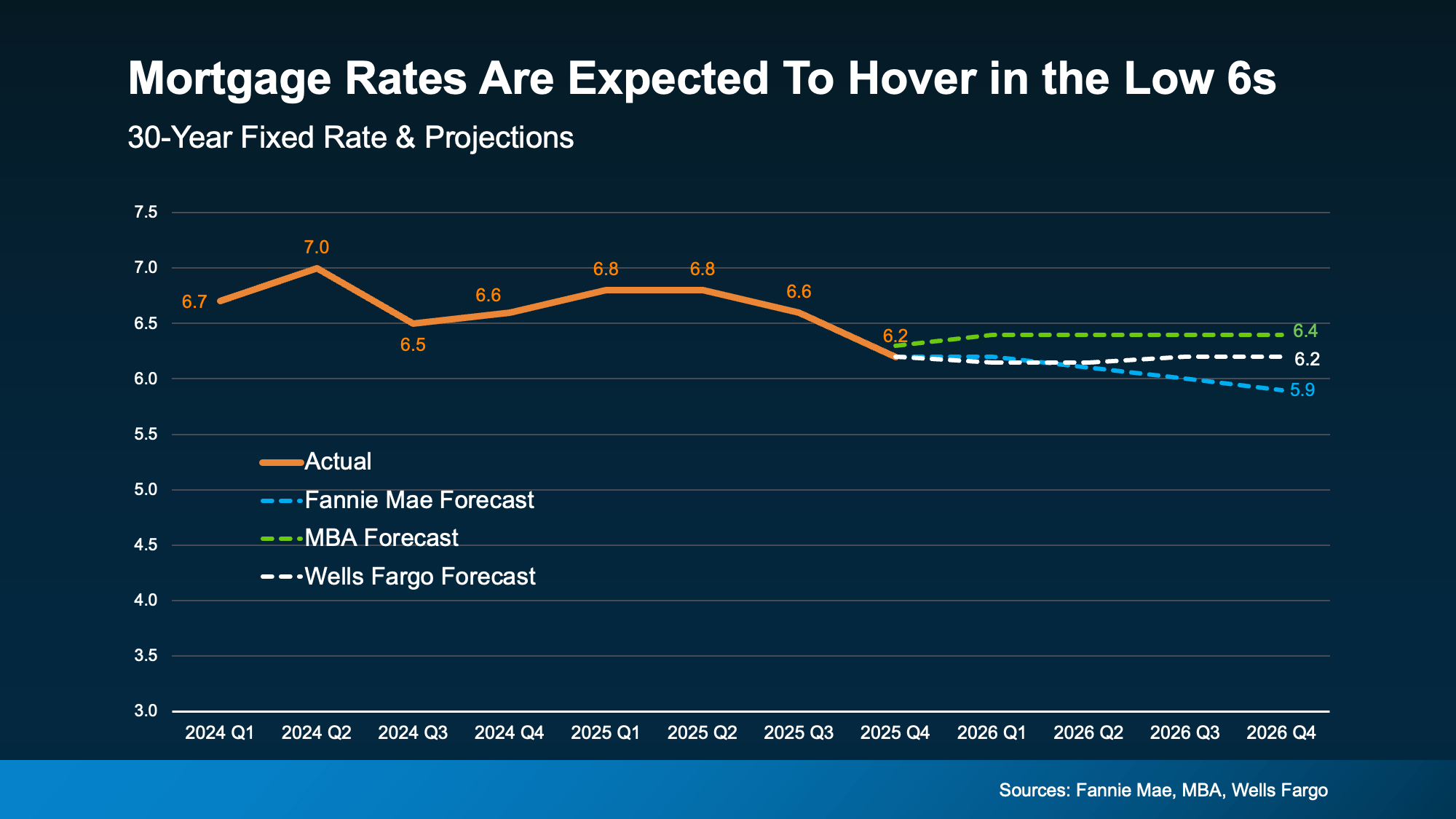
Hacia dónde vayan a partir de aquí realmente depende de lo que suceda con la economía, el mercado laboral y cualquier cambio en la política monetaria que haga la Reserva Federal (Fed) el próximo año. Lo importante es que ya son más bajas de lo que eran hace solo un año, y eso es ideal si estás planeando mudarte en 2026.
-
Para los compradores: Una tasa más baja reduce los pagos mensuales y aumenta el poder adquisitivo. Y esa combinación ayuda a que más personas califiquen para hogares que antes sentían fuera de su alcance.
-
Para los vendedores: Puede ser hora de aceptar que las tasas en el rango del 6% son la nueva normalidad. Y si necesitas mudarte, es factible, especialmente con tu plusvalía (equity).
Vienen aún más opciones en camino
En 2025, el número de viviendas en venta mejoró aproximadamente un 15%. A medida que aumentó el inventario, los compradores recuperaron cosas que no habían tenido en años: opciones, tiempo para considerar esas opciones y poder de negociación. Eso ayudó a restaurar un mayor equilibrio en el mercado inmobiliario.
Sin mencionar que el aumento del inventario es una gran parte de lo que ha ayudado a que el crecimiento de los precios se desacelere, lo que a su vez mejora la asequibilidad.
Si bien no se espera que el aumento de inventario este año sea tan pronunciado, los expertos de Realtor.com dicen que la oferta de viviendas en venta debería crecer otro 8.9% este año.
El crecimiento de los precios de las viviendas se desacelera a un ritmo más sostenible
Con más viviendas en venta, no hay tanta presión al alza sobre los precios en este momento. Y hemos visto cómo eso se ha estabilizado durante el último año. Aun así, la abrumadora mayoría de los expertos dicen que, a nivel nacional, los precios seguirán subiendo el próximo año, solo que a un ritmo más lento. En promedio, dicen que los precios subirán un 1.6% en 2026 (ver gráfico a continuación):
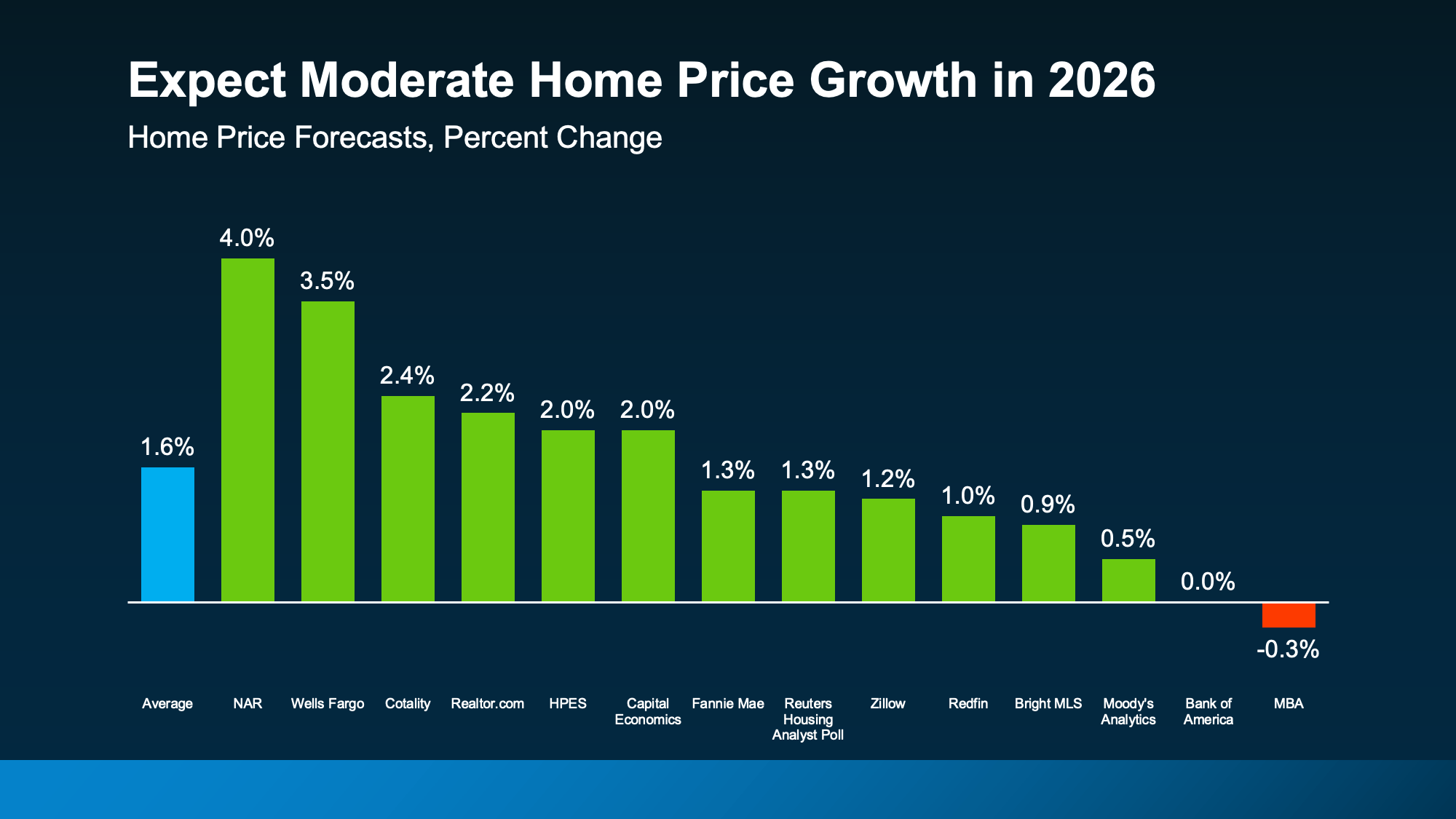
Y eso es tranquilizador si has estado viendo contenido en las redes sociales que dice que los precios se van a desplomar. Pero esto es lo que más debes recordar al respecto: Va a variar mucho según la zona.
Por lo tanto apóyate en un agente local para conocer lo último sobre lo que está sucediendo donde vives. Algunos mercados verán subir los precios más que esto. Otros pueden ver bajar los precios ligeramente. Todo depende realmente de las condiciones en tu mercado local.
Pero en general, los precios continuarán subiendo a nivel nacional. Y eso es bueno para el mercado en su conjunto. Como explica Realtor.com:
“Para los compradores y vendedores de viviendas, el cambio señala un mercado más equilibrado: uno donde el crecimiento de los precios se estabiliza, el alivio de las tasas ofrece un respiro y el poder de negociación se inclina sutilmente hacia los compradores.”
-
Para los compradores: Esperen un crecimiento de precios más moderado, no los picos repentinos e intensos de hace unos pocos años. Eso les da menos sorpresas y más previsibilidad, lo que facilita mucho la elaboración del presupuesto.
-
Para los vendedores: Este crecimiento más lento de los precios restaura el equilibrio sin poner en riesgo su plusvalía. Y eso es una victoria.
Se venderán más viviendas
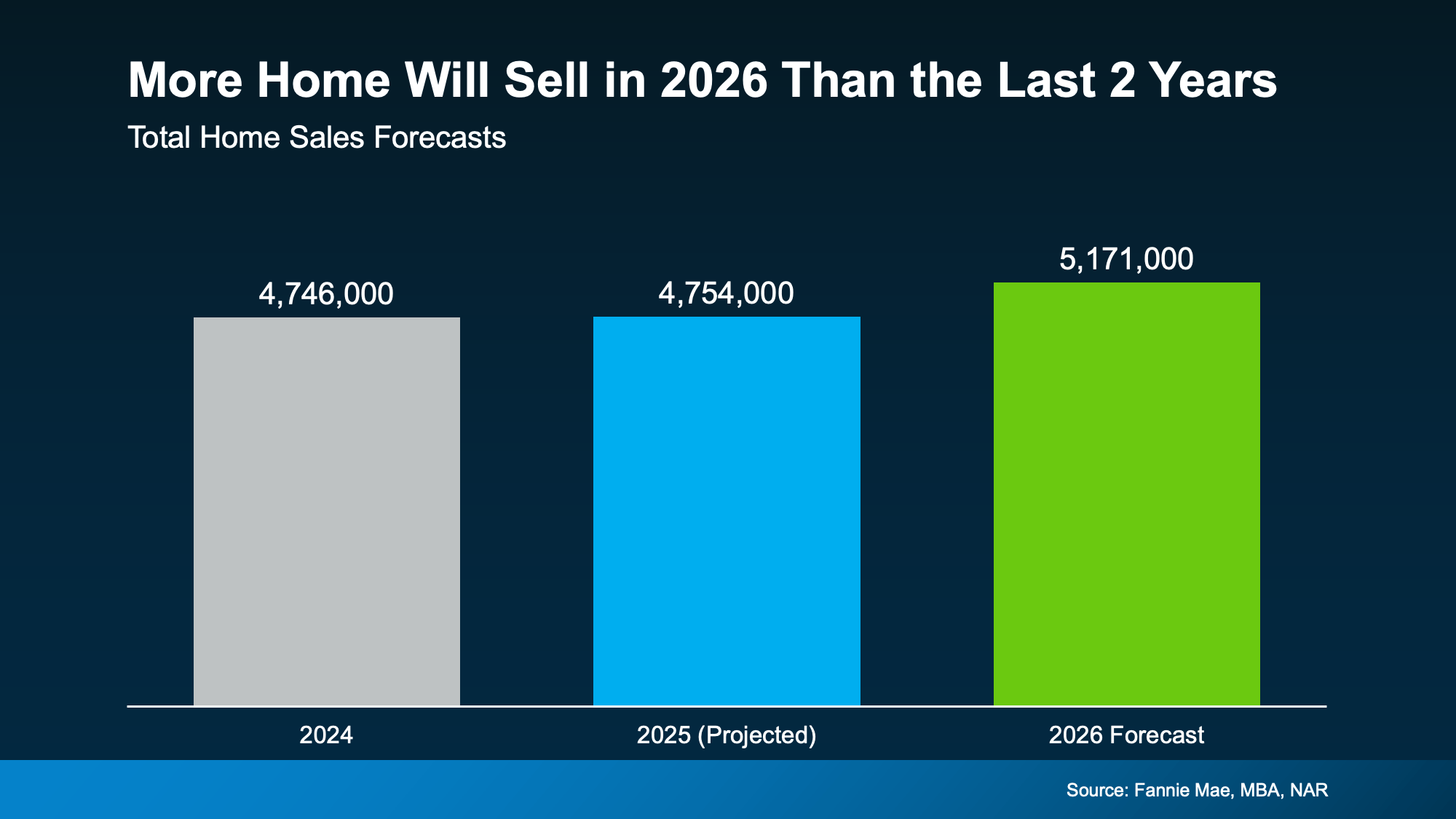
Todo esto suma para una mejor ecuación de asequibilidad en 2026. Y esa es exactamente la razón por la que los expertos dicen que deberíamos ver venderse más viviendas (y más gente comprando) este año.
Como dice Mischa Fisher, Economista Jefe de Zillow:
“Los compradores se están beneficiando de más inventario y una mejor asequibilidad, mientras que los vendedores están viendo estabilidad de precios y una demanda más constante. Cada grupo debería tener un poco más de margen de maniobra en 2026.”
El punto es que, finalmente, más personas podrán hacer su mudanza este año. Entonces, la pregunta es: ¿serás tú uno de ellos? El mercado te está dando una oportunidad que no has tenido en un tiempo. Tal vez sea hora de aprovecharla.
En conclusión
La asequibilidad no cambiará repentinamente de la noche a la mañana. Pero, con varias tendencias clave trabajando juntas, debería mejorar lenta y constantemente en los próximos meses.
Es exactamente por eso que, en 2026, deberías ver un mercado con más equilibrio, más previsibilidad y más margen de maniobra del que has tenido en años.
¿Quieres más información sobre las oportunidades que se abren en nuestro mercado local? Hablemos.
Gracias Por Leer
Denise Olivares-Molina
