
by Denise Olivares-Molina | Feb 16, 2026 | For Buyers, Home Buying, Home Preparation, Home Prices, Home value, Housing Market, Investment, Investment Strategy, Investments, Move-up Buyers, Weekly
At some point, a house that once felt perfect just… doesn’t anymore.
Maybe you need more space.
Maybe working from home turned your dining room into a permanent office.
Maybe the layout just doesn’t match how you live now.
If your current house is starting to feel like it’s holding you back instead of supporting your life, it’s natural to think about making a move. But that brings up the next big question: once you sell, where do you go?
For a growing number of buyers, the answer is something brand new.
New Construction Is a More Popular Choice Lately
According to the National Association of Realtors (NAR), more people are buying new homes than they have in years. The latest annual data available shows 16% of homes purchased were newly built.
At first glance you may not see why that’s a big deal. But that’s actually the highest share of new home purchases in almost two decades.
Why More Buyers Are Choosing a Brand-New Construction
For many buyers, especially move-up buyers, new construction isn’t just about aesthetics. It’s about lifestyle, convenience, and peace of mind.
1. Everything Is Brand New
You’re not inheriting someone else’s projects. No wondering how old the roof is. No budgeting for a new HVAC right after move-in. No big surprises when the previous owners patch job fails. For move-up buyers who’ve been dumping money into updating their current house, that’s a win.
2. You Can Customize Before Move In
If you choose a home that’s still under construction, you could have the chance to pick the flooring, counters, cabinets, hardware, lighting, and so much more. That level of personalization can be a draw for move-up buyers like you, because it allows you to hand pick the fit and finishes you’ve been wanting for so long.
3. A Home Designed for How People Live Today
Most new construction homes are built to current building standards and buyer preferences, which means you could see built-in smart home features, better energy efficiency (which can lower utility bills), and even more modern floor plans and features. And if your layout just isn’t working for you anymore, you may find exactly what you need now in a new home.
4. Neighborhood Amenities
New developments often include shared community spaces like walking trails, parks, playgrounds, or even pools and gyms. For families and active households, that’s a big bonus to have that just a few steps out of their front door.
5. Builder Incentives
Not to mention, since there are more new homes on the market than the norm, builders are motivated to sell what they have. So, you may find they’re more willing to negotiate than you’d expect on things like price, upgrades, and more.
Bottom Line
If your current house isn’t meeting your needs anymore, don’t assume your only choice is an existing home. New construction is becoming a real contender, especially for move-up buyers who want space, features, and a home that works for how they live now.
Curious whether new construction might be a fit for you? Let’s chat.
Thank You For Reading
Denise Olivares-Molina

by Denise Olivares-Molina | Jan 13, 2026 | Advice for Sellers, Affordability, For Sellers, Home Buying, Home Care, Home Equity Loans, Home Gain Statistics, Home Preparation, Home Prices, Home value, Homeowner Information, Housing Market, Housing Market Shifts, Housing Market Updates, Investment, Investment Strategy, Investments, Pricing, Real Estate Finances, Real Estate Goals, Real Estate Investing, Real Estate Market, Real Estate Tips, Real Estate Trends in 2026, Seller, Sellers, Selling A Home, Selling Myths, Selling Tips, Weekly
¿Te preguntas qué esperar del mercado inmobiliario en 2026? No eres el único. Durante los últimos años, la asequibilidad ha sido la mayor barrera entre la mayoría de las personas y su próxima mudanza. Y muchos compradores y vendedores han estado conteniendo la respiración esperando que las cosas mejoren. ¿La buena noticia? Finalmente está sucediendo.
En 2025, la asequibilidad fue la mejor de los últimos 3 años. Y los expertos coinciden en que este impulso continuará en 2026. Esto se basa en su análisis de los factores clave que darán forma al mercado de la vivienda el próximo año: las tasas hipotecarias, el inventario y los precios de las viviendas.
Las tasas hipotecarias más bajas ya están aquí
Las tasas hipotecarias ya han bajado desde su punto máximo. Según algunos cálculos, cayeron casi un punto porcentual completo en el último año. Y eso es algo importante, aunque no lo parezca. Pero, ¿qué tan bajo llegarán? ¿Y deberías esperar a que bajen más? Aquí tienes la respuesta.
Los pronósticos sugieren que se mantendrán prácticamente donde están ahora y oscilarán en el rango bajo del 6% a lo largo de 2026 (ver gráfico a continuación):
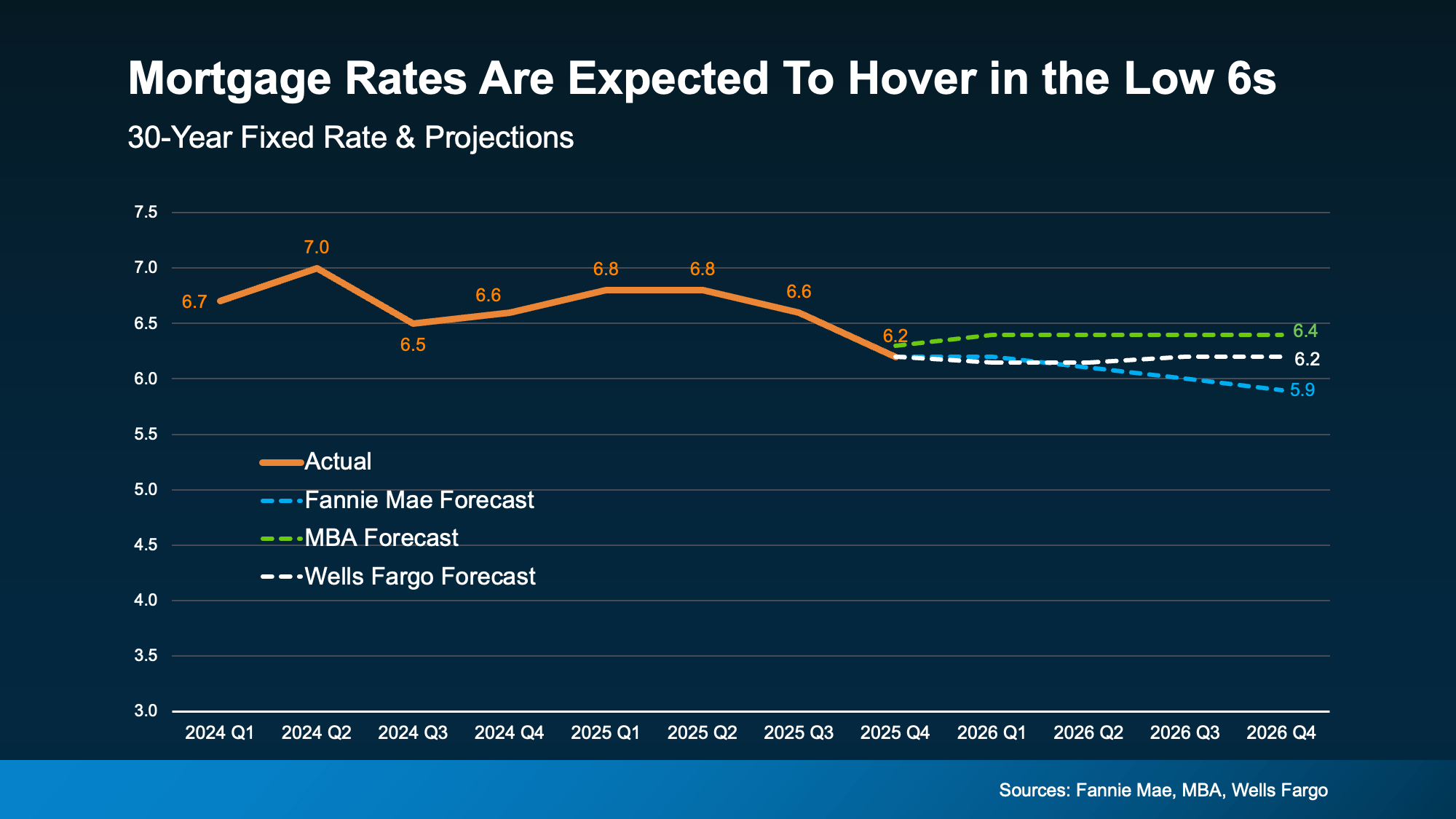
Hacia dónde vayan a partir de aquí realmente depende de lo que suceda con la economía, el mercado laboral y cualquier cambio en la política monetaria que haga la Reserva Federal (Fed) el próximo año. Lo importante es que ya son más bajas de lo que eran hace solo un año, y eso es ideal si estás planeando mudarte en 2026.
-
Para los compradores: Una tasa más baja reduce los pagos mensuales y aumenta el poder adquisitivo. Y esa combinación ayuda a que más personas califiquen para hogares que antes sentían fuera de su alcance.
-
Para los vendedores: Puede ser hora de aceptar que las tasas en el rango del 6% son la nueva normalidad. Y si necesitas mudarte, es factible, especialmente con tu plusvalía (equity).
Vienen aún más opciones en camino
En 2025, el número de viviendas en venta mejoró aproximadamente un 15%. A medida que aumentó el inventario, los compradores recuperaron cosas que no habían tenido en años: opciones, tiempo para considerar esas opciones y poder de negociación. Eso ayudó a restaurar un mayor equilibrio en el mercado inmobiliario.
Sin mencionar que el aumento del inventario es una gran parte de lo que ha ayudado a que el crecimiento de los precios se desacelere, lo que a su vez mejora la asequibilidad.
Si bien no se espera que el aumento de inventario este año sea tan pronunciado, los expertos de Realtor.com dicen que la oferta de viviendas en venta debería crecer otro 8.9% este año.
El crecimiento de los precios de las viviendas se desacelera a un ritmo más sostenible
Con más viviendas en venta, no hay tanta presión al alza sobre los precios en este momento. Y hemos visto cómo eso se ha estabilizado durante el último año. Aun así, la abrumadora mayoría de los expertos dicen que, a nivel nacional, los precios seguirán subiendo el próximo año, solo que a un ritmo más lento. En promedio, dicen que los precios subirán un 1.6% en 2026 (ver gráfico a continuación):
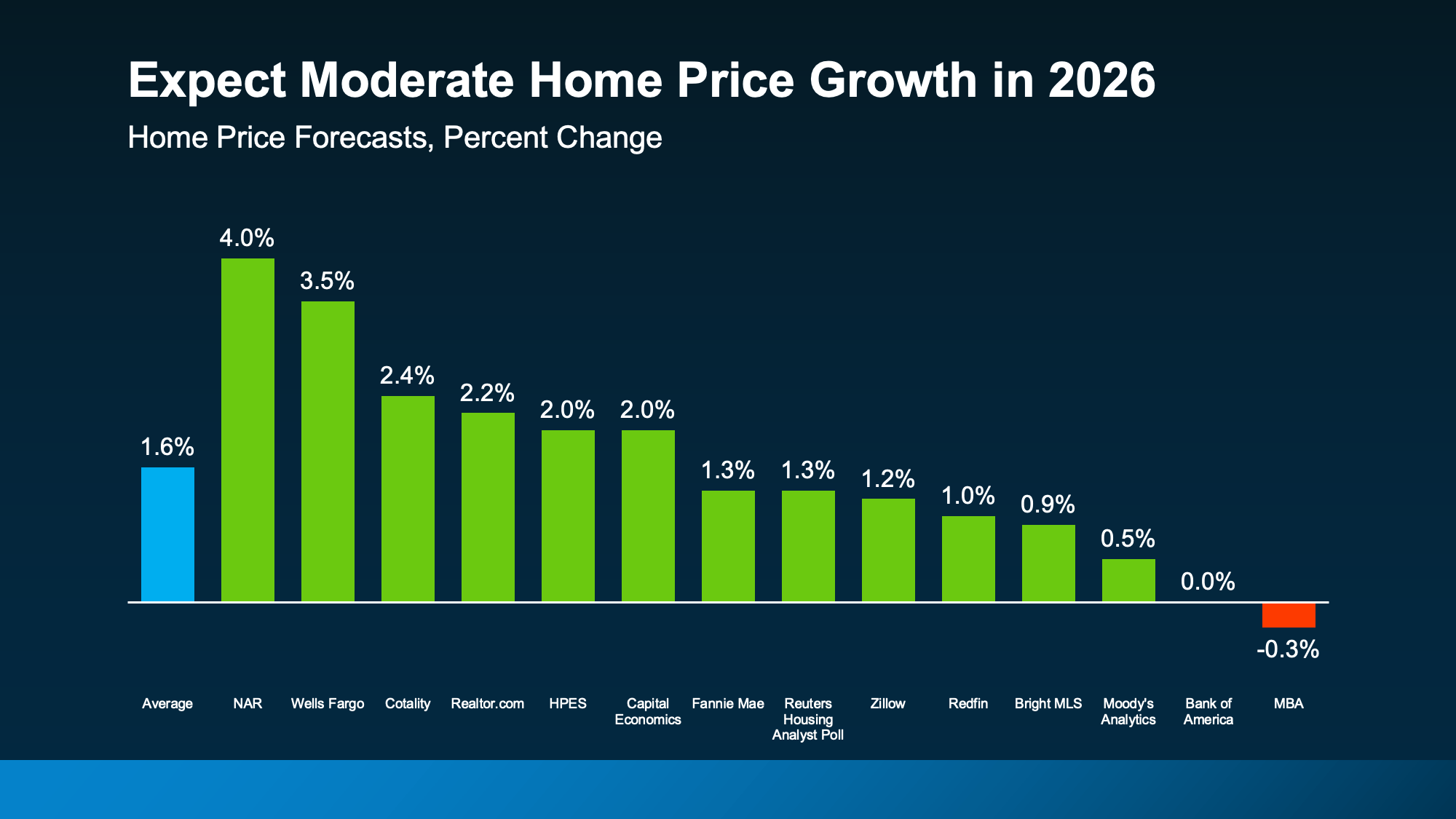
Y eso es tranquilizador si has estado viendo contenido en las redes sociales que dice que los precios se van a desplomar. Pero esto es lo que más debes recordar al respecto: Va a variar mucho según la zona.
Por lo tanto apóyate en un agente local para conocer lo último sobre lo que está sucediendo donde vives. Algunos mercados verán subir los precios más que esto. Otros pueden ver bajar los precios ligeramente. Todo depende realmente de las condiciones en tu mercado local.
Pero en general, los precios continuarán subiendo a nivel nacional. Y eso es bueno para el mercado en su conjunto. Como explica Realtor.com:
“Para los compradores y vendedores de viviendas, el cambio señala un mercado más equilibrado: uno donde el crecimiento de los precios se estabiliza, el alivio de las tasas ofrece un respiro y el poder de negociación se inclina sutilmente hacia los compradores.”
-
Para los compradores: Esperen un crecimiento de precios más moderado, no los picos repentinos e intensos de hace unos pocos años. Eso les da menos sorpresas y más previsibilidad, lo que facilita mucho la elaboración del presupuesto.
-
Para los vendedores: Este crecimiento más lento de los precios restaura el equilibrio sin poner en riesgo su plusvalía. Y eso es una victoria.
Se venderán más viviendas
Todo esto suma para una mejor ecuación de asequibilidad en 2026. Y esa es exactamente la razón por la que los expertos dicen que deberíamos ver venderse más viviendas (y más gente comprando) este año.
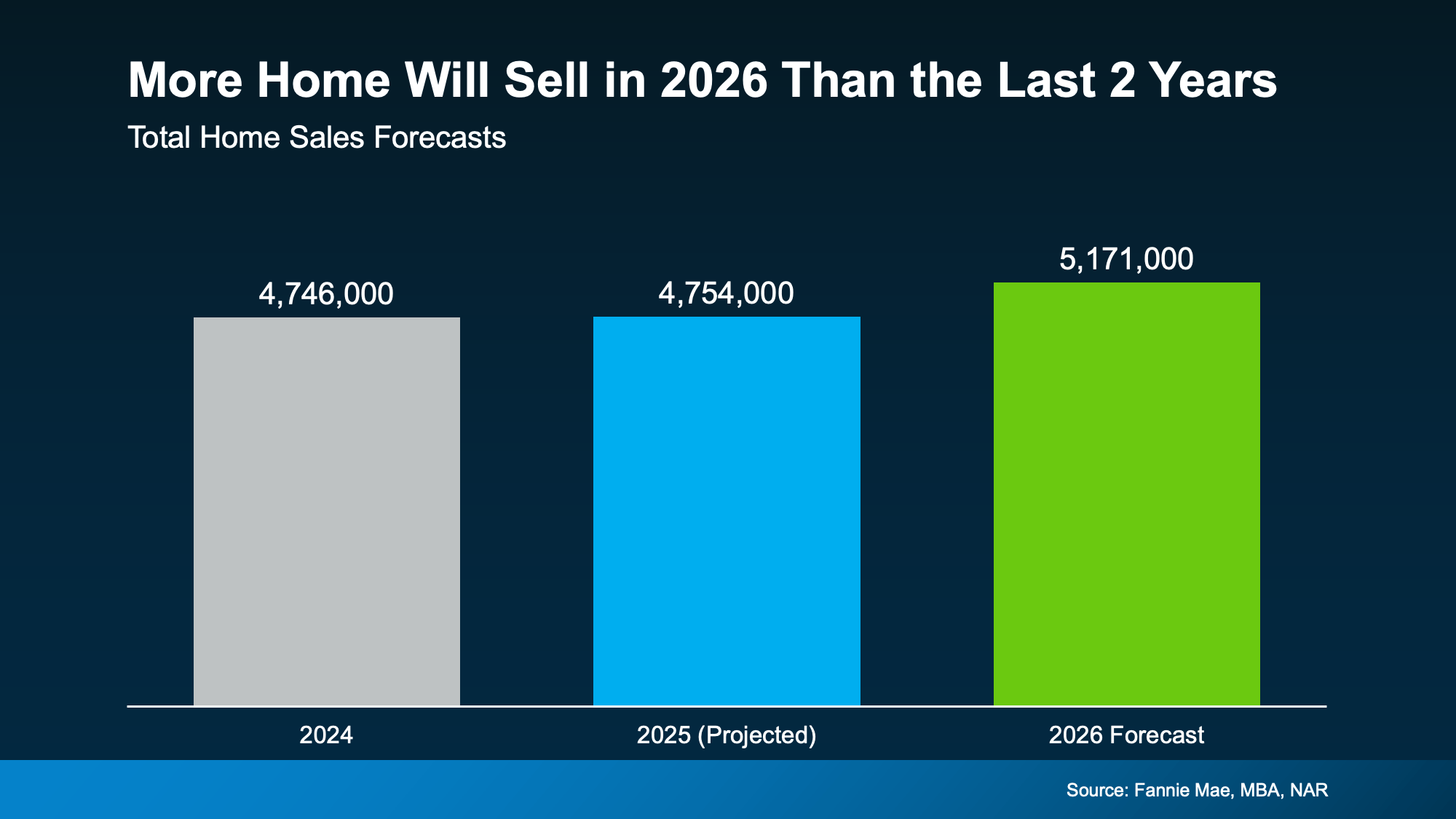
Como dice Mischa Fisher, Economista Jefe de Zillow:
“Los compradores se están beneficiando de más inventario y una mejor asequibilidad, mientras que los vendedores están viendo estabilidad de precios y una demanda más constante. Cada grupo debería tener un poco más de margen de maniobra en 2026.”
El punto es que, finalmente, más personas podrán hacer su mudanza este año. Entonces, la pregunta es: ¿serás tú uno de ellos? El mercado te está dando una oportunidad que no has tenido en un tiempo. Tal vez sea hora de aprovecharla.
En conclusión
La asequibilidad no cambiará repentinamente de la noche a la mañana. Pero, con varias tendencias clave trabajando juntas, debería mejorar lenta y constantemente en los próximos meses.
Es exactamente por eso que, en 2026, deberías ver un mercado con más equilibrio, más previsibilidad y más margen de maniobra del que has tenido en años.
¿Quieres más información sobre las oportunidades que se abren en nuestro mercado local? Hablemos.
Gracias Por Leer
Denise Olivares-Molina

by Denise Olivares-Molina | Jan 13, 2026 | Advice for Sellers, Affordability, Current Trends, For Sellers, Forecasts, Home Prices, Home value, Homeowner Information, Housing Market, Housing Market Updates, Investment, Investment Strategy, Investments, Real Estate Finances, Real Estate Goals, Real Estate Investing, Real Estate Market, Real Estate Tips, Real Estate Trends in 2026, Weekly
Wondering what to expect from the housing market in 2026? You’re not the only one. For the past few years, affordability has been the biggest barrier standing between most people and their next move. And a lot of buyers and sellers have been holding their breath waiting for things to get better. The good news? It’s finally happening.
In 2025, affordability was the best it’s been in 3 years. And experts agree the momentum will keep going in 2026. And that’s based on their analysis of the key factors shaping the housing market in the year ahead: mortgage rates, inventory, and home prices.
Lower Mortgage Rates Are Already Here
Mortgage rates have already come down from their peak. By some counts, they dropped by almost a full percentage point over the course of the last year. And that’s a big deal, even if it doesn’t sound like it. But how low will they go? And should you wait for them to come down more? Here’s your answer.
Forecasts suggest they’ll stay pretty much where they are now and hover in the low 6% range throughout 2026 (see graph below):
Where they go from here really depends on what happens with the economy, the job market, and any changes in monetary policy the Fed makes in the year ahead. The important thing is, they’re already lower than they were just one year ago and that’s ideal if you’re planning a 2026 move.
- For buyers: A lower rate reduces monthly payments and increases buying power. And, that combo helps more people qualify for homes that previously felt just out of reach.
- For sellers: It may be time to accept that rates in the 6s are the new normal. And if you need to move, it’s doable, especially with your equity.
Even More Options Are on the Way
In 2025, the number of homes for sale improved by about 15%. As inventory rose, buyers regained things they hadn’t had in years: options, time to consider those options, and negotiating leverage. That helped restore more balance to the housing market.
Not to mention, the inventory gains are a big piece of what’s helped price growth slow down – which in turn improves affordability.
While the inventory gains this year aren’t expected to be as steep, experts at Realtor.com say the supply of homes for sale should grow by another 8.9% this year.
- For buyers: That means even more choice and more negotiating power.
- For sellers: Pricing your house right will be essential to draw in buyers.
Home Price Growth Is Slowing to a More Sustainable Pace
With more homes for sale, there isn’t as much upward pressure on prices right now. And we’ve seen that shake out over the past year. Even so, the overwhelming majority of experts say, nationally, prices will continue rising in the year ahead – just at a slower pace. On average, they say prices will rise by 1.6% in 2026 (see graph below):
And that’s reassuring if you’ve been fed content on social media saying prices are going to come crashing down. But here’s what you need to remember most about this. It’s going to vary a lot by area.
So, lean on a local agent for the latest on what’s happening where you are. Some markets will see prices rise more than this. Others may see prices come down slightly. It really all depends on conditions in your local market
But overall, prices will continue to rise at the national level. And that’s good for the market as a whole. As Realtor.com explains:
“For homebuyers and sellers, the shift signals a more balanced market—one where price growth steadies, rate relief offers breathing room, and negotiating power tilts subtly toward buyers.”
- For buyers: Expect more moderate price growth, not the sudden and intense spikes just a few short years ago. That gives you fewer surprises and more predictability, which makes budgeting a whole lot easier.
- For sellers: This slower price growth restores balance without putting your equity at risk. And that’s a win.
More Homes Will Sell
All of this adds up to a better affordability equation in 2026. And that’s exactly why experts are saying we should see more homes sell (and more people buy) this year.
As Mischa Fisher, Chief Economist at Zillow, says:
“Buyers are benefiting from more inventory and improved affordability, while sellers are seeing price stability and more consistent demand. Each group should have a bit more breathing room in 2026.”
The bottom line is, more people are finally going to be able to make their move this year. So, the question is: will you be one of them? The market is giving you an opportunity you haven’t had in a while. Maybe it’s time to take advantage of it.
Bottom Line
Affordability won’t change suddenly overnight. But, with several key trends working together, it should slowly and steadily improve in the months ahead.
That’s exactly why, in 2026, you should see a market with more balance, more predictability, and more breathing room than you’ve had in years.
Want more information about the opportunities unlocking in our local market?
Let’s chat.
Thank You For Reading
Denise-Olivares-Molina

by Denise Olivares-Molina | Dec 22, 2025 | Advice for Buyers, Affordability, Buyers, Buying A Home, Buying Tips, First Time Home Buyers, First-Time Buyers, For Buyers, Home Prices, Home value, Investments, Tips for Buyers, Weekly
You may not want to put your homebuying plans into hibernation mode this winter. While a lot of people assume spring is the ideal time to buy a house, new data shows January may actually be the best time of year for budget-conscious buyers.
Kind of surprising, right? Here’s why January deserves a serious look.
1. Prices Tend To Be Lower This Time of Year
Lending Tree says January is the least expensive month to buy a home. And there’s something to that. January has historically offered one of the lowest price-per-square-foot points of the entire year. But the spring? That’s when demand (and prices) usually peak. And that’s not speculation – it’s a well-known trend based on years of market data.
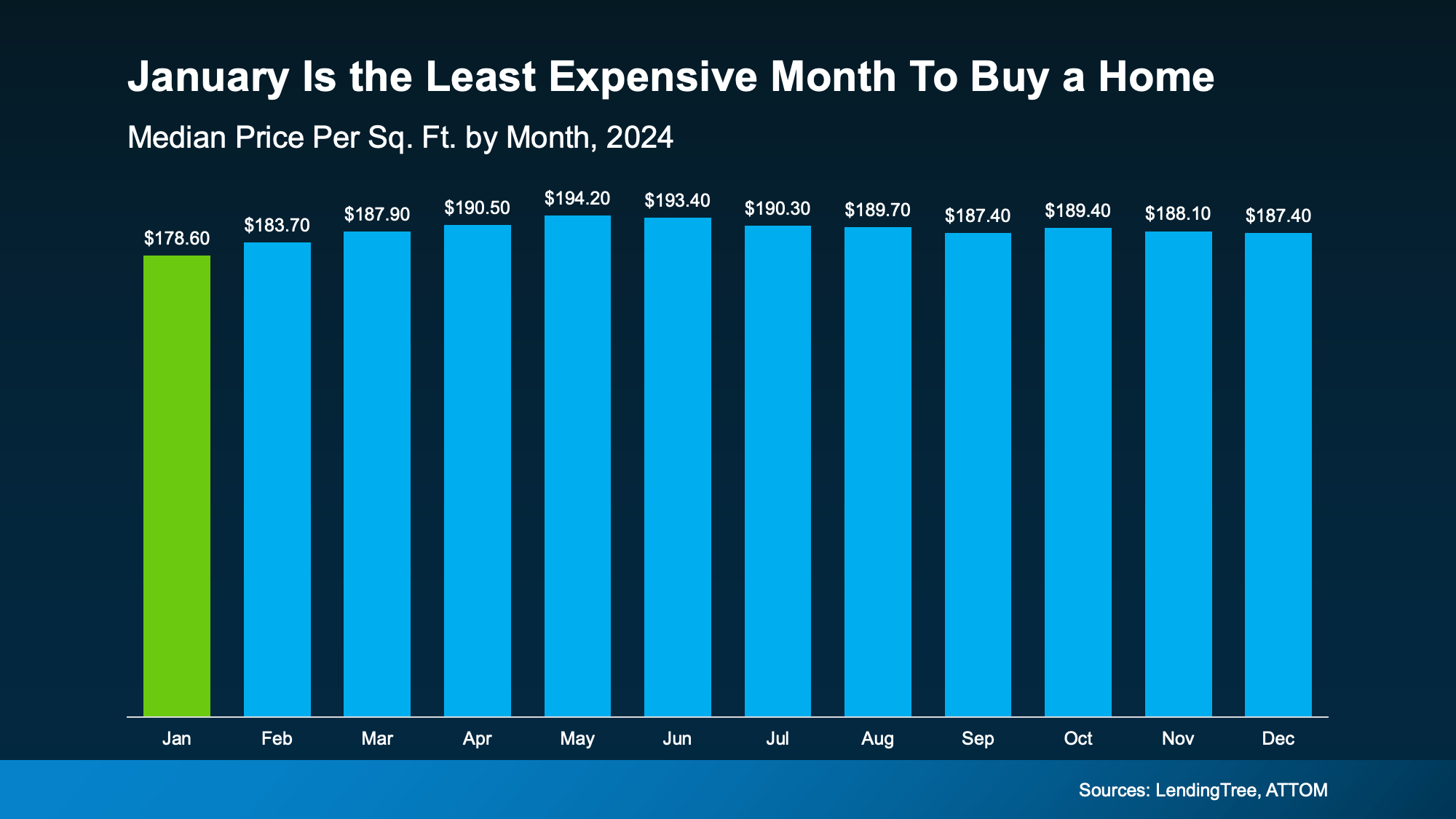 So, how much less are we talking? Here’s a look at the numbers. According to the last full year of data, for the typical 1,500 square foot house, buyers who closed on their home in January paid around $23,000 less compared to those who bought in May. And that general trend typically holds true each year (see chart below):
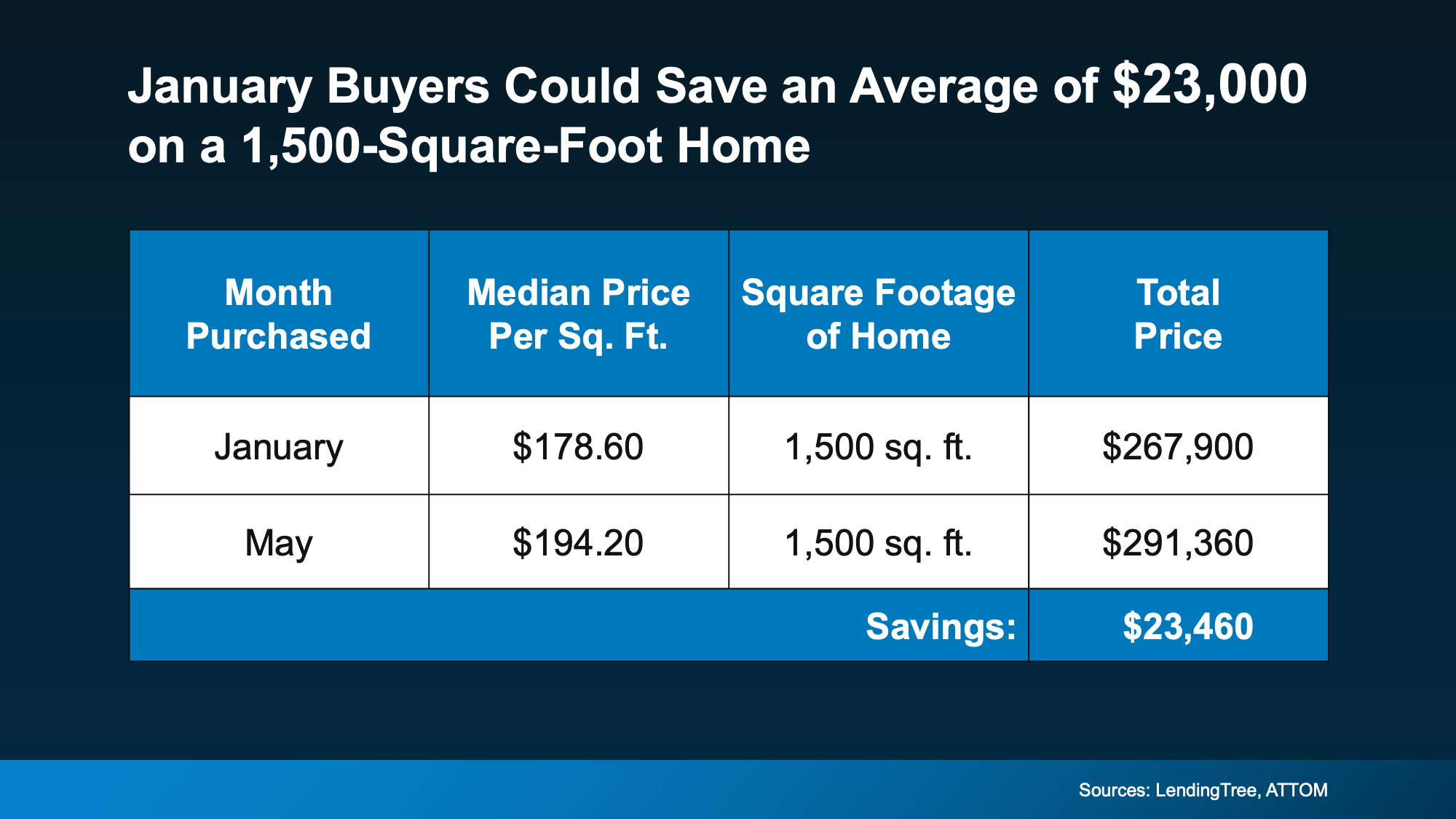 Now, your number is going to depend on the price, size, and type of the home you’re buying. But the trend is clear. For today’s buyers, it’s meaningful savings, especially when affordability is still tight for so many households.
2. Fewer Buyers and More Motivated Sellers
And why do buyers typically save in the winter? It’s simple. Winter is one of the slowest times in the housing market each year. Both buyers and sellers tend to pull back, thinking it’s better to wait until spring. And that means:
- You face less competition
- You’re less likely to get into a multiple offer scenario
- Sellers are more willing to negotiate (since there aren’t as many buyers)
With fewer buyers in the market, you can take your time browsing.
But winter doesn’t just thin out the pool of buyers, it also reveals which sellers truly need to sell. Because fewer people are house hunting during the colder months, sellers who really need to move tend to be more open to negotiating. As Realtor.com explains:
“Less competition means fewer bidding wars and more power to negotiate the extras that add up: closing cost credits, home warranties, even repair concessions. . . these concessions can end up knocking thousands of dollars off the price of a home.”
This can include everything from price cuts to covering closing costs, adjusting timelines, and more. It doesn’t mean you’ll automatically get discounts on every home. But it does mean you’re more likely to be taken seriously and given room to negotiate.
Should You Wait for Spring?
Here’s the real takeaway. When you remove the pressure and frenzy that comes with the busy spring season, it becomes much easier to get the home you want at a price that fits your budget.
But if you wait until spring, more buyers will be in the market. So, waiting could actually mean you spend more and you’d have to deal with more stress.
Now, only you can decide the right timing for your life, but don’t assume you should wait for warmer weather before you move.
Buying in January gives you: less competition, potentially lower prices, and more motivated sellers. And those are three perks you’re not going to see if you wait until spring.
Bottom Line
If you’ve been thinking about taking the next step, this season might give you more opportunity than you think.
Curious what buying in January could look like for you? Let’s take a closer look at your numbers and the homes that are available in our area.
Thank You For Reading
Denise Olivares-Molina

by Denise Olivares-Molina | Oct 11, 2025 | Advice for Buyers and Sellers, Advice for Homeowners, Advice For Renters, Affordability, Home Buying, Home Care, Investments, Kitchen Makeover

Aquí está la traducción del artículo al español:
Más Allá de lo Básico: ¿Su Seguro de Vivienda Realmente Cubre Todos los Riesgos?
Todos esperamos que nuestros hogares sean refugios seguros, lugares donde las preocupaciones se desvanecen. Pero, ¿qué sucede cuando ocurre lo inesperado? Una tormenta de hielo invernal, una tubería reventada, un vendaval costero implacable; estos no son solo titulares, son realidades potenciales que pueden convertir su santuario en una escena de devastación. Aquí es donde interviene el seguro contra riesgos, actuando como su escudo financiero. Pero he aquí la pregunta crucial: ¿es su póliza una red de seguridad sólida, o tiene agujeros lo suficientemente grandes como para que su tranquilidad (y su billetera) se escapen?
Muchos propietarios creen que el “seguro de vivienda” es un término genérico que cubre todo, de la A a la Z. Si bien las pólizas estándar cubren un amplio espectro de peligros (como incendios, viento y rayos), la verdad es que no todos los seguros contra riesgos son iguales. Entender los matices de su cobertura no solo es inteligente; es esencial para una protección eficaz.
Los Escenarios con “Fugas”: Dónde Podría Fallarle su Cobertura Estándar
Aquí hay algunas situaciones comunes en las que una póliza de riesgos básica podría dejarlo vulnerable, especialmente en el área de Nueva Inglaterra:
-
La Exclusión por Inundación: Esta es la brecha más significativa en las pólizas estándar. La mayoría de los seguros de propietarios de vivienda no cubren los daños por inundación, que pueden ocurrir incluso tierra adentro debido a fuertes lluvias o al rápido derretimiento de la nieve. Si su casa está cerca de un cuerpo de agua o en una zona de inundación, necesita una póliza de seguro contra inundaciones por separado, a menudo obtenida a través del Programa Nacional de Seguro contra Inundaciones (NFIP, por sus siglas en inglés).
-
Límites por Hielo y Peso: Si bien el colapso repentino por el peso de la nieve suele estar cubierto, los daños repetidos o los problemas estructurales sutiles causados por cargas pesadas y prolongadas de hielo o nieve pueden tener límites. Más importante aún, las barreras de hielo son un peligro importante en Nueva Inglaterra, y aunque los daños resultantes suelen estar cubiertos, la remoción de la barrera de hielo en sí misma podría no estarlo.
-
Reflujos del Alcantarillado y Fallas de la Bomba de Sumidero: Mientras que las roturas repentinas de tuberías suelen estar cubiertas, los daños causados por el agua que retrocede de las alcantarillas o desagües, o por el desbordamiento de una bomba de sumidero, se excluyen con frecuencia. Esto a menudo requiere un endoso o anexo agregado a su póliza.
-
La Trampa de los Artículos de Alto Valor: ¿Tiene joyas, arte o antigüedades costosas? Las pólizas estándar generalmente tienen sublímites para estos artículos, lo que significa que solo pagarán una fracción de su valor real. Necesitará declarar estos artículos de forma individual o comprar una póliza de artículos personales por separado.
-
Infraseguro — El Costo de Reconstrucción: Este es un peligro silencioso. Si el monto de la cobertura de su vivienda (el costo para reconstruir su casa) no se ha actualizado en años, podría estar gravemente subasegurado. Los costos de construcción fluctúan drásticamente. Debe revisar y ajustar regularmente sus límites de cobertura para asegurarse de que puede permitirse reconstruir hoy, no hace cinco años.
Cobertura Eficaz: Cómo Tapar los Agujeros
¿Cómo se asegura de que su seguro de vivienda sea una red de seguridad sólida?
-
Lea su Póliza (¡Sí, de Verdad!): Entienda qué está cubierto, qué está excluido y cuáles son sus límites.
-
Evalúe sus Riesgos: Adapte su seguro a los riesgos específicos de Nueva Inglaterra: exposición costera, hielo y vientos fuertes.
-
Hable con su Agente: Su agente de seguros puede ayudarlo a identificar posibles brechas, explicar los endosos y asegurarse de que tenga la cantidad correcta de cobertura para el costo de reemplazo de su hogar.
-
Considere los Endosos: Pregunte sobre la adición de coberturas para cosas como el reflujo de alcantarillado y el costo de reemplazo extendido (que puede cubrir hasta un 20-25% por encima del límite de su vivienda si los costos de reconstrucción se disparan).
-
Revisiones Periódicas: La vida cambia, el valor de las viviendas cambia y los costos de construcción cambian. Revise su póliza anualmente para asegurarse de que todavía satisface sus necesidades.
No deje la protección de su hogar al azar. Al comprender y adaptar activamente su seguro contra riesgos, está invirtiendo en una verdadera tranquilidad, asegurándose de que cuando el desastre inevitablemente llame a su puerta, su red de seguridad financiera esté lista para sostenerlo.
Gracias Por Leer
Denise Olivares-Molina

by Denise Olivares-Molina | Oct 11, 2025 | Advice for Buyers and Sellers, Advice for Homeowners, Advice For Renters, Affordability, Home Care, Home value, Homeowner Information, Investments, Safety, Weekly

We all hope our homes are safe havens, places where worries melt away. But what happens when the unexpected strikes? A winter ice storm, a burst pipe, a relentless coastal gale – these aren’t just headlines; they’re potential realities that can turn your sanctuary into a scene of devastation. This is where hazard insurance steps in, acting as your financial shield. But here’s the crucial question: is your policy a robust safety net, or does it have holes big enough for your peace of mind (and your wallet) to slip right through?
Many homeowners believe that “home insurance” is a blanket term, covering everything from A to Z. While standard policies cover a broad spectrum of perils (like fire, wind, and lightning), the truth is, not all hazard insurance is created equal. Understanding the nuances of your coverage isn’t just smart; it’s essential for efficient protection.
The “Sieve” Scenarios: Where Standard Coverage Might Fail You
Here are a few common situations where a basic hazard policy might leave you vulnerable, especially in the New England area:
-
The Flood Exclusion: This is the most significant gap in standard policies. Most homeowners’ insurance does not cover flood damage, which can happen even inland from heavy rain or rapid snowmelt. If your home is near a body of water or in a flood zone, you need a separate flood insurance policy, often obtained through the National Flood Insurance Program (NFIP).
-
Ice and Weight Limits: While sudden collapse from snow weight is often covered, repeated damage or subtle structural issues caused by heavy, long-term ice or snow loads may have limits. More importantly, ice dams are a major New England peril, and while resulting damage is often covered, the removal of the ice dam itself may not be.
-
Sewer Backups and Sump Pump Failures: While sudden pipe bursts are often covered, damage caused by water backing up from sewers or drains, or from an overflowing sump pump, is frequently excluded. This often requires an endorsement or rider added to your policy.
-
The High-Value Item Trap: Do you have expensive jewelry, art, or antiques? Standard policies usually have sub-limits for these items, meaning they’ll only pay out a fraction of their actual value. You’ll need to schedule these items individually or purchase a separate personal articles policy.
-
Underinsurance — The Cost of Rebuilding: This is a silent danger. If your dwelling coverage amount (the cost to rebuild your home) hasn’t been updated in years, you might be severely underinsured. Construction costs fluctuate dramatically. You must regularly review and adjust your coverage limits to ensure you can afford to rebuild today, not five years ago.
Efficient Coverage: Plugging the Holes
How do you ensure your home insurance is a robust safety net?
-
Read Your Policy (Yes, Really!): Understand what’s covered, what’s excluded, and what your limits are.
-
Assess Your Risks: Tailor your insurance to New England’s specific risks: coastal exposure, ice, and high winds.
-
Talk to Your Agent: Your insurance agent can help you identify potential gaps, explain endorsements, and ensure you have the right amount of coverage for your home’s replacement cost.
-
Consider Endorsements: Ask about adding coverage for things like sewer backup and extended replacement cost (which can cover up to 20-25% over your dwelling limit if rebuilding costs surge).
-
Regular Reviews: Life changes, home values change, and construction costs change. Review your policy annually to ensure it still meets your needs.
Don’t leave your home’s protection to chance. By actively understanding and tailoring your hazard insurance, you’re investing in true peace of mind, ensuring that when disaster inevitably knocks, your financial safety net is ready to catch you.
Thank You For Reading
Denise Olivares-Molina
