
by Denise Olivares-Molina | Sep 1, 2026 | 2026 Housing Market, 2026 Mortgage Rate, Advice for Sellers, Affordability, For Sellers, Forecasts, Homeowner Information, Housing Market, Housing Market Insights, Housing Market Shifts, Housing Market Updates, Mortgage Rates, Protect Your Investment, Real Estate Finances
A recent survey from Talker Research asked Americans to pick one word to describe how 2026 has felt so far. The winner? Stressful. And honestly, there’s been a lot going on.
So, it’s understandable if you’ve been putting off buying or selling a home until things settle down. But you may be waiting on something that’s already happened. While everything else has felt shaky, the housing market has become one of the steadiest things out there. Look at the data.
Home Prices Have Leveled Out
After years of fast increases, data from the National Association of Realtors (NAR) shows home prices have been remarkably steady for the past 4 years (see graph below):
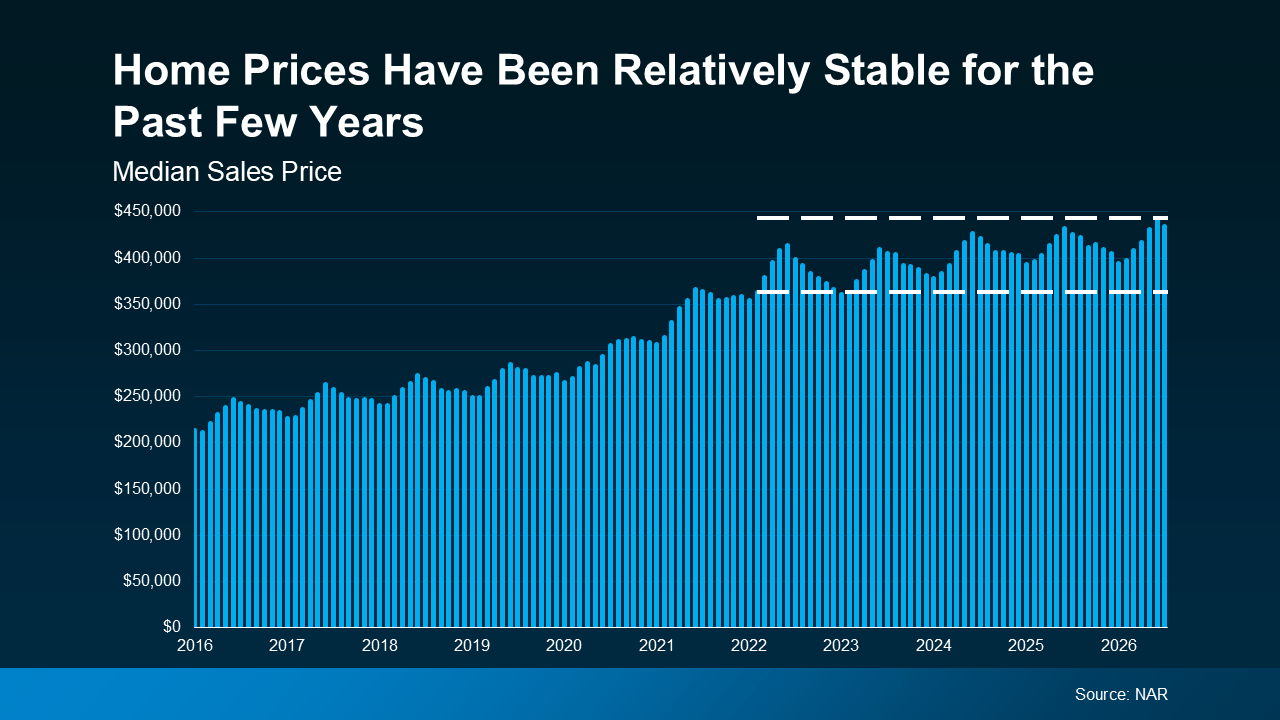 And experts say that’s what to expect going forward, too. As Selma Hepp, Chief Economist at Cotality, explains:
“In 2026, we expect home prices to remain broadly stable, with modest appreciation at a national level.”
No wild swings. Just slow, steady growth. That’s a healthy market. Of course, that pace can vary a bit depending on where you live. But nationally, steady growth like this makes it easier to plan your budget, whether you’re buying or selling.
The Supply of Homes for Sale Has Steadied
For years, the supply of homes for sale was a moving target. It dropped fast during the pandemic and has been climbing pretty reliably ever since. Now, that pace of growth has slowed down. According to Realtor.com, inventory today is very close to where it was this time last year (see graph below):
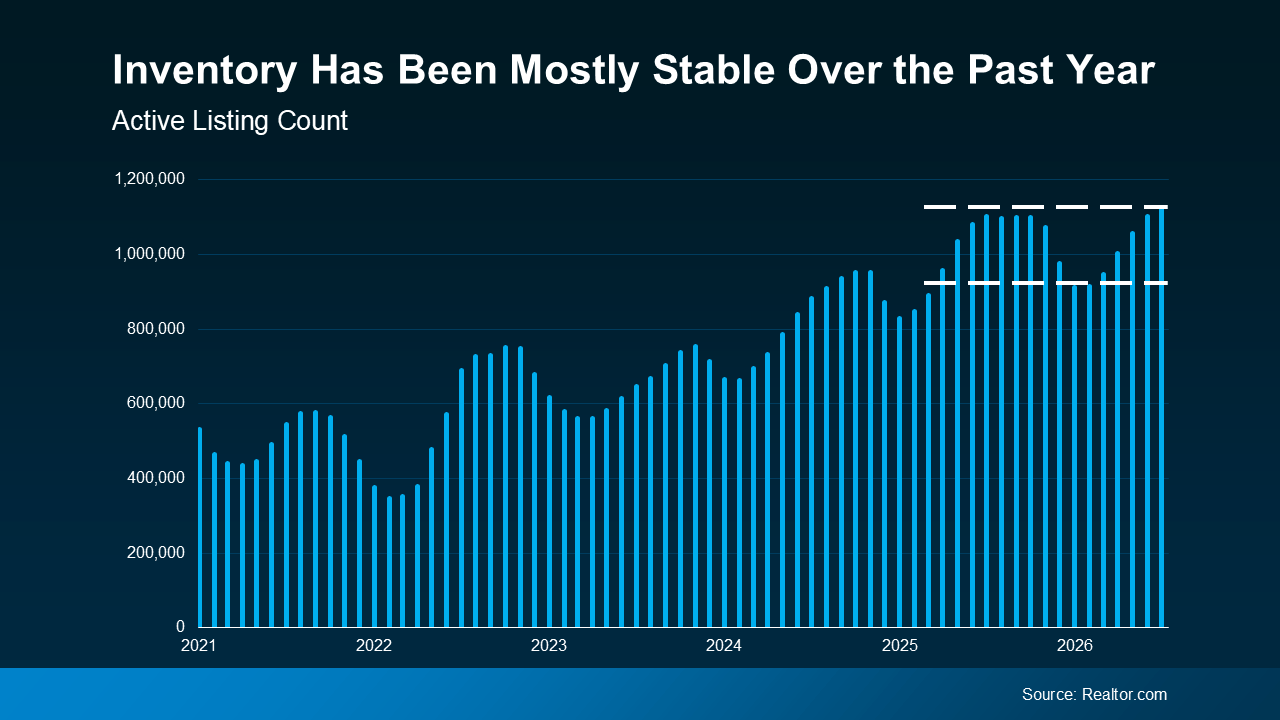 That’s helpful no matter which side you’re on. When the number of homes for sale isn’t changing much, you know what you’re walking into – how many options you’ll have as a buyer, and how much competition you’ll face as a seller.
Mortgage Rates Found Their Range
Yes, rates jumped dramatically back in 2022. But since then, Freddie Mac data shows they’ve stayed between 6% and 7% for the better part of the last 3 or so years (see graph below):
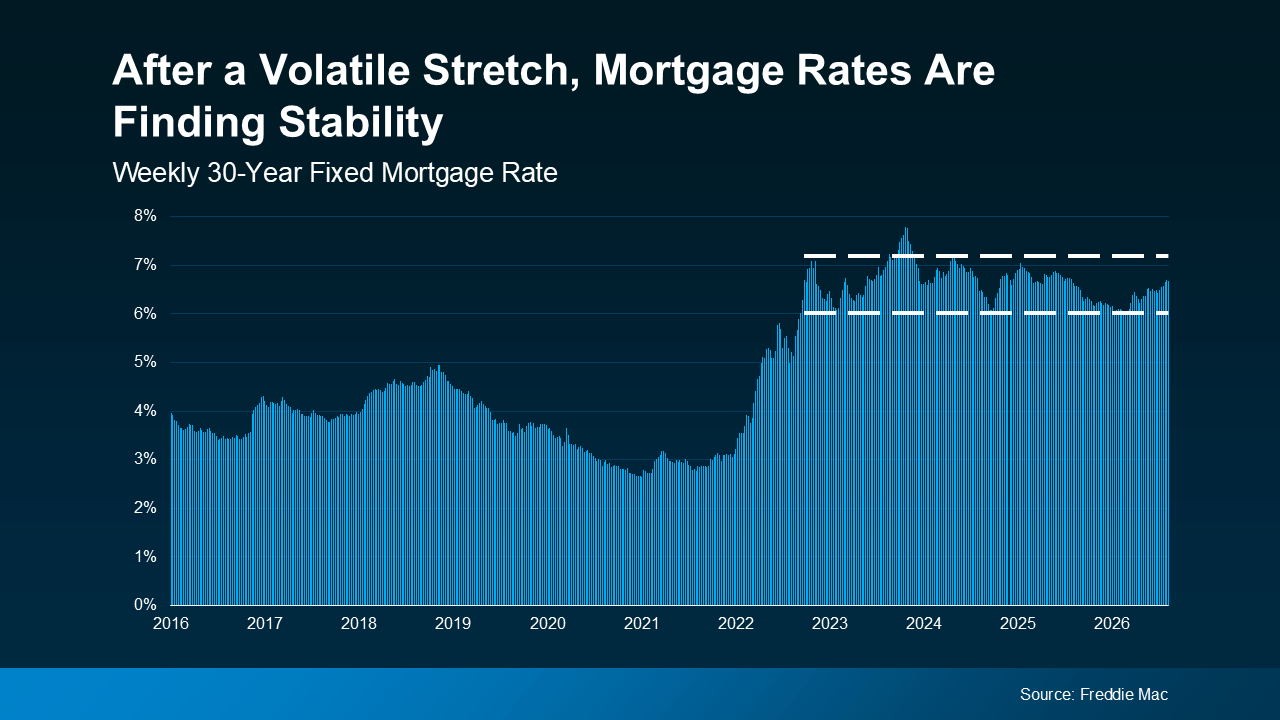 Yes, there was one brief spike above that threshold, but overall, rates have stayed in that range for a while now. That predictability helps when you’re planning a move.
And now that this seems to be a longer-term trend, people have accepted it as the new normal. Buyers have gotten comfortable purchasing in that range, and sellers have gotten just as comfortable listing in it.
That comfort’s important because when both sides know what to expect, they keep making moves. In other words, the market isn’t frozen waiting for something to change. It’s moving calmly.
Bottom Line
The rest of the world may feel unpredictable right now, but the housing market doesn’t have to. Prices, inventory, and rates have all found solid ground.
If stability is what you’ve been waiting for, it’s already here. Let’s connect if you want to talk through what that means for your move.
Thank You For Reading
Denise Olivares-Molina

by Denise Olivares-Molina | Sep 1, 2026 | 2026 Housing Market, Advice for Buyers, Agent Value, Buyer Tips, Buyers, Buying A Home, Buying Myths, Buying Tips, First-Time Buyers, First-Time Investors, For Buyers, Home Prices, Housing Market, Housing Market Insights, Housing Market Shifts, Housing Market Updates, Real Estate Finances, Real Estate Market, Real Estate Market 2026, Real Estate Myths, Real Estate Tips, Weekly
Lately, headlines have floated an eye-catching idea about tapping into your 401(k) to cover a down payment on a home. Maybe you’ve caught the buzz and wondered whether that money could get you into a home faster, especially with affordability as tough as it is.
Here’s what you need to remember. Pulling from your retirement savings is a big decision, so take time to weigh all your options first and be sure to talk with a financial expert before you do anything.
Why Dipping into a 401(k) Can Be Tempting
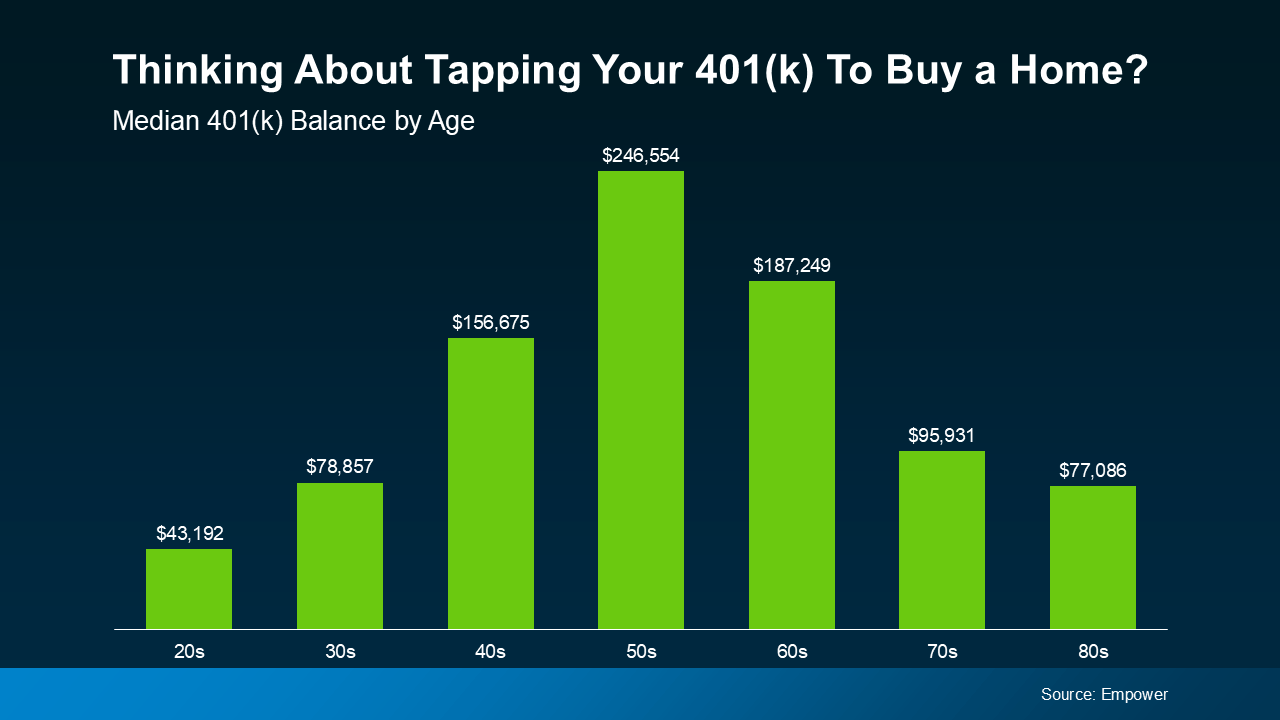
Data from Empower shows many Americans have built up considerable retirement savings. The median 401(k) amount for anyone in their 40s-60s is six figures (see graph below):
 And when you’ve got a good chunk saved and your dream home is right there, reaching for it can feel like an easy call.
But dipping into your retirement savings to buy a home could cost you a penalty and set back your finances later on. That’s why it’s a good idea to explore other options for your down payment first. As Redfin says:
“If you’re struggling to save enough for a down payment, you may be wondering if tapping into your 401(k) is the right option. While it’s possible, doing so comes with significant risks, like early withdrawal penalties and lost investment growth.“
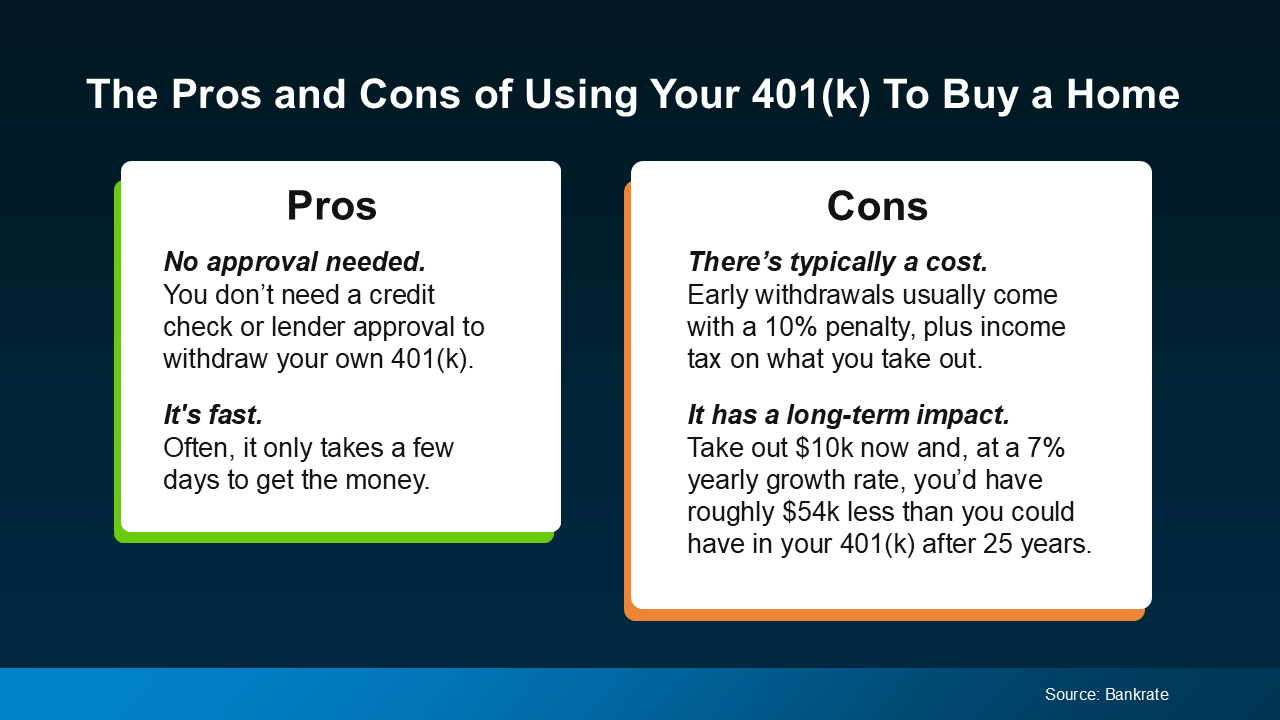
Before you decide, have a financial advisor help you compare the upsides to the risks. Bankrate points to a few of each (see visual):
Other Options Worth Exploring First
Your 401(k) isn’t the only way to finance a home purchase. Redfin outlines a few other options to look into before you decide what to do:
-
Low and No-Down Payment Loans: FHA loans, for example, allow qualified buyers to put down as little as 3.5% of the home’s price, depending on their credit scores.
-
Down Payment Assistance Programs: Many national and local programs can help reduce what you pay toward your down payment or closing costs.
Make a Plan Before You Make a Move
No matter which route you take, talk with a financial expert first. The buyers who come out ahead build a solid plan with the right professionals before starting their journey to homeownership. As NerdWallet puts it:
“Even if you’re convinced a 401(k) loan is the way to go, it’s important to understand the risks at the outset.“
Bottom Line
Affordability is definitely a challenge, but that doesn’t mean tapping your 401(k) is your only way in if you want to buy.
If you’re considering using your 401(k) savings for a down payment, weigh all your options and talk with a trusted financial advisor before you make any decisions. They’ll help you make a plan to fit your goals and your budget.
Thank You For Reading
Denise Olivares-Molina

by Denise Olivares-Molina | Aug 17, 2026 | Advice for Homeowners, Advice for Sellers, For Sellers, Home Selling Strategy, Home value, Homeowner Information, Housing Market, Housing Market Insights, Housing Market Shifts, Seller, Sellers, Selling A Home, Selling Tips, Weekly
Esa habitación de sobra en la planta principal. El sótano terminado con una pequeña cocina y su propia entrada. La habitación extra que ha estado usando como depósito.
Para usted, es espacio extra. Pero para un grupo cada vez mayor de compradores, es la razón por la que elegirían su casa. Aquí le explicamos por qué. La compra de viviendas multigeneracionales va en aumento.
Millones de familias viven de forma multigeneracional
El número de hogares multigeneracionales está aumentando. Esto sucede cuando 3 o más generaciones viven bajo un mismo techo. Y los datos muestran que esos hogares crecieron de 3,2 millones a casi 4 millones entre 2014 y 2024, según Realtor.com.
Y cada año, más personas buscan una casa más grande que se adapte a sus necesidades combinadas.
Si bien el interés por este tipo de casa está aumentando a nivel general, los datos de USAFacts muestran que la convivencia multigeneracional es más común en unos estados que en otros. Cuanto más oscuro sea el estado en el mapa a continuación, más común es en esa área (consulte el mapa a continuación):
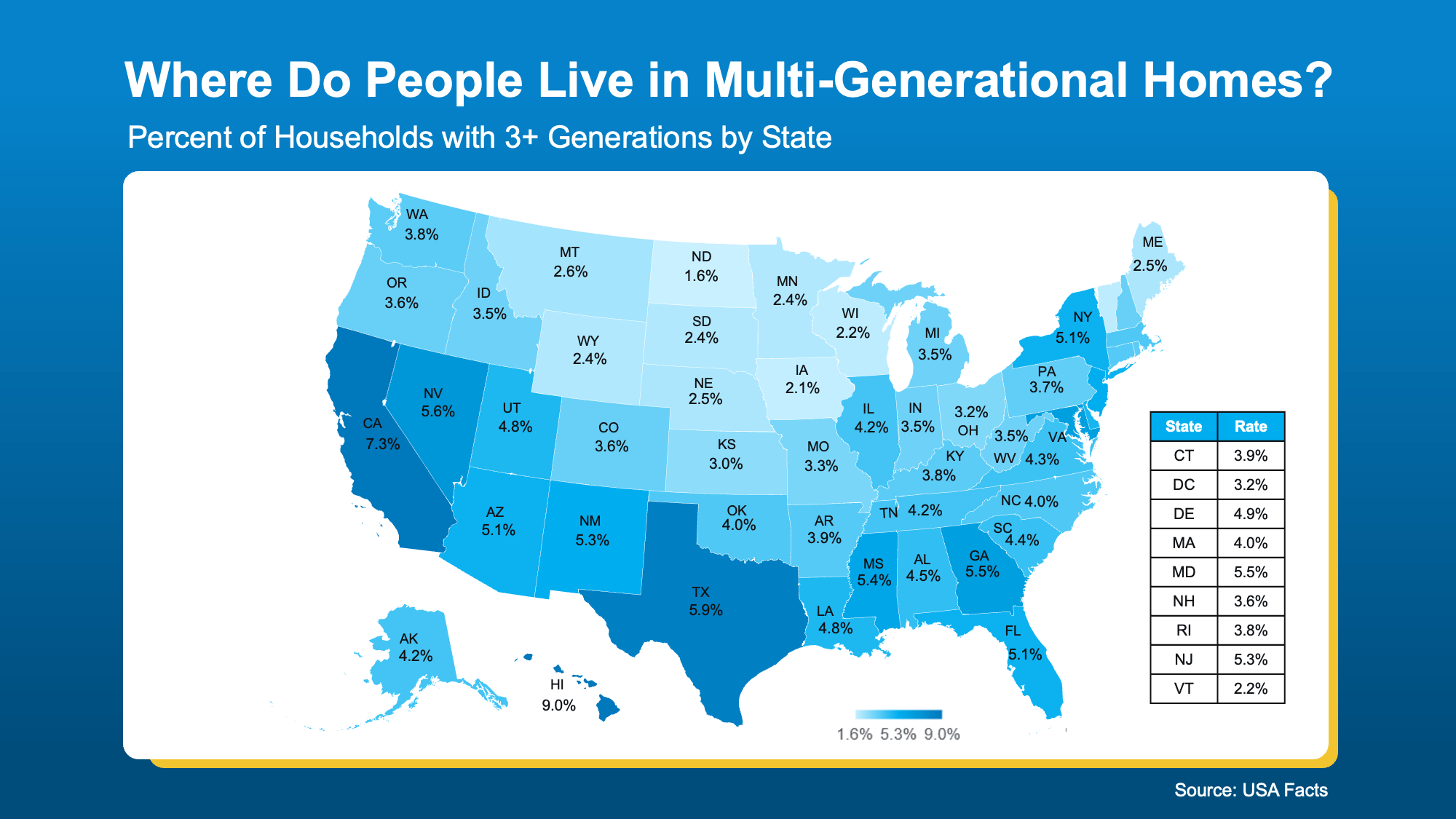
¿Dónde se ubica su estado? Dependiendo de dónde se encuentre, el grupo de compradores que busca una casa como la suya podría ser incluso más grande de lo que piensa. Pero la conclusión general es la siguiente:
Existe un mercado real para las casas más grandes con espacio para múltiples generaciones bajo un mismo techo, especialmente porque la asequibilidad de las viviendas sigue siendo muy ajustada. Y si usted es dueño de una casa así, sepa que tiene mucha demanda.
Las casas multigeneracionales se venden a un precio superior
Y esa habitación adicional tiene un valor real para el comprador adecuado. Según Realtor.com, en 2025, el precio promedio de venta de una casa multigeneracional fue de $709.000, aproximadamente un 65% más alto que el promedio de $429.900 de una casa estándar.
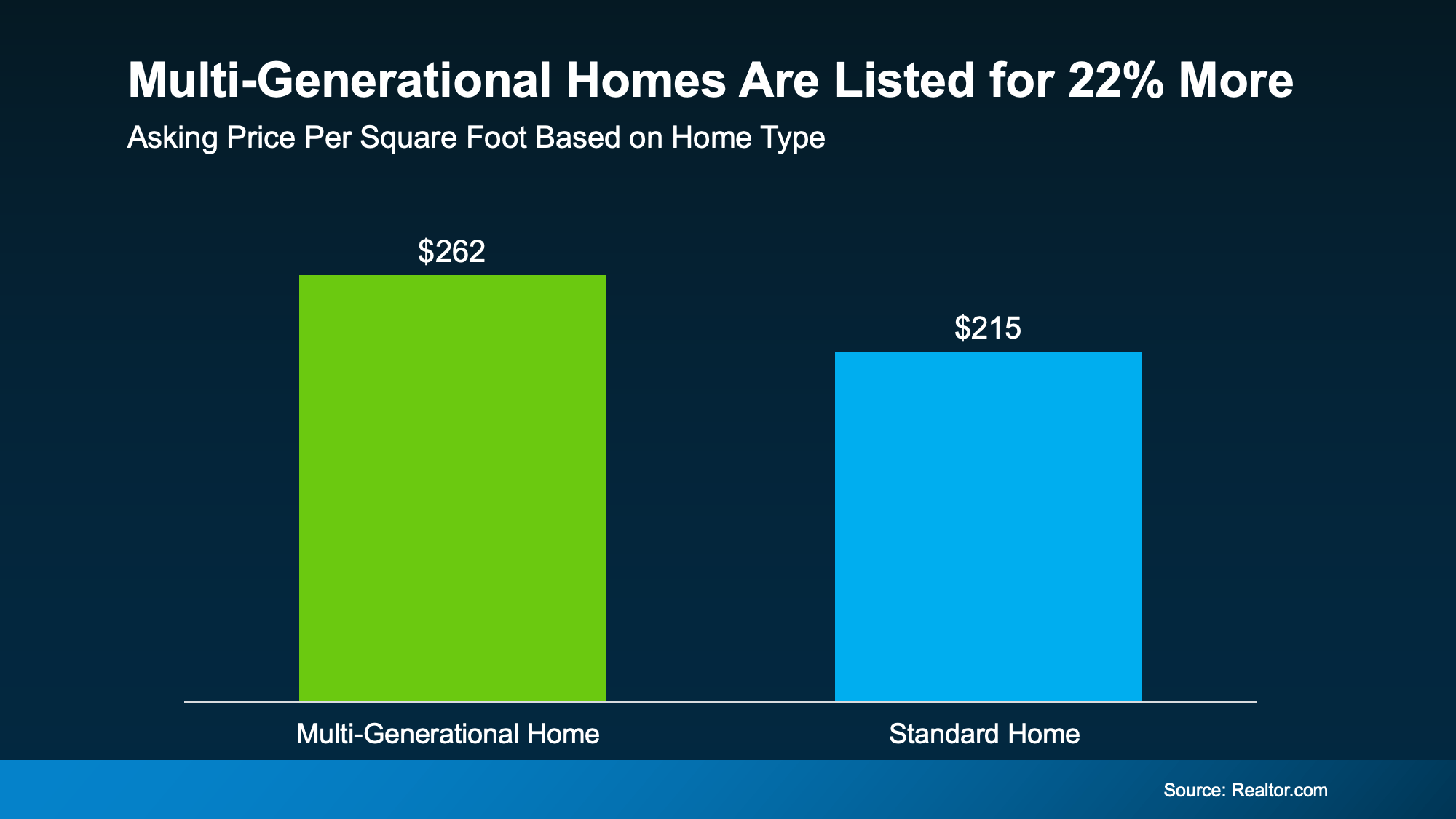
Parte de esto se debe simplemente al tamaño. Pero si comparamos las casas multigeneracionales con las casas normales que tienen la misma cantidad de pies cuadrados, las primeras siguen ganando: $262 por pie cuadrado en comparación con $215.
Ese es un recargo del 22% que podría obtener por características especiales como suites para suegros, segundas cocinas y entradas independientes (consulte el gráfico a continuación):
Cuando venda, esto podría ayudarle a quedarse con más dinero en el bolsillo, especialmente cuando su agente inmobiliario destaque las características multigeneracionales de su casa en el anuncio.
Y los compradores no se asustan con los precios
E incluso con precios ligeramente más altos, los compradores no se echan atrás. Las casas multigeneracionales atrajeron un 13,5% más de visitas en línea que las estándar y, aun así, se vendieron igual de rápido (en unos 59 días), según el mismo informe de Realtor.com.
Hannah Jones, analista sénior de investigación económica en Realtor.com, explica:
“La fuerte demanda y los elevados precios superiores que estamos viendo en mercados con inventario limitado apuntan a un verdadero desajuste entre lo que los compradores buscan y lo que realmente está disponible. Para los vendedores en estos mercados, este tipo de vivienda puede ser un activo importante”.
Básicamente, cuando los compradores quieren algo muy específico, la casa que cumple con esos requisitos tiende a destacar.
En conclusión
Su casa, adaptada para varias generaciones o simplemente más grande que el promedio, podría cumplir con criterios que muchos compradores no encuentran en una vivienda estándar. Eso es lo que llama la atención. Y lo que genera ofertas. Así que, hablemos sobre lo que podría obtener en nuestro mercado en este momento.
Gracias por leer,
Denise Olivares-Molina

by Denise Olivares-Molina | Aug 3, 2026 | Advice for Sellers, For Sellers, Home Gain Statistics, Home Prices, Homeowner Information, Housing Market, Housing Market Insights, Housing Market Shifts, Housing Market Updates, Market Updates, Pricing, Real Estate Finances, Real Estate Goals, Real Estate Investing, Real Estate Market, Real Estate Market 2026, Real Estate Myths, Weekly
After more than a year of headlines talking about how home prices are going to crash, the latest data shows that price growth may be starting to pick back up again. And depending on whether you’re buying or selling, that shift means something different for you.
The Numbers May Be Starting To Turn
For the past couple of years, home price growth has been moderating – cooling from around 7% in mid-2024, according to Redfin (see graph below). But look at the right side of that graph. The pace of that growth appears to have hit its low point and started to turn.
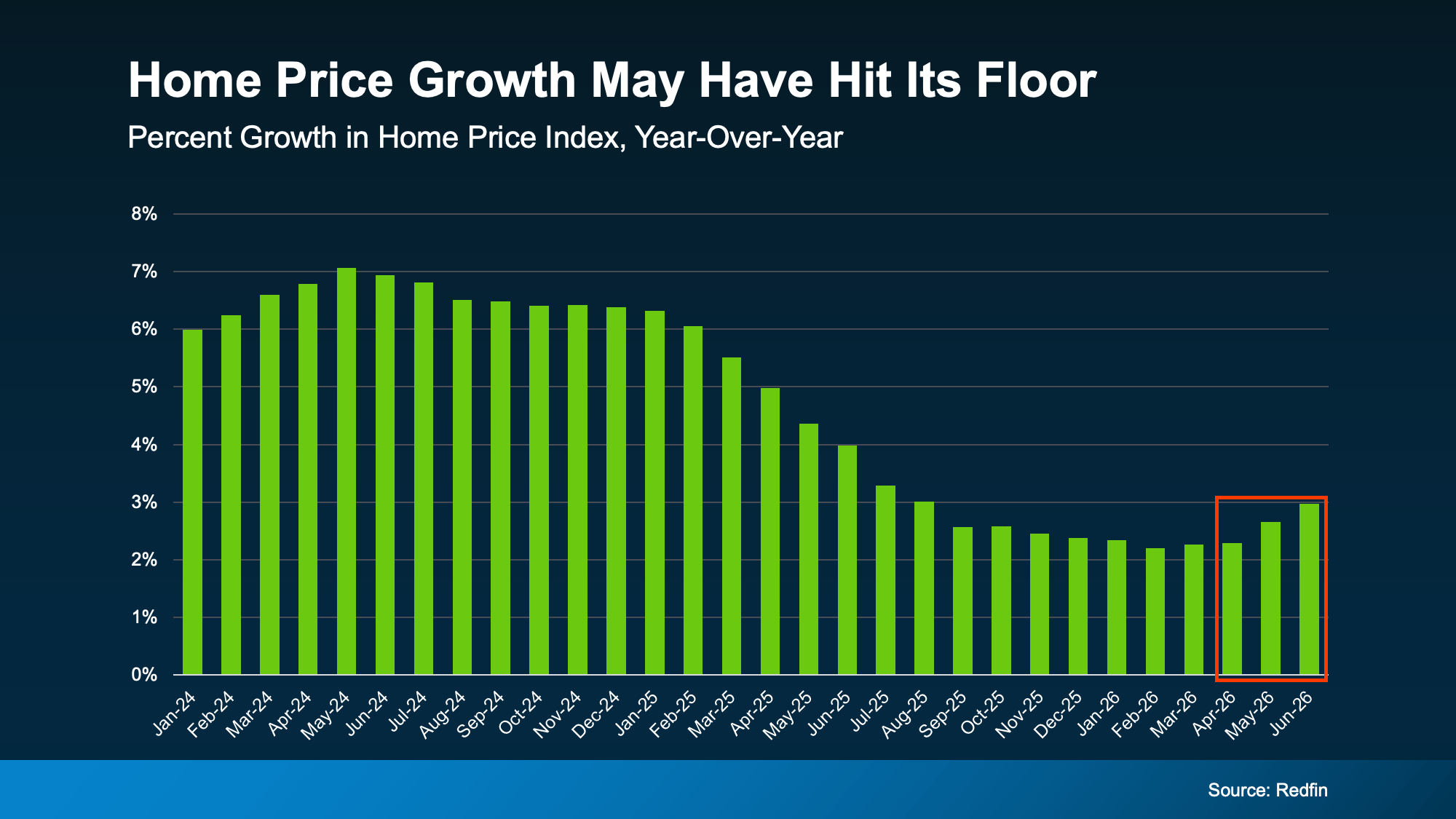
While a couple months of data doesn’t necessarily mean this will be a lasting trend, there are some other signs that this could continue.
For example, fewer markets are seeing prices decline. According to ResiClub and Zillow, about 36% of the 300 largest housing markets had falling prices as of the middle of last year. Since the start of this year, that share has been shrinking. Now? Only 23% are experiencing those mild dips (see graph below):
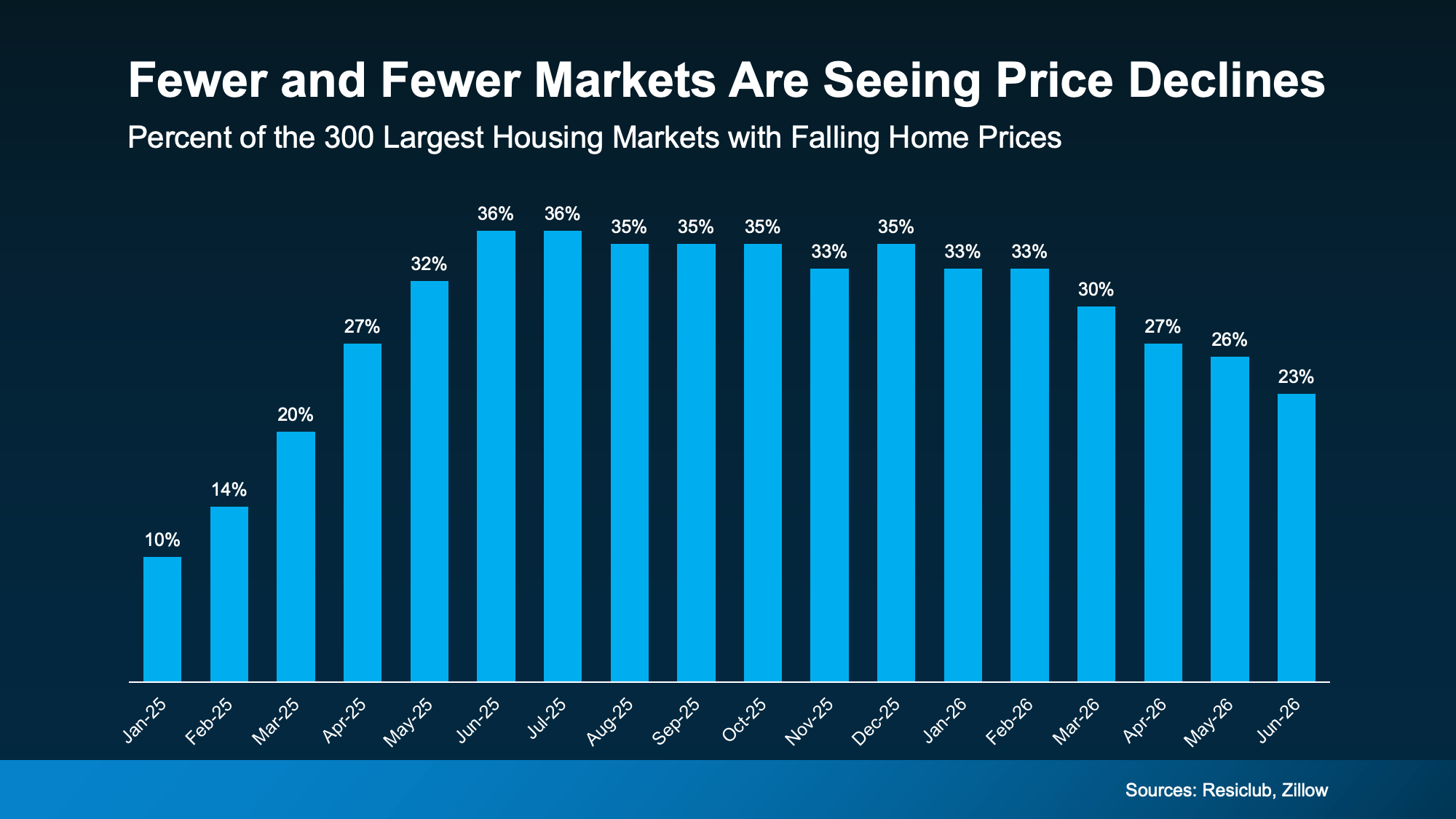
When fewer markets see prices falling, that means more markets are seeing prices rise again.
And forecasts suggest this shift has room to run. On average, experts project home prices will rise about 2.3% nationally this year. And for that to happen, price growth would have to pick up a bit in the second half of 2026.
But Remember, Real Estate Is Local
While it looks like national prices may be starting to pick back up a tiny bit, that doesn’t mean that’s what’s happening in your neighborhood.
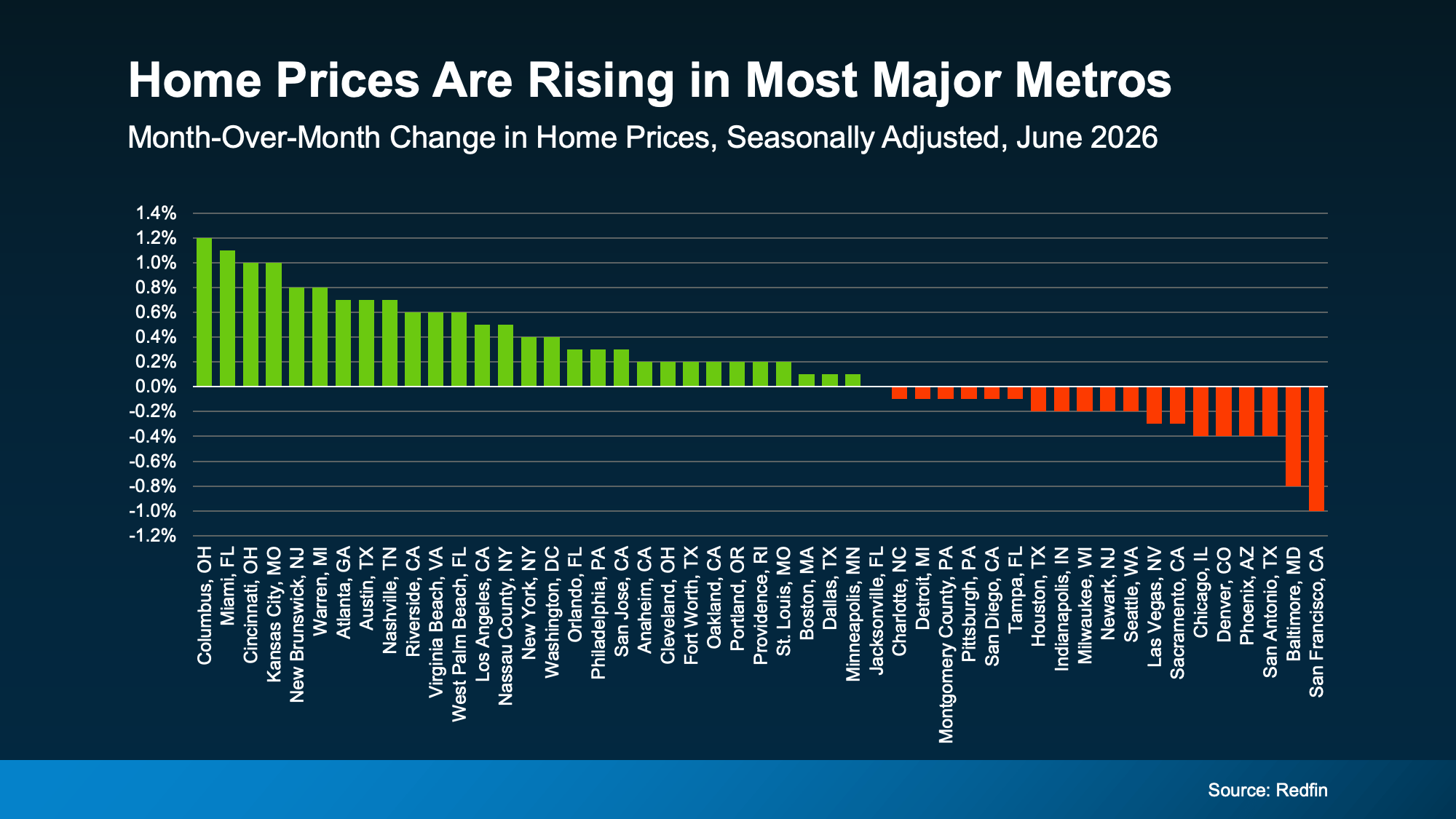
National home prices are really just an average of hundreds of local markets. Some are climbing faster. Others are still cooling. But one reason the national average may be looking up is because a growing number of metros may actually be net positive for prices this year.
Not long ago, the major metros were split about 50/50 – half seeing prices rise and half seeing them fall. Now, that balance looks like it’s starting to tip in a more positive direction. Just last month, more than half of the major metros saw prices go up, according to Redfin (see graph below):
As Selma Hepp, Chief Economist at Cotality, explains:
“. . . local markets continue to tell very different stories. Annual home price growth has changed little since the start of the year, but some markets, especially those supported by strong job and income growth in the West and more affordable Midwest markets, have seen notable acceleration in price gains.”
What This Means for You
Home price headlines can be confusing because they don’t always tell the full picture. Lean on an agent to understand what’s happening in your local market and what the early signs say for where prices may go from here.
That’s the best way to stay one step ahead of the market.
If you’re buying: slower price growth has worked in your favor. You’ve had more room to negotiate and a budget you could plan around. If price growth is picking up in your area, buying now may mean paying less than you would later this year.
If you own a home: you’ve been gaining equity all along, even while growth moderated. If growth keeps picking up, those gains could speed up, too. Lawrence Yun, Chief Economist at the National Association of Realtors (NAR), projects the typical homeowner will gain roughly $16,000 in housing wealth this year. And if you’re thinking about selling, this shift is a good early sign for you. Just remember, the market is still pretty balanced and buyer-friendly in a lot of areas right now.
Home price growth slowed way down, and now it’s showing early signs of picking back up. Whether you’re buying or selling, let’s connect so you can see exactly what prices are doing in our local market and what that means for your plans.
Bottom Line
Home price growth slowed way down, and now it’s showing early signs of picking back up. Whether you’re buying or selling, let’s connect so you can see exactly what prices are doing in our local market and what that means for your plans.
Thank You For Reading
Denise Olivares-Molina

by Denise Olivares-Molina | Jul 20, 2026 | Advice for Buyers, Buyers, Buying A Home, Buying Myths, Buying Tips, Economy, Elegant Designs, Housing Market, Housing Market Insights, Housing Market Shifts, Housing Market Updates, Infographic, Market Trends, Market Updates, Real Estate Finances, Real Estate Goals, Real Estate Investing, Real Estate Market, Real Estate Market 2026, Real Estate Trends in 2026, Recipes, Weekly
If you’ve thought about buying a home in the past few years, you may have run into two frustrations: asking prices that kept climbing and too few homes to choose from.
In many places, both sticking points are letting up this summer, with lower asking prices and more homes for sale. Let’s look at the trends, and what they mean for your search.
Sellers Are Pricing To Attract Buyers
According to Realtor.com, the national median asking price was $430,000 in June, nearly $11,000 under what it was the year before (see graph below):
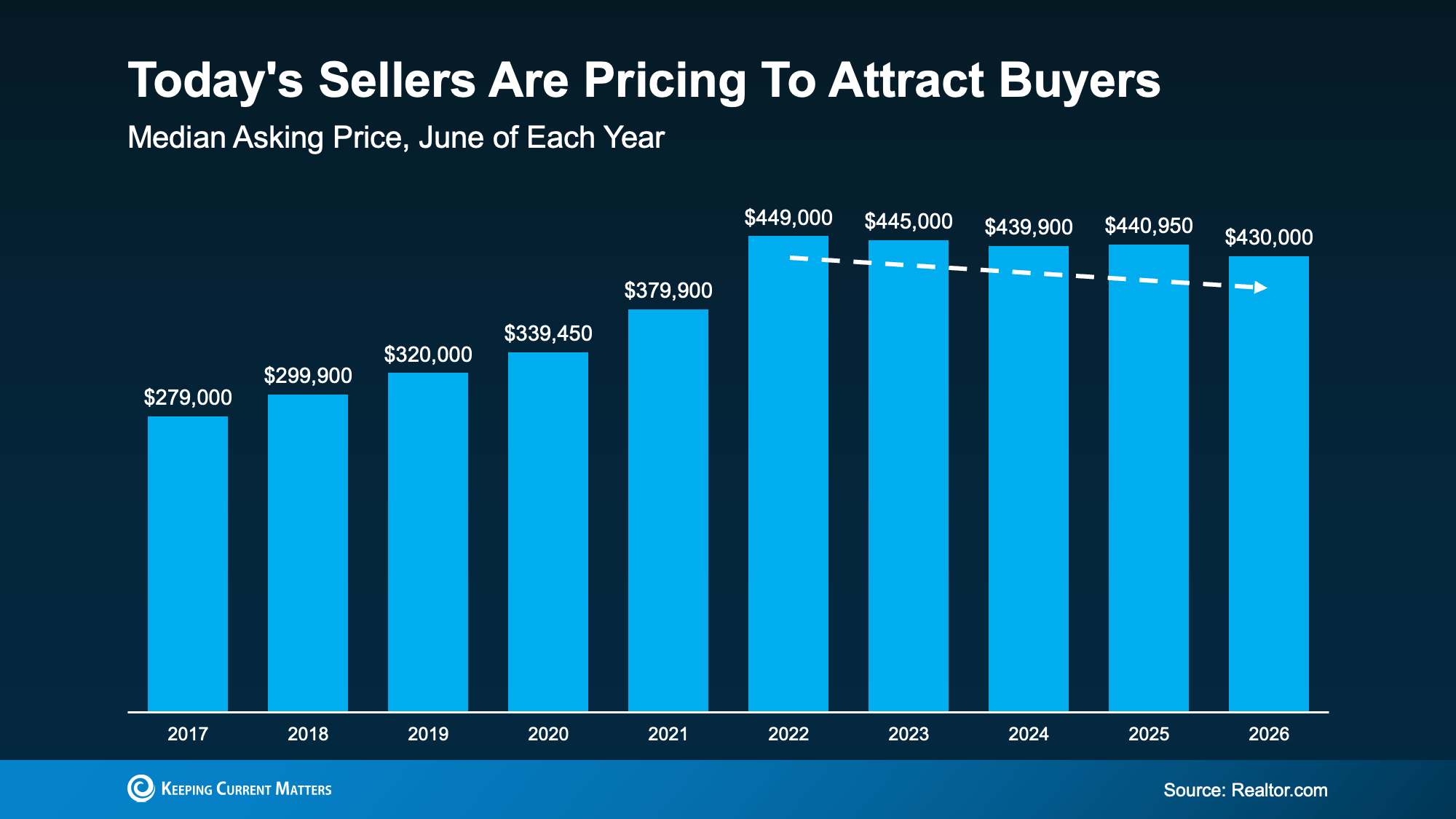
That’s the eighth month in a row that the typical asking price has dipped below where they were the previous year, according to the same Realtor.com report.
And while falling prices can sound worrying, this isn’t a sign of an impending crash. We’re talking about asking prices, not sold prices. This is a sign that today’s sellers are meeting the market where it is and pricing to draw buyers. And that’s actually something normal we’d expect from the market. As Danielle Hale, Chief Economist at Realtor.com, puts it:
“Sellers are reading market conditions and are pricing accordingly from the start rather than listing high and cutting later, and buyers are taking note and making bids. This is a welcome sign that we are in a functioning market.”
Asking prices were never going to climb forever – now they’re just settling closer to what buyers can actually pay. That signals a healthier market, and sellers re-adjusting their expectations.
More Homes Are Available Now
If you’ve spent the past few years watching homes disappear before you could even schedule a tour, this is for you.
Supply is starting to catch up. According to Realtor.com, the number of homes listed for sale in June was the highest June number we’ve seen in three years (see graph below):
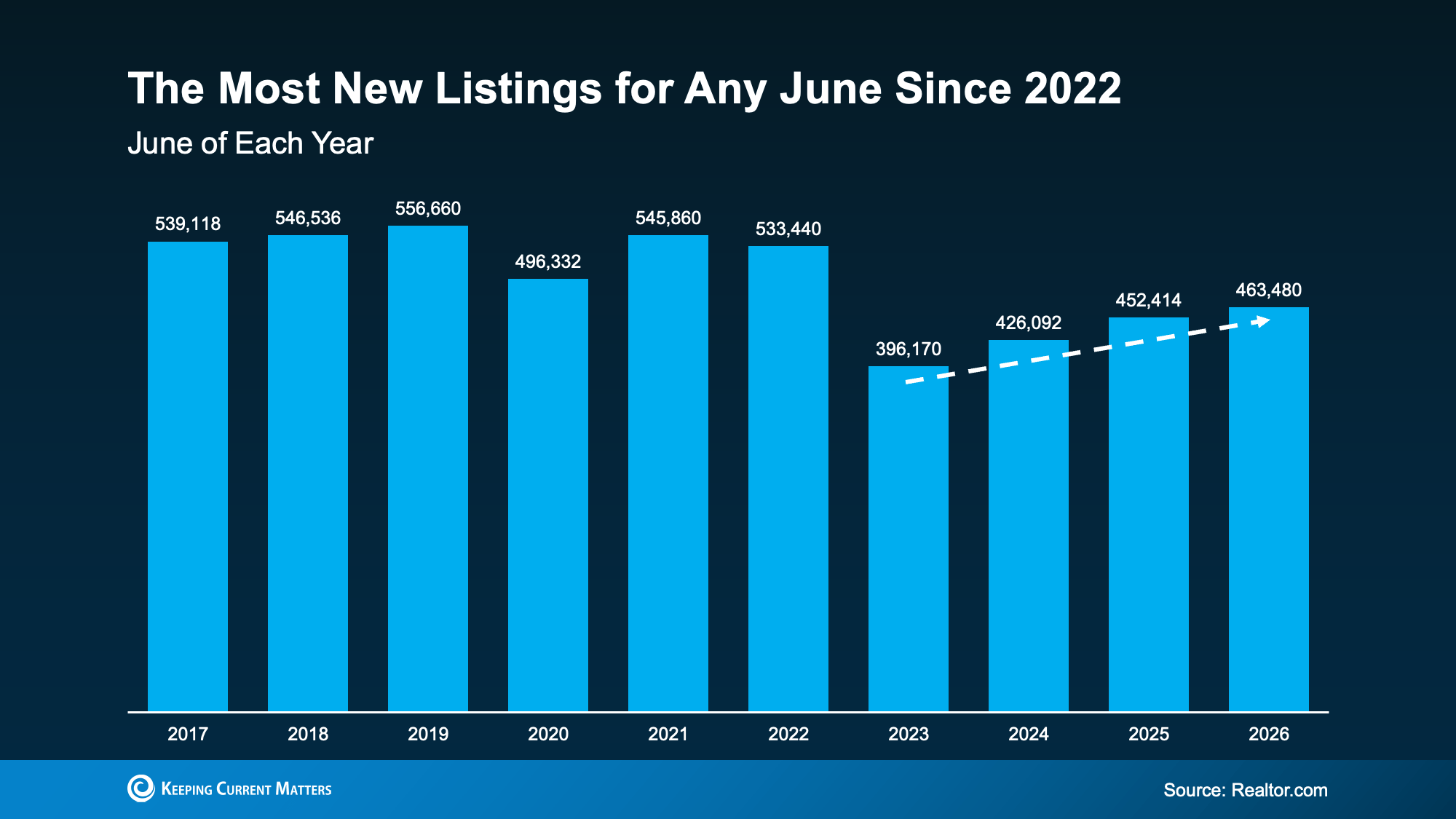
This means more options for you and less competition for each one.
Now, supply is not back to normal everywhere. As you can see, we’re still down from where we were back in 2017-2019. But in many places, it’s better than it’s been in a while. Here’s how that helps you.
You don’t have to rush an offer just to stay in the running, and you have better odds of finding and landing the right home, not just the one that’s available. Plus, you’ll have more room to negotiate, so you’re searching from a stronger position than buyers had even a year ago.
Why This Is Encouraging if You’re Buying Your First Home
For first-time buyers looking for lower-priced homes, these trends line up especially well. Mischa Fisher, Chief Economist at Zillow, explains:
“The lowest price tiers are exhibiting some softness in terms of price, they also had the most listing-activity growth, the first time since 2022 that’s been the case.”
So, if you’re searching for your first place or your next house, there’s a little more to choose from and a little more give on price.
Bottom Line
If a tight budget or a thin selection has kept you from buying a home, now might be the time to restart your search.
Ready to see what’s available here? Let’s connect.
Thank You For Reading,
Denise Olivares-Molina

by Denise Olivares-Molina | May 18, 2026 | Advice for Sellers, Affordability, For Sellers, Home Prices, Home Selling Strategy, Home value, Homeowner Information, Housing Market, Housing Market Shifts, Housing Market Updates, Real Estate Finances, Real Estate Goals, Real Estate Investing, Real Estate Market, Real Estate Tips, Real Estate Trends in 2026, Weekly
La mayoría de los vendedores entran al mercado con una cifra en mente. Y, a menudo, es la que más cara les sale: su precio de salida (precio de lista).
Una encuesta de Realtor.com muestra que aproximadamente 8 de cada 10 vendedores (el 80%) esperan vender hoy al precio de salida o por encima de este. Pero aquí es donde las cosas se ponen interesantes.
En la realidad, solo unos 4 de cada 10 (aproximadamente el 40%) lo logran.
Esa es una gran brecha, y ahí es donde a muchos vendedores los pilla desprevenidos. Entonces, ¿a qué se debe esta desconexión? ¿Y cómo puedes prepararte para ser uno de esos 4 de cada 10 que obtienen el máximo valor por su dinero?
Analicémoslo en detalle.
¿Qué deberías esperar recibir realmente por tu casa?
Ese 40% puede sonar bajo al principio, pero no lo es.
Si miramos atrás hacia el último año típico para el mercado inmobiliario (2019), lo que realmente estamos viendo es un retorno a la normalidad (ver gráfico abajo). En todo caso, hoy en día un número ligeramente mayor de propietarios puede vender por encima del precio de lista en comparación con 2019:
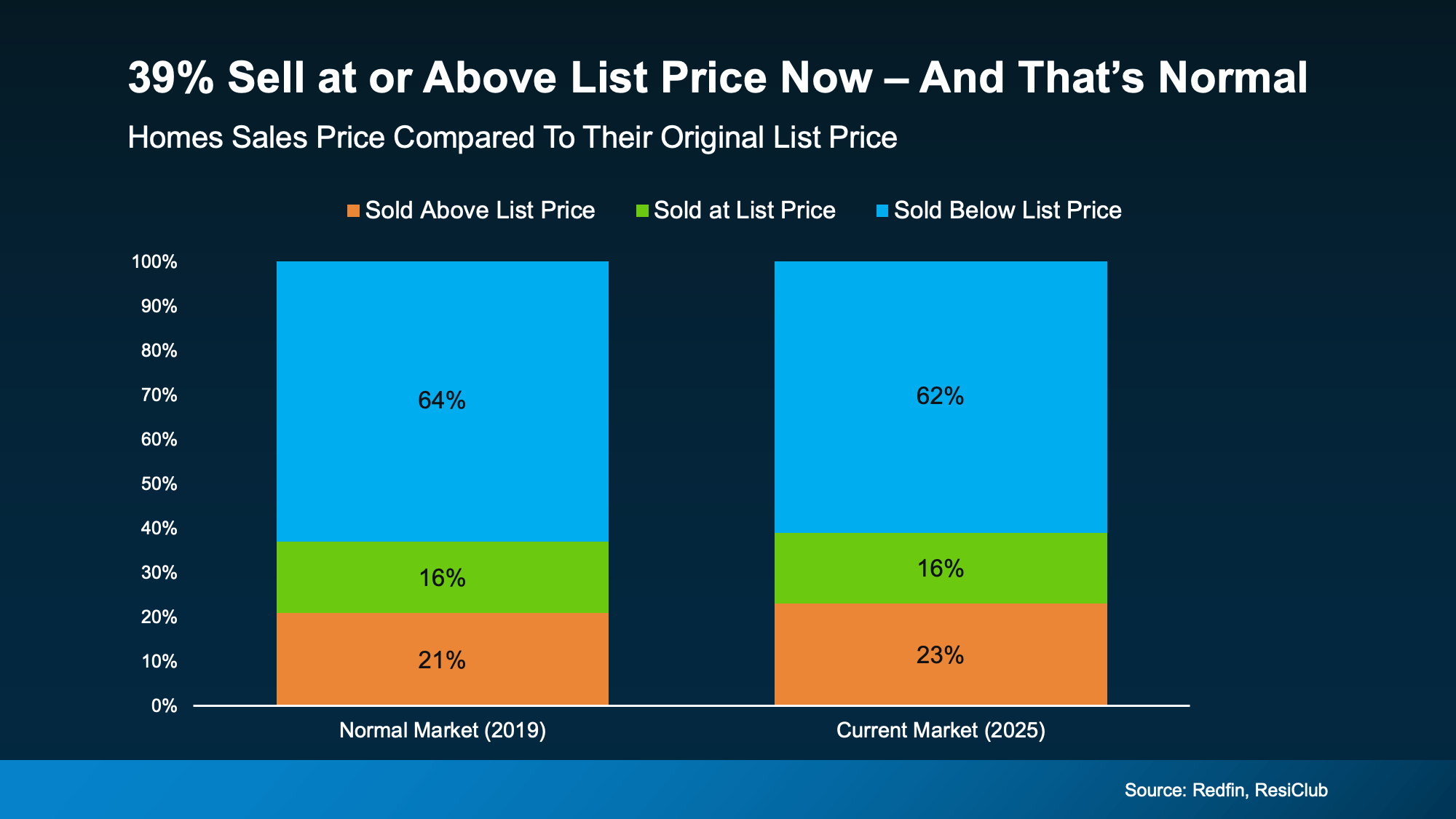
Solo da la sensación de ser bajo porque los últimos años fueron de todo menos típicos. Entre 2020 y mediados de 2022, la demanda de los compradores estaba por las nubes y la cantidad de casas en venta alcanzó mínimos históricos. Casi todo se vendía por encima del precio de salida.
Ahora, el mercado ha cambiado.
Hay más casas en venta. Los compradores tienen más opciones y eso significa que son más selectivos con la forma en que gastan su dinero.
En otras palabras, las reglas del juego han cambiado, y fijar precios como si todavía estuviéramos en 2021 es donde los vendedores se meten en problemas. Tienes que adaptarte al mercado tal y como está si realmente quieres sacar una gran tajada.
Qué pasa cuando el precio de una casa es demasiado alto
Esta es la realidad. Es fácil pensar que fijar un precio alto te da margen para negociar, pero normalmente hace todo lo contrario.
En este mercado, cuando tu casa tiene un precio superior al que esperan los compradores, estos no negocian: siguen de largo.
Porque los compradores se fijan primero en el precio. Y si tu casa no está en sintonía con opciones similares en tu zona, es posible que ni siquiera consigas que vayan a verla. Ahí es cuando las cosas empiezan a complicarse como una bola de nieve:
-
Un precio alto genera menos interés entre los compradores.
-
Menos interés se traduce en menos ofertas.
-
Y menos ofertas normalmente significan más tiempo estancado en el mercado.
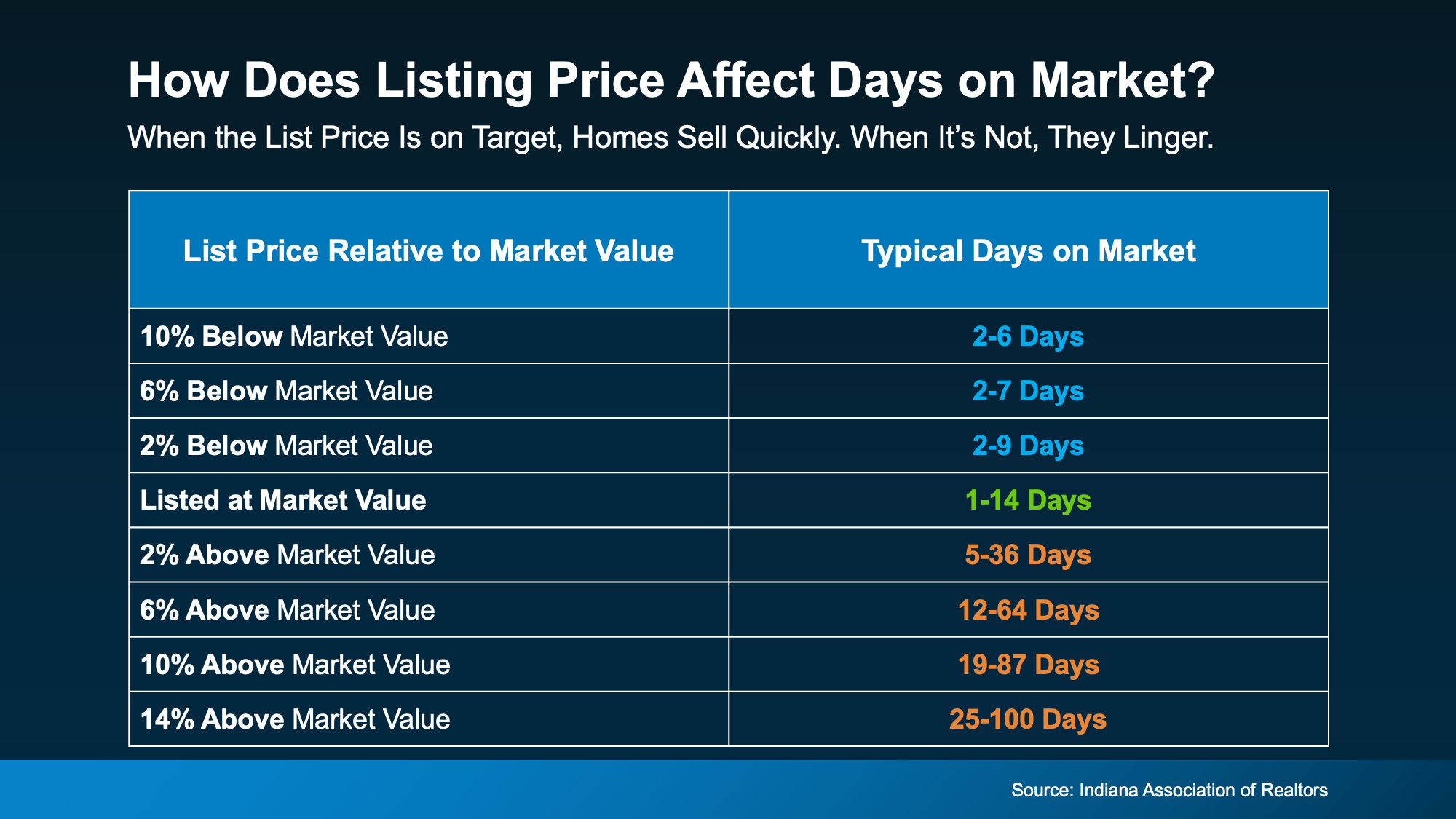
Echa un vistazo a esta tabla de la Asociación de Agentes Inmobiliarios de Indiana (Indiana Association of Realtors). Aunque estos datos son de un solo estado, la tendencia general se mantiene en muchos mercados del país. Muestra que las casas que salen a la venta a precio de mercado o por debajo de este se venden rápido. ¿Pero las casas con precios altos? Se eternizan. Y ese retraso tiene un coste muy real.
La trampa de la rebaja de precio (y cómo evitarla)
Cuando una casa pasa tanto tiempo sin recibir ofertas, muchos vendedores recurren a una reducción de precio. Según Realtor.com, el 16.7% de los vendedores está optando por esa vía hoy en día.
Pero aquí está el verdadero problema: incluso una rebaja de precio no garantiza la venta.
De hecho, algunos compradores verán una reducción como una señal de que algo va mal con la casa, aunque no sea así.
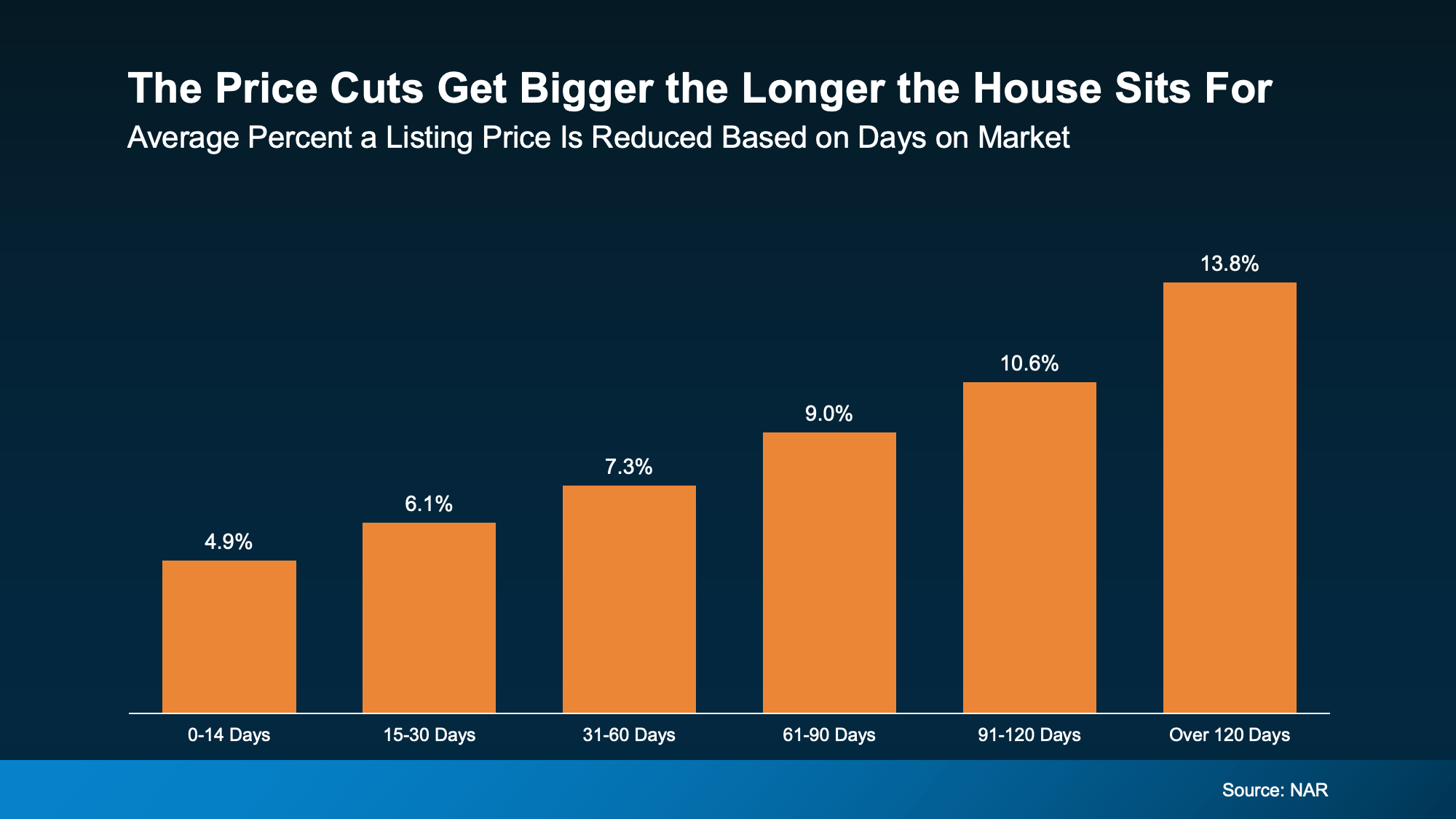
Por eso, los datos de la Asociación Nacional de Agentes Inmobiliarios (NAR, por sus siglas en inglés) muestran que cuanto más tiempo pasa una casa en el mercado, mayor tiende a ser esa rebaja para lograr atraer de nuevo a los compradores:
Así que lo que empezó como una estrategia para “dejar margen” para negociar puede terminar costándote más a largo plazo.
Por qué importa fijar el precio correcto desde el primer día
Aunque poner a la venta tu casa a precio de mercado (o incluso un poco por debajo) pueda sonar contradictorio si lo que buscas es ganar la mayor cantidad de dinero posible, la mayoría de las veces es, de hecho, la mejor estrategia.
Porque el objetivo no es simplemente publicar tu casa para ver qué precio cuela. Es fijar el precio de una manera que genere demanda desde el primer día.
La NAR lo explica a la perfección:
“Mientras que algunos vendedores están poniendo precios a sus casas más altos que nunca, una mentalidad más equilibrada (al estilo de ‘Ricitos de Oro’, ni mucho ni poco) es un mejor enfoque para evitar las rebajas de precio y el tiempo prolongado en el mercado”.
En otras palabras, existe un punto de equilibrio ideal. Si es demasiado alto, los compradores desaparecen. Si es demasiado bajo, dudarán del valor de la propiedad.
Pero justo en el medio, ahí es donde ocurre la magia.
Y ahí es donde entra en juego el agente inmobiliario adecuado.
Ellos te ayudan a entender qué están pagando realmente los compradores en este momento, cómo se compara tu casa con las demás y cómo fijar el precio para que destaque de inmediato. En el mercado actual, esa estrategia marca la diferencia entre:
-
Publicar un precio alto, ver cómo la casa se estanca y venderla por menos más adelante.
-
O fijar el precio correcto, generar competencia y posicionarte para ganar desde el principio.
En conclusión
Muchos propietarios piensan que pueden salir con un precio alto ahora y negociar después, pero es un error que les cuesta caro. Y es la razón por la que solo 4 de cada 10 vendedores están consiguiendo su precio de salida o más.
Si quieres formar parte de ese grupo, todo empieza por acertar con el precio desde el primer día.
Pongámonos en contacto para asegurarnos de que así sea.
Gracias Por Leer
Denise Olivares-Molina
