
by Denise Olivares-Molina | Jul 20, 2026 | Advice for Buyers, Buyers, Buying A Home, Buying Myths, Buying Tips, Economy, Elegant Designs, Housing Market, Housing Market Insights, Housing Market Shifts, Housing Market Updates, Infographic, Market Trends, Market Updates, Real Estate Finances, Real Estate Goals, Real Estate Investing, Real Estate Market, Real Estate Market 2026, Real Estate Trends in 2026, Recipes, Weekly
If you’ve thought about buying a home in the past few years, you may have run into two frustrations: asking prices that kept climbing and too few homes to choose from.
In many places, both sticking points are letting up this summer, with lower asking prices and more homes for sale. Let’s look at the trends, and what they mean for your search.
Sellers Are Pricing To Attract Buyers
According to Realtor.com, the national median asking price was $430,000 in June, nearly $11,000 under what it was the year before (see graph below):
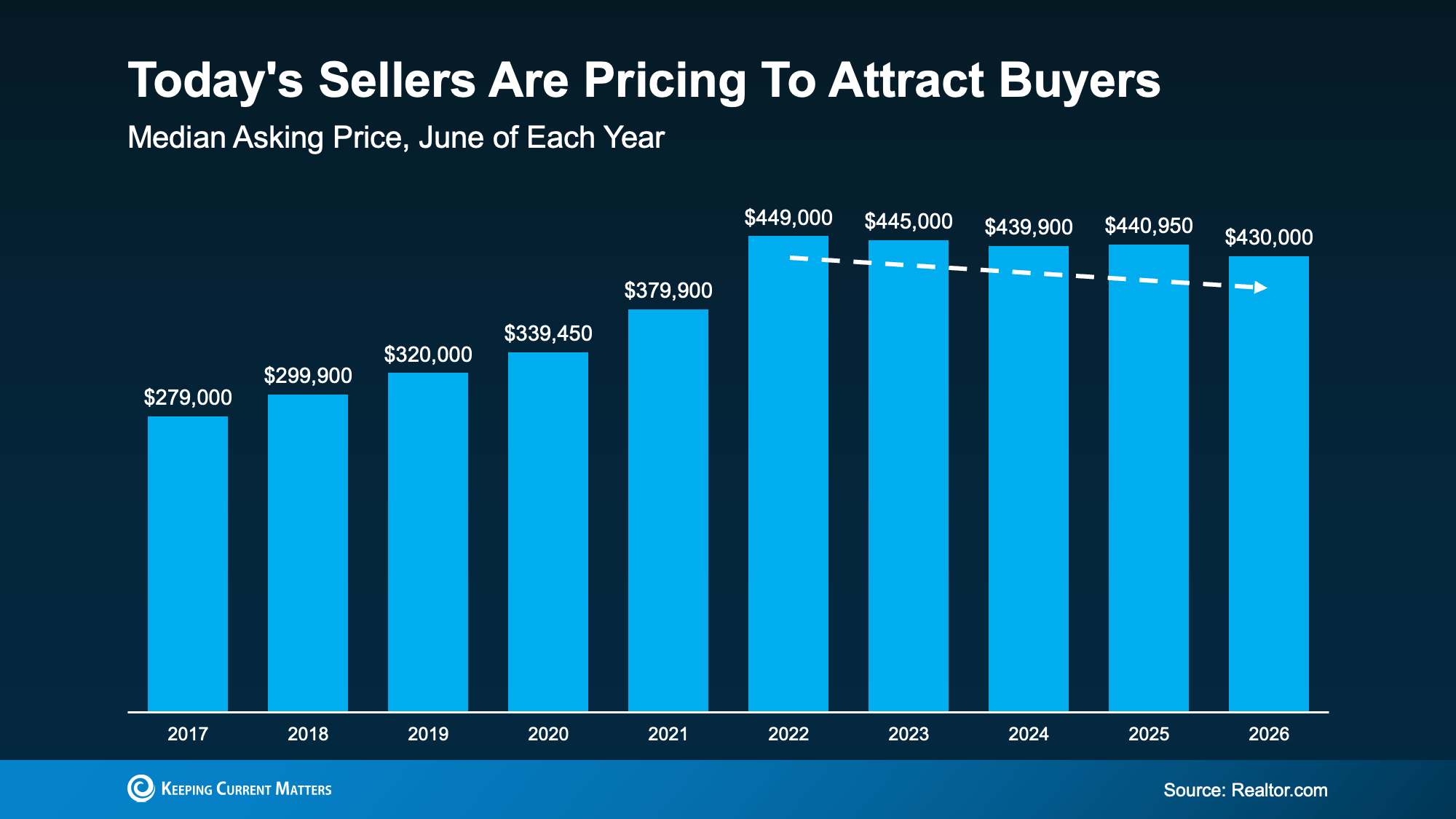
That’s the eighth month in a row that the typical asking price has dipped below where they were the previous year, according to the same Realtor.com report.
And while falling prices can sound worrying, this isn’t a sign of an impending crash. We’re talking about asking prices, not sold prices. This is a sign that today’s sellers are meeting the market where it is and pricing to draw buyers. And that’s actually something normal we’d expect from the market. As Danielle Hale, Chief Economist at Realtor.com, puts it:
“Sellers are reading market conditions and are pricing accordingly from the start rather than listing high and cutting later, and buyers are taking note and making bids. This is a welcome sign that we are in a functioning market.”
Asking prices were never going to climb forever – now they’re just settling closer to what buyers can actually pay. That signals a healthier market, and sellers re-adjusting their expectations.
More Homes Are Available Now
If you’ve spent the past few years watching homes disappear before you could even schedule a tour, this is for you.
Supply is starting to catch up. According to Realtor.com, the number of homes listed for sale in June was the highest June number we’ve seen in three years (see graph below):
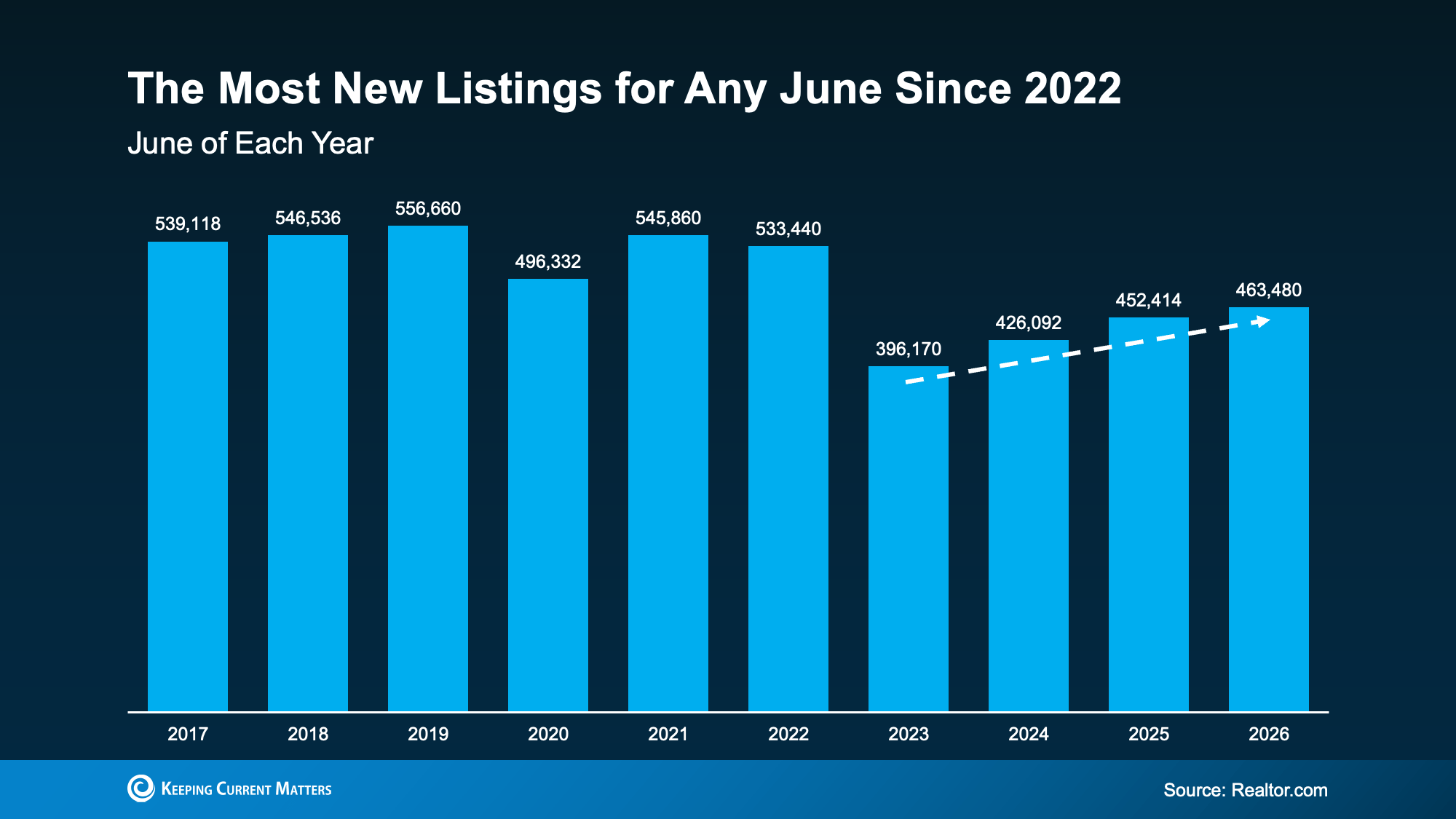
This means more options for you and less competition for each one.
Now, supply is not back to normal everywhere. As you can see, we’re still down from where we were back in 2017-2019. But in many places, it’s better than it’s been in a while. Here’s how that helps you.
You don’t have to rush an offer just to stay in the running, and you have better odds of finding and landing the right home, not just the one that’s available. Plus, you’ll have more room to negotiate, so you’re searching from a stronger position than buyers had even a year ago.
Why This Is Encouraging if You’re Buying Your First Home
For first-time buyers looking for lower-priced homes, these trends line up especially well. Mischa Fisher, Chief Economist at Zillow, explains:
“The lowest price tiers are exhibiting some softness in terms of price, they also had the most listing-activity growth, the first time since 2022 that’s been the case.”
So, if you’re searching for your first place or your next house, there’s a little more to choose from and a little more give on price.
Bottom Line
If a tight budget or a thin selection has kept you from buying a home, now might be the time to restart your search.
Ready to see what’s available here? Let’s connect.
Thank You For Reading,
Denise Olivares-Molina

by Denise Olivares-Molina | Jul 6, 2026 | Advice for Buyers, Down Payments, Economy, Real Estate Finances, Real Estate Market, Real Estate Tips, Real Estate Trends in 2026, Weekly
Saving for a down payment can feel like the hardest part of buying a home. And with affordability as tight as it’s been lately, it’s fair to wonder how anyone manages it right now. Here’s something you may not have seen coming.
Some people are getting their foot in the door with a smaller down payment.
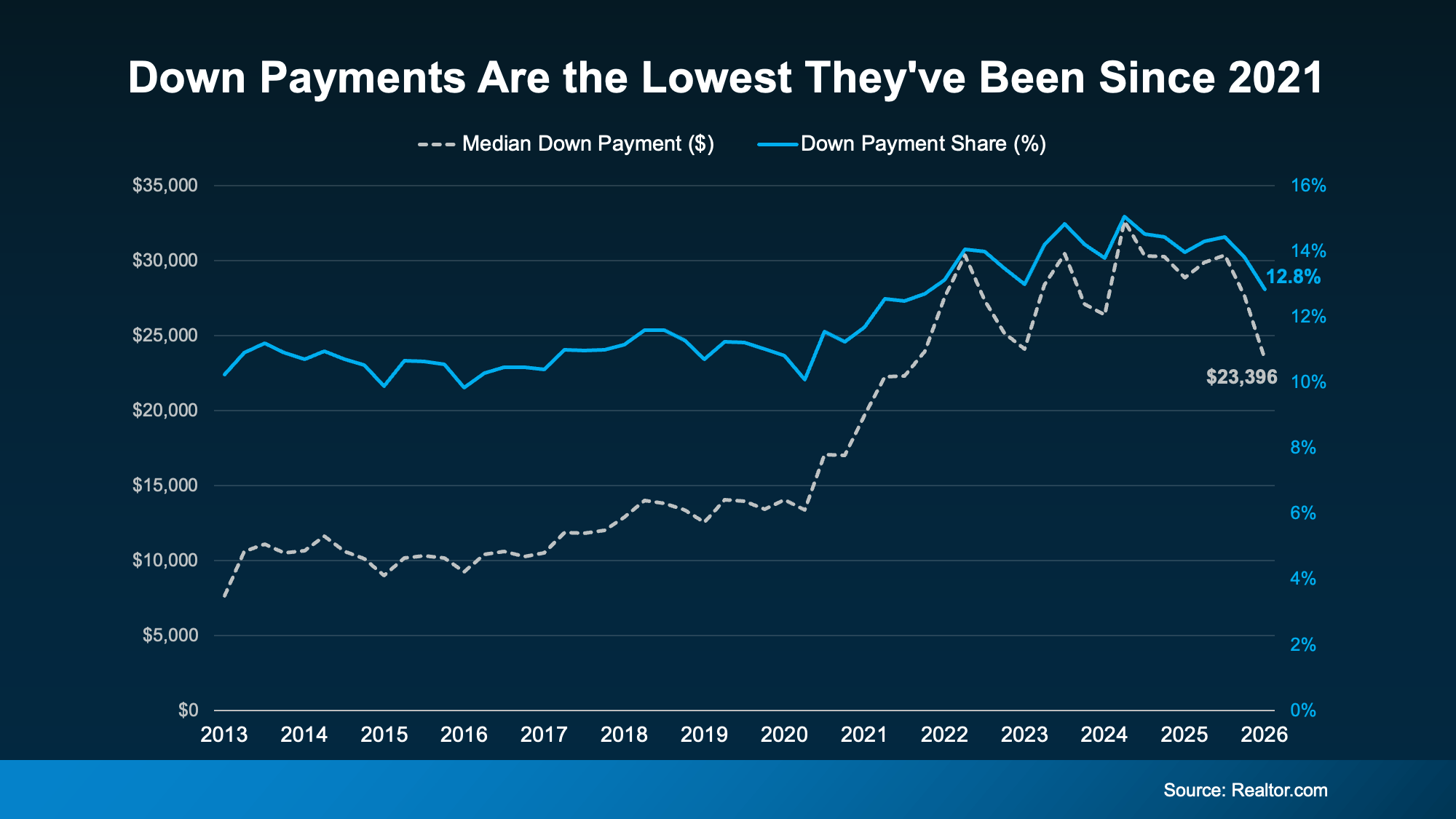
According to Realtor.com, the typical buyer put down about $23,400 in early 2026 – that’s around $5,000 below what was typical the year before (a 19% drop year over year). That’s the lowest down payments have been since 2021 (see graph below):
So why are buyers putting less money down, and how can you put less down, too? Here’s your answer.
Why Down Payments Are Getting Smaller
There are a few things driving the trend:
-
Less competition between buyers. Part of it comes down to a more balanced market. With buyers facing less competition than they did a few years ago, there’s less pressure to put a big sum down just to stand out.
-
More moderate home prices. Your down payment is a percentage of the purchase price. So, as price growth cools, the amount you need to put down may change too. In a lot of markets, prices have slowed or leveled off, and some areas are even seeing slight dips. That can translate into smaller down payments.
-
Buyers opting for loans with lower down payments. More buyers are also turning to government-backed loans, like FHA and VA, which often need little or no money down. FHA loans have made up more than 24% of purchase mortgages for five straight quarters, and VA loans recently hit their highest share in over a decade, according to Mortgage Professional America.
But even a smaller down payment is still a significant chunk of cash, and saving it can be hard. So where does the rest come from? For many buyers, two things make the difference: programs built to help, and a hand from loved ones.
Help You May Not Know You Qualify For
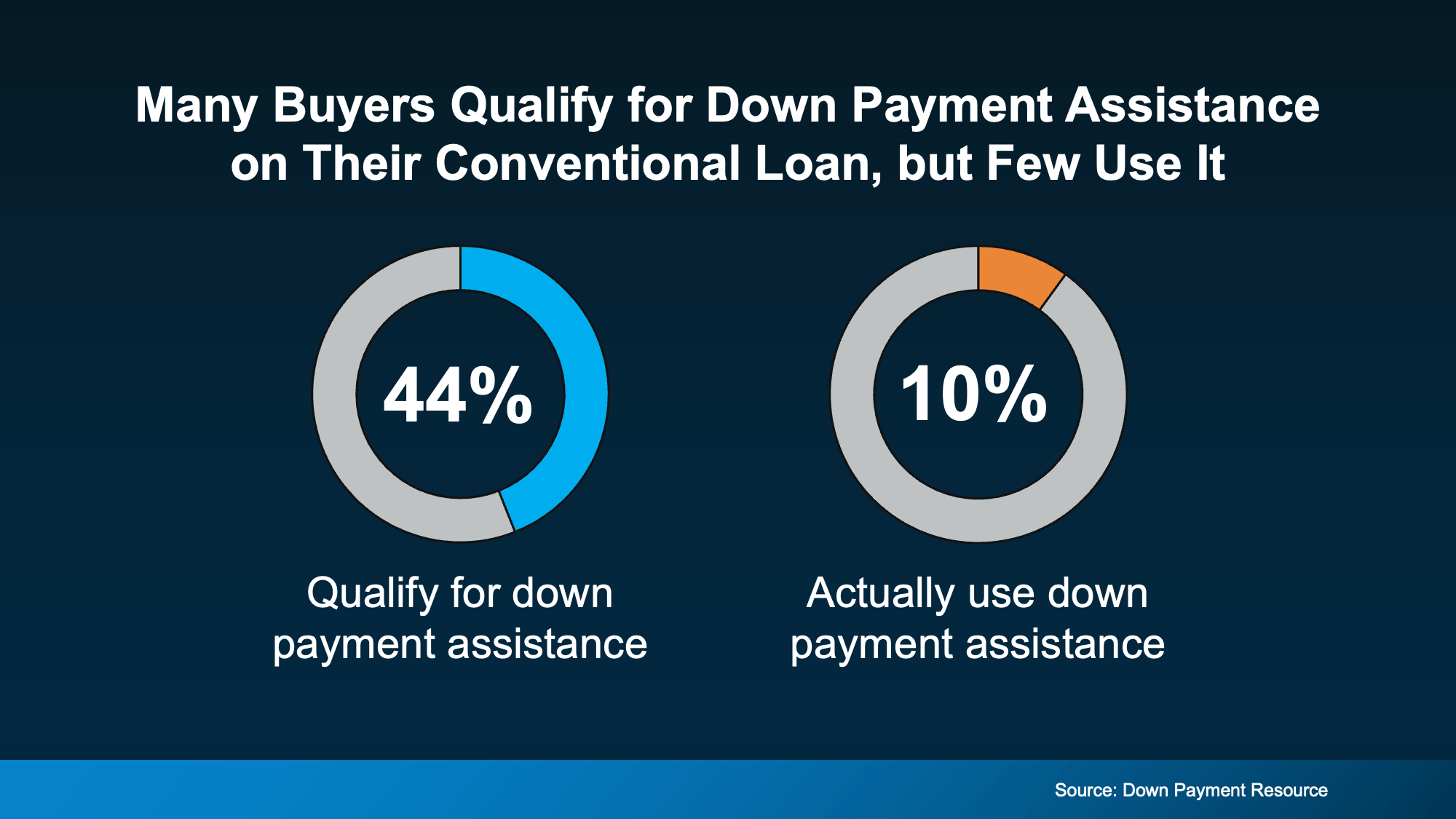
Down payment assistance is one of the most overlooked tools out there. Looking at the 10 largest U.S. metros, Urban Institute and Down Payment Resource found nearly 44% of recent buyers already qualified for a down payment program, but many of them closed on their loan without tapping the help (see chart below):
The options are broader than you might assume, too. According to Down Payment Resource:
-
There are more than 2,600 down payment assistance programs available
-
More than half (62%) are designed to help first-time buyers
-
38% have no first-time buyer requirement, so you may qualify even if you’ve owned before
-
62% are open to buyers earning $100,000 or more
A Boost from Loved Ones
For a growing number of buyers, help comes from closer to home. Research from Veterans United shows about 59% of parents have provided or plan to provide financial support to help their child buy a home.
That support most often goes toward the down payment, followed by help qualifying for a mortgage and covering closing costs. Chris Birk, VP of Mortgage Insight at Veterans United, puts it this way:
“For many families, helping a child buy a home has become less of an optional gesture and more of a practical response to today’s affordability challenges.”
If your loved ones are in a position to help, it can make a real difference in how soon you can buy.
Bottom Line
Down payments are smaller than they’ve been in years, and that opens the door for more buyers.
And with added help from assistance programs and a little help from loved ones, you may have more ways forward than you realized. Connect with a trusted lender to talk through your options.
Thank You For Reading
Denise Olivares-Molina

by Denise Olivares-Molina | Apr 27, 2026 | Advice for Sellers, Economy, For Sellers, Home Prices, Home Selling Strategy, Home value, Homeowner Information, Housing Market, Housing Market Shifts, Housing Market Updates, Market Trends, Pricing, Real Estate Market, Real Estate Tips, Real Estate Trends in 2026, Seller, Sellers, Selling A Home, Selling Myths, Selling Tips, Tips for Sellers, Weekly
Hay mucha incertidumbre en este momento, lo que está generando algunos titulares dramáticos. Y si estás pensando en comprar una casa, eso puede hacerte sentir un poco menos seguro sobre tu decisión.
Un estudio reciente de CNBC preguntó a los compradores de vivienda qué es lo que más les preocupa, y tres temas surgieron una y otra vez:
Pero mucho de lo que podrías estar escuchando sobre estos temas se basa más en conceptos erróneos y no en hechos. Así que vamos a desglosarlo y a separar la realidad de la ficción.
Concepto erróneo #1: “Simplemente esperaré, porque las tasas hipotecarias van a caer drásticamente”
Una idea que circula en las redes sociales es que las tasas hipotecarias van a caer drásticamente pronto. Por lo tanto, es mejor esperar para comprar.
¿Pero es eso realmente lo que se espera?
Si bien las tasas hipotecarias han bajado un poco en las últimas semanas, los pronósticos no muestran una gran caída en el futuro cercano. El escenario más probable es que las tasas se mantengan en el rango bajo del 6% este año.
Y ese no es un gran cambio con respecto a donde están las tasas ahora (ver gráfico a continuación).
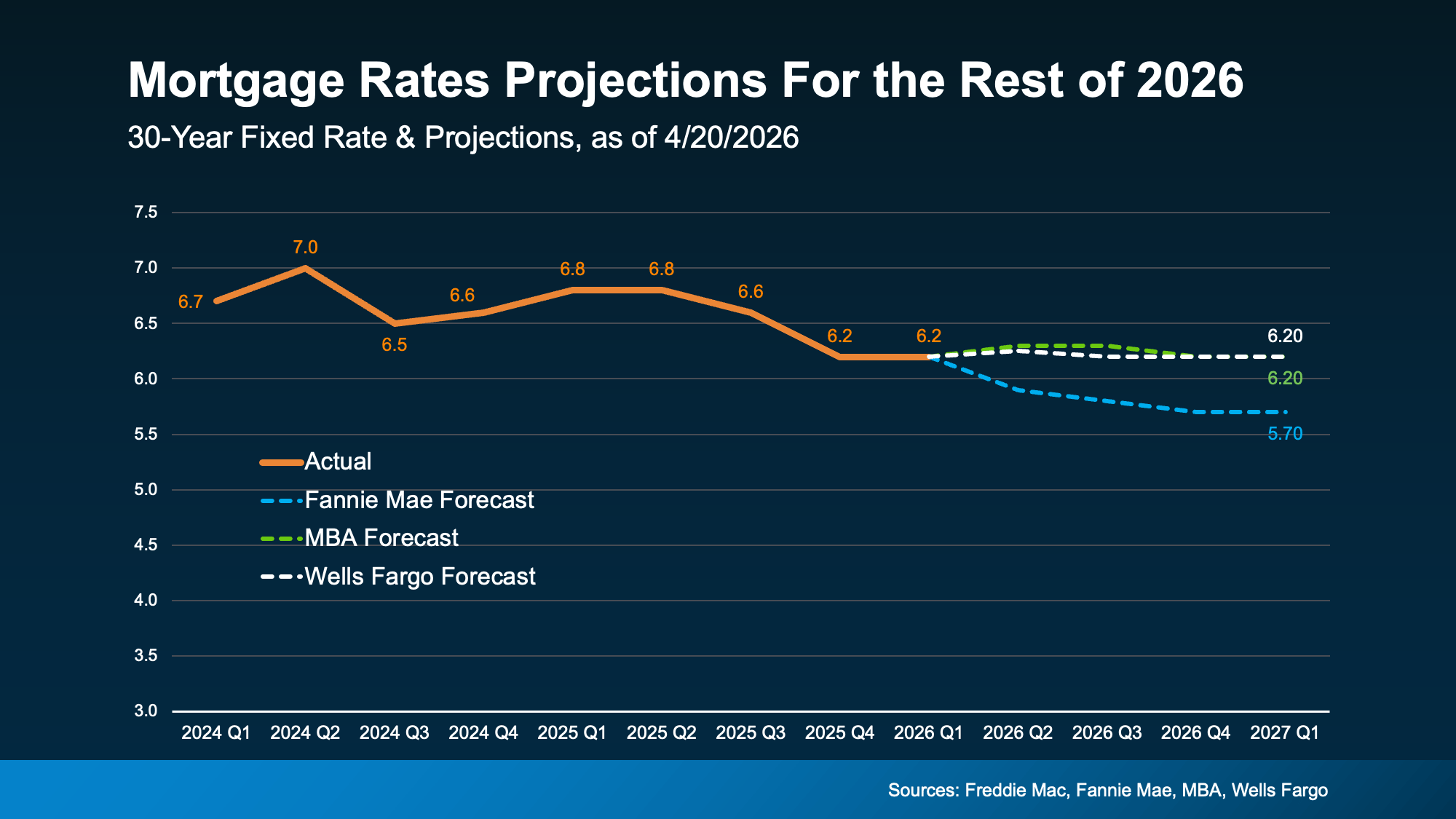
Por supuesto, esto depende del rumbo que tomen la inflación y la economía a partir de ahora. Pero, según lo que sabemos hoy, esperar una gran caída en las tasas podría no resultar como algunos esperan. Como explica U.S. News:
“No se espera que las tasas hipotecarias cambien mucho durante los próximos trimestres…”
Sin mencionar que, incluso con las tasas donde están hoy, la situación ya es más asequible que hace un año. Así que, aunque no cambien mucho, sigue siendo mejor de lo que era.
Concepto erróneo #2: “Hay demasiadas casas en venta en este momento”
Probablemente hayas escuchado que el inventario ha aumentado. Y a nivel nacional, es cierto. El número de casas en venta es un 8% mayor que en esta misma época el año pasado. Pero eso no es algo malo. De hecho, es una de las razones por las que los compradores tienen un poco más de respiro en este momento.
El problema es que los titulares están haciendo que algo bueno suene mal. Se centran en cómo este es el mayor inventario que hemos tenido desde 2019 o en la cantidad de casas que están construyendo los desarrolladores. Y eso puede hacer que parezca que la cantidad de casas en venta está aumentando demasiado y demasiado rápido.
Pero eso no es lo que muestra el panorama general.
Los datos de Realtor.com demuestran que, aunque el inventario ha subido en comparación con el año pasado, sigue siendo casi un 14% más bajo de lo que era durante el último mercado inmobiliario normal (2017-2019).
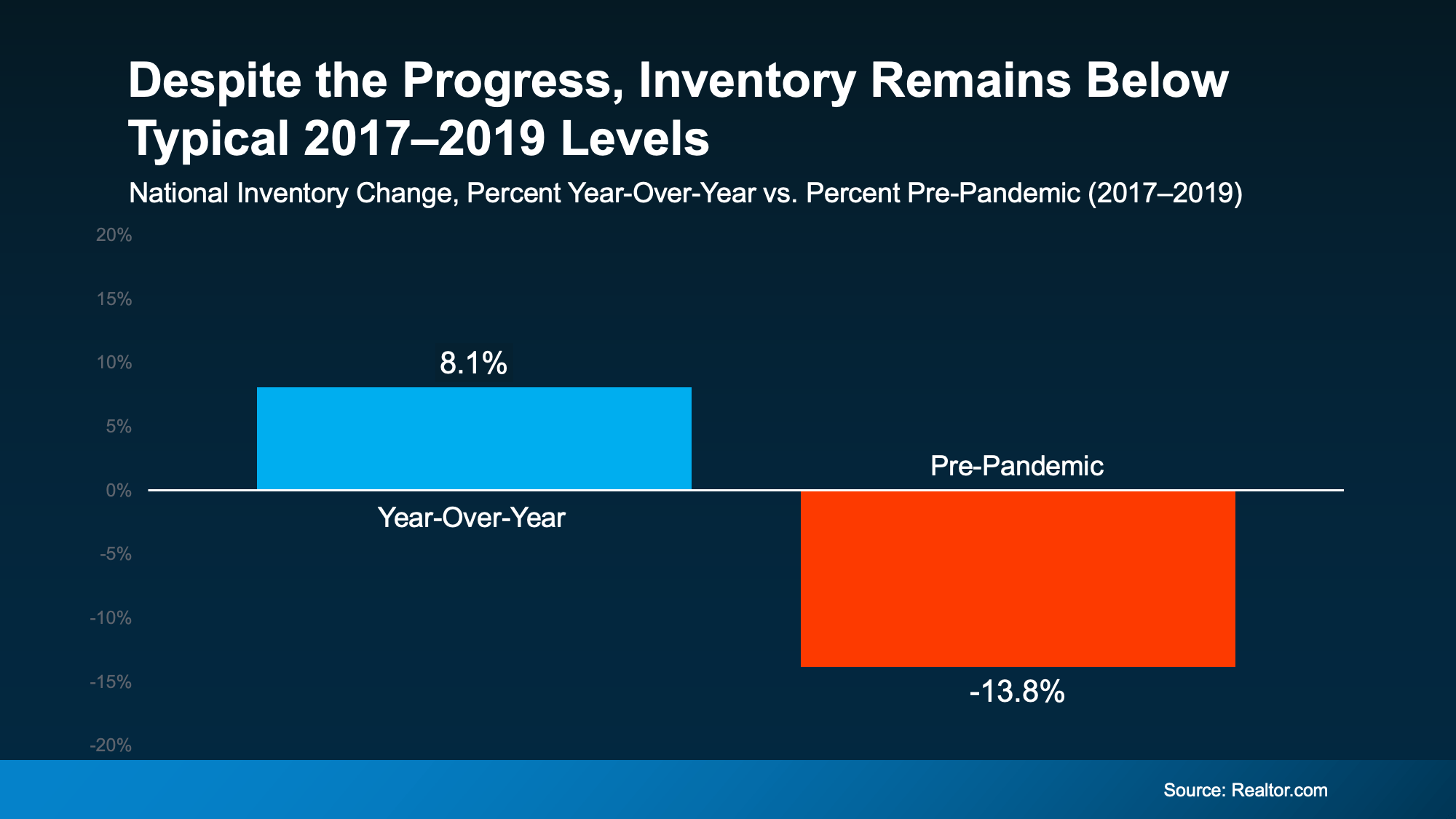
Si bien puede variar mucho dependiendo de dónde vivas, hoy solo 9 estados tienen más inventario que antes de la pandemia. Esa es una razón clave por la que todavía no hay suficientes casas en venta para desencadenar algo parecido al colapso del 2008.
Concepto erróneo #3: “Los precios de las viviendas están a punto de colapsar”
Probablemente también hayas visto este. La confusión proviene del hecho de que algunas áreas metropolitanas están experimentando ligeras caídas de precios. Algunos influencers se están dejando llevar por eso y afirman que los precios se están desplomando. Pero esa no es la realidad.
La mayoría de las áreas están viendo subir los precios, no bajar. Y esto se debe a que:
-
Muchos propietarios no están vendiendo porque no quieren renunciar a la baja tasa hipotecaria que aseguraron hace unos años. Y eso está limitando cuánto puede crecer el inventario.
-
Dado que el inventario sigue estando por debajo de las normas previas a la pandemia, no hay suficientes casas en venta para causar un colapso en los precios.
-
E incluso en mercados con más inventario, algunos vendedores están optando por retirar sus casas del mercado en lugar de reducir los precios.
Y esas son 3 grandes razones por las que los precios no se dirigen hacia un colapso.
Incluso en los mercados que experimentan caídas leves, estas bajas no son suficientes para anular las grandes ganancias que la mayoría de los propietarios han acumulado en los últimos 5 años (ver gráfico a continuación).
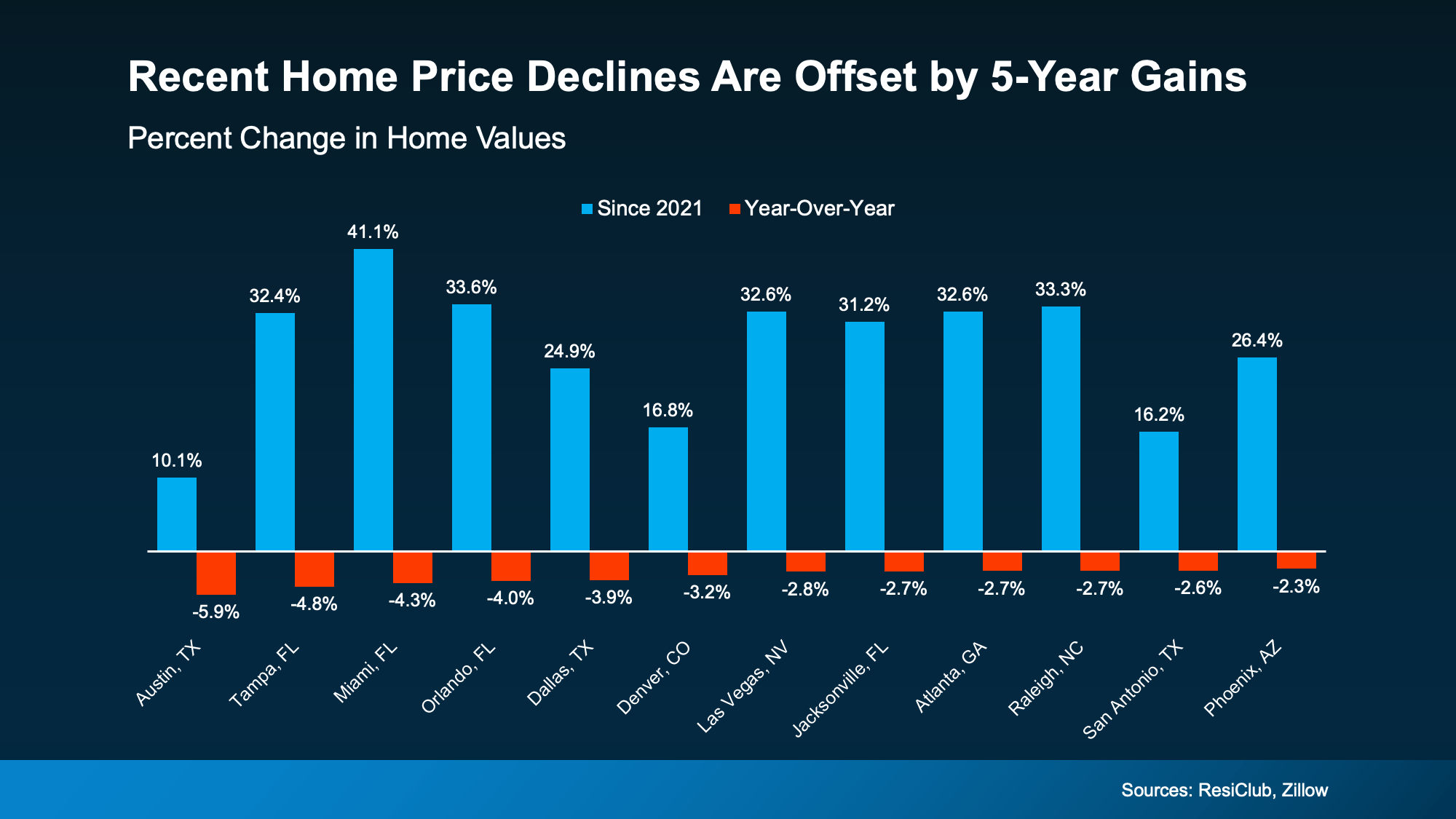
Eso no es un colapso. Es simplemente una moderación de los precios después de unos años récord.
En conclusión
Las publicaciones en línea van a hacer que las cosas suenen peor de lo que son. Si deseas una visión real y basada en datos de lo que verdaderamente está sucediendo en el mercado actual, apóyate en un agente de bienes raíces.
Conectémonos para que hoy tengas a alguien que te ayude a separar la realidad de la ficción.
Gracias por leer
Denise Olivares-Molina

by Denise Olivares-Molina | Apr 27, 2026 | 2026 Housing Market, Advice for Sellers, Costs, Economy, For Sellers, Home Prices, Home Selling Strategy, Homeowner Information, Housing Market, Housing Market Updates, Interest Rates, Real Estate Goals, Real Estate Investing, Real Estate Market, Real Estate Trends in 2026, Seller, Sellers, Selling A Home, Selling Myths, Selling Tips, Weekly
There’s a lot of uncertainty right now and that’s leading to some dramatic headlines. And if you’re thinking about buying a home, that can make you feel a little less sure about your decision.
A recent study by CNBC asked homebuyers what they’re most worried about, and three themes kept coming up again and again:
- Mortgage rates
- The number of homes for sale
- Home prices
But a lot of what you may be hearing on those is based more on misconceptions. Not facts. So, let’s break it down and separate fact from fiction.
Misconception #1: “I’ll Just Wait, Because Mortgage Rates Are Going To Fall Dramatically”
One idea doing its rounds on social is that mortgage rates are going to drop dramatically soon. So, it’s better to wait to buy.
But is that really what’s expected?
While mortgage rates have come down a bit in the last few weeks, forecasts don’t show a major drop ahead. The most likely scenario is that rates stay somewhere in the low 6% range this year.
And that’s not a big change from where rates are now (see graph below):
Of course, this depends on where inflation and the economy go from here. But, based on what we know today, waiting for a big drop in rates may not work out the way some people hope. As U.S. News explains:
“Mortgage rates aren’t expected to change much over the next several quarters . . .”
Not to mention, even with rates where they are today, it’s already more affordable than a year ago. So, even if they don’t change much, it’s still better than it was.
Misconception #2: “There Are Too Many Homes for Sale Right Now”
You’ve probably heard inventory is up. And nationally, it is. The number of homes for sale is 8% higher than this time last year. But that’s not a bad thing. In fact, it’s one of the reasons buyers have a bit more breathing room right now.
The problem is the headlines are making something good, sound bad. They’re focusing on how this is the most inventory we’ve had since 2019 or how many homes builders are building. And that can make it sound like the number of homes for sale is rising too far, too fast.
But that’s not what the bigger picture shows.
Data from Realtor.com proves that, even though inventory is up compared to last year, it’s still nearly 14% lower than it was during the last normal housing market (2017-2019):
While it can vary a lot based on where you live, only 9 states have more inventory than pre-pandemic today. That’s a key reason why there still aren’t enough homes for sale to trigger something like the crash back in 2008.
Misconception #3: “Home Prices Are About To Crash”
You’ve probably seen this one, too. The confusion is coming from the fact that some metros are experiencing slight price declines. And influencers are running with that and saying prices are crashing. But that’s not the reality.
Most areas are seeing prices rise, not fall. And that’s because:
- Many homeowners aren’t selling because they don’t want to give up the low mortgage rate they locked in a few years ago. And that’s keeping a lid on how much inventory can grow.
- Since inventory is still below pre-pandemic norms, there aren’t enough homes for sale to cause a price crash.
- And even in markets with more inventory, some sellers are choosing to pull their homes off the market instead of cutting prices.
And those are 3 big reasons prices aren’t headed for a crash.
And even in the markets experiencing mild declines, the drops aren’t enough to cancel out the big gains most homeowners have seen in the last 5 years(see graph below):
That’s not a crash. That’s just prices moderating after a few record-breaking years.
Bottom Line
Online posts are going to make things sound worse than they are. If you want a true, data-bound look at what’s really happening in today’s market, lean on a real estate agent.
Let’s connect so you have someone to separate fact from fiction today.
Thank You For Reading
Denise Olivares-Molina

by Denise Olivares-Molina | Mar 30, 2026 | Advice for Sellers, Eco-Friendly Tips, Economy, For Sellers, Home Selling Strategy, Homeowner Information, Housing Market, Housing Market Shifts, Housing Market Updates, Seller, Sellers, Selling A Home, Selling Myths, Selling Tips
Aunque la primavera ofrece constantemente algunas de las mejores condiciones para los vendedores de viviendas, Realtor.com afirma que existe una ventana de tiempo específica donde los astros parecen alinearse año tras año. Y se acerca rápidamente.
Basándose en su análisis de tendencias históricas, la semana ideal para poner tu casa en el mercado este año es: del 12 al 18 de abril.
Aquí te explicamos por qué este periodo destaca por ser particularmente favorable para los vendedores:
-
Compradores más activos: Según las investigaciones de Realtor.com, las casas listadas durante esta semana suelen recibir un 16.7% más de visitas que en una semana normal. En un mercado donde los compradores tienen opciones, atraer esa atención extra puede marcar el rumbo de toda tu venta.
-
Ventas más rápidas: Ademas Realtor.com explica que El aumento en la demanda de los compradores te prepara para un proceso más ágil. Aunque últimamente las casas han tardado más en venderse, las propiedades puestas a la venta en esta semana específica estuvieron en el mercado un 17% menos de tiempo de lo habitual. Esa es una diferencia que notarás.
-
Un mejor precio para tu casa: Dado que el inventario de casas en venta ha crecido, hoy en día es normal que los compradores pidan créditos, reparaciones o ajustes de precio. Sin embargo, durante esta ventana de principios de primavera, un 18.9% menos de casas sufren un recorte de precio. Esto te da una mejor oportunidad de obtener el precio total de salida.
-
Más ganancias en tu bolsillo: Según el estudio, las casas bien preparadas que se listan esta semana pueden alcanzar un precio de unos $5,300 más que en una semana promedio (y $26,000 más que las casas a principios de año).
¿Y qué vendedor no quiere más miradas sobre su casa, recibir una oferta lo antes posible y tener la mejor oportunidad de vender al mejor precio?
Qué debes hacer para prepararte
Si ya estás pensando en vender y quieres aprovechar este momento ideal, tu siguiente paso es sorprendentemente sencillo: habla con un agente local.
Su experiencia en tu zona será clave durante las próximas semanas, ya que estas tendencias varían según el estado, la ciudad e incluso el vecindario. Tu agente utilizará ese conocimiento interno para ayudarte a determinar qué debes hacer ahora mismo para preparar tu casa, incluyendo:
-
Qué aspectos conviene embellecer antes de publicar.
-
Cómo priorizar reparaciones (y qué contratistas pueden ayudarte).
-
Pequeñas mejoras rápidas que tendrán un gran impacto.
-
Qué es lo que más les importa a los compradores hoy en día.
Para algunos vendedores, bastará con unos pocos arreglos sencillos que pueden terminar en un par de semanas: una capa de pintura fresca, mantillo nuevo para el jardín o una limpieza de primavera profunda.
Para otros, valdrá la pena tomarse un mes más para realizar algunas actualizaciones menores antes de vender. Y eso está bien. Aunque esta ventana de mediados de abril ofrece una ventaja, no es tu única oportunidad. Zillow afirma que el mejor momento para listar es en mayo, lo que significa que la “ventana dorada” para los vendedores no se cierra tras esa semana; permanece abierta durante toda la temporada.
En pocas palabras
Poner tu casa en el mercado a mediados de abril puede darte una ventaja adicional, pero la gran oportunidad es la temporada de primavera en su conjunto. La verdadera pregunta es:
¿Sabes qué necesitas hacer antes de poder listar tu propiedad?
Oficialmente, es el momento de ponerse en marcha para cualquier vendedor que planee mudarse esta primavera. Si quieres que tu casa salga al mercado esta semana (o en cualquier momento de esta temporada), hablemos sobre lo que hace falta para tenerla lista.

by Denise Olivares-Molina | Mar 30, 2026 | 2026 Housing Market, Advice for Sellers, Economy, For Sellers, Home Buying, Home Preparation, Home Prices, Home Selling Strategy, Homeowner Information, Housing Market, Housing Market Shifts, Housing Market Updates, Market Trends, Market Updates, Real Estate Finances, Real Estate Investing, Real Estate Market, Real Estate Tips, Real Estate Trends in 2026, Recipes, Weekly
While the Spring season consistently offers up some of the best conditions for home sellers, Realtor.com says there’s one window where the stars really seem to align year after year. And it’s coming up fast.
Based on their analysis of historical trends, the ideal week to put your house on the market this year is: April 12–18.
And here’s why this window stands out as being particularly seller-friendly:
- Buyers Are More Active. According to the research coming out of Realtor.com, homes listed during this week typically get about 16.7% more views than in a normal week. And in a market where buyers have options, getting that extra attention can set the tone for your entire sale.
- Sales Happen Faster. Realtor.com also explains the added demand from buyers sets you up for a faster process. While homes have been taking longer to sell lately, homes up for sale this week were on the market for 17% less time than usual. And that’s a difference you’ll be able to feel.
- A Better Price for Your House. Since the number of homes for sale has grown, it’s normal for buyers to ask for credits, repairs, and price adjustments today. But, during this early Spring window, about 18.9% fewer homes do a price cut. That gives you a better chance of getting your full asking price.
- More Profit in Your Pocket. According to the study, well-prepped homes listed this week can command a price that’s about $5,300 more than the average week (and $26,000 more than homes at the start of the year).
And what seller doesn’t want more eyes on their house, getting an offer in hand sooner (rather than later), and their best shot at selling for top dollar?
What You Need To Do To Get Ready
If you’re already thinking about selling and you want to take advantage of this sweet spot, your next step is shockingly simple. Just talk to a local agent.
Their expertise on your area is going to be key over the next few weeks. Because these trends are going to vary by state, city, and even neighborhood. And your agent will use that insider knowledge to help you figure out what you need to do now to get your house ready. Including:
- What you’ll want to spruce up before listing
- How to prioritize any repairs (and contractors that can help)
- Quick wins that’ll have a big impact
- What buyers care most about today
For some sellers, that’s a few easy fixes they can knock out in the next couple of weeks. A fresh coat of paint. Some new mulch. Or some light Spring cleaning.
For others, it’s worth taking another month or so to make some minor updates before listing. And that’s okay. Because while this mid-April window may give sellers an advantage, it’s not your only opportunity to sell.
Zillow says the best time to list is in May. And that means the golden window for sellers isn’t closing after this one week. It’s open all season long.
Bottom Line
Getting your house on the market in mid-April may give you an extra edge, but the bigger opportunity is the Spring season as a whole. The real question is:
Do you know what you need to do before you can list?
Because it’s officially go-time for any seller planning a Spring move.
If you want your house to hit the market this week (or even this season), let’s talk about what it’ll take to get it ready.
Thank You For Reading
Denise Olivares-Molina
