
by Denise Olivares-Molina | Aug 17, 2026 | Advice for Homeowners, Advice for Sellers, For Sellers, Home Selling Strategy, Home value, Homeowner Information, Housing Market, Housing Market Insights, Housing Market Shifts, Seller, Sellers, Selling A Home, Selling Tips, Weekly
Esa habitación de sobra en la planta principal. El sótano terminado con una pequeña cocina y su propia entrada. La habitación extra que ha estado usando como depósito.
Para usted, es espacio extra. Pero para un grupo cada vez mayor de compradores, es la razón por la que elegirían su casa. Aquí le explicamos por qué. La compra de viviendas multigeneracionales va en aumento.
Millones de familias viven de forma multigeneracional
El número de hogares multigeneracionales está aumentando. Esto sucede cuando 3 o más generaciones viven bajo un mismo techo. Y los datos muestran que esos hogares crecieron de 3,2 millones a casi 4 millones entre 2014 y 2024, según Realtor.com.
Y cada año, más personas buscan una casa más grande que se adapte a sus necesidades combinadas.
Si bien el interés por este tipo de casa está aumentando a nivel general, los datos de USAFacts muestran que la convivencia multigeneracional es más común en unos estados que en otros. Cuanto más oscuro sea el estado en el mapa a continuación, más común es en esa área (consulte el mapa a continuación):
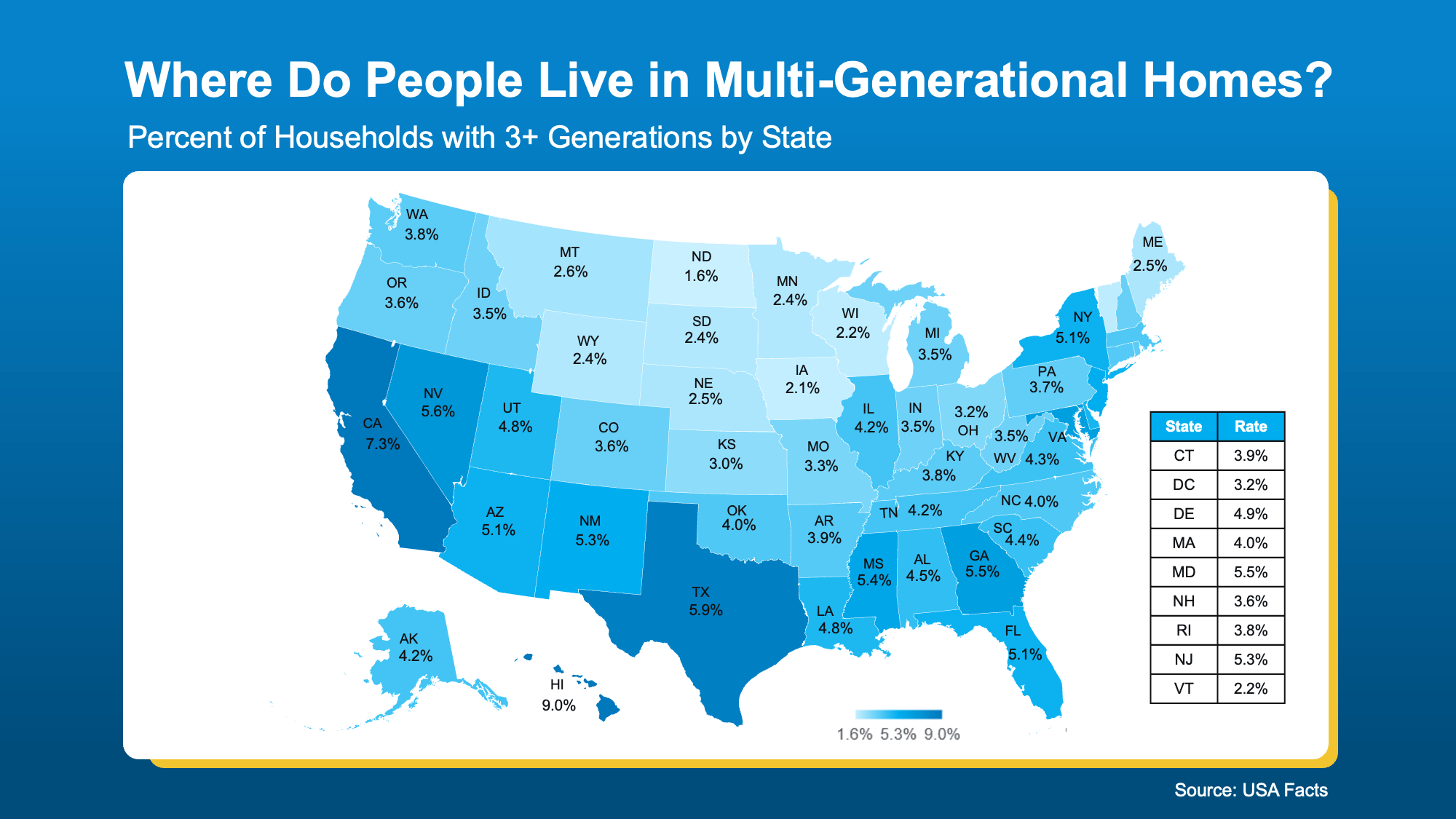
¿Dónde se ubica su estado? Dependiendo de dónde se encuentre, el grupo de compradores que busca una casa como la suya podría ser incluso más grande de lo que piensa. Pero la conclusión general es la siguiente:
Existe un mercado real para las casas más grandes con espacio para múltiples generaciones bajo un mismo techo, especialmente porque la asequibilidad de las viviendas sigue siendo muy ajustada. Y si usted es dueño de una casa así, sepa que tiene mucha demanda.
Las casas multigeneracionales se venden a un precio superior
Y esa habitación adicional tiene un valor real para el comprador adecuado. Según Realtor.com, en 2025, el precio promedio de venta de una casa multigeneracional fue de $709.000, aproximadamente un 65% más alto que el promedio de $429.900 de una casa estándar.
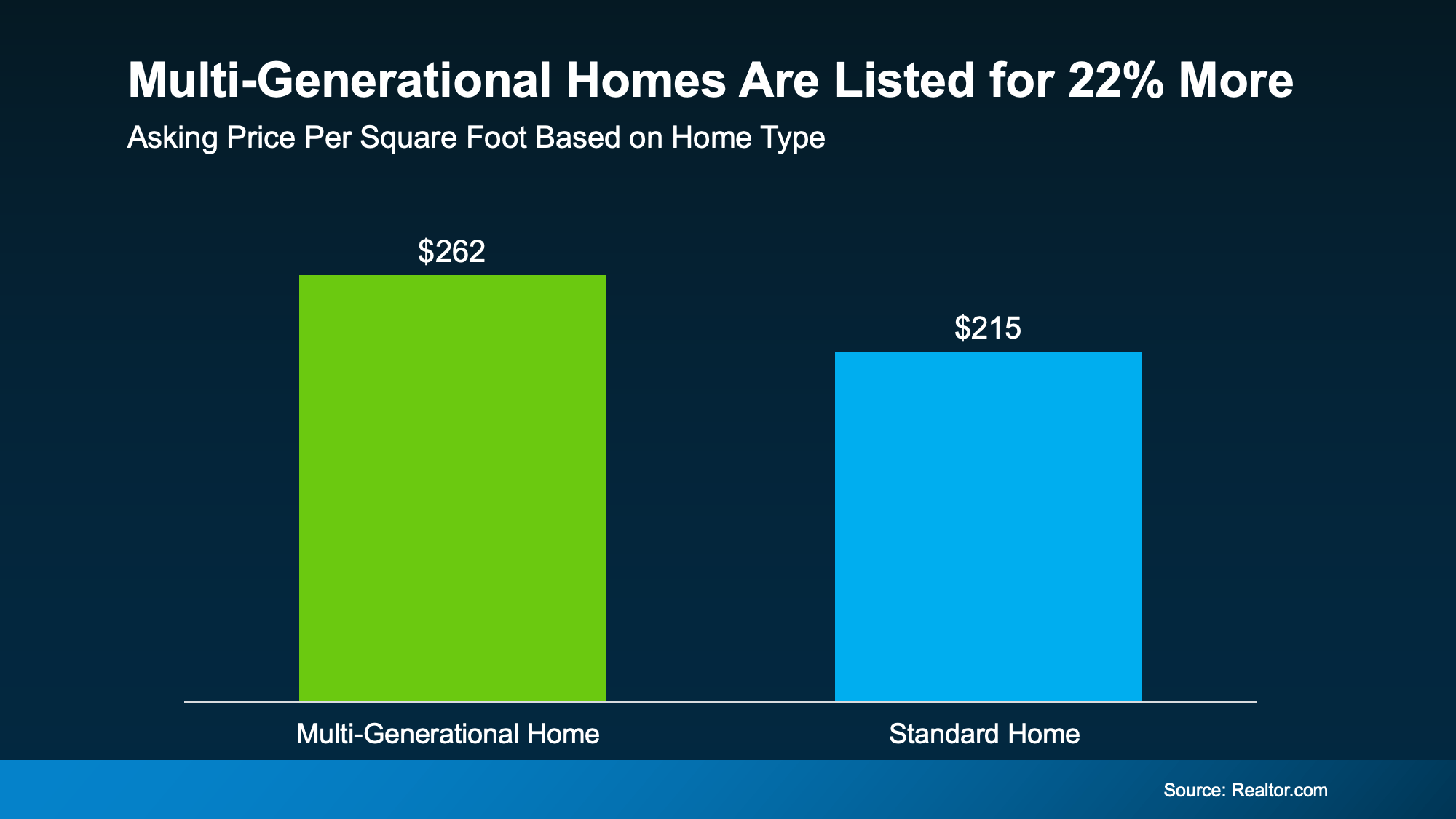
Parte de esto se debe simplemente al tamaño. Pero si comparamos las casas multigeneracionales con las casas normales que tienen la misma cantidad de pies cuadrados, las primeras siguen ganando: $262 por pie cuadrado en comparación con $215.
Ese es un recargo del 22% que podría obtener por características especiales como suites para suegros, segundas cocinas y entradas independientes (consulte el gráfico a continuación):
Cuando venda, esto podría ayudarle a quedarse con más dinero en el bolsillo, especialmente cuando su agente inmobiliario destaque las características multigeneracionales de su casa en el anuncio.
Y los compradores no se asustan con los precios
E incluso con precios ligeramente más altos, los compradores no se echan atrás. Las casas multigeneracionales atrajeron un 13,5% más de visitas en línea que las estándar y, aun así, se vendieron igual de rápido (en unos 59 días), según el mismo informe de Realtor.com.
Hannah Jones, analista sénior de investigación económica en Realtor.com, explica:
“La fuerte demanda y los elevados precios superiores que estamos viendo en mercados con inventario limitado apuntan a un verdadero desajuste entre lo que los compradores buscan y lo que realmente está disponible. Para los vendedores en estos mercados, este tipo de vivienda puede ser un activo importante”.
Básicamente, cuando los compradores quieren algo muy específico, la casa que cumple con esos requisitos tiende a destacar.
En conclusión
Su casa, adaptada para varias generaciones o simplemente más grande que el promedio, podría cumplir con criterios que muchos compradores no encuentran en una vivienda estándar. Eso es lo que llama la atención. Y lo que genera ofertas. Así que, hablemos sobre lo que podría obtener en nuestro mercado en este momento.
Gracias por leer,
Denise Olivares-Molina

by Denise Olivares-Molina | Jul 20, 2026 | Advice for Buyers and Sellers, Advice for Homeowners, Advice for Sellers, Affordability, For Sellers, Home Prices, Home Selling Strategy, Home value, Housing Market, Housing Market Insights, Housing Market Updates, Pricing Strategy, Seller, Sellers, Selling A Home, Selling Myths, Selling Tips, Weekly
If you’ve been thinking about selling, you’ve probably seen plenty of headlines suggesting buyers have just about disappeared. But there’s a big difference between a slow market and a stalled one.
Yes, mortgage rates are still higher than most people would like. Homes aren’t selling as fast as they were. And every week seems to bring another headline about buyers sitting on the sidelines. But here’s what you haven’t heard.
Despite everything going on, buyer demand has been remarkably resilient.
In fact, more sellers are getting to put up the “pending sale” sign now than during the last two years. What’s even more surprising is that they’re doing it at a time of year when activity usually starts to slow down.
And if you’re thinking about selling, that’s a trend worth paying attention to.
Buyers Are More Active Than You Think
One of the best ways to measure buyer demand is by looking at pending home sales. Those are homes that have gone under contract but haven’t closed yet. Think of them as a real-time pulse check on the market and whether buyers are still buying.
HousingWire Data shows more homes are going under contract than at the same time the past 2 years (see graph below):
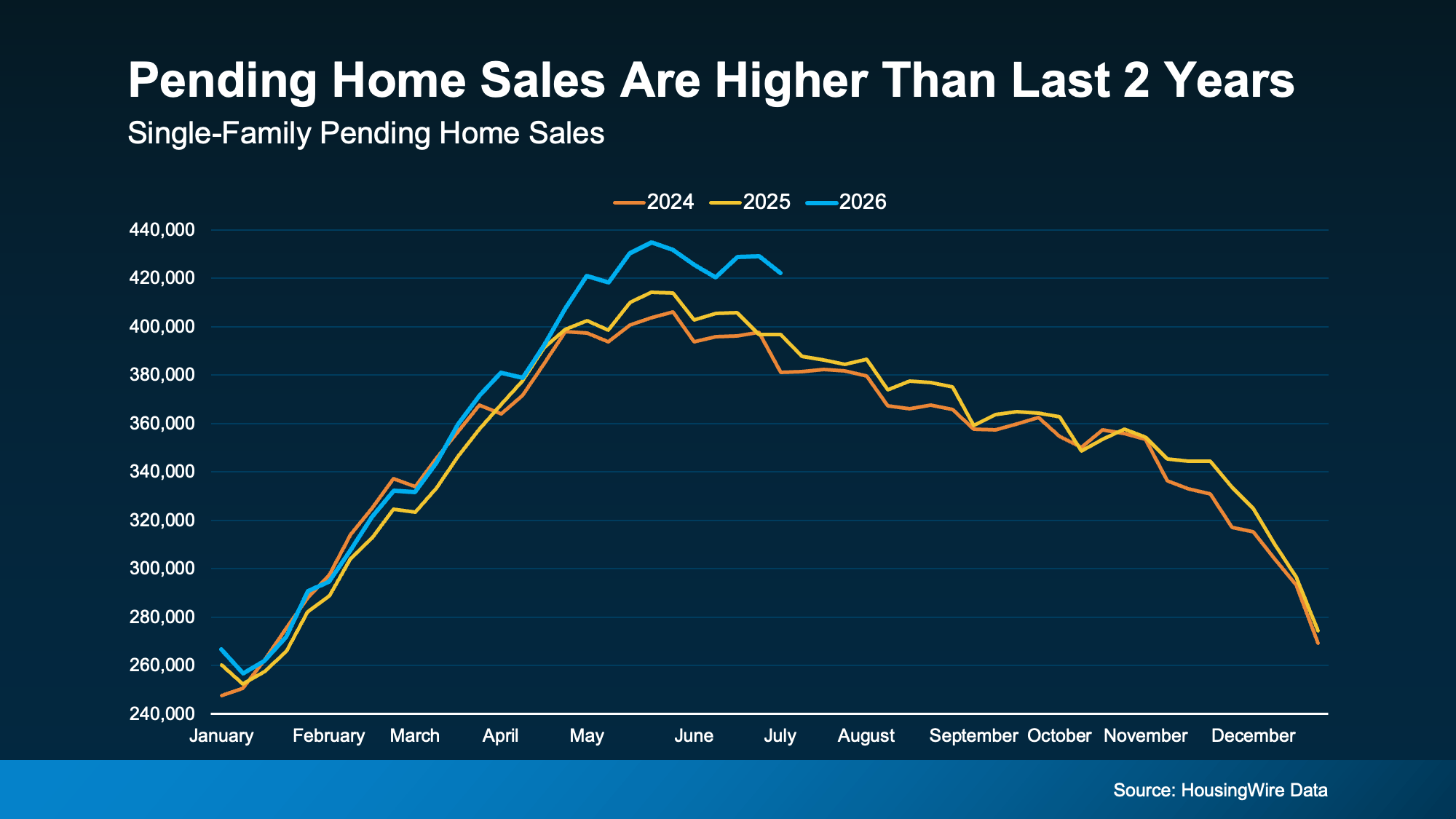
While it may come as a surprise, the numbers speak for themselves. It doesn’t mean buyers are everywhere, but it does mean they’re still active right now. And even if this ebbs and flows a bit in the weeks ahead, right now we’re still ahead of where we’ve been lately. That’s encouraging news if you’re thinking about selling because it tells us something important…
People haven’t stopped buying homes. Serious buyers are still making moves.
And a lot of these people are buying because they decided they can’t keep waiting. Whether it’s a growing family, a new job, retirement, or simply wanting a different home, life keeps moving… even when mortgage rates stay higher than we’d like. As Lawrence Yun, Chief Economist at the National Association of Realtors (NAR), explains:
“A late spring buyer rush—even with mortgage rates not budging—is an indication of pent-up housing demand and consumers’ acceptance of above-6% mortgage rates as the new normal.”
So, if you’ve been worried no one’s buying, this data should give you some confidence. Today’s buyers aren’t just casually browsing open houses on a Sunday afternoon, they’ve spent months waiting for rates to improve and now they realize they can’t wait anymore.
That means they have a purposeand a timeline. And that’s exactly the kind of motivated buyer you want to work with.
What This Means for Your Sale
Does that mean every house will sell instantly? No.
Today’s market is more balanced than it was a few years ago. So, you can’t just price your house however you want or skip preparing it for the market.
Now buyers have choices, and they’re willing to wait for the right home at the right price. But sellers who understand today’s market (and price and position their homes right) are still finding success. Because the idea that “no one’s buying right now” just isn’t supported by the data.
The buyers are there.
The opportunity is there.
The key is having the right strategy to capture it.
Bottom Line
This year’s housing market may be moving slower than many of us hoped. But, buyer demand is more resilient than the headlines suggest.
If you’re wondering whether there are enough buyers for your house, let’s connect. I’ll show you what’s happening in our local market and build a strategy that helps you take advantage of the momentum that’s already here.
Thank You For Reading
Denise Olivares-Molina

by Denise Olivares-Molina | Jun 15, 2026 | Advice for Sellers, Cost-Saving Tips, Costs, For Sellers, Pricing, Pricing Strategy, Real Estate Finances, Seller, Sellers, Selling A Home, Selling Myths, Selling Tips, Tips for Sellers, Weekly
A few years ago, sellers could get away with saying “no” to just about everything.
No repairs.
No concessions.
No negotiation.
If buyers wanted the house, they pretty much had to take it on the seller’s terms. But now that inventory’s grown, negotiations are becoming a normal part of the process again.
That’s why one of the most important things sellers need to understand right now is this:
The goal isn’t to “win” every negotiation.
Sometimes, it’s worth meeting buyers where they are to get a deal done, fast. One example? Helping with a buyer’s closing costs.
Let’s break that down, so you know what to expect if it comes up in your sale.
What Are Buyer Closing Costs?
Closing costs are the extra expenses buyers pay on top of their down payment when they purchase a home. Freddie Mac gives some examples:
Typically, buyer closing costs range from about 2% to 5% of the home’s purchase price. So, on the typical $400,000 home, that could mean anywhere from $8,000 to $20,000 out of pocket.
And in today’s affordability-challenged market, that upfront cash can be a major hurdle for some buyers – even if they can comfortably afford the monthly mortgage payment itself.
That’s why more people are asking sellers for help.
And More Sellers Are Saying “Yes”
According to the latest data from Zillow, 67% of sellers reported paying some or all of the buyer’s closing costs in 2025 (see chart below):
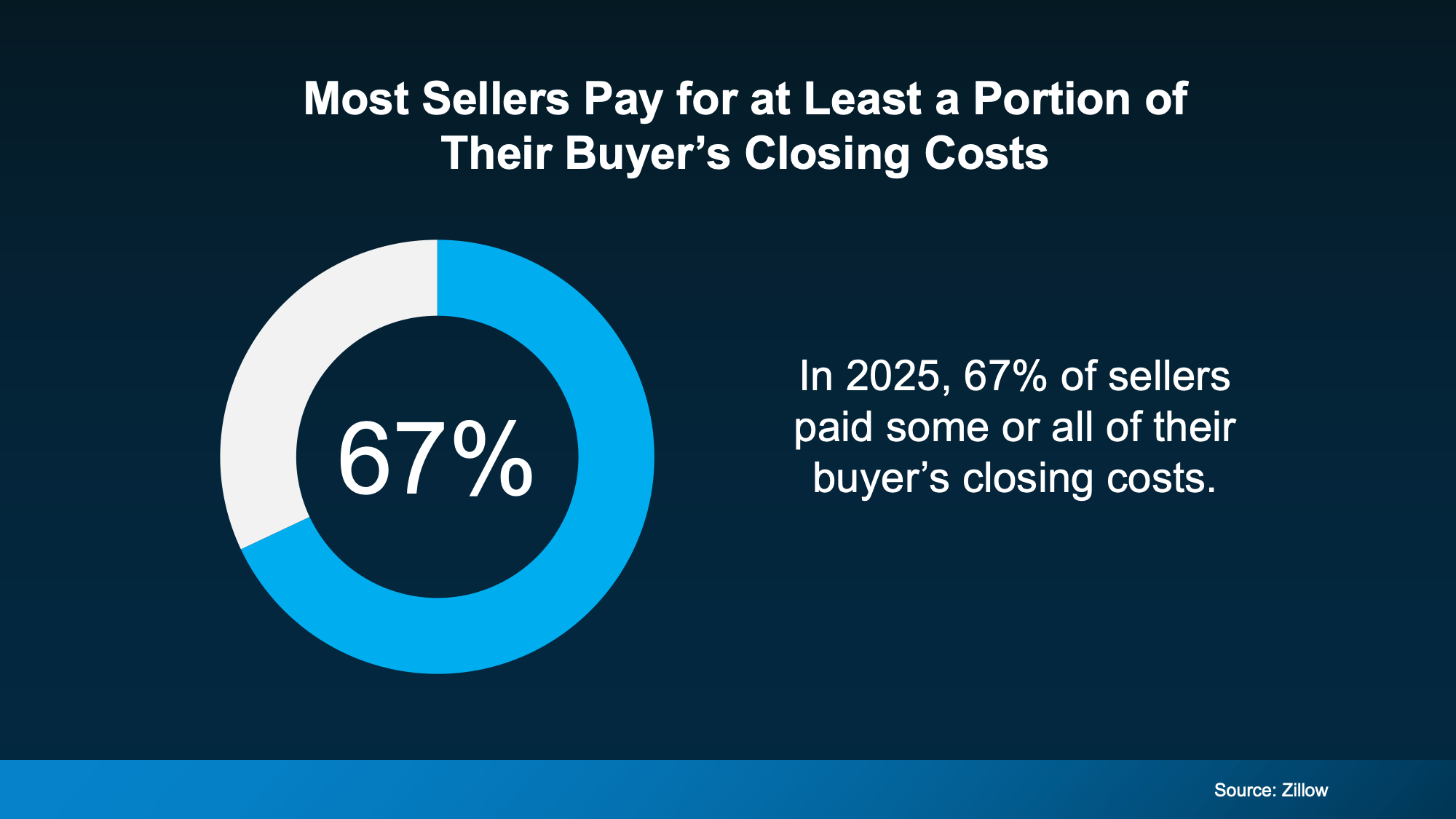
Now, that doesn’t mean every seller is doing it. And it definitely doesn’t mean every seller should. But it does show how common concessions have become as the market has shifted. And that’s important for you to know.
When Paying Closing Costs May Make Sense
This is where many sellers get stuck. They hear “help with closing costs” and immediately think: “Why should I pay for their expenses?”
But that’s not always the right way to look at it. You’ve got to consider who has the leverage in today’s market.
Redfin data shows there are more sellers than buyers active today. And that shifts the market dynamics (see graph below):
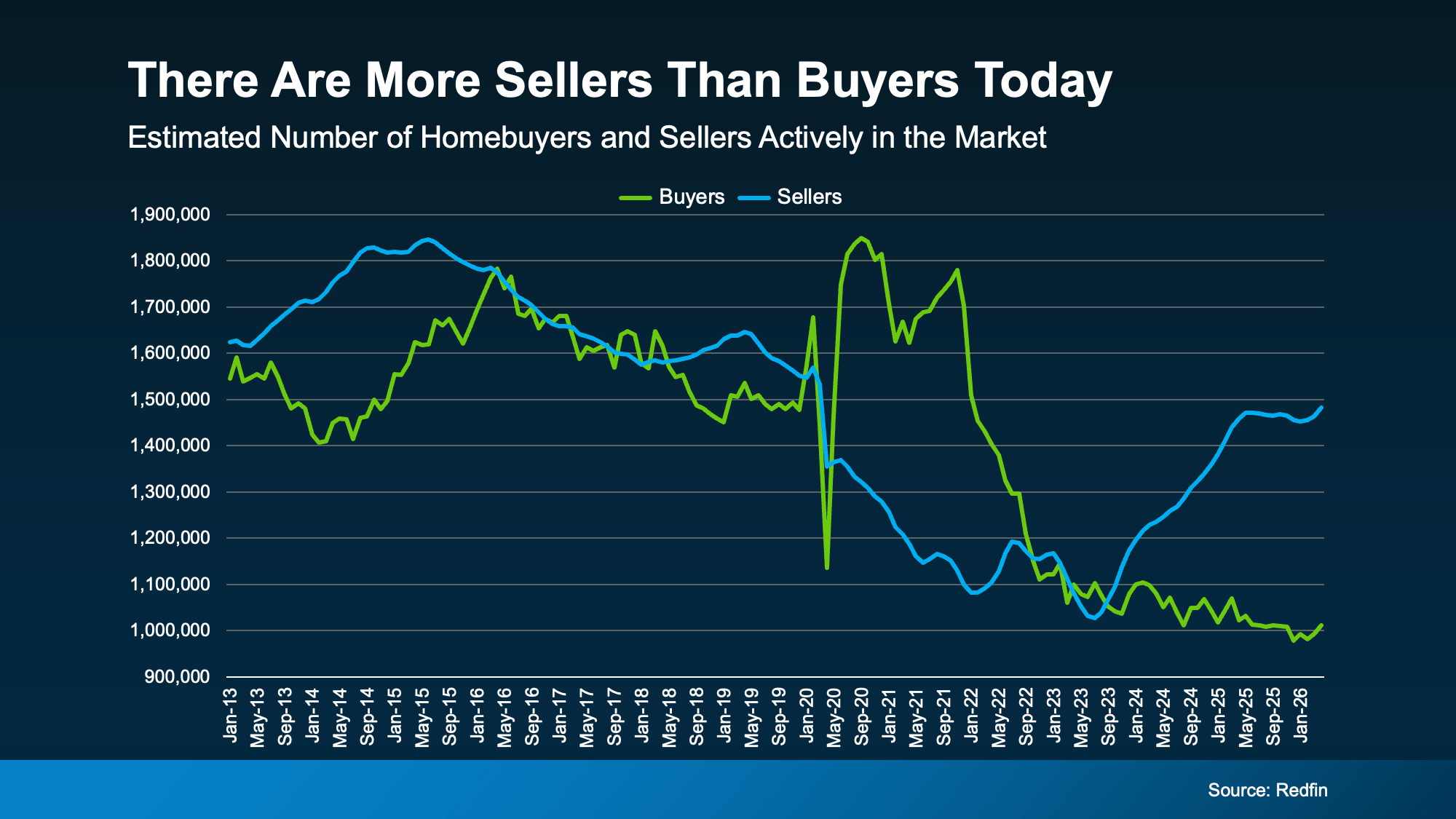
That doesn’t mean every market favors buyers. Far from it. In some areas, homes are still selling quickly and sellers have plenty of leverage. But in others, buyers have more room to negotiate than they’ve had in years.
That’s why local market conditions matter so much when you make your decision.
For example, helping with closing costs may be worth considering if:
-
There are a lot of homes for sale in your area
-
Your house has been sitting on the market longer than expected
-
You’ve had showings, but no offers
-
You’re motivated to move quickly
-
Or you’re trying to keep a deal together during negotiations
After all, if it’s the thing that helps bring a serious buyer across the finish line, it could be well worth it.
Other Concessions You Could Offer Instead
Just remember, being flexible doesn’t mean saying “yes” to every request. It means understanding which compromises actually help you accomplish your goals. Because there are always alternatives.
Redfin suggests considering other concessions if you’re not interested in helping with closing costs, like:
The right answer depends on what buyers in your market are asking for and what matters most to you. That’s exactly why working with an experienced local agent is so important.
Bottom Line
The sellers having the most success today are the ones who understand the market has changed and are adapting to meet it where it is.
Sometimes that means negotiating on closing costs. Sometimes it means offering something else. The key is knowing which concessions are worth it for our local market.
If you’re wondering what’s normal in our area, what’s worth negotiating, and where it makes sense to stand firm, let’s connect.
Thank You For Reading
Denise Olivares-Molina

by Denise Olivares-Molina | Jun 1, 2026 | Advice for Sellers, Family Time, For Sellers, Move-up Buyers, Moving On, Real Estate Finances, Real Estate Goals, Real Estate Investing, Real Estate Market, Real Estate Market 2026, Real Estate Tips, Real Estate Trends in 2026, Seller, Sellers, Selling A Home, Selling Tips
You may be telling yourself you’re going to wait to move – maybe you’re hoping mortgage rates will come down, prices will fall, or the market will feel a little easier.
And honestly? A lot of people feel that way right now. But here’s what some are starting to realize.
Waiting doesn’t usually fix the thing that made you want to move in the first place.
Your family still desperately needs more room. Your empty nest still feels too…empty.
Your parents or grandparents still need you to live closer.
You just got married… or divorced.
Your vision of retirement has you living somewhere else.
Eventually, life can reach a point where waiting feels harder than moving.
That’s why some people are still deciding to buy right now, even in today’s market. Not because conditions are perfect. But because the life changes behind their move never really went away.
And maybe that’s exactly where you are too. If so, you’re certainly not alone.
The Real Reasons People Move
Data from the National Association of Realtors (NAR) shows 1 in 5 buyers last year said they felt like they had to purchase a home at that time, no matter the market.
That’s an important reminder right now. Sure, the dollars and cents of your move have to make sense for you. But big life changes happen whether mortgage rates and home prices are high, low, or somewhere in between.
And those big life events happen more than you may think. NAR says roughly 22.5 million people experience major life changes in a typical two-year span (see graph below):
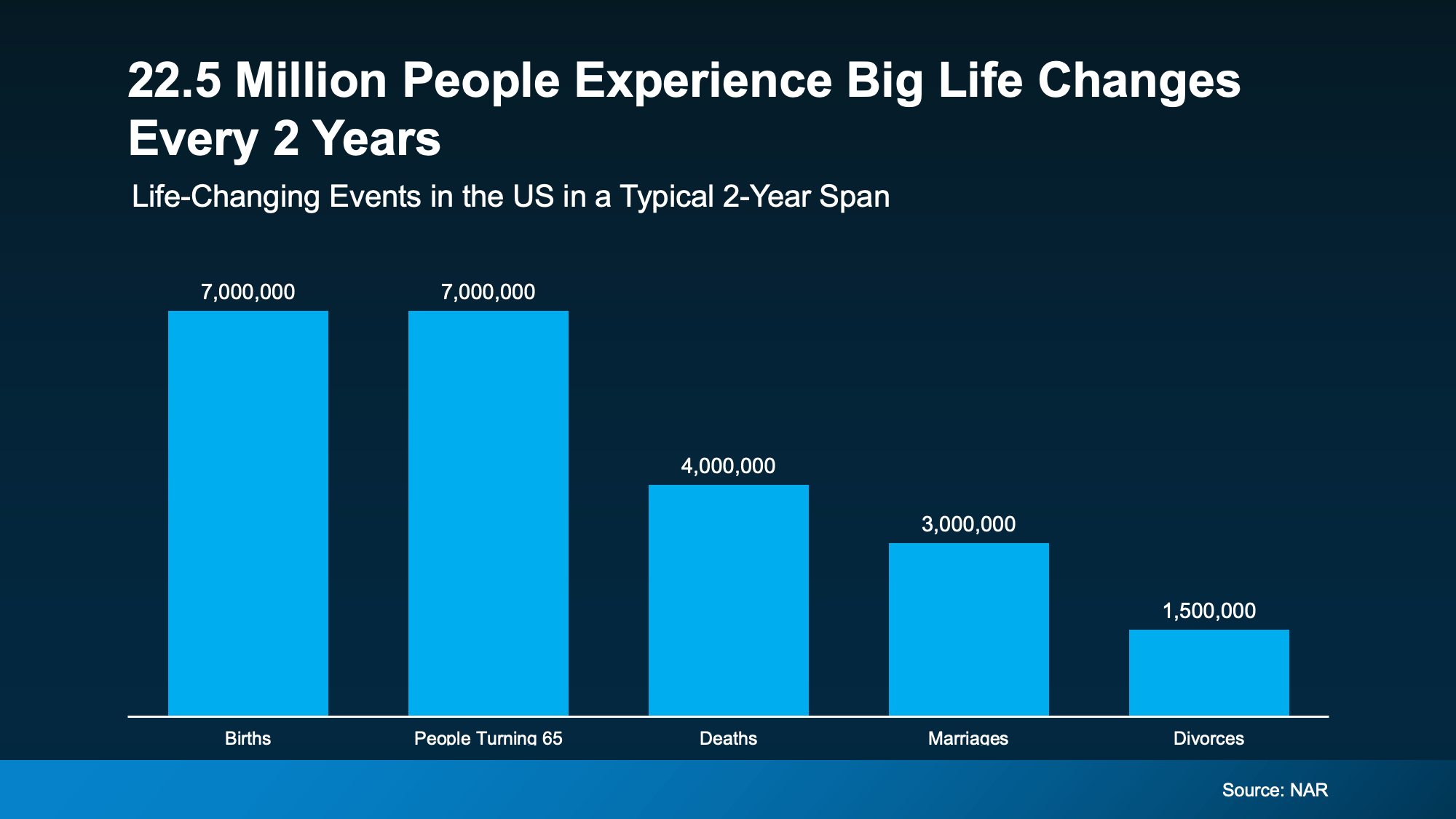
These are exactly the kinds of things that can change how much space you need, where you want to live, or what kind of lifestyle makes sense now. Chen Zhao, Head of Economics Research at Redfin, explains:
“Life doesn’t stand still—people get new jobs, grow their families, downsize after retirement, or simply want to live in a different neighborhood.”
And that’s what makes waiting so hard. Every month you spend hoping the market changes is another month living in a house that no longer works for your life. It’s stressful to feel stuck. And that feeling usually doesn’t disappear.
There May Be More Opportunity Than You Think
But while affordability is still a challenge, there may still be a way for you to make your move.
The number of homes for sale has been growing for 4 straight years (see graph below). That means more homes to choose from and, in some markets, more room to negotiate than buyers had just a few years ago.
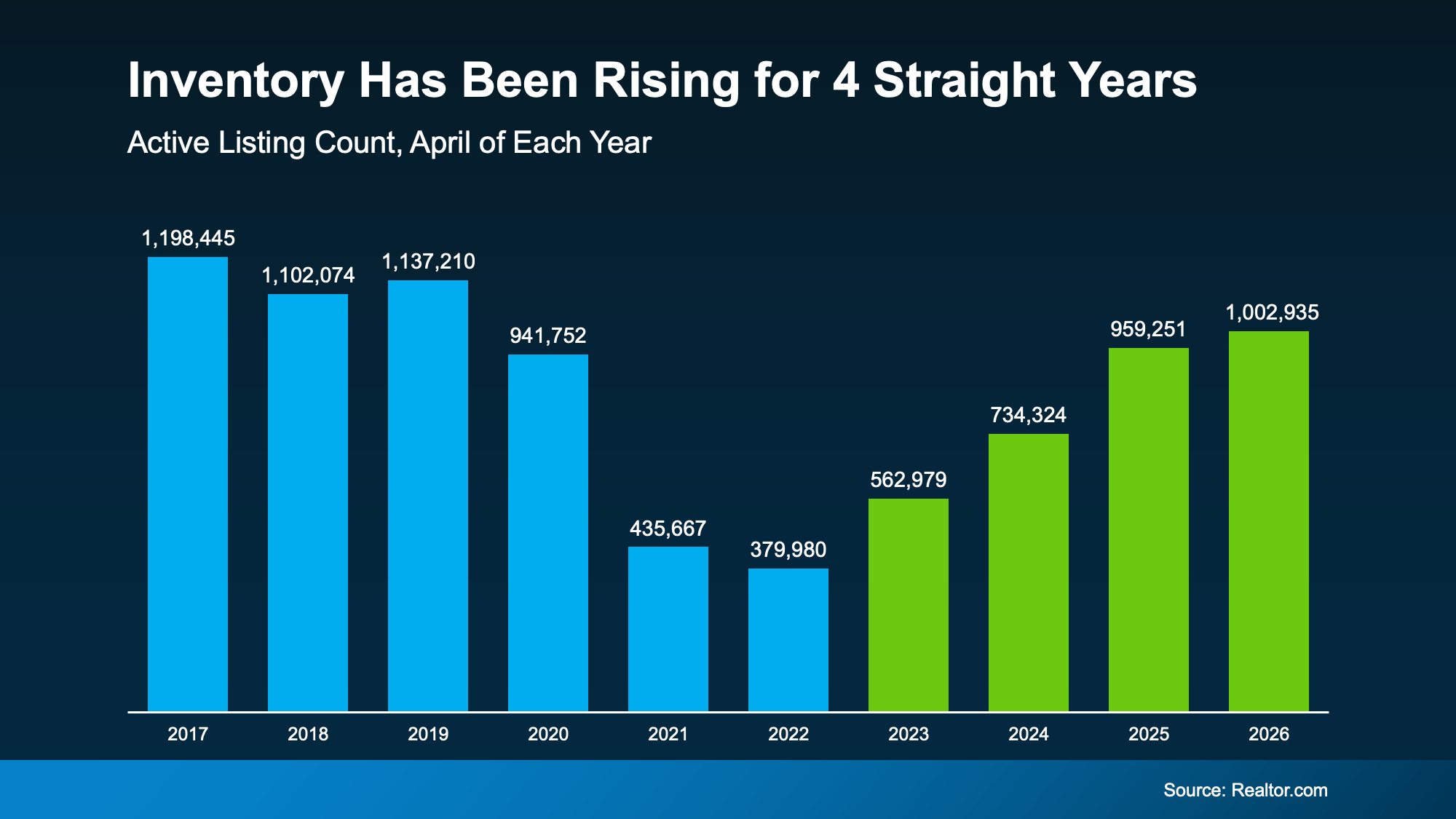
That doesn’t mean moving is suddenly easy. But it does mean some buyers are finding ways to make a move work. So, if you’ve been putting your plans on hold, maybe the question isn’t just:
“What’s the market doing?” or “When will it get better?”
Maybe ask yourself this, too: “Can I still live where I’m at right now and make it work?”
If the answer to that second question is “no,” it may be worth having a conversation about what your options look like today – despite where rates or prices are. You could find your move is still possible after all. With more homes for sale, there’s a better chance to find one that fits your life (and your budget) right now.
Bottom Line
Life changes. Priorities shift. Families grow. Kids move out. Careers evolve. And eventually, the house you’re in may stop fitting the life you’re living.
If that’s been weighing on you lately, let’s talk through what your options could realistically look like today, no matter where rates or prices are.
Life can’t always wait for perfect market conditions. Maybe you don’t have to either.
Thank you For Reading
Denise Olivares-Molina

by Denise Olivares-Molina | May 11, 2026 | Advice for Homeowners, Advice for Sellers, For Sellers, Seller, Sellers, Selling A Home, Selling Tips, Weekly
¿Vas a vender tu casa esta temporada? Probablemente hayas escuchado que deberías prepararla (hacer staging) antes de que salga al mercado. Pero, ¿qué significa realmente y vale la pena el esfuerzo?
La respuesta corta es “sí”, especialmente ahora mismo.
Con más casas a la venta este año, es probable que te preguntes cómo obtener la mayor ganancia posible sin que tu propiedad se quede estancada en el mercado. La respuesta es el staging. Puede ayudar a que tu casa destaque, atraiga ofertas más sólidas y se venda más rápido. Como dice Nadia Evangelou, Economista Principal de la Asociación Nacional de Realtors (NAR):
“El staging importa. Preparar la casa para que esté ‘lista para el comprador’ atrae a más interesados, especialmente ahora que el inventario ha aumentado”.
Esto es lo que implica realmente el staging y lo que podría hacer por tu venta.
¿Qué es el Home Staging?
El home staging es el proceso de preparar tu casa para que resulte atractiva a la mayor cantidad de compradores posible. Por lo general, esto implica despejar el desorden, hacer una limpieza profunda, reorganizar los muebles y añadir detalles sencillos que ayuden a que cada habitación se sienta luminosa, abierta y acogedora.
El objetivo es lograr que los compradores se enamoren del espacio y se imaginen viviendo allí, lo que aumenta las probabilidades de que presenten una oferta.
Por qué el staging vale la pena
Las casas preparadas tienden a rendir mejor en casi todas las métricas importantes al vender. Según Redfin, se ha demostrado que las casas con staging se venden hasta un 73% más rápido que las que no lo tienen. Además, suelen cerrar la venta en menos de un mes, en comparación con los dos o tres meses que pueden tardar las propiedades vacías.
También hay un fuerte retorno de la inversión.
El Home Staging Institute afirma que un nivel intermedio de staging puede ofrecer un 350% de retorno de inversión. En una casa de 400,000 $, eso convierte el costo típico de 4,000 $ en aproximadamente 18,000 $ de valor añadido al vender:
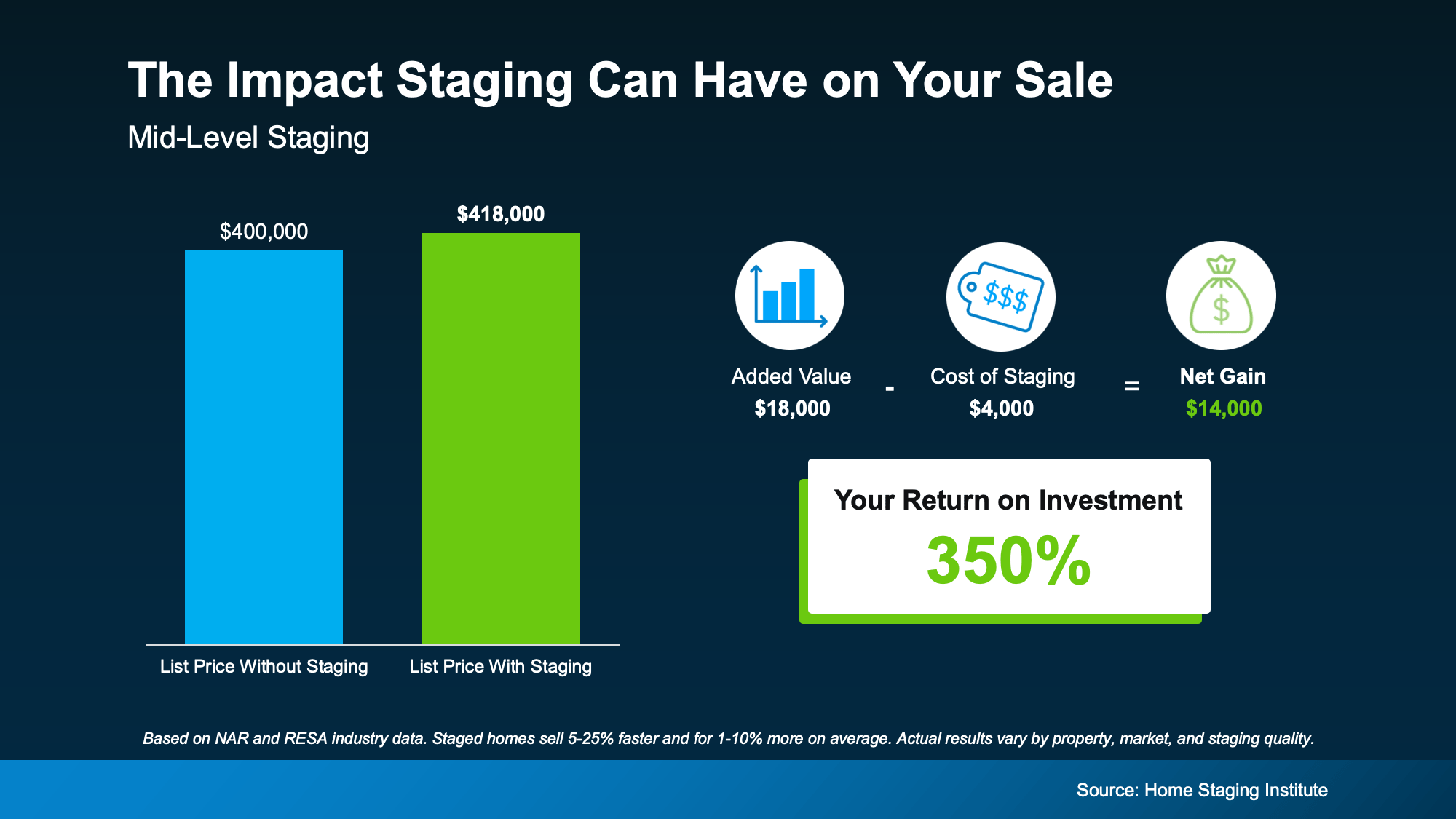
Al seguir esta estimación, se trata de una ganancia potencial extra de unos 14,000 $, un impulso significativo cuando intentas maximizar el dinero que te llevas al momento del cierre.
Tus opciones de staging
Y por si acaso estás viendo esa inversión inicial de 4,000 $ y piensas: “Yo no voy a gastar eso”, esto es lo que debes saber. El staging no siempre tiene que significar contratar a todo un equipo o llenar tu casa con muebles alquilados. Hay varios caminos que puedes tomar, dependiendo de tu presupuesto y tiempo:
-
Staging profesional: Un experto se encarga de todo, desde la distribución hasta la decoración, a menudo trayendo su propio inventario. Según el Home Staging Institute, los costos suelen oscilar entre 500 $ y 5,000 $ o más, dependiendo del tamaño de la casa.
-
Staging virtual: Se añaden muebles y estilo digital a las fotos de tu anuncio, lo cual puede ser una opción económica para casas vacías.
-
Staging “hazlo tú mismo” (DIY): Si tu presupuesto es ajustado y tu casa solo necesita actualizaciones menores, despejar el desorden, limpiar a fondo y organizar los muebles para que el flujo sea mejor puede marcar una gran diferencia.
Tu agente puede ayudarte a determinar qué enfoque se adapta mejor a tu casa, a tu mercado y a tus objetivos. Los agentes ven a qué responden los compradores en las jornadas de puertas abiertas (open houses) y visitas cada semana, por lo que pueden darte recomendaciones específicas y personalizadas sobre lo que vale la pena (y lo que no).
De esa manera, podrás obtener el máximo provecho de tu dinero, sin importar tu presupuesto.
Conclusión
Con más casas a la venta en este momento, causar una buena primera impresión es fundamental. El staging puede ayudar a que tu casa se venda más rápido y por más dinero, y hay una opción para casi todos los presupuestos.
Si te estás preparando para poner tu casa a la venta, hablemos sobre qué nivel de staging tiene sentido para tu propiedad y diseñemos un plan para atraer a los compradores adecuados.
Gracias Por Leer
Denise Olivares-Molina

by Denise Olivares-Molina | May 11, 2026 | Advice for Sellers, For Sellers, Seller, Sellers, Selling A Home, Selling Tips, Tips for Sellers, Weekly
Selling your house this season? You’ve probably heard you should stage it before it hits the market. But what does that really mean – and is it worth the effort?
The short answer is “yes,” especially right now.
With more houses for sale this year, you’re likely wondering how to make the most money possible without your house sitting on the market. The answer is staging. It can help your house stand out, bring in stronger offers, and sell faster. As Nadia Evangelou, Principal Economist at the National Association of Realtors (NAR), puts it:
“Staging matters. Preparing the home to be ‘buyer-ready’ attracts more buyers, especially now that inventory has increased.”
Here’s what staging actually involves and what it could do for your sale.
What Is Home Staging?
Home staging is the process of preparing your house, so it appeals to as many buyers as possible. That usually means decluttering, deep cleaning, rearranging furniture, and adding simple touches that help each room feel bright, open, and welcoming.
The goal is to help buyers fall in love with the space and picture themselves living there, which makes them more likely to make an offer.
Why Staging Is Worth the Effort
Staged houses tend to perform better on almost every metric that matters when you sell. According to Redfin, staged homes have been shown to sell up to 73% faster than unstaged homes. And they often close in under a month, compared to anywhere from two to three months for vacant ones.
There’s also a strong return on the money you spend.
The Home Staging Institute says mid-level staging can deliver a 350% return on investment. On a $400k home, that turns the typical $4k cost into roughly $18k in added value when you sell (see graph below):
By that estimate, that’s an extra potential profit of about $14k – a meaningful boost when you’re trying to maximize what you walk away with at closing.
Your Staging Options
And just in case you’re seeing that $4k upfront investment above and thinking, “I’m not going to spend that,” here’s what you should know.
Staging doesn’t always have to mean hiring a full crew or filling your house with rented furniture. There are a few different paths you can take, depending on your budget and timeline. So, you could spend a lot less and still get a good return.
Here are a few options:
- Professional staging. A stager handles everything from layout to décor, often bringing in their own inventory. According to the Home Staging Institute, costs typically range from $500 to $5k or more, depending on the size of your house.
- Virtual staging. Digital furniture and styling are added to your listing photos, which can be a budget-friendly option for vacant houses.
- DIY staging. If your budget is tight and your home only needs minor updates, decluttering, deep cleaning, and arranging furniture for flow can still make a real difference.
Your agent can help you figure out which approach fits your house, your market, and your goals.
Agents see what buyers respond to in open houses and showings every week, so they can give you specific, personalized recommendations on what’s worth your time and money (and what isn’t).
That way you can get the most bang for your buck – no matter your budget.
Bottom Line
With more homes for sale right now, making a strong first impression matters. Staging can help your house sell faster and for more – and there’s an option for almost every budget.
If you’re getting ready to list, let’s talk about what level of staging makes sense for your house and make a plan for attracting the right buyers.
Thank You For Reading
Denise Olivares-Molina
