
by Denise Olivares-Molina | Sep 1, 2026 | 2026 Housing Market, Advice for Buyers, Agent Value, Buyer Tips, Buyers, Buying A Home, Buying Myths, Buying Tips, First-Time Buyers, First-Time Investors, For Buyers, Home Prices, Housing Market, Housing Market Insights, Housing Market Shifts, Housing Market Updates, Real Estate Finances, Real Estate Market, Real Estate Market 2026, Real Estate Myths, Real Estate Tips, Weekly
Lately, headlines have floated an eye-catching idea about tapping into your 401(k) to cover a down payment on a home. Maybe you’ve caught the buzz and wondered whether that money could get you into a home faster, especially with affordability as tough as it is.
Here’s what you need to remember. Pulling from your retirement savings is a big decision, so take time to weigh all your options first and be sure to talk with a financial expert before you do anything.
Why Dipping into a 401(k) Can Be Tempting
Data from Empower shows many Americans have built up considerable retirement savings. The median 401(k) amount for anyone in their 40s-60s is six figures (see graph below):
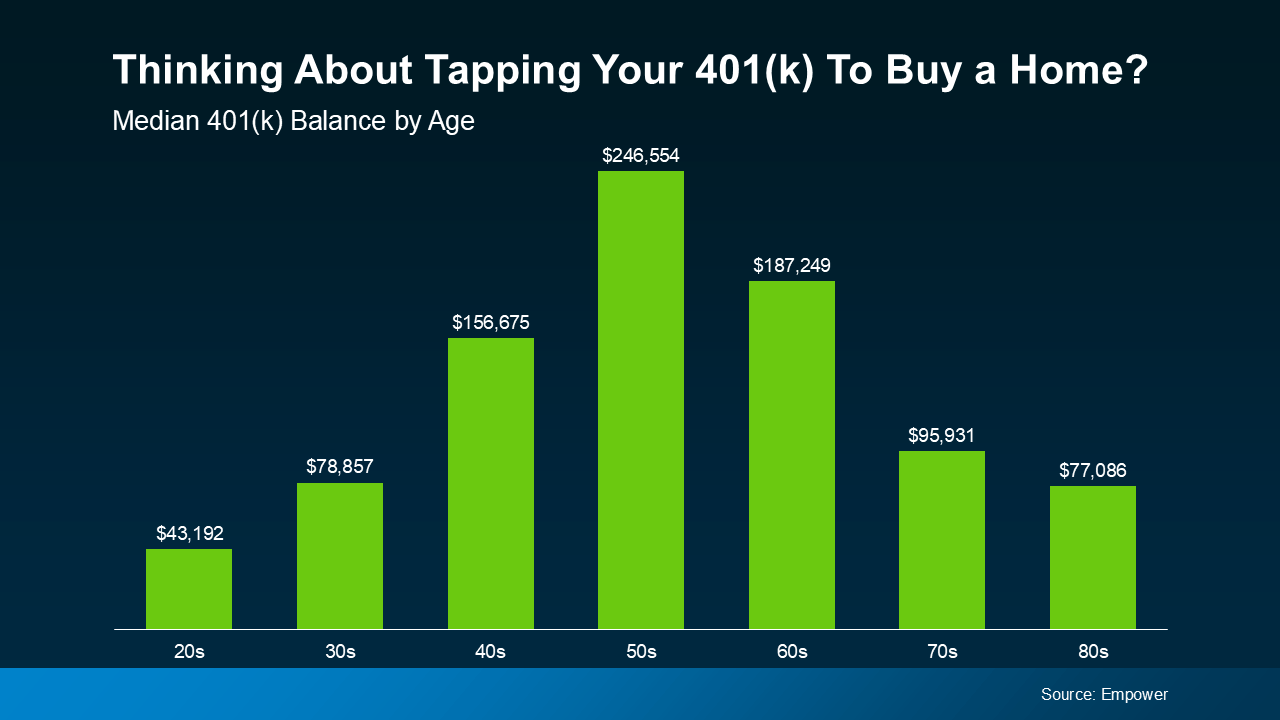 And when you’ve got a good chunk saved and your dream home is right there, reaching for it can feel like an easy call.
But dipping into your retirement savings to buy a home could cost you a penalty and set back your finances later on. That’s why it’s a good idea to explore other options for your down payment first. As Redfin says:
“If you’re struggling to save enough for a down payment, you may be wondering if tapping into your 401(k) is the right option. While it’s possible, doing so comes with significant risks, like early withdrawal penalties and lost investment growth.“
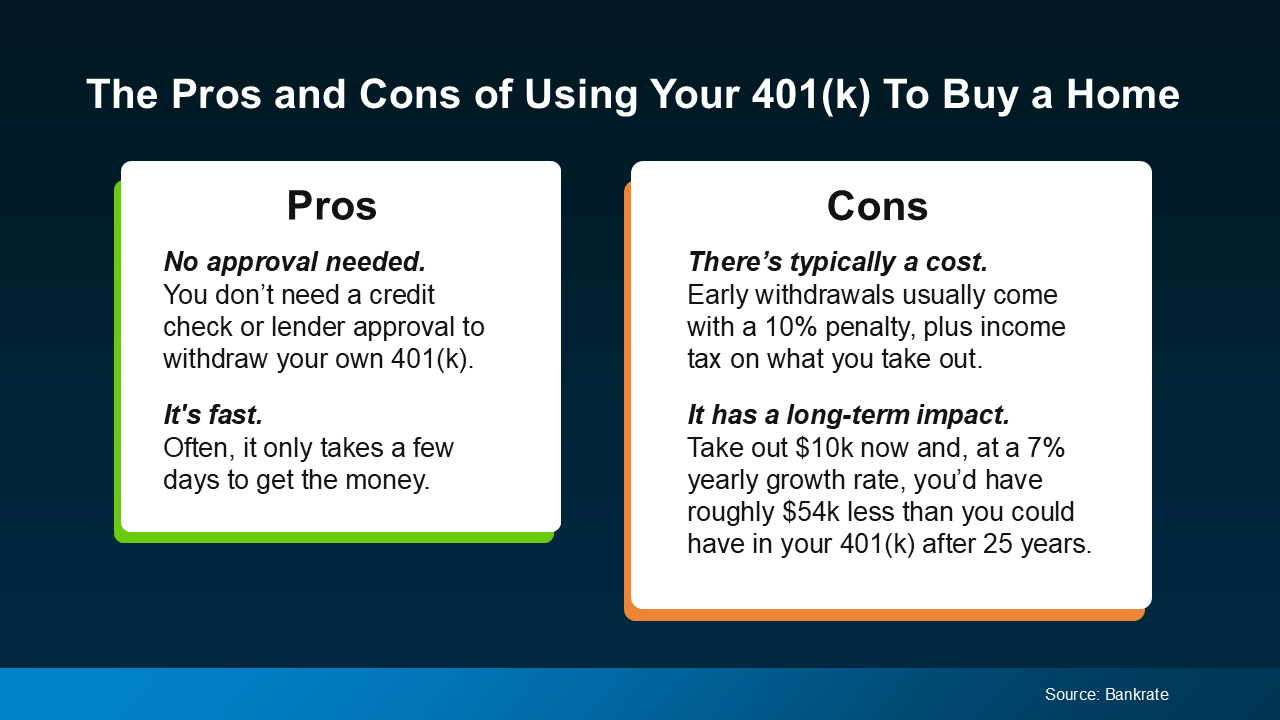
Before you decide, have a financial advisor help you compare the upsides to the risks. Bankrate points to a few of each (see visual):
Other Options Worth Exploring First
Your 401(k) isn’t the only way to finance a home purchase. Redfin outlines a few other options to look into before you decide what to do:
-
Low and No-Down Payment Loans: FHA loans, for example, allow qualified buyers to put down as little as 3.5% of the home’s price, depending on their credit scores.
-
Down Payment Assistance Programs: Many national and local programs can help reduce what you pay toward your down payment or closing costs.
Make a Plan Before You Make a Move
No matter which route you take, talk with a financial expert first. The buyers who come out ahead build a solid plan with the right professionals before starting their journey to homeownership. As NerdWallet puts it:
“Even if you’re convinced a 401(k) loan is the way to go, it’s important to understand the risks at the outset.“
Bottom Line
Affordability is definitely a challenge, but that doesn’t mean tapping your 401(k) is your only way in if you want to buy.
If you’re considering using your 401(k) savings for a down payment, weigh all your options and talk with a trusted financial advisor before you make any decisions. They’ll help you make a plan to fit your goals and your budget.
Thank You For Reading
Denise Olivares-Molina

by Denise Olivares-Molina | Aug 17, 2026 | Advice for Buyers, Buyers, First Time Home Buyers, First-Time Buyers, First-Time Investors, For Buyers, Market Trends, Market Updates, Real Estate Finances, Real Estate Goals, Real Estate Investing, Real Estate Market, Real Estate Market 2026, Real Estate Tips, Real Estate Trends in 2026, Weekly
Pregunte por ahí y casi todos los compradores de viviendas quieren saber si hay alguna manera de conseguir una mejor oferta. Y casi todos los vendedores quieren saber si todavía obtendrán el precio máximo por su propiedad.
Lo interesante es que… ambos pueden tener razón exactamente al mismo tiempo. Todo depende de dónde viva.
Eso se debe a que el mercado inmobiliario actual ya no se mueve en una sola dirección. Algunos mercados favorecen claramente a los compradores. Otros todavía favorecen a los vendedores. Pero la mayoría se encuentra en un punto intermedio.
Y saber en qué mercado se encuentra realmente puede cambiar por completo la estrategia que utilice para comprar o vender (y qué expectativas debería tener). Vamos a desglosarlo.
Un número le dice quién tiene el poder de negociación
Entonces, ¿cómo sabe en qué mercado se encuentra? Hay un número que cuenta la historia más rápido que cualquier otra cosa: los meses de inventario de viviendas en venta. Es la señal más clara de quién tiene la ventaja y qué estrategia necesitará. Piénselo de esta manera.
Imagine que a partir de hoy no se pusieran a la venta más casas. Los meses de inventario nos dicen cuánto tiempo tomaría vender todo lo que está actualmente en el mercado según la demanda de hoy.
En términos generales, si los meses de inventario son:
-
Menos de 4 meses: Los vendedores suelen tener la ventaja.
-
De 4 a 6 meses: Compradores y vendedores están en mayor igualdad de condiciones.
-
Más de 6 meses: Los compradores generalmente pueden negociar una mejor oferta.
En este momento, los datos de la Asociación Nacional de Agentes Inmobiliarios (NAR, por sus siglas en inglés) indican que ese número es de 4.6, lo que sitúa al mercado general nuevamente en territorio equilibrado (vea el gráfico a continuación):
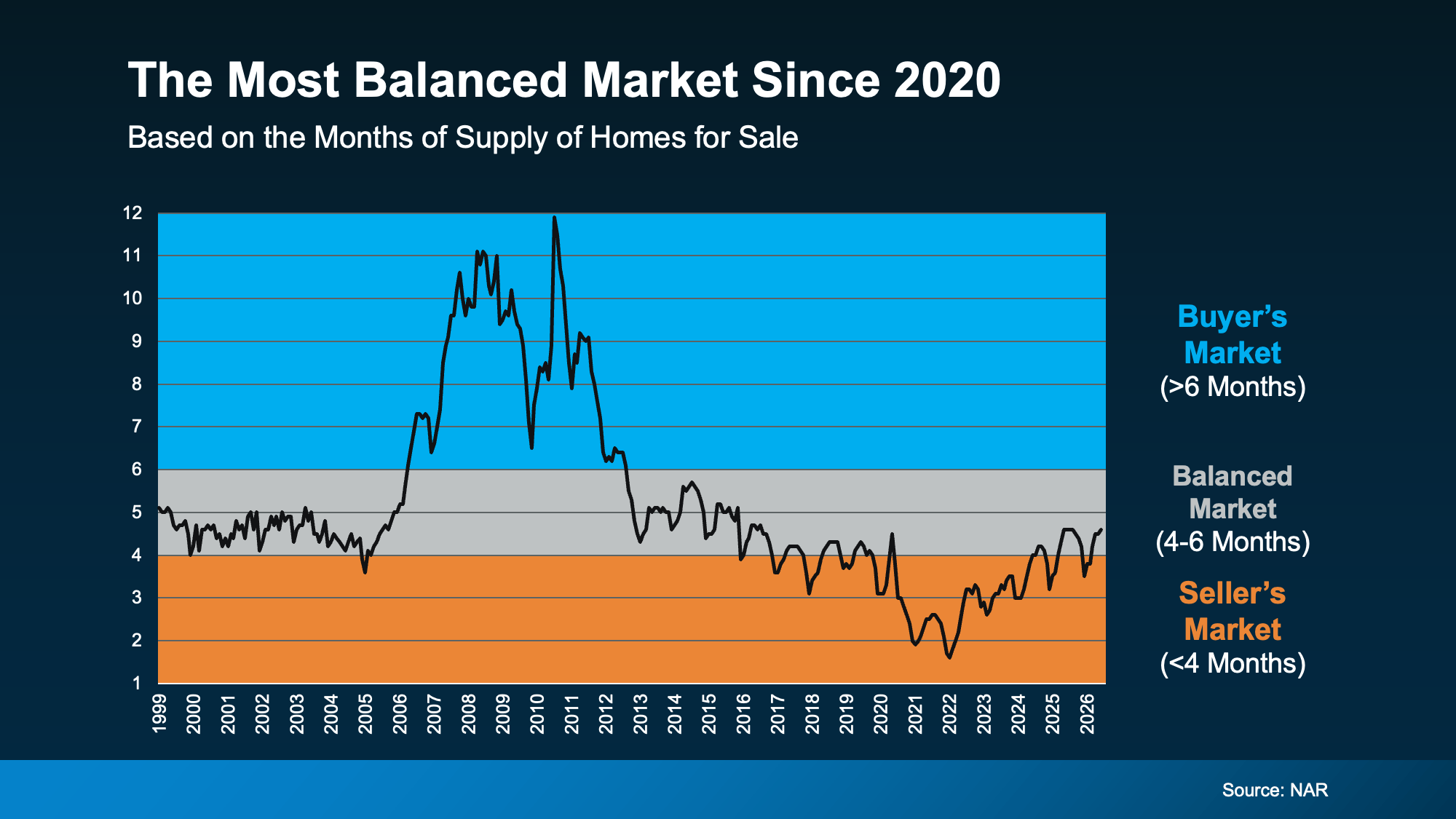
Eso significa que, en su conjunto, el mercado finalmente ha regresado a un rango mucho más equilibrado después de años de estar inclinado a favor de los vendedores. Aunque pueda parecer que la balanza se ha inclinado solo un poco, es suficiente para hacer una verdadera diferencia en la estrategia que necesitará para su mudanza, al menos en la mayoría de los lugares.
La historia de dos mercados: Por qué “equilibrado” no significa lo mismo en todas partes
Los datos de Redfin ayudan a arrojar luz sobre cómo se distribuye esto en todo el país. Desglosa qué ciudades se inclinan en una dirección u otra (vea el gráfico a continuación).
-
Algunos mercados dan a los compradores más poder de negociación. Esos están en azul.
-
Algunos todavía favorecen a los vendedores. Ese es el naranja.
-
Otros se encuentran en un punto intermedio. Esos son grises.
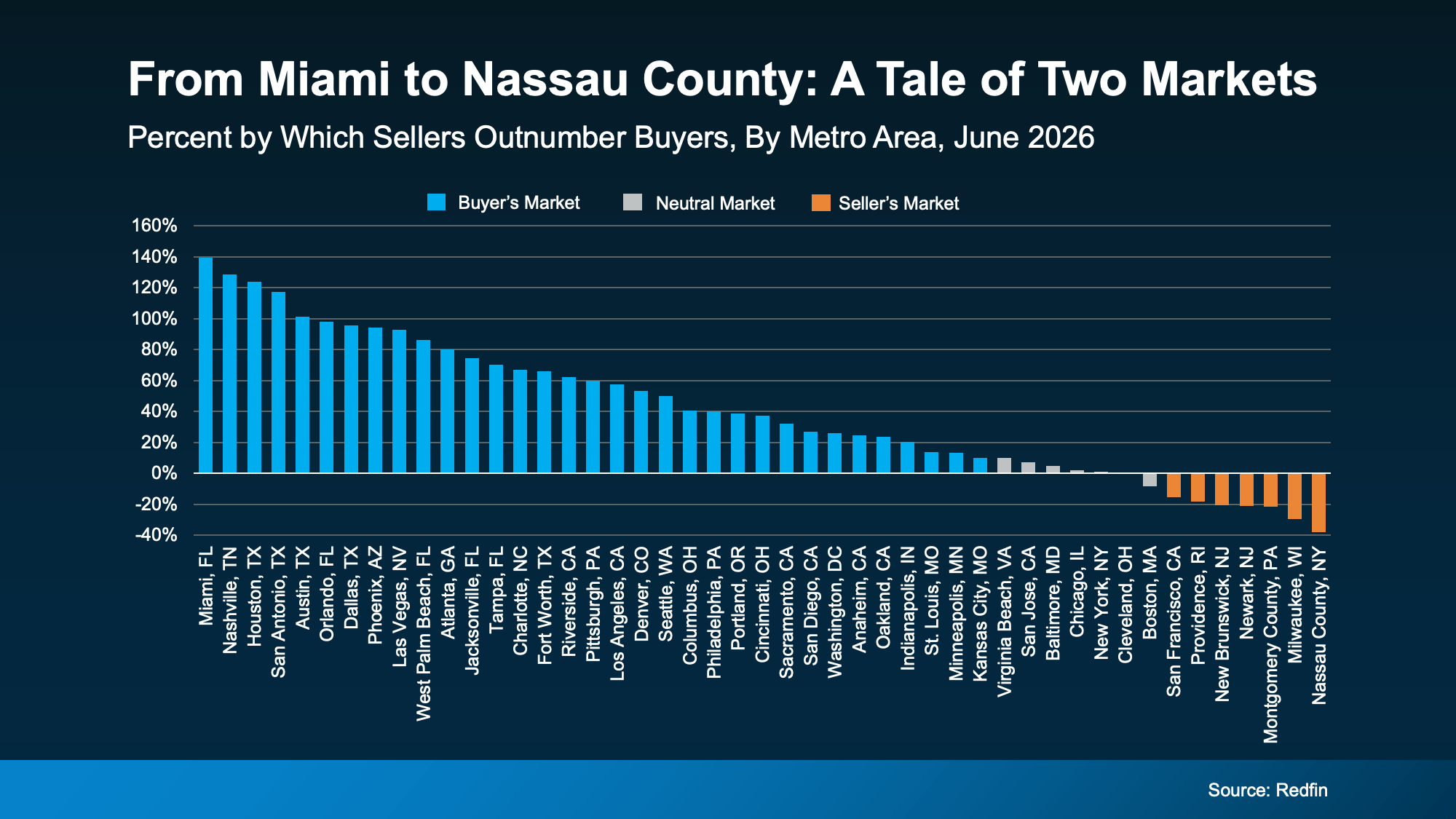
¿Nota algo? Muchos más lugares están experimentando condiciones más favorables para los compradores en este momento. De hecho, este es el mercado más favorable para los compradores que hemos visto en casi 6 años.
Pero no asuma que los compradores tienen la ventaja en todas partes.
Todavía hay ciudades donde los vendedores mantienen el poder. Y si se encuentra en una de ellas, su enfoque para vender o comprar se verá completamente diferente al que tendría en un mercado que se inclina hacia los compradores.
El mayor error que puede cometer en este momento
Por eso, el mayor error no es pensar que finalmente es un mercado de compradores. Y tampoco es pensar que sigue siendo un mercado de vendedores. Es hacer cualquier suposición sin hablar primero con un agente experto.
El mercado actual es increíblemente local. En un mercado, un comprador podría estar obteniendo miles de dólares en concesiones por parte de un vendedor. Y un propietario podría tener que considerar bajar su precio.
Pero en otro, un comprador podría estar estresado por tener que presentar su mejor oferta, o podría perder la casa frente a otro comprador. Y un vendedor podría seguir viendo una fuerte demanda y precios subiendo poco a poco.
El mismo mercado inmobiliario general.
Experiencias muy diferentes.
La verdad es que lo que está sucediendo en su propio vecindario afecta todo, desde cómo ponerle precio a su casa hasta cómo hacer una oferta o negociar reparaciones o concesiones. Y por eso, el conocimiento local de un agente importa hoy más que nunca.
Su plan tiene que basarse en su vecindario, y solo un agente tiene la experiencia para hacerlo bien.
En resumen
Este mercado no es igual para todos.
Si se pregunta quién tiene la ventaja donde vivimos, hablemos. Le mostraré exactamente cómo se ven los números en nuestro mercado, y qué estrategia le brinda la mejor oportunidad de conseguir lo que desea.
Gracias Por Leer,
Denise Olivares-Molina

by Denise Olivares-Molina | Aug 17, 2026 | Advice for Buyers, Buyers, First Time Home Buyers, First-Time Buyers, First-Time Investors, For Buyers, Market Trends, Market Updates, Real Estate Finances, Real Estate Goals, Real Estate Investing, Real Estate Market, Real Estate Market 2026, Real Estate Tips, Real Estate Trends in 2026, Weekly
Ask around and almost every homebuyer out there wants to know if there’s a way to get a better deal. And just about every seller wants to know if they’ll still get top dollar.
The interesting thing is… both can be right at the exact same time. It just depends on where you live.
That’s because today’s housing market isn’t moving in one direction anymore. Some markets clearly favor buyers. Others still favor sellers. But most are sitting somewhere in the middle.
And knowing which market you’re actually in can completely change the strategy you use to buy or sell (and what expectations you should have). Let’s break it down.
One Number Tells You Who’s Got Leverage
So how do you know which market you’re in? There’s one number that tells the story faster than anything else: the months’ supply of homes for sale. It’s the clearest signal of who’s got leverage – and what strategy you’ll need. Think of it like this.
Imagine no additional homes were listed starting today. Months’ supply tells us how long it would take to sell everything that’s currently on the market based on today’s demand.
Generally speaking, if months’ supply is:
-
Fewer than 4 months: Sellers usually have the advantage.
-
4 to 6 months: Buyers and sellers are on more equal footing.
-
More than 6 months: Buyers can usually negotiate for a better deal.
Right now, the National Association of Realtors (NAR) data says that number is 4.6 and that puts the overall market back in balanced territory (see graph below):
That means, as a whole, the market has finally moved back into a much more balanced range after years of being tilted in sellers’ favor. While that may look like the scales have tipped only slightly, it’s enough to make a real difference in what strategy you’ll need for your move – at least in most places.
The Tale of Two Markets: Why ‘Balanced’ Doesn’t Mean the Same Thing Everywhere
Redfin data helps shed some light on how this shakes out across the country. It breaks down which cities are leaning in either direction (see graph below).
-
Some markets give buyers more leverage.Those are in blue.
-
Some still favor sellers. That’s the orange.
-
Others fall somewhere in between. Those are gray.
Notice anything? A lot more places are seeing more buyer-friendly conditions right now. In fact, this is the most buyer-friendly market we’ve seen in nearly 6 years.
But don’t take that as buyers have the upper hand everywhere.
There are still cities where sellers still have the power. And if you’re in one of them, your approach to selling or buying looks completely different than it would in a buyer-leaning market.
The Biggest Mistake You Can Make Right Now
That’s why the biggest mistake isn’t thinking it’s finally a buyer’s market. And it isn’t thinking it’s still a seller’s market either. It’s making any assumption without talking to an expert agent first.
Today’s market is incredibly local. In one market, a buyer may be getting thousands of dollars in concessions from a seller. And a homeowner may have to consider dropping their price.
But in another, a buyer may be stressed about coming in with their best offer, or they may lose out on the home to another buyer. And a seller may still be seeing strong demand and prices inching higher.
Same overall housing market.
Very different experiences.
The truth is what’s happening in your back yard affects everything from pricing your house to making an offer to negotiating repairs or concessions. And that’s why an agent’s local knowledge matters more now than ever before.
Your plan has to be based on your neighborhood – and only an agent has the expertise to get that right.
Bottom Line
This market isn’t one-size-fits-all.
If you’re wondering who has the upper hand where we live, let’s talk. I’ll show you exactly what the numbers look like in our market – and what strategy gives you the best shot at getting what you want.
Thank You For Reading
Denise Olivares-Molina

by Denise Olivares-Molina | Jun 1, 2026 | Advice for Buyers, Buying A Home, Buying Tips, First-Time Investors, For Buyers, Real Estate Market, Real Estate Market 2026, Real Estate Tips, Real Estate Trends in 2026, Weekly
You started shopping with a specific mental image of your future home in your mind. Then the houses in your budget came in smaller than you pictured.
That’s the reality for a lot of buyers right now. Affordability is tight.
But don’t let that discourage you. Going smaller might actually be a smart play in today’s market – and the upside can be bigger than you’d think. Let’s break down two places to look where smaller won’t necessarily feel like a compromise.
Homebuilders Are Focused on Smaller Options Lately
For starters, smaller is kind of on trend right now. Newly built homes have been shrinking for years. According to the latest data from the Census, the median square footage of new single-family homes has been falling overall since 2014 (see graph below):
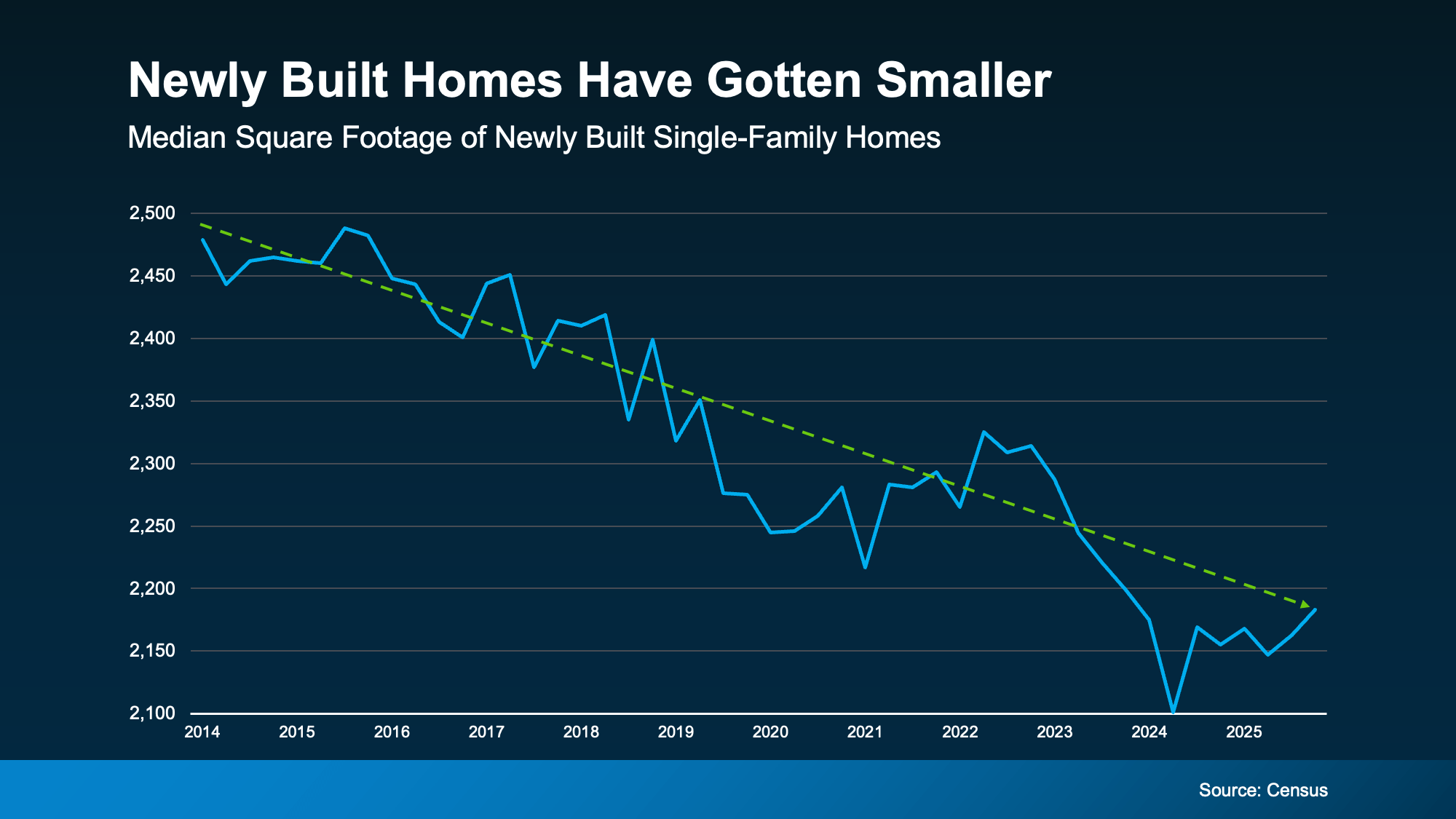
Why? Builders focus on the types of homes consumers want the most. After all, they want to build what will actually sell. And for the past decade, buyers seem to agree less is more.
Especially right now, when affordability is a key concern, they’re building homes with smaller square footage than a decade ago. And that’s good because that may be more within budget for many buyers. It’s part of why new home prices recently hit a 5-year low.
So, if you’re not getting excited about any of the existing options at your price point, it may be time to check out what builders are doing in your area.
You may find brand-new options you really love with all the latest and greatest features. And if you’ve got modern appliances and design, maybe slightly less square footage doesn’t feel like that much of a compromise anymore, especially if the house is move-in ready.
Condos Are Opening Up Another Path
Just in case you don’t have a ton of new builds in your area, another avenue worth exploring is condominiums or condos.
For buyers crunching numbers to make the math work, condos can take real pressure off the budget. According to the National Association of Realtors (NAR), the median price for condos is less than the median for single-family homes in every region (see graph below):
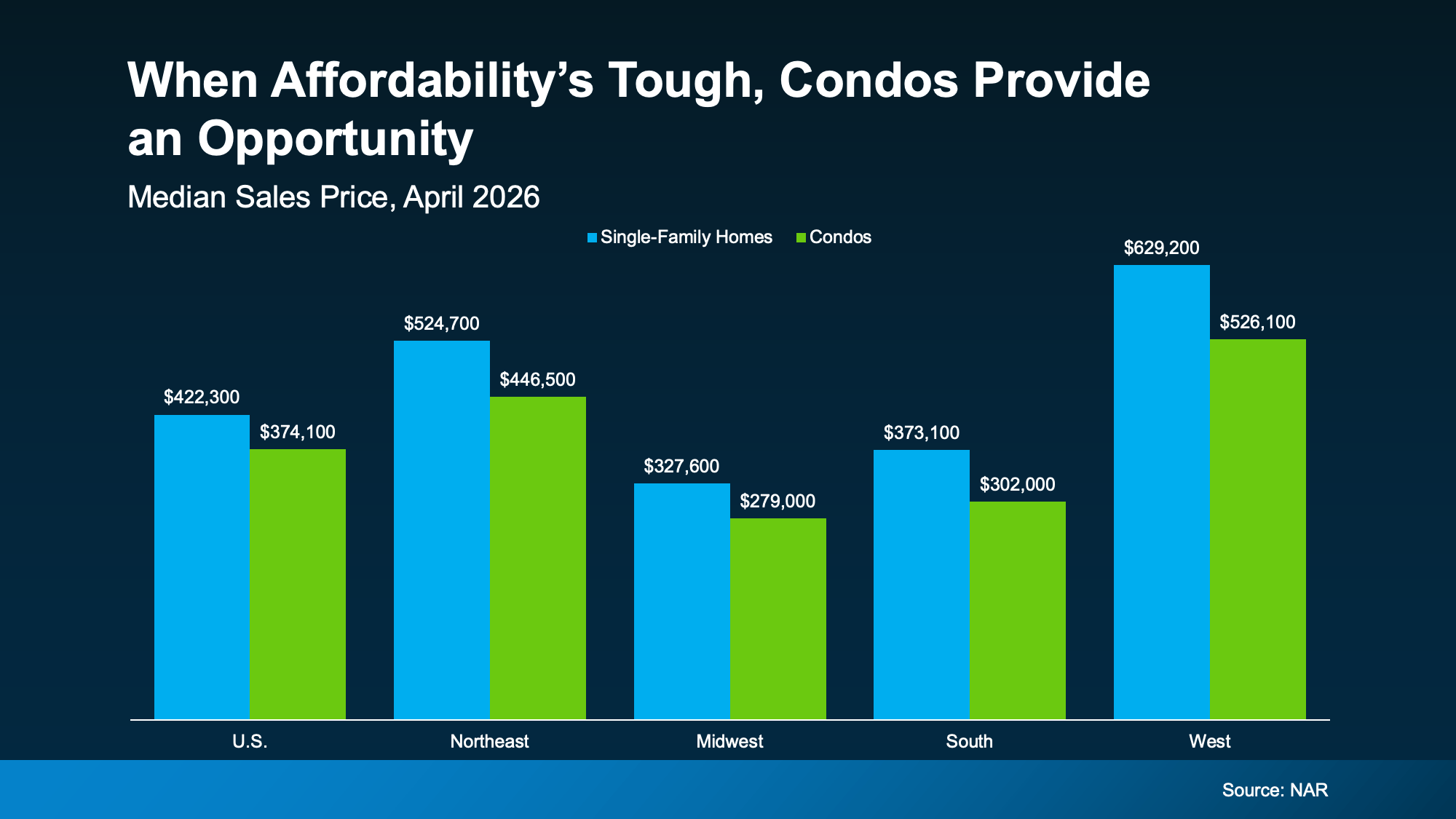
Part of that is because condos are typically smaller. And smaller square footage can come with a smaller price tag too. That’s a selling point to affordability-strapped buyers right now – and it’s one of the reasons we’re seeing a bump in condo sales.
The number of condos sold rose 2.7% from just a month ago. It’s also up year over year, according to NAR. Ali Wolf, Chief Economist for New Home Source, explains why more buyers are going this route:
“In addition to favoring smaller floor plans, more consumers are showing a willingness to live in an attached home. This shift is not driven by a preference for shared walls, but by a pursuit of value.”
The Community Does Some of the Heavy Lifting
Here’s why smaller may still work for you. Whether it’s a condo complex or a neighborhood of detached single-family homes, the right community can give you back in amenities what you trade in square footage.
Many developments are designed so the home is just one piece of where you actually spend your time. Master-planned communities often include walking trails, pools, fitness centers, co-working spaces, and outdoor gathering areas – the kind of features that pick up where your floor plan leaves off.
No room for a dedicated office? The co-working space might be just a five-minute walk away. Want a place to work out? It’s already built in with the shared gym. And features like that can make opting for a smaller footprint feel less like a compromise – and more like a big lifestyle upgrade.
Bottom Line
Today’s smaller single-family homes and condos have more going for them than the square footage suggests. They can give your budget some breathing room and put you in a community designed with lifestyle in mind.
Curious about the options in our area? Let’s connect.
Thank You For Reading
Denise Olivares-Molina

by Denise Olivares-Molina | Jan 6, 2026 | Advice for Buyers, Buyers, Buying A Home, Buying Myths, Buying Tips, First-Time Buyers, First-Time Investors, For Buyers, Weekly
Encontrar la casa adecuada es emocionante, pero estar preaprobado para su préstamo es lo que lo hace posible. Ya sea que planee comprar pronto o solo lo esté pensando, obtener la preaprobación es una de las mejores jugadas que puede hacer. Aquí le decimos por qué.
1. ¿Qué es realmente la preaprobación?
La preaprobación es mucho más que una suposición. Significa que un prestamista ha revisado sus finanzas (cosas como sus ingresos, activos, puntaje de crédito, deudas y ahorros) y le ha dicho cuánto está dispuesto a prestarle.
Es básicamente una confirmación de la realidad para su búsqueda de vivienda, para que pueda asegurarse de que se alinee con su presupuesto y comprar con confianza cuando esté listo.
2. Por qué es una estrategia poderosa (Especialmente ahora)
El mercado de la vivienda ha estado cambiando últimamente con el movimiento de las tasas hipotecarias, la moderación de los precios y el aumento del inventario. Por lo tanto, saber con qué cuenta en el mercado actual es una gran razón por la cual la preaprobación es importante. Esto es lo que le ofrece:
-
Claridad: Sabrá lo que puede pagar antes de enamorarse de una casa que podría estar fuera de su alcance.
-
Confianza: Los vendedores tomarán su oferta en serio cuando vean que está preaprobado, porque saben que no es un comprador de alto riesgo.
-
Control: Si las tasas bajan y quiere aprovechar el momento, ya estará un paso adelante con su plan.
Como explica Experian:
“. . . querrá asegurarse de recibir su carta de preaprobación antes de comenzar a buscar casas para poder presentar una oferta sólida tan pronto como encuentre lo que desea. El proceso puede tomar desde un día hasta algunas semanas, por lo que, si lo pospone, podría perder frente a una oferta competidora.”
Y una vez que encuentre una casa por la que quiera hacer una oferta, la preaprobación tiene otro gran beneficio. No solo hace que su oferta sea más fuerte, sino que muestra a los vendedores que ya se ha sometido a una verificación crediticia y financiera. Como dice Greg McBride, Analista Financiero Jefe en Bankrate:
“La preaprobación tiene más peso porque significa que los prestamistas han hecho más que una revisión superficial de su crédito y sus finanzas; han revisado sus recibos de nómina, declaraciones de impuestos y estados de cuenta bancarios. Una preaprobación significa que ha superado los obstáculos necesarios para ser aprobado para una hipoteca hasta una cierta cantidad de dólares.”
Es decir, La preaprobación le ayuda a tomar decisiones más fuertes e informadas, y le ayuda a evitar perder una casa o quedarse estancado al margen cuando la correcta llegue al mercado. Porque la realidad es que, aunque la competencia puede ser menor en estos días, las casas deseables (especialmente las que tienen buen precio) todavía se venden rápido.
3. No espere hasta estar “listo”
Piénselo de esta manera: la preaprobación no significa que va a comprar una casa mañana. Solo significa que estará listo cuando llegue el momento. Además, la mayoría de las preaprobaciones son válidas por 60 a 90 días y se pueden actualizar fácilmente si sus planes cambian.
Así que, aquí hay un buen lugar para comenzar. Hágase esta pregunta: “Si la casa perfecta apareciera hoy, ¿estaría listo para hacer una oferta?”
Si su respuesta es “no del todo”, entonces la preaprobación es su siguiente paso.
En conclusión
La preaprobación no lo limita. Le abre puertas.
En el mercado actual, los compradores que ganan no son los que esperan. Son los que planean. Por lo tanto, si está pensando en comprar en los próximos meses, adelántese al juego conectando con su agente y un prestamista de confianza.
Ellos le ayudarán a entender cómo funciona el proceso y lo guiarán en cada paso del camino para que, cuando aparezca la casa adecuada, usted esté listo.
Gracias por leer
Denise Olivares-Molina

by Denise Olivares-Molina | Jan 6, 2026 | Advice for Buyers, Buyers, Buying A Home, Buying Myths, Buying Tips, First Time Home Buyers, First-Time Buyers, First-Time Investors, For Buyers, Weekly
Finding the right home feels exciting – but being pre-approved for your loan is what makes it possible. Whether you’re planning to buy soon or still just thinking about it, getting pre-approved is one of the best moves you can make. Here’s why.
1. What Is Pre-Approval, Really?
Pre-approval is much more than a guess. It means a lender has reviewed your finances (things like your income, assets, credit score, debts, and savings) and told you how much they’re willing to let you borrow for your loan.
It’s basically a reality check for your home search, so you can make sure it aligns with your budget and shop confidently when you’re ready to go.
2. Why It’s a Power Move (Especially Right Now)
The housing market’s been shifting lately with mortgage rates moving, prices moderating, and inventory rising. So, knowing what you’re working with in the current market is a big reason why pre-approval matters. Here’s what it gives you:
- Clarity: You’ll know what you can afford before you fall in love with a house that’s potentially out of reach.
- Confidence: Sellers will take your offer seriously when they see you’re pre-approved because you’re not a risky buyer.
- Control: If rates come down and you want to jump on the moment, you’re already a step ahead with your plan.
As Experian explains:
“. . . you’ll want to make sure you receive your preapproval letter before you start looking at homes so you can submit a strong offer as soon as you find what you want. The process can take anywhere from a day to a few weeks, so if you procrastinate, you may lose out to a competing offer.”
And once you find a home you want to put an offer on, pre-approval has another big perk. It not only makes your offer stronger, it shows sellers you’ve already undergone a credit and financial check. As Greg McBride,Chief Financial Analyst at Bankrate, says:
“Preapproval carries more weight because it means lenders have actually done more than a cursory review of your credit and your finances, but have instead reviewed your pay stubs, tax returns and bank statements. A preapproval means you’ve cleared the hurdles necessary to be approved for a mortgage up to a certain dollar amount.”
Translation: Pre-approval helps you make stronger, more informed decisions – and it helps you avoid missing out on a home or getting stuck on the sidelines when the right one hits the market. Because the reality is, competition might be lower these days, but desirable homes (especially the ones that are priced well) still go quickly.
3. Don’t Wait Until You’re “Ready”
Think of it this way: pre-approval doesn’t mean you’re buying a house tomorrow. It just means you’ll beready when the time comes. And most pre-approvals are good for 60–90 days and can be refreshed easily if your plans change.
So, here’s a good place to start. Ask yourself this question: “If the perfect home came along today, would you be ready to make an offer?”
If your answer is “not quite,” then pre-approval is your next step.
Bottom Line
Pre-approval doesn’t box you in. It opens doors.
In today’s market, buyers who win aren’t the ones who wait. They’re the ones who plan. So, if you’re even thinking about buying in the next few months, get ahead of the game by connecting with your agent and a trusted lender.
They’ll help you understand what how the process works and walk you through every step along the way, so when the right home pops up, you’re ready.
Thank you for reading
Denise Olivares-Molina
