
by Denise Olivares-Molina | Sep 1, 2026 | 2026 Housing Market, Advice for Buyers, Agent Value, Buyer Tips, Buyers, Buying A Home, Buying Myths, Buying Tips, First-Time Buyers, First-Time Investors, For Buyers, Home Prices, Housing Market, Housing Market Insights, Housing Market Shifts, Housing Market Updates, Real Estate Finances, Real Estate Market, Real Estate Market 2026, Real Estate Myths, Real Estate Tips, Weekly
Lately, headlines have floated an eye-catching idea about tapping into your 401(k) to cover a down payment on a home. Maybe you’ve caught the buzz and wondered whether that money could get you into a home faster, especially with affordability as tough as it is.
Here’s what you need to remember. Pulling from your retirement savings is a big decision, so take time to weigh all your options first and be sure to talk with a financial expert before you do anything.
Why Dipping into a 401(k) Can Be Tempting
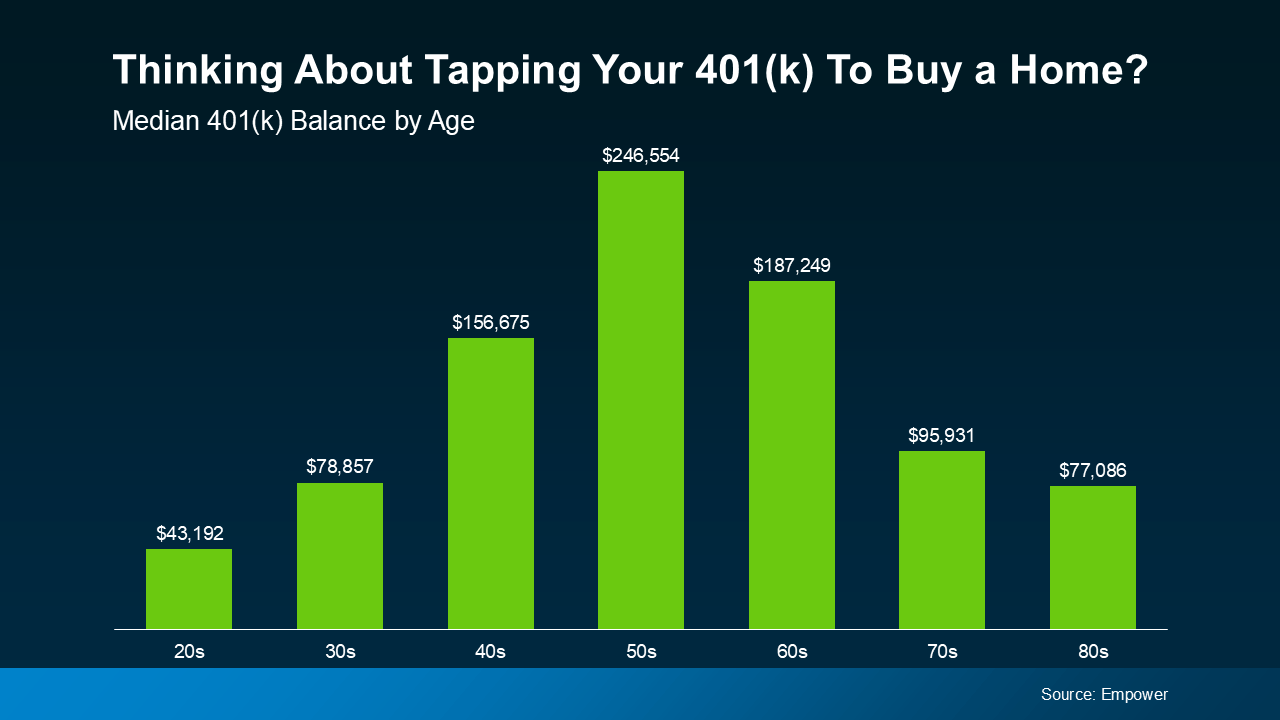
Data from Empower shows many Americans have built up considerable retirement savings. The median 401(k) amount for anyone in their 40s-60s is six figures (see graph below):
 And when you’ve got a good chunk saved and your dream home is right there, reaching for it can feel like an easy call.
But dipping into your retirement savings to buy a home could cost you a penalty and set back your finances later on. That’s why it’s a good idea to explore other options for your down payment first. As Redfin says:
“If you’re struggling to save enough for a down payment, you may be wondering if tapping into your 401(k) is the right option. While it’s possible, doing so comes with significant risks, like early withdrawal penalties and lost investment growth.“
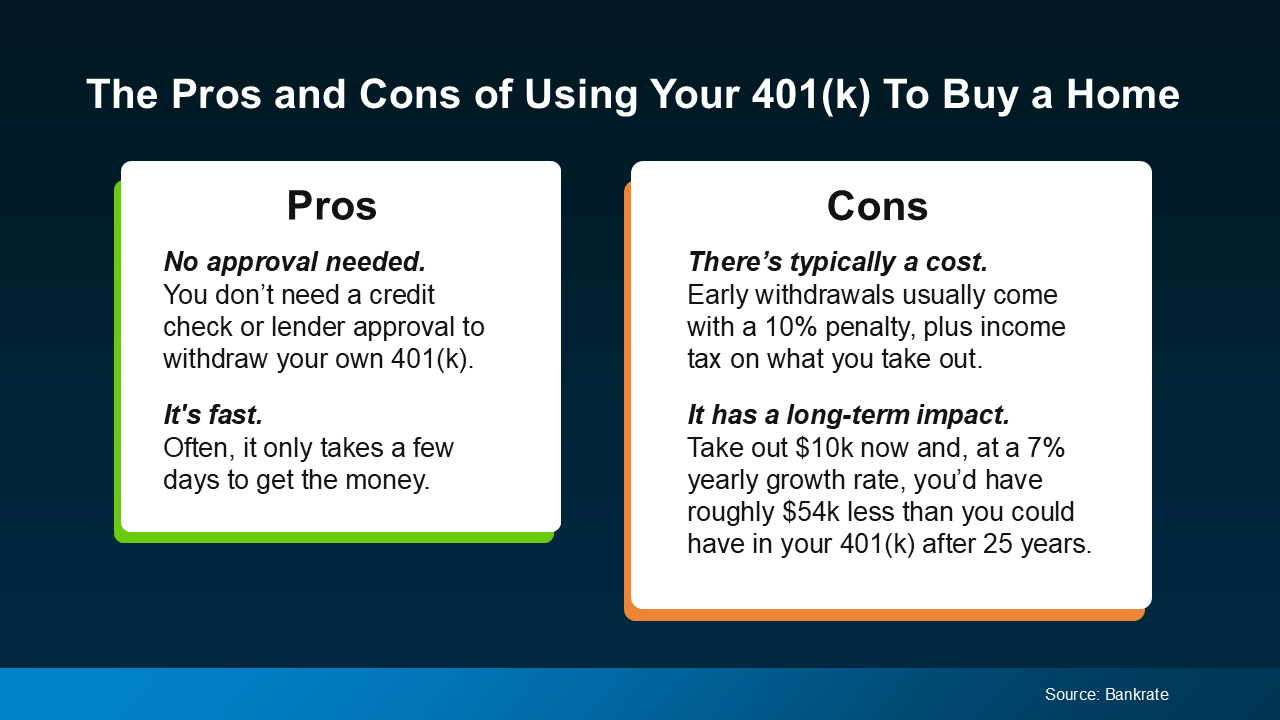
Before you decide, have a financial advisor help you compare the upsides to the risks. Bankrate points to a few of each (see visual):
Other Options Worth Exploring First
Your 401(k) isn’t the only way to finance a home purchase. Redfin outlines a few other options to look into before you decide what to do:
-
Low and No-Down Payment Loans: FHA loans, for example, allow qualified buyers to put down as little as 3.5% of the home’s price, depending on their credit scores.
-
Down Payment Assistance Programs: Many national and local programs can help reduce what you pay toward your down payment or closing costs.
Make a Plan Before You Make a Move
No matter which route you take, talk with a financial expert first. The buyers who come out ahead build a solid plan with the right professionals before starting their journey to homeownership. As NerdWallet puts it:
“Even if you’re convinced a 401(k) loan is the way to go, it’s important to understand the risks at the outset.“
Bottom Line
Affordability is definitely a challenge, but that doesn’t mean tapping your 401(k) is your only way in if you want to buy.
If you’re considering using your 401(k) savings for a down payment, weigh all your options and talk with a trusted financial advisor before you make any decisions. They’ll help you make a plan to fit your goals and your budget.
Thank You For Reading
Denise Olivares-Molina
by Denise Olivares-Molina | Aug 25, 2026 | Uncategorized
Buying a home is an exciting milestone, but it also comes with important financial decisions. Whether you are purchasing your first home or looking for your next property, preparation can make the process easier and more manageable.
From understanding your budget to comparing properties, taking the right steps early can help you make a confident home-buying decision.
Start With Your Budget
Before looking at homes, determine how much you can comfortably afford.
Consider more than the purchase price. Your budget should also account for mortgage payments, property taxes, homeowners insurance, maintenance, utilities, and potential closing costs.
A realistic budget can help you focus on homes that fit your financial plans.
Get Pre-Approved for a Mortgage
A mortgage pre-approval can give you a clearer idea of your potential borrowing range.
Lenders typically review factors such as income, credit history, debts, and assets when evaluating a mortgage application. A pre-approval can also help you understand your estimated monthly payment before you begin making offers.
Keep in mind that a pre-approval is not a guarantee of final loan approval.
Think About Your Long-Term Goals
A home should fit more than your needs today.
Consider how long you expect to stay in the property and whether the home could continue to work for you as your circumstances change.
Think about features such as the number of bedrooms, workspace needs, storage, outdoor space, maintenance requirements, and overall layout.
Research the Property and Area
Once you find a home you like, take time to research the property.
Review available information about the home’s condition, age, major systems, property taxes, insurance considerations, and any applicable homeowners association fees or rules.
You can also research nearby transportation, shopping, recreation, schools, public services, and other amenities that are important to you.
Look Beyond the Listing Price
The listing price is only one part of the cost of buying a home.
Ask about potential repairs, maintenance, insurance, taxes, closing costs, and other expenses. A home with a lower purchase price may not always have the lowest overall cost of ownership.
Understanding the full financial picture can help you compare properties more effectively.
Schedule a Home Inspection
A professional home inspection can provide valuable information about the property’s condition.
An inspection may identify concerns involving the roof, foundation, plumbing, electrical systems, heating and cooling equipment, or other components.
The inspection does not guarantee that a home will have no problems, but it can help you better understand the property before completing the purchase.
Keep Some Savings Available
It can be tempting to use most of your available funds toward the down payment and closing costs.
However, keeping an emergency fund can be helpful after you move in. Unexpected repairs, maintenance needs, moving expenses, or other costs can arise.
Planning for these expenses can provide greater financial flexibility.
Take Your Time With the Decision
Buying a home is a significant commitment. Avoid making a decision based only on excitement or pressure.
Compare properties, review your financing options, ask questions, and consider how each home fits your budget and long-term plans.
The goal is not simply to find a home you like. It is to find a property that makes sense for your overall financial and lifestyle goals.
Work With the Right Professionals
A real estate professional can help you understand the buying process, compare properties, prepare offers, and navigate the transaction.
Mortgage professionals, inspectors, insurance providers, attorneys, and other qualified professionals may also play important roles depending on the transaction and local requirements.
Having the right team can help you move through the process with greater clarity.
The Bottom Line
A successful home purchase starts with preparation. Establishing a realistic budget, understanding financing, researching properties, and planning for future expenses can help you make a more informed decision.
If you are thinking about buying a home, taking the time to prepare now can make the journey smoother and help you move forward with confidence.

by Denise Olivares-Molina | Aug 17, 2026 | Advice for Buyers, Buyers, First Time Home Buyers, First-Time Buyers, First-Time Investors, For Buyers, Market Trends, Market Updates, Real Estate Finances, Real Estate Goals, Real Estate Investing, Real Estate Market, Real Estate Market 2026, Real Estate Tips, Real Estate Trends in 2026, Weekly
Pregunte por ahí y casi todos los compradores de viviendas quieren saber si hay alguna manera de conseguir una mejor oferta. Y casi todos los vendedores quieren saber si todavía obtendrán el precio máximo por su propiedad.
Lo interesante es que… ambos pueden tener razón exactamente al mismo tiempo. Todo depende de dónde viva.
Eso se debe a que el mercado inmobiliario actual ya no se mueve en una sola dirección. Algunos mercados favorecen claramente a los compradores. Otros todavía favorecen a los vendedores. Pero la mayoría se encuentra en un punto intermedio.
Y saber en qué mercado se encuentra realmente puede cambiar por completo la estrategia que utilice para comprar o vender (y qué expectativas debería tener). Vamos a desglosarlo.
Un número le dice quién tiene el poder de negociación
Entonces, ¿cómo sabe en qué mercado se encuentra? Hay un número que cuenta la historia más rápido que cualquier otra cosa: los meses de inventario de viviendas en venta. Es la señal más clara de quién tiene la ventaja y qué estrategia necesitará. Piénselo de esta manera.
Imagine que a partir de hoy no se pusieran a la venta más casas. Los meses de inventario nos dicen cuánto tiempo tomaría vender todo lo que está actualmente en el mercado según la demanda de hoy.
En términos generales, si los meses de inventario son:
-
Menos de 4 meses: Los vendedores suelen tener la ventaja.
-
De 4 a 6 meses: Compradores y vendedores están en mayor igualdad de condiciones.
-
Más de 6 meses: Los compradores generalmente pueden negociar una mejor oferta.
En este momento, los datos de la Asociación Nacional de Agentes Inmobiliarios (NAR, por sus siglas en inglés) indican que ese número es de 4.6, lo que sitúa al mercado general nuevamente en territorio equilibrado (vea el gráfico a continuación):
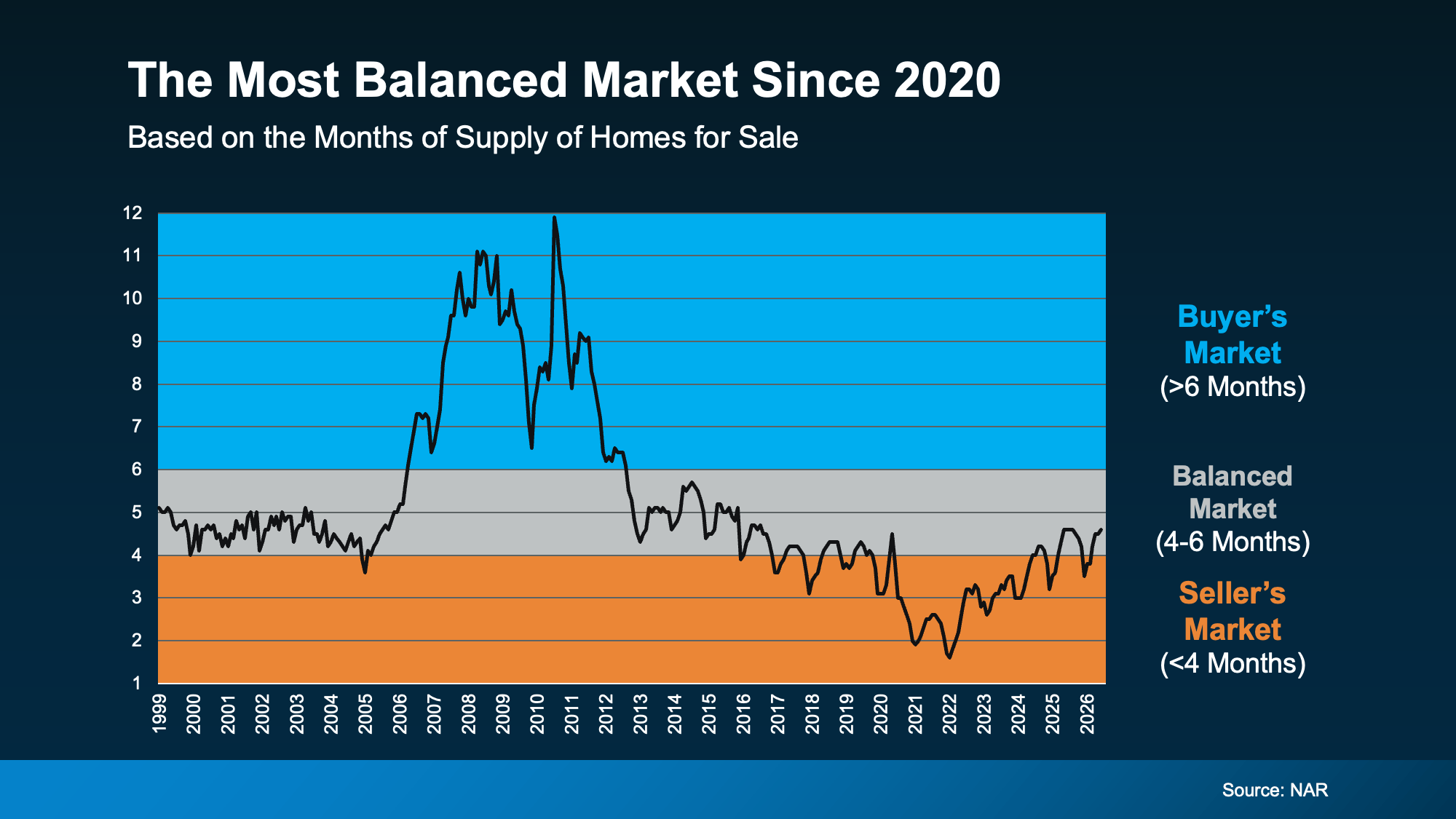
Eso significa que, en su conjunto, el mercado finalmente ha regresado a un rango mucho más equilibrado después de años de estar inclinado a favor de los vendedores. Aunque pueda parecer que la balanza se ha inclinado solo un poco, es suficiente para hacer una verdadera diferencia en la estrategia que necesitará para su mudanza, al menos en la mayoría de los lugares.
La historia de dos mercados: Por qué “equilibrado” no significa lo mismo en todas partes
Los datos de Redfin ayudan a arrojar luz sobre cómo se distribuye esto en todo el país. Desglosa qué ciudades se inclinan en una dirección u otra (vea el gráfico a continuación).
-
Algunos mercados dan a los compradores más poder de negociación. Esos están en azul.
-
Algunos todavía favorecen a los vendedores. Ese es el naranja.
-
Otros se encuentran en un punto intermedio. Esos son grises.
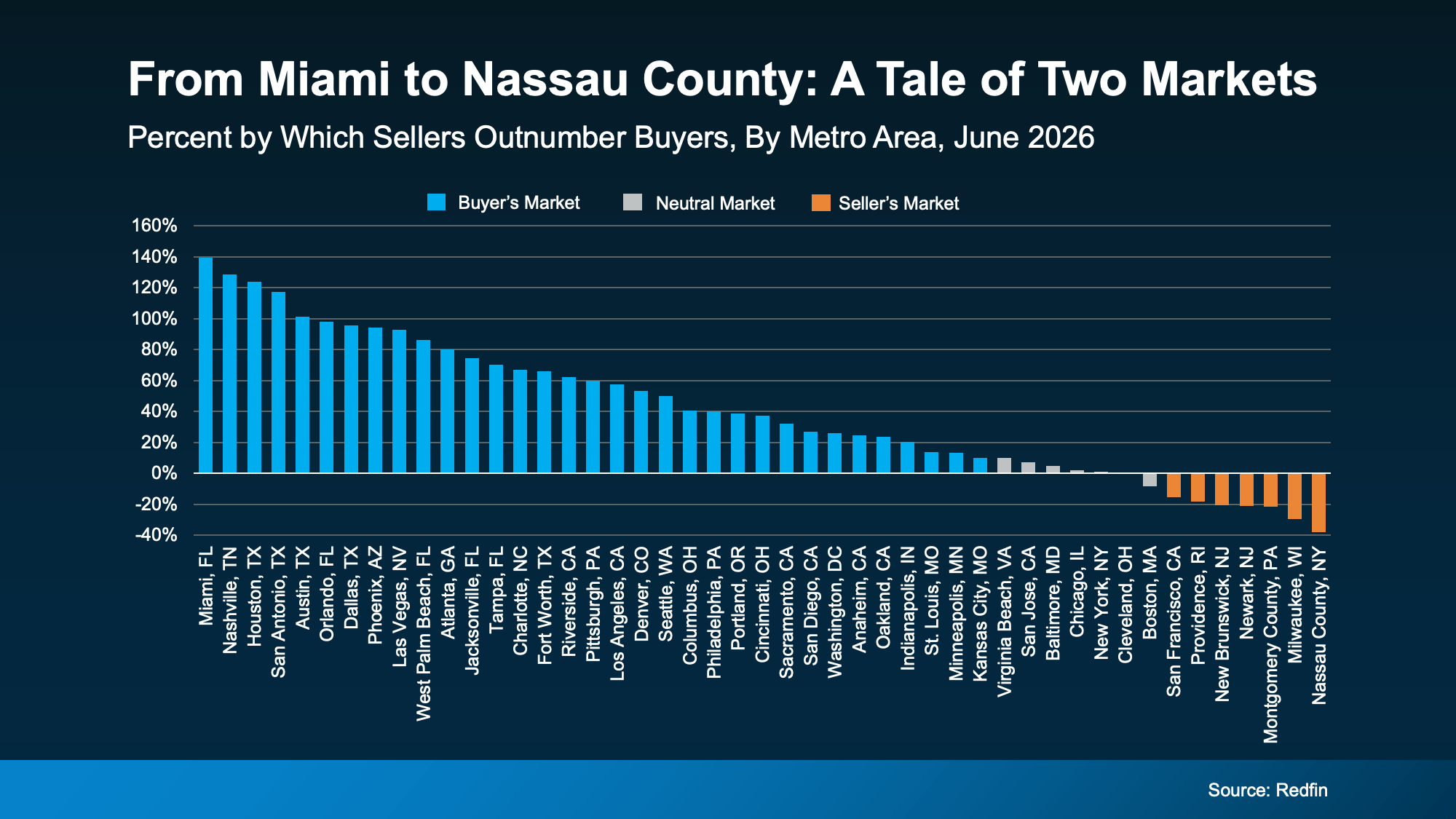
¿Nota algo? Muchos más lugares están experimentando condiciones más favorables para los compradores en este momento. De hecho, este es el mercado más favorable para los compradores que hemos visto en casi 6 años.
Pero no asuma que los compradores tienen la ventaja en todas partes.
Todavía hay ciudades donde los vendedores mantienen el poder. Y si se encuentra en una de ellas, su enfoque para vender o comprar se verá completamente diferente al que tendría en un mercado que se inclina hacia los compradores.
El mayor error que puede cometer en este momento
Por eso, el mayor error no es pensar que finalmente es un mercado de compradores. Y tampoco es pensar que sigue siendo un mercado de vendedores. Es hacer cualquier suposición sin hablar primero con un agente experto.
El mercado actual es increíblemente local. En un mercado, un comprador podría estar obteniendo miles de dólares en concesiones por parte de un vendedor. Y un propietario podría tener que considerar bajar su precio.
Pero en otro, un comprador podría estar estresado por tener que presentar su mejor oferta, o podría perder la casa frente a otro comprador. Y un vendedor podría seguir viendo una fuerte demanda y precios subiendo poco a poco.
El mismo mercado inmobiliario general.
Experiencias muy diferentes.
La verdad es que lo que está sucediendo en su propio vecindario afecta todo, desde cómo ponerle precio a su casa hasta cómo hacer una oferta o negociar reparaciones o concesiones. Y por eso, el conocimiento local de un agente importa hoy más que nunca.
Su plan tiene que basarse en su vecindario, y solo un agente tiene la experiencia para hacerlo bien.
En resumen
Este mercado no es igual para todos.
Si se pregunta quién tiene la ventaja donde vivimos, hablemos. Le mostraré exactamente cómo se ven los números en nuestro mercado, y qué estrategia le brinda la mejor oportunidad de conseguir lo que desea.
Gracias Por Leer,
Denise Olivares-Molina

by Denise Olivares-Molina | Aug 17, 2026 | Advice for Buyers, Buyers, First Time Home Buyers, First-Time Buyers, First-Time Investors, For Buyers, Market Trends, Market Updates, Real Estate Finances, Real Estate Goals, Real Estate Investing, Real Estate Market, Real Estate Market 2026, Real Estate Tips, Real Estate Trends in 2026, Weekly
Ask around and almost every homebuyer out there wants to know if there’s a way to get a better deal. And just about every seller wants to know if they’ll still get top dollar.
The interesting thing is… both can be right at the exact same time. It just depends on where you live.
That’s because today’s housing market isn’t moving in one direction anymore. Some markets clearly favor buyers. Others still favor sellers. But most are sitting somewhere in the middle.
And knowing which market you’re actually in can completely change the strategy you use to buy or sell (and what expectations you should have). Let’s break it down.
One Number Tells You Who’s Got Leverage
So how do you know which market you’re in? There’s one number that tells the story faster than anything else: the months’ supply of homes for sale. It’s the clearest signal of who’s got leverage – and what strategy you’ll need. Think of it like this.
Imagine no additional homes were listed starting today. Months’ supply tells us how long it would take to sell everything that’s currently on the market based on today’s demand.
Generally speaking, if months’ supply is:
-
Fewer than 4 months: Sellers usually have the advantage.
-
4 to 6 months: Buyers and sellers are on more equal footing.
-
More than 6 months: Buyers can usually negotiate for a better deal.
Right now, the National Association of Realtors (NAR) data says that number is 4.6 and that puts the overall market back in balanced territory (see graph below):
That means, as a whole, the market has finally moved back into a much more balanced range after years of being tilted in sellers’ favor. While that may look like the scales have tipped only slightly, it’s enough to make a real difference in what strategy you’ll need for your move – at least in most places.
The Tale of Two Markets: Why ‘Balanced’ Doesn’t Mean the Same Thing Everywhere
Redfin data helps shed some light on how this shakes out across the country. It breaks down which cities are leaning in either direction (see graph below).
-
Some markets give buyers more leverage.Those are in blue.
-
Some still favor sellers. That’s the orange.
-
Others fall somewhere in between. Those are gray.
Notice anything? A lot more places are seeing more buyer-friendly conditions right now. In fact, this is the most buyer-friendly market we’ve seen in nearly 6 years.
But don’t take that as buyers have the upper hand everywhere.
There are still cities where sellers still have the power. And if you’re in one of them, your approach to selling or buying looks completely different than it would in a buyer-leaning market.
The Biggest Mistake You Can Make Right Now
That’s why the biggest mistake isn’t thinking it’s finally a buyer’s market. And it isn’t thinking it’s still a seller’s market either. It’s making any assumption without talking to an expert agent first.
Today’s market is incredibly local. In one market, a buyer may be getting thousands of dollars in concessions from a seller. And a homeowner may have to consider dropping their price.
But in another, a buyer may be stressed about coming in with their best offer, or they may lose out on the home to another buyer. And a seller may still be seeing strong demand and prices inching higher.
Same overall housing market.
Very different experiences.
The truth is what’s happening in your back yard affects everything from pricing your house to making an offer to negotiating repairs or concessions. And that’s why an agent’s local knowledge matters more now than ever before.
Your plan has to be based on your neighborhood – and only an agent has the expertise to get that right.
Bottom Line
This market isn’t one-size-fits-all.
If you’re wondering who has the upper hand where we live, let’s talk. I’ll show you exactly what the numbers look like in our market – and what strategy gives you the best shot at getting what you want.
Thank You For Reading
Denise Olivares-Molina

by Denise Olivares-Molina | Aug 3, 2026 | Advice for Buyers, Advice for Homeowners, Buyers, Buying A Home, For Buyers, Homeowner Information, Weekly
Si comprar una casa está en tu radar, probablemente has estado atento a las tasas hipotecarias y los precios de las viviendas. Pero no te olvides del seguro de vivienda.
El seguro de vivienda siempre ha sido parte de ser propietario de una casa. Sin embargo, en los últimos años, se ha convertido en un gasto mayor para muchos propietarios, algo que es especialmente frustrante cuando la asequibilidad ya se siente ajustada.
¿Las buenas noticias? Aunque las primas siguen subiendo, los datos más recientes muestran que esos aumentos están empezando a desacelerar. Esto es lo que los compradores deben saber.
Los costos del seguro de vivienda han aumentado
Probablemente has escuchado historias de amigos o familiares sobre el aumento de sus primas. Y eso no es realmente una sorpresa si consideras que los datos del Pew Research Center muestran que el 71 % de los propietarios afirman que los costos de sus seguros han aumentado en los últimos años.
Aunque a nadie le gustan los costos crecientes, saber qué esperar puede ayudarte a planificar con anticipación. Tu primer pago del seguro suele estar incluido en los costos de cierre, pero después de eso se convertirá en parte de tus gastos mensuales de vivienda.
Obtener una cotización de seguro con anticipación puede ayudarte a crear un presupuesto más realista y evitar sorpresas más adelante.
Las primas están subiendo, pero no tan rápido como antes
La mayoría de los titulares se centran en cómo el seguro de vivienda se está volviendo más caro. Y es verdad. Pero esta es la parte que es fácil pasar por alto:
Las primas de los seguros siguen subiendo.
Pero no están subiendo tan rápido como antes.
Según el informe más reciente de Rate Insurance, en 2025 se observó la primera desaceleración en los aumentos anuales de las primas desde 2019 (ver gráfico a continuación):
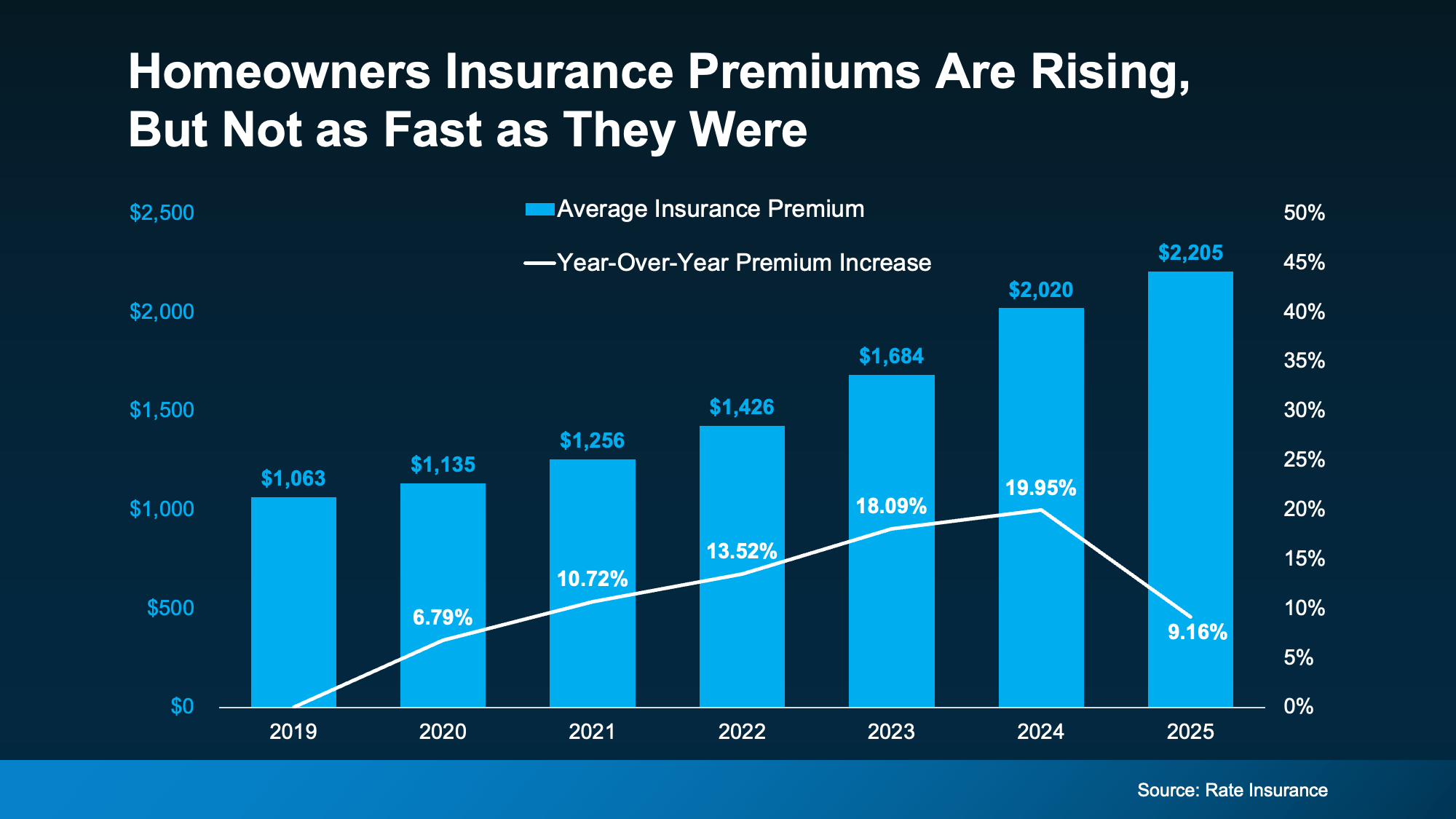
Eso no significa que las primas se estén volviendo más baratas. Simplemente significa que los rápidos aumentos de los últimos años podrían estar finalmente empezando a moderarse, un paso pequeño pero bienvenido en la dirección correcta.
Pero lo que pagarás en una parte del país puede ser muy diferente de lo que alguien paga en otro lugar.
El lugar donde compres puede marcar una gran diferencia
Los costos del seguro varían porque algunas partes del país experimentan más reclamos que otras. Por eso es importante observar lo que sucede a nivel local.
Tu prima dependerá de factores como el lugar donde estás comprando, la vivienda en sí y la cobertura que elijas.
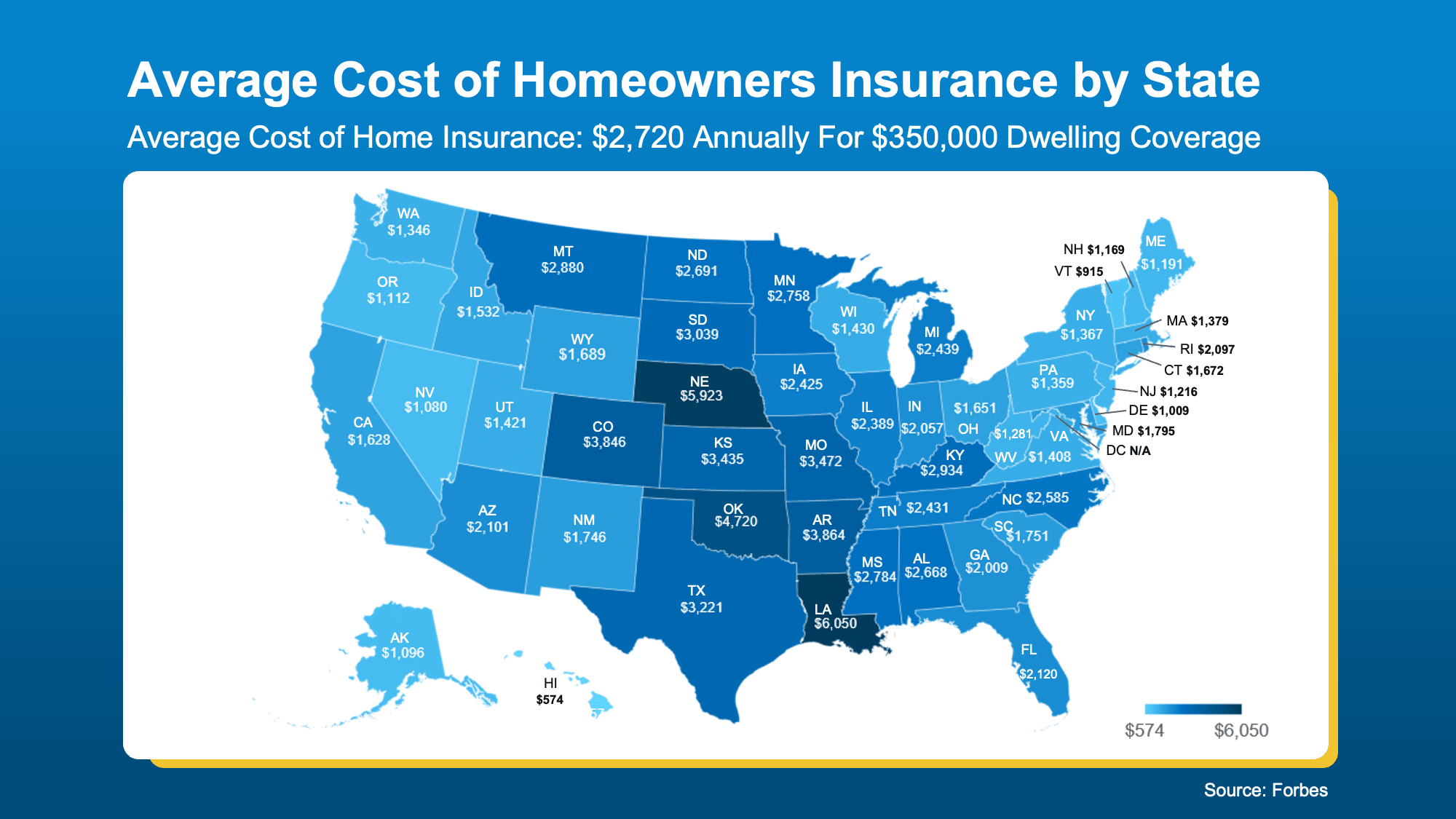
Los datos de Forbes pueden darte una idea aproximada de las primas típicas de tu estado. Echa un vistazo al mapa a continuación: cuanto más oscuro sea el azul, más altos tienden a ser los costos en ese estado:
Formas de reducir tus costos
Si bien no puedes controlar cada gasto que conlleva comprar una casa, sí puedes controlar qué tan preparado estás. Si estás haciendo cuentas y tratando de encontrar formas de ahorrar, Insurify y NerdWallet ofrecen estos consejos que pueden ayudarte a conseguir el mejor precio de seguro posible:
-
Busca opciones: Compara cotizaciones de varias compañías.
-
Agrupa tus pólizas: Combina los seguros de vivienda y de auto para ver si el precio en paquete es más económico.
-
Pregunta por descuentos: No te pierdas los ahorros para los que podrías calificar.
-
Destaca las mejoras: Características como un techo nuevo o ventanas contra tormentas pueden reducir los costos.
-
Mejora tu crédito: Un puntaje de crédito más sólido puede traducirse en mejores primas.
Una de las cosas más inteligentes que puedes hacer es obtener una cotización de seguro antes de hacer una oferta. De esa manera, sabrás cuáles probablemente serán tus costos mensuales de vivienda antes de comprometerte.
Un profesional de seguros puede guiarte a través de tus opciones y ayudarte a encontrar una cobertura que se adapte tanto a tus necesidades como a tu presupuesto.
En resumen
El seguro de vivienda se ha convertido en una parte más importante de la conversación sobre la compra de una casa. Pero no tiene por qué convertirse en una mayor fuente de estrés.
La clave es saber qué esperar antes de comprar. Obtén una cotización de seguro con anticipación, inclúyela en tu presupuesto y apóyate en profesionales locales de confianza para que te ayuden a tomar la decisión más informada posible.
Gracias por leer,
Denise Olivares-Molina

by Denise Olivares-Molina | Aug 3, 2026 | Advice for Buyers, Advice for Homeowners, First-Time Buyers, For Buyers, Home value, Homeowner Information, Real Estate Tips, Tips for Buyers, Weekly
If buying a home is on your radar, you’ve probably been keeping an eye on mortgage rates and home prices. But don’t forget about homeowners insurance.
Homeowners insurance has always been part of owning a home. But over the past few years, it’s become a larger expense for many homeowners – something that’s especially frustrating when affordability already feels tight.
The good news? While premiums are still rising, the latest data shows those increases are beginning to slow. Here’s what buyers should know.
Home Insurance Costs Have Gone Up
You’ve probably heard stories from friends or family about their premiums going up. And that’s not really a surprise when you consider data from the Pew Research Center shows 71% of homeowners say their insurance costs have gone up over the past few years.
While no one likes rising costs, knowing what to expect can help you plan ahead. Your first insurance payment is typically included in your closing costs, but after that it’ll become part of your monthly housing expenses.
Getting an insurance quote early can help you build a more realistic budget and avoid surprises later.
Premiums Are Rising, But Not as Fast as They Were
Most of the headlines focus on how home insurance is getting more expensive. And that’s true. But here’s the part that’s easy to miss.
Insurance premiums are still rising.
But they’re not rising as fast as they were.
According to the latest report from Rate Insurance, 2025 saw the first slowdown in annual premium increases since 2019 (see graph below):
That doesn’t mean premiums are getting cheaper. It simply means the rapid increases of the past several years may finally be starting to ease – a small but welcome step in the right direction.
But what you’ll pay in one part of the country can look very different from what someone pays somewhere else.
Where You Buy Can Make a Big Difference
Insurance costs vary because some parts of the country experience more claims than others. That’s why it’s important to look at what’s happening locally.
Your premium will depend on things like where you’re buying, the home itself, and the coverage you choose.
Forbes data can give a rough idea of your state’s typical premiums. Check out the map below – the darker the blue, the higher the costs tend to be in that state:
Ways To Lower Your Costs
While you can’t control every cost that comes with buying a home, you can control how prepared you are. If you’re crunching the numbers and trying to find ways to save, Insurify and NerdWallet offer these tips that can help you get the best insurance price possible:
-
Shop Around – Compare quotes from multiple companies.
-
Bundle Policies – Combine home and auto to see if a bundle price is cheaper.
-
Ask If There Are Discounts – Don’t miss out on savings you may qualify for.
-
Highlight Upgrades – Features like a new roof or storm windows can cut costs.
-
Improve Your Credit – A stronger credit score can mean better premiums.
One of the smartest things you can do is get an insurance quote before you make an offer. That way, you’ll know what your monthly housing costs are likely to be before you commit.
An insurance professional can walk you through your options and help you find coverage that fits both your needs and your budget.
Bottom Line
Homeowners insurance has become a bigger part of the homebuying conversation. But it doesn’t have to become a bigger source of stress.
The key is knowing what to expect before you buy. Get an insurance quote early, factor it into your budget, and lean on trusted local professionals to help you make the most informed decision possible.
Thank You For Reading
Denise Olivares-Molina

by Denise Olivares-Molina | Jul 20, 2026 | Advice for Buyers, Buyers, Buying A Home, Buying Myths, Buying Tips, For Buyers, Home Prices, Weekly
Si has pensado en comprar una casa en los últimos años, es posible que te hayas topado con dos frustraciones: precios de venta que no dejaban de subir y muy pocas casas para elegir.
En muchos lugares, ambos obstáculos están cediendo este verano, con precios iniciales más bajos y más casas a la venta. Veamos las tendencias y lo que significan para tu búsqueda.
Los vendedores están fijando los precios para atraer a los compradores
Según Realtor.com, el precio medio nacional de venta (asking price) fue de $430,000 en junio, casi $11,000 por debajo de lo que era el año anterior (ver el gráfico a continuación):
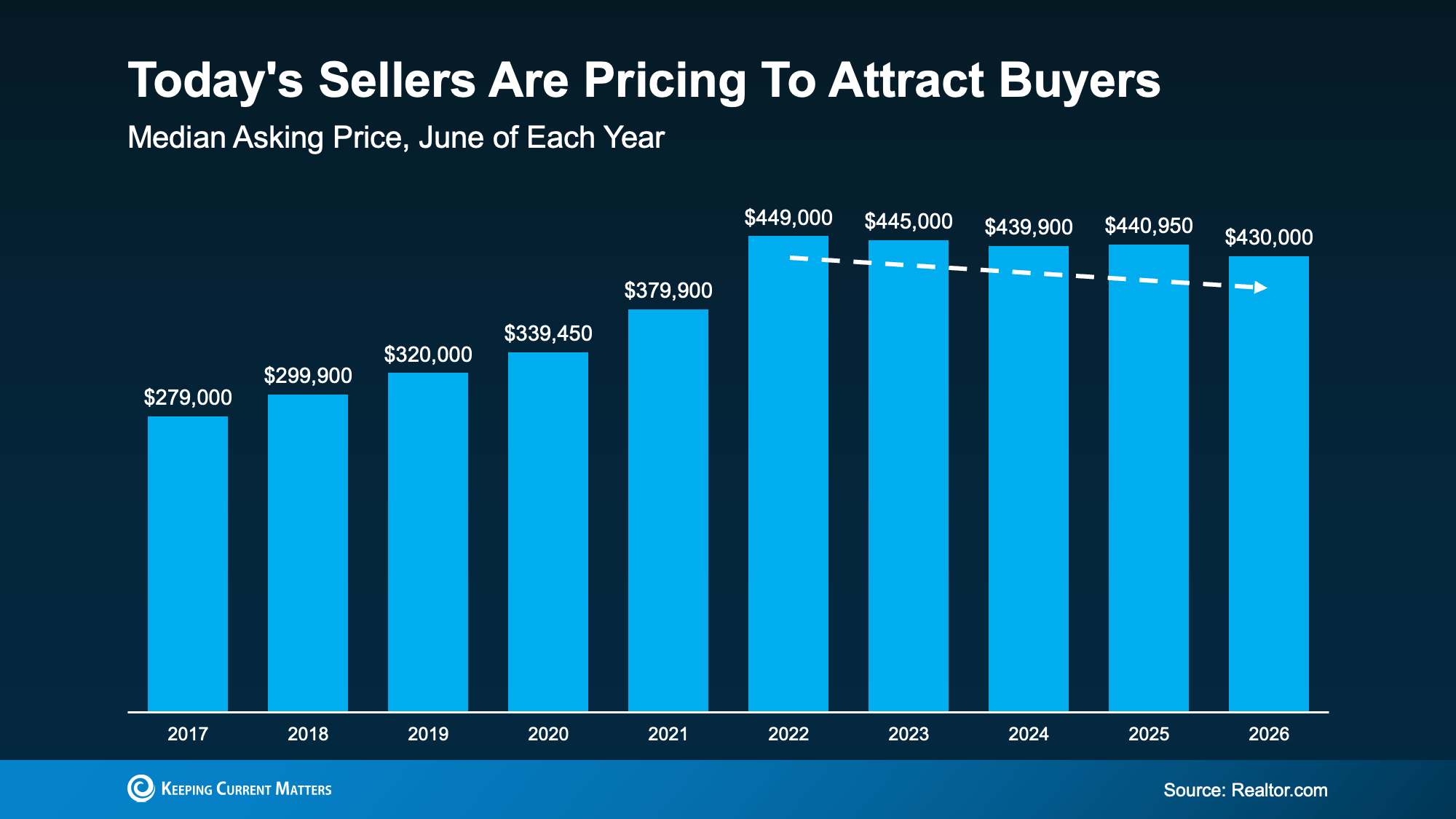
Ese es el octavo mes consecutivo en el que el precio de venta típico ha caído por debajo de donde estaba el año anterior, según el mismo informe de Realtor.com.
Y aunque la caída de los precios puede parecer preocupante, esto no es una señal de un colapso inminente. Estamos hablando de precios iniciales, no de precios finales de venta. Esta es una señal de que los vendedores de hoy se están adaptando a la realidad del mercado y ajustando los precios para atraer a los compradores. Y eso es, en realidad, algo normal que esperaríamos del mercado. Como lo expresa Danielle Hale, Economista Jefe de Realtor.com:
“Los vendedores están leyendo las condiciones del mercado y están fijando los precios en consecuencia desde el principio en lugar de salir alto y recortar después, y los compradores están tomando nota y haciendo ofertas. Esta es una señal bienvenida de que estamos en un mercado que funciona”.
Los precios de venta nunca iban a subir para siempre; ahora simplemente se están ajustando a lo que los compradores realmente pueden pagar. Eso indica un mercado más saludable y que los vendedores están reajustando sus expectativas.
Hay más casas disponibles ahora
Si has pasado los últimos años viendo cómo las casas desaparecían antes de que siquiera pudieras programar una visita, esto es para ti.
La oferta está empezando a recuperarse. Según Realtor.com, el número de casas puestas a la venta en junio fue la cifra más alta para un mes de junio que hemos visto en tres años (ver el gráfico a continuación):
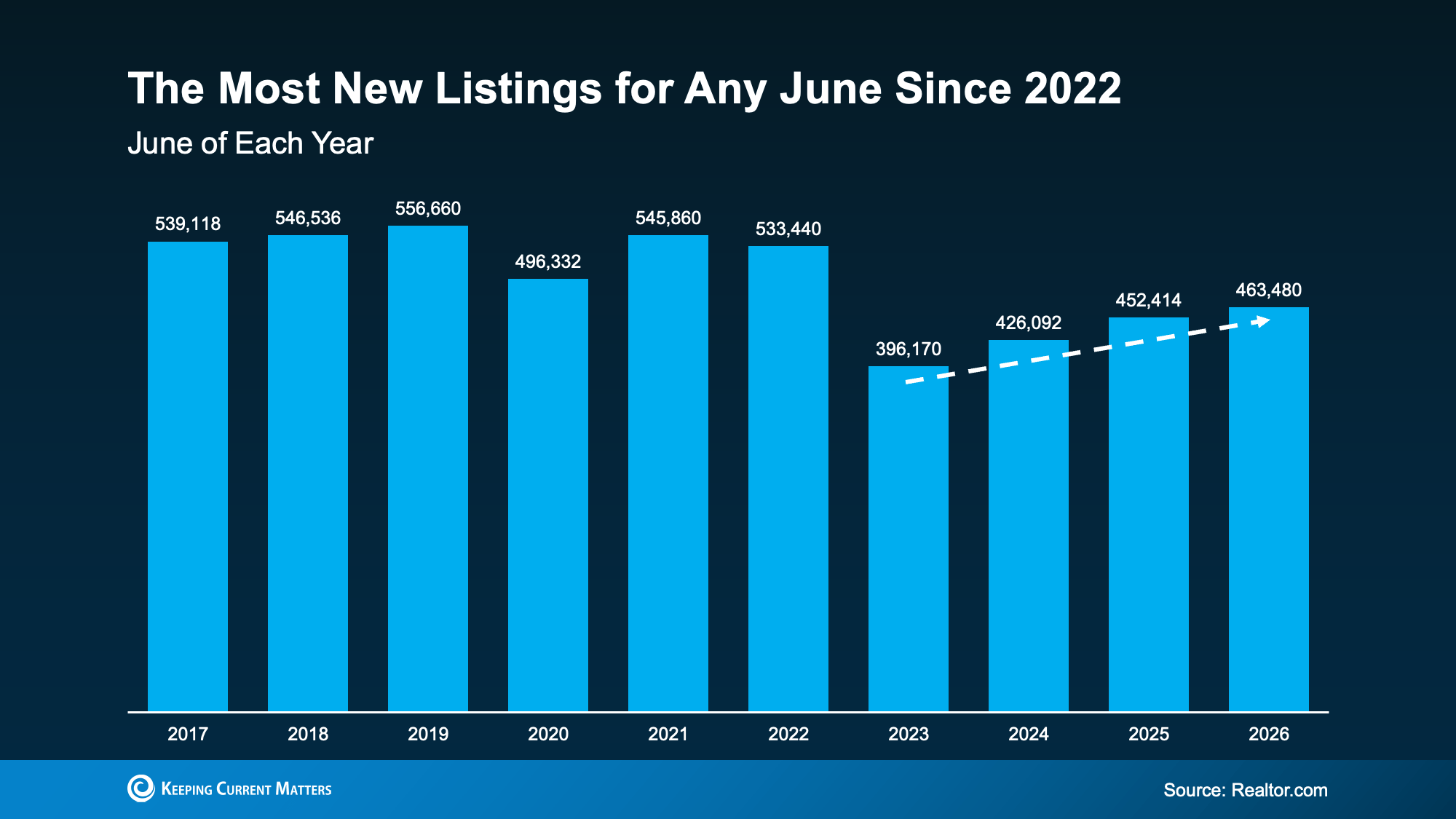
Esto significa más opciones para ti y menos competencia por cada una de ellas.
Ahora bien, la oferta no ha vuelto a la normalidad en todas partes. Como puedes ver, todavía estamos por debajo de los niveles en los que estábamos entre 2017 y 2019. Pero en muchos lugares, la situación está mejor de lo que ha estado en mucho tiempo. Así es como esto te beneficia:
No tienes que apresurar una oferta solo para mantenerte en la competencia, y tienes mejores probabilidades de encontrar y conseguir la casa adecuada, no solo la que esté disponible. Además, tendrás más margen para negociar, por lo que tu búsqueda parte de una posición más sólida de la que tenían los compradores hace apenas un año.
Por qué esto es alentador si estás comprando tu primera casa
Para los compradores primerizos que buscan casas de menor precio, estas tendencias se alinean especialmente bien. Mischa Fisher, Economista Jefe de Zillow, lo explica:
“Los niveles de precios más bajos están mostrando cierta flexibilidad en términos de precio, y también tuvieron el mayor crecimiento en la actividad de nuevas propiedades listadas, siendo la primera vez desde 2022 que este es el caso”.
Entonces, si estás buscando tu primer hogar o tu próxima casa, hay un poco más de dónde elegir y un poco más de flexibilidad en el precio.
En resumen
Si un presupuesto ajustado o una escasa selección te han impedido comprar una casa, ahora podría ser el momento de reiniciar tu búsqueda.
¿Listo para ver qué hay disponible por aquí? Conectemos.
Gracias por leer,
Denise Olivares-Molina
