
by Denise Olivares-Molina | Jan 13, 2026 | Advice for Sellers, Affordability, For Sellers, Home Buying, Home Care, Home Equity Loans, Home Gain Statistics, Home Preparation, Home Prices, Home value, Homeowner Information, Housing Market, Housing Market Shifts, Housing Market Updates, Investment, Investment Strategy, Investments, Pricing, Real Estate Finances, Real Estate Goals, Real Estate Investing, Real Estate Market, Real Estate Tips, Real Estate Trends in 2026, Seller, Sellers, Selling A Home, Selling Myths, Selling Tips, Weekly
¿Te preguntas qué esperar del mercado inmobiliario en 2026? No eres el único. Durante los últimos años, la asequibilidad ha sido la mayor barrera entre la mayoría de las personas y su próxima mudanza. Y muchos compradores y vendedores han estado conteniendo la respiración esperando que las cosas mejoren. ¿La buena noticia? Finalmente está sucediendo.
En 2025, la asequibilidad fue la mejor de los últimos 3 años. Y los expertos coinciden en que este impulso continuará en 2026. Esto se basa en su análisis de los factores clave que darán forma al mercado de la vivienda el próximo año: las tasas hipotecarias, el inventario y los precios de las viviendas.
Las tasas hipotecarias más bajas ya están aquí
Las tasas hipotecarias ya han bajado desde su punto máximo. Según algunos cálculos, cayeron casi un punto porcentual completo en el último año. Y eso es algo importante, aunque no lo parezca. Pero, ¿qué tan bajo llegarán? ¿Y deberías esperar a que bajen más? Aquí tienes la respuesta.
Los pronósticos sugieren que se mantendrán prácticamente donde están ahora y oscilarán en el rango bajo del 6% a lo largo de 2026 (ver gráfico a continuación):
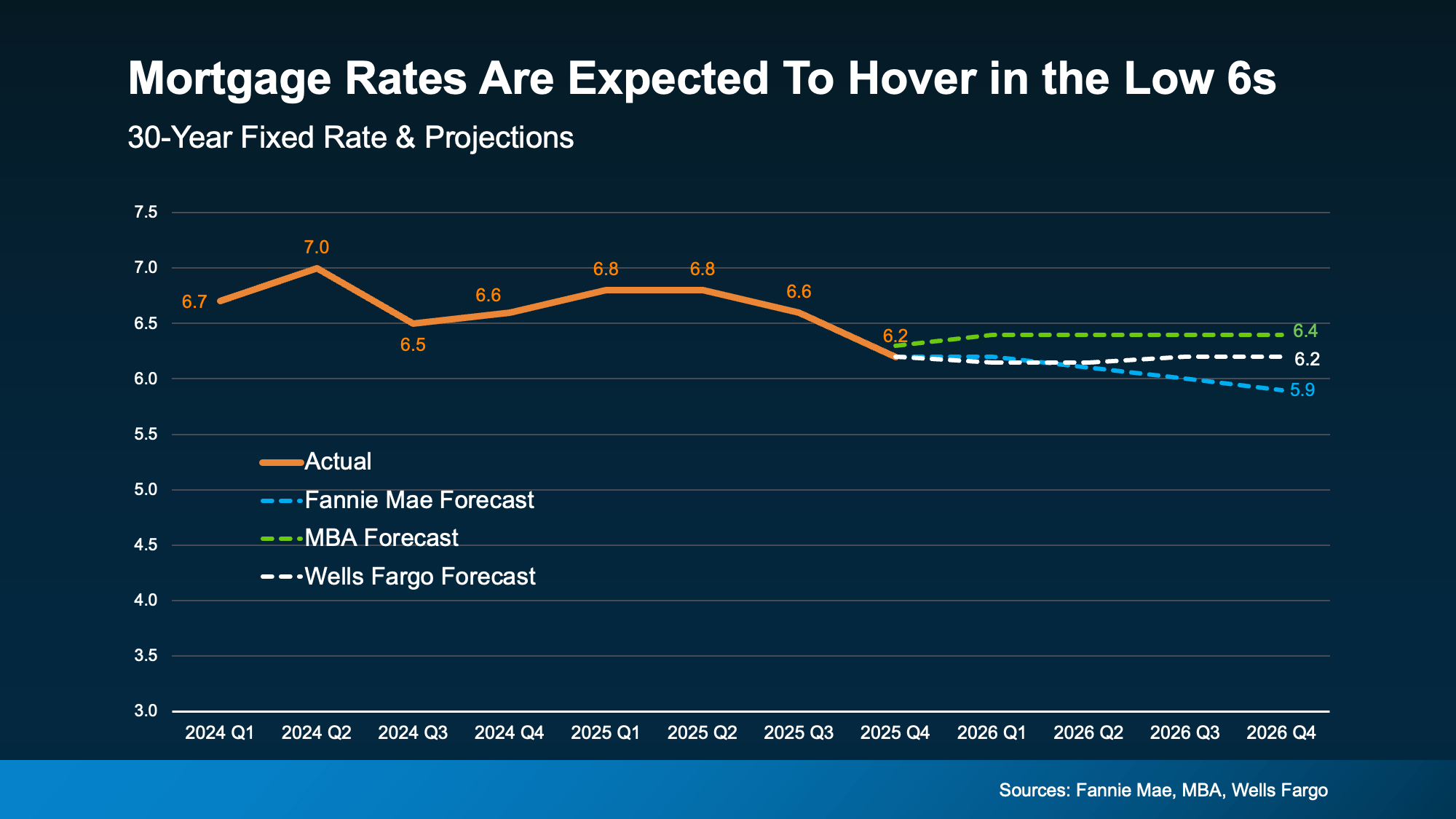
Hacia dónde vayan a partir de aquí realmente depende de lo que suceda con la economía, el mercado laboral y cualquier cambio en la política monetaria que haga la Reserva Federal (Fed) el próximo año. Lo importante es que ya son más bajas de lo que eran hace solo un año, y eso es ideal si estás planeando mudarte en 2026.
-
Para los compradores: Una tasa más baja reduce los pagos mensuales y aumenta el poder adquisitivo. Y esa combinación ayuda a que más personas califiquen para hogares que antes sentían fuera de su alcance.
-
Para los vendedores: Puede ser hora de aceptar que las tasas en el rango del 6% son la nueva normalidad. Y si necesitas mudarte, es factible, especialmente con tu plusvalía (equity).
Vienen aún más opciones en camino
En 2025, el número de viviendas en venta mejoró aproximadamente un 15%. A medida que aumentó el inventario, los compradores recuperaron cosas que no habían tenido en años: opciones, tiempo para considerar esas opciones y poder de negociación. Eso ayudó a restaurar un mayor equilibrio en el mercado inmobiliario.
Sin mencionar que el aumento del inventario es una gran parte de lo que ha ayudado a que el crecimiento de los precios se desacelere, lo que a su vez mejora la asequibilidad.
Si bien no se espera que el aumento de inventario este año sea tan pronunciado, los expertos de Realtor.com dicen que la oferta de viviendas en venta debería crecer otro 8.9% este año.
El crecimiento de los precios de las viviendas se desacelera a un ritmo más sostenible
Con más viviendas en venta, no hay tanta presión al alza sobre los precios en este momento. Y hemos visto cómo eso se ha estabilizado durante el último año. Aun así, la abrumadora mayoría de los expertos dicen que, a nivel nacional, los precios seguirán subiendo el próximo año, solo que a un ritmo más lento. En promedio, dicen que los precios subirán un 1.6% en 2026 (ver gráfico a continuación):
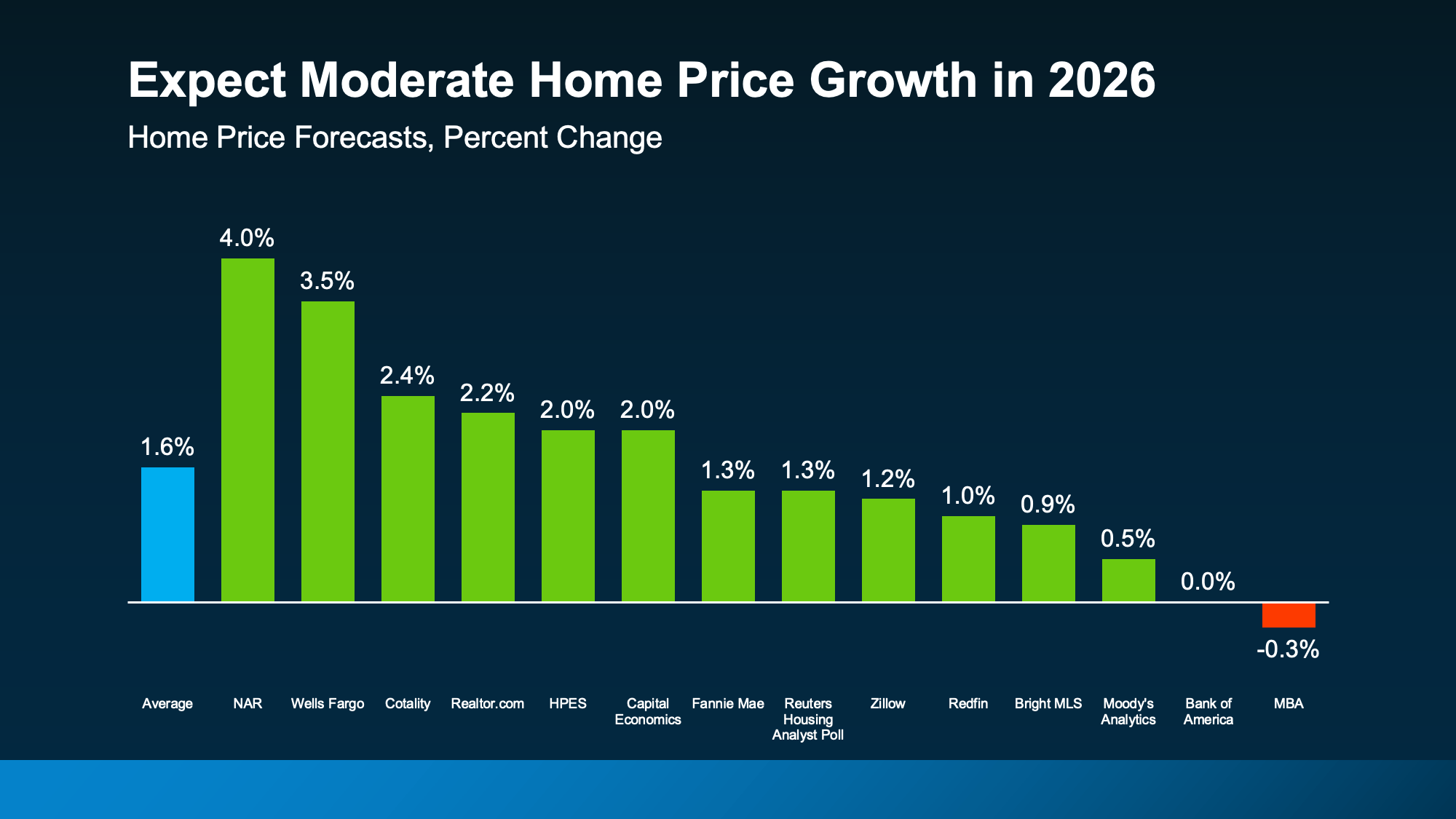
Y eso es tranquilizador si has estado viendo contenido en las redes sociales que dice que los precios se van a desplomar. Pero esto es lo que más debes recordar al respecto: Va a variar mucho según la zona.
Por lo tanto apóyate en un agente local para conocer lo último sobre lo que está sucediendo donde vives. Algunos mercados verán subir los precios más que esto. Otros pueden ver bajar los precios ligeramente. Todo depende realmente de las condiciones en tu mercado local.
Pero en general, los precios continuarán subiendo a nivel nacional. Y eso es bueno para el mercado en su conjunto. Como explica Realtor.com:
“Para los compradores y vendedores de viviendas, el cambio señala un mercado más equilibrado: uno donde el crecimiento de los precios se estabiliza, el alivio de las tasas ofrece un respiro y el poder de negociación se inclina sutilmente hacia los compradores.”
-
Para los compradores: Esperen un crecimiento de precios más moderado, no los picos repentinos e intensos de hace unos pocos años. Eso les da menos sorpresas y más previsibilidad, lo que facilita mucho la elaboración del presupuesto.
-
Para los vendedores: Este crecimiento más lento de los precios restaura el equilibrio sin poner en riesgo su plusvalía. Y eso es una victoria.
Se venderán más viviendas
Todo esto suma para una mejor ecuación de asequibilidad en 2026. Y esa es exactamente la razón por la que los expertos dicen que deberíamos ver venderse más viviendas (y más gente comprando) este año.
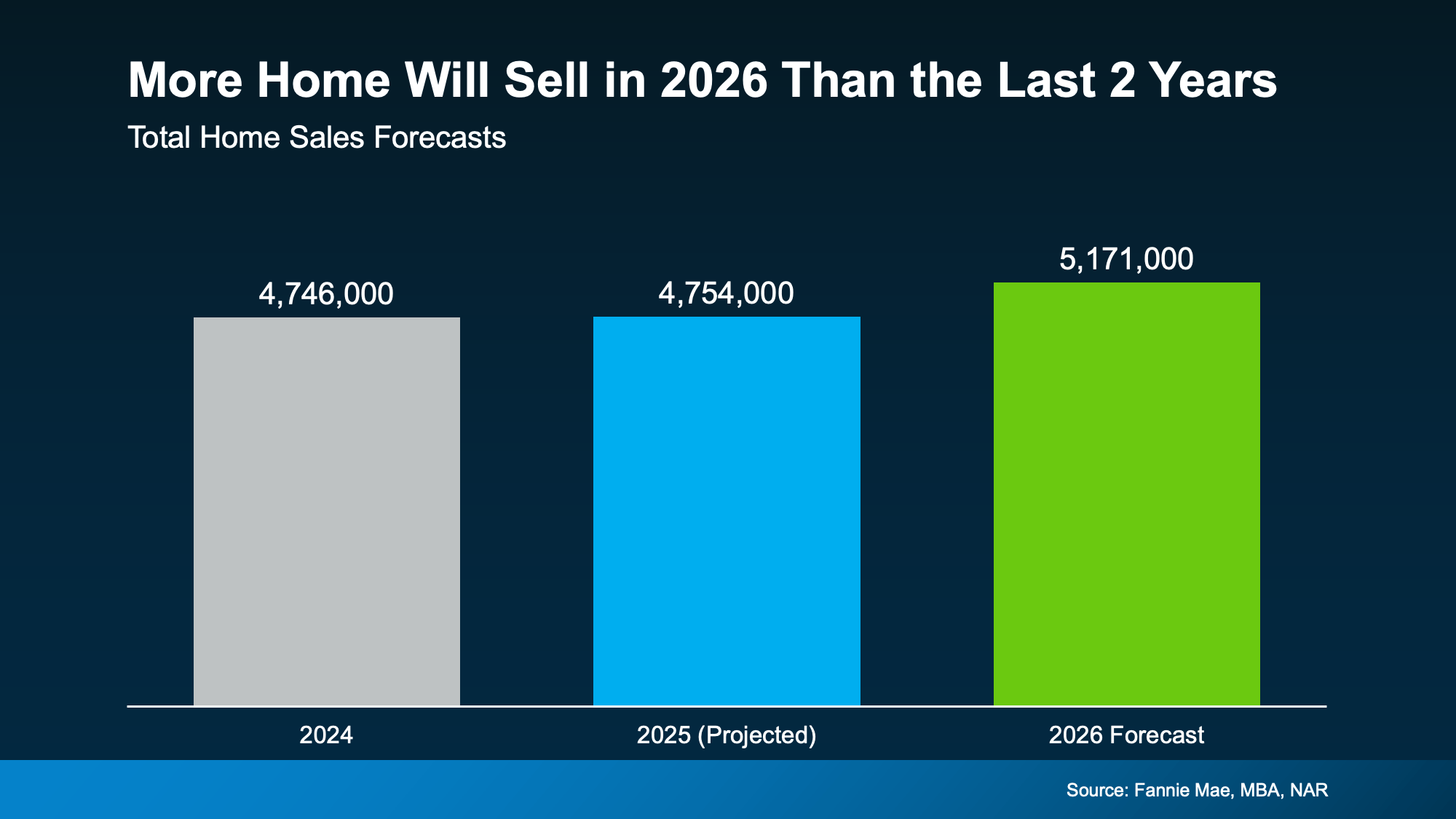
Como dice Mischa Fisher, Economista Jefe de Zillow:
“Los compradores se están beneficiando de más inventario y una mejor asequibilidad, mientras que los vendedores están viendo estabilidad de precios y una demanda más constante. Cada grupo debería tener un poco más de margen de maniobra en 2026.”
El punto es que, finalmente, más personas podrán hacer su mudanza este año. Entonces, la pregunta es: ¿serás tú uno de ellos? El mercado te está dando una oportunidad que no has tenido en un tiempo. Tal vez sea hora de aprovecharla.
En conclusión
La asequibilidad no cambiará repentinamente de la noche a la mañana. Pero, con varias tendencias clave trabajando juntas, debería mejorar lenta y constantemente en los próximos meses.
Es exactamente por eso que, en 2026, deberías ver un mercado con más equilibrio, más previsibilidad y más margen de maniobra del que has tenido en años.
¿Quieres más información sobre las oportunidades que se abren en nuestro mercado local? Hablemos.
Gracias Por Leer
Denise Olivares-Molina

by Denise Olivares-Molina | Nov 3, 2025 | Affordability, Agent Value, Buying A Home, Buying Tips, Costs, Housing Market, Housing Market Shifts, Housing Market Updates, Pricing, Real Estate 2025, Real Estate Finances, Real Estate Goals, Real Estate Market, Real Estate Tips, Weekly
If you stepped back from your home search over the past few years, you’re not alone – and you’re definitely not out of options. In fact, now might be the ideal time to take another look. With more homes to choose from, prices leveling off in many areas, and mortgage rates easing, today’s market is offering something you haven’t had in a while: options.
Experts agree, buyers are in a better spot right now than they’ve been in quite a long time. Here’s what they have to say.
Affordability Is Finally Improving
Lisa Sturtevant, Chief Economist at Bright MLS, says affordability is finally starting to turn the corner:
“Slower price growth coupled with a slight drop in mortgage rates will improve affordability and create a window for some buyers to get into the market.”
Mortgage rates have eased from their recent highs, price growth has slowed, and that one-two combo is making homes more affordable than they’ve been in months.
There Are More Homes on The Market
And a big reason prices are easing is because there are more homes on the market. According to the latest from Realtor.com, there are 17% more homes for sale today than there were at this time last year. That means more options, less competition with other buyers, and a chance to find the space that actually works for you.
Lawrence Yun, Chief Economist at the National Association of Realtors (NAR), shares:
“Homebuyers are in the best position in more than five years to find the right home and negotiate for a better price. Current inventory is at its highest since May 2020, during the COVID lockdown.”
Take a look at the numbers.
As Yun notes, inventory is up everywhere. Compared to this time last year, every region of the country has more homes on the market than at this time last year (see graph below):
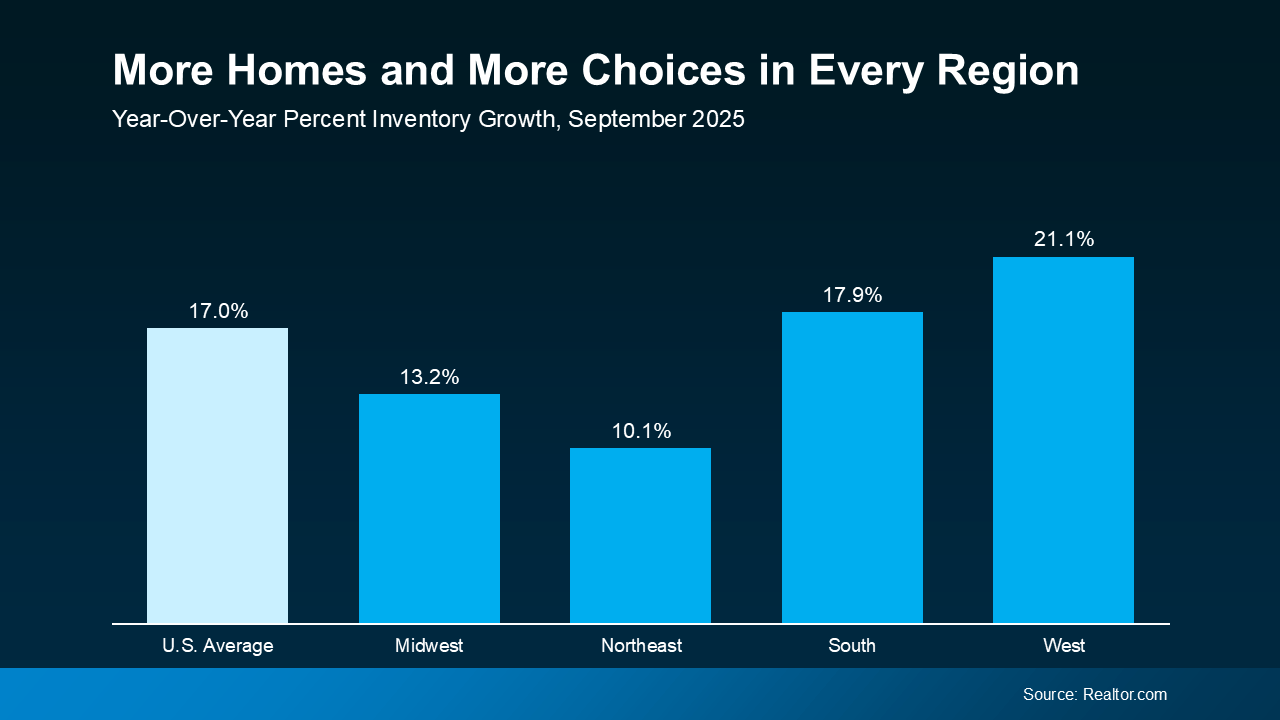 That translates to more homes to choose from, whether you’re looking for a bigger backyard, a shorter commute, or finally ditching your rental.
But not all markets are the same…
When you compare current inventory growth to pre-pandemic norms (2017–2019), the picture changes a bit, depending on where you are (see graph below):
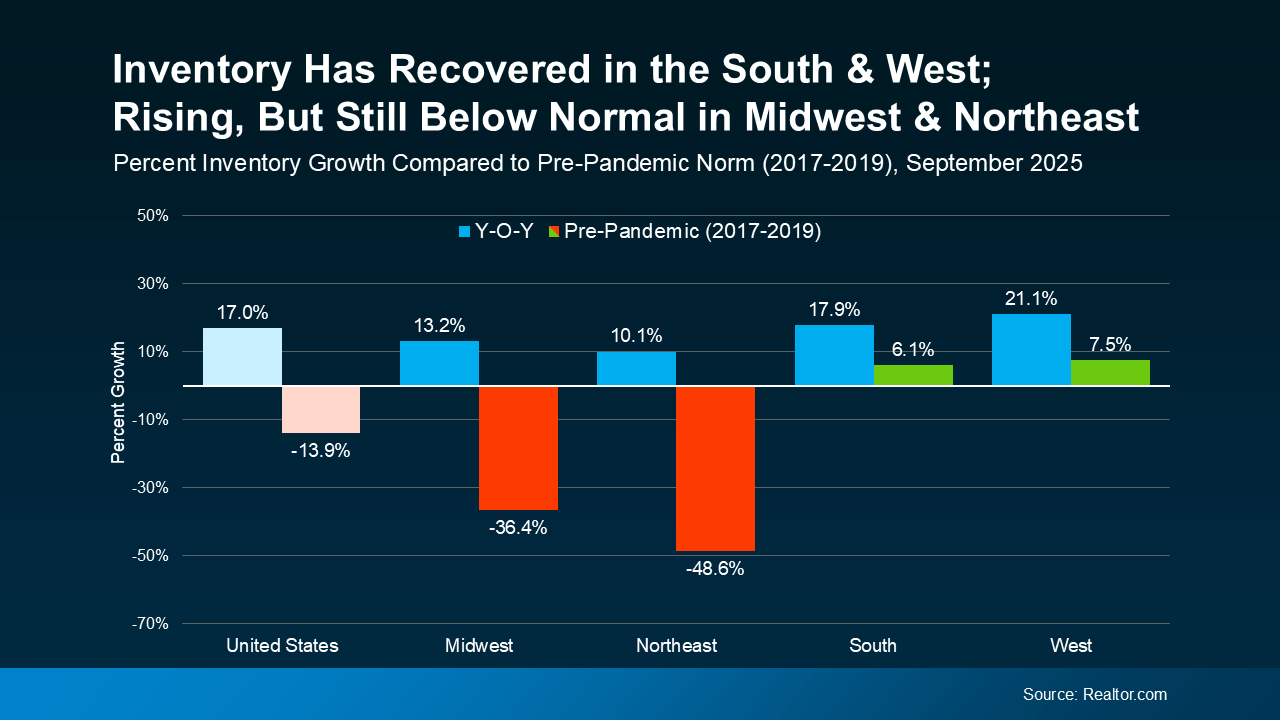 The green bars show where inventory has fully recovered (and even grown above pre-pandemic levels) in the South and the West. Supply, however, is still tighter in the Northeast and Midwest, as shown in the red bars, where inventory is still below normal.
And here’s why that’s still a win everywhere.
When you step back and look at the bigger picture, with inventory up in every region, that means more choices everywhere, even if some areas have more homes for sale than others.
And with fewer buyers in the market and more homes for sale, sellers are willing to negotiate to get a deal done.
All of that adds up to a win for today’s buyers.
And it’s also why working with a local expert really makes a difference. What’s happening in your zip code or neighborhood might look different than the national or regional trend. But the overall takeaway is clear: with more homes on the market, buyers have more leverage than they did a year or more ago.
So, if you stepped away from your search because things felt too competitive, too pricey, you were worried about finding a home, or it was all just too much to process, this could be your moment to take another look.
And if you’re not quite ready to go all in, that’s okay too. You can start by planning ahead. That means working with a trusted agent who can help you break down your budget, narrow your search, and make sure you’re prepped and ready when the right home hits the market.
Bottom Line
Want to know what’s happening in our area? Let’s have a conversation so you can get a custom overview of what’s available right now and learn how to be ready when the timing is right for you.
Because this isn’t 2021.
This isn’t even 2023 or 2024.
This is a new market – and you might be surprised by what you find.
Thank Your For Reading
Denise Olivares-Molina

by Denise Olivares-Molina | Oct 20, 2025 | Advice for Buyers and Sellers, Advice for Homeowners, Advice for Sellers, For Sellers, Home Prices, Home value, Homeowner Information, Housing Market, Housing Market Shifts, Housing Market Updates, Infographic, Pricing, Real Estate 2025, Real Estate Finances, Real Estate Goals, Real Estate Investing, Real Estate Market, Real Estate Tips, Weekly
Si ha visto titulares o publicaciones en redes sociales que anuncian un colapso inmobiliario, es fácil preguntarse si el valor de las viviendas está a punto de caer. Pero esta es la simple verdad.
Los datos no apuntan a un colapso. Apuntan a un crecimiento lento y continuo.
Y claro, esto variará según la zona. Algunos mercados verán subir los precios más que otros. Y algunos incluso podrían ver pequeñas caídas a corto plazo. Pero el panorama general es que se espera que los precios de las viviendas suban a nivel nacional, no que bajen, en los próximos 5 años.
La verdadera historia está en los pronósticos de los expertos
En la Encuesta de Expectativas de Precios de la Vivienda (HPES, por sus siglas en inglés) de Fannie Mae, más de 100 de los principales expertos del mercado inmobiliario opinan cada trimestre sobre hacia dónde proyectan que irán los precios de la vivienda a partir de ahora. Y en el informe que se acaba de publicar, los expertos coinciden en que se prevé que los precios suban a nivel nacional al menos hasta 2029 (ver el gráfico a continuación):
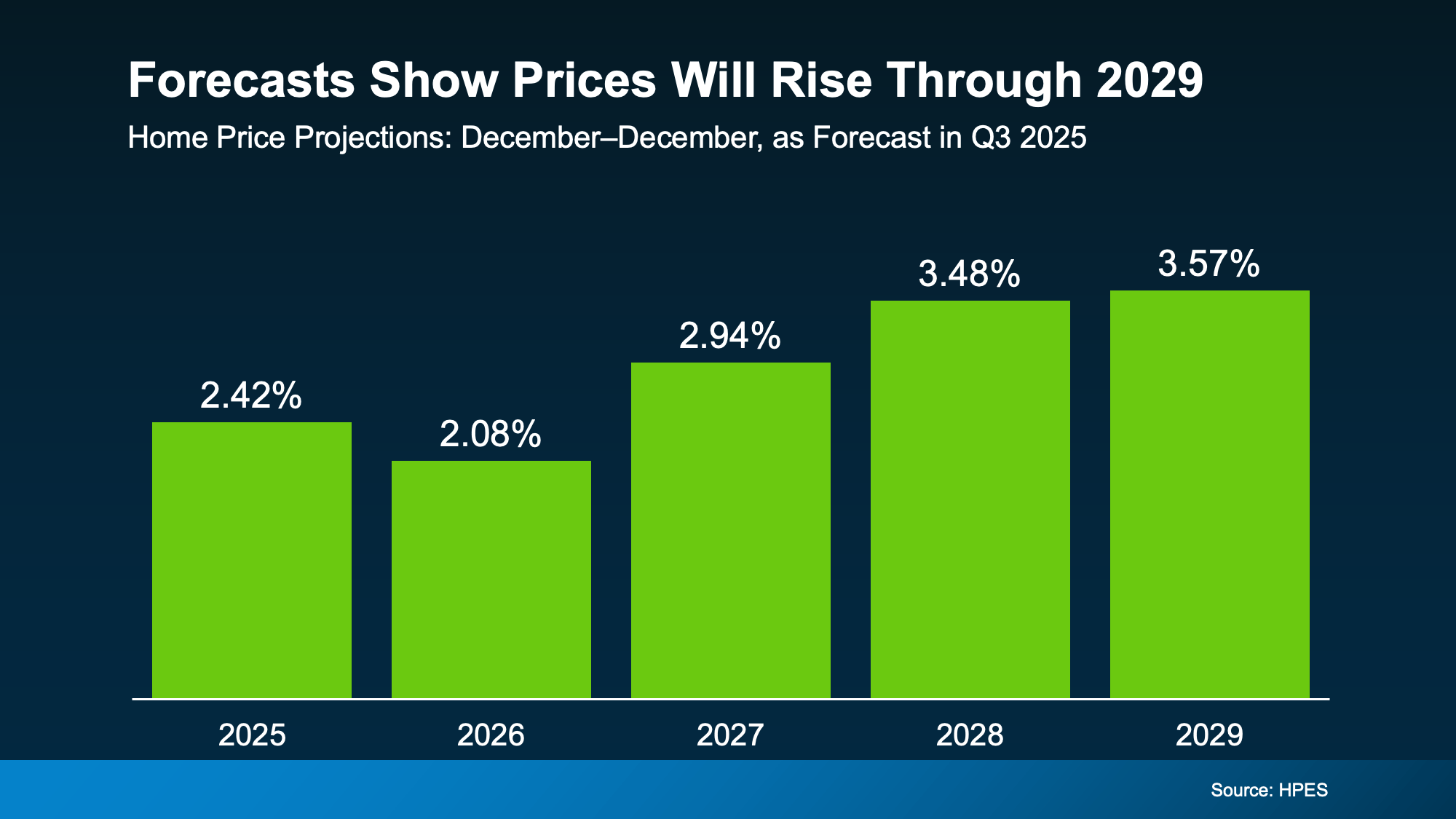
Así es como se interpreta este gráfico. Cada barra muestra un aumento, no una pérdida. Lo que ocurre es que el ritmo previsto de esa apreciación varía de un año a otro.
Y para recalcar esto aún más, veamos otra perspectiva de dónde están los precios y hacia dónde se espera que vayan. En esta versión, los pronósticos de los expertos se dividen en 3 categorías: el promedio general, las proyecciones más optimistas y las más pesimistas (ver la tabla a continuación):
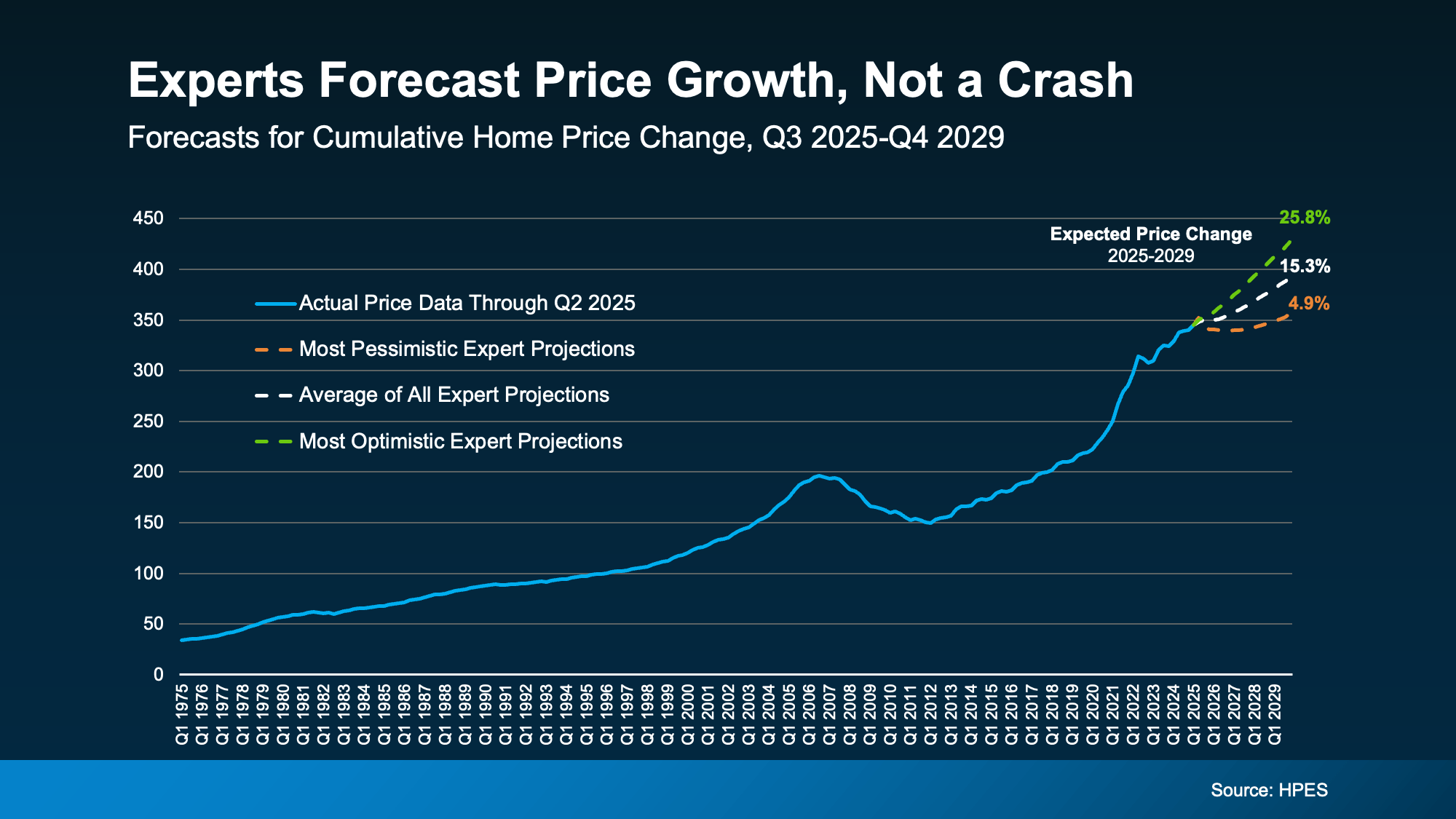
Observe cómo incluso los pronosticadores más pesimistas dicen que veremos un aumento de precios de casi el 5% en los próximos años.
- En general, se espera que los precios suban alrededor de un 15% desde ahora hasta finales de 2029.
- Los optimistas dicen que superaremos esa cifra y veremos un aumento de aproximadamente el 26%.
- E incluso los pesimistas anticipan que los precios subirán un 5% durante ese período.
¿Qué es lo que más destaca? Ninguno de estos grupos que estudian el mercado pronostica un colapso, ni siquiera una caída, en los próximos 5 años.
Cómo se compara esto con lo “normal” para el mercado
Ahora, volvamos al primer gráfico. Las proyecciones indican aumentos de precios del 2 al 3.5% en cada uno de los próximos cinco años. Para ponerlo en contexto, la tasa de apreciación promedio de los últimos 25 años fue más cercana al 4-5% anual.
Entonces, aunque eso está ligeramente por debajo del promedio histórico, es mucho más sostenible y típico que la situación del mercado en 2020, 2021 y 2022.
En aquel entonces, los precios subieron demasiado y muy rápido debido a una oferta históricamente baja y una demanda históricamente alta. En algunos lugares, los precios llegaron a subir entre un 15% y un 20%.
Por lo tanto, aunque pueda parecer que los precios se están estancando en comparación con las subidas de la era de la pandemia, lo que realmente está sucediendo es que el mercado finalmente está encontrando el equilibrio de nuevo.
Por qué no se espera que los precios colapsen
Gran parte de lo que se dice hoy sobre los precios de la vivienda se basa en esa rápida subida y en el viejo dicho de que todo lo que sube, tiene que bajar. Pero históricamente, eso no es del todo cierto. Los precios de la vivienda casi siempre suben. Y la razón principal por la que no nos dirigimos a una repetición de 2008 es simple: la oferta y la demanda.
Aunque los desafíos de asequibilidad han dificultado la compra para algunas personas en los últimos años, todavía no hay suficientes viviendas para todos los que quieren una. Y esa escasez continua mantiene la presión al alza sobre los precios a nivel nacional.
Por eso los expertos de todos los ámbitos pueden coincidir con confianza: no nos dirigimos a un colapso de precios, sino a una apreciación constante y a largo plazo.
Y por si es la economía lo que le preocupa, recuerde esto.En los últimos 50 años, ha habido muchos acontecimientos económicos que han afectado al mercado. Y algo que ha sido una constante a lo largo del tiempo es que el mercado inmobiliario siempre se recupera. Y ahora mismo estamos superando ese punto de inflexión y entrando en una recuperación.
En conclusión
Si ha estado esperando para comprar o vender porque le preocupa un colapso, es hora de mirar los datos, no los titulares.
La pregunta no es si los precios de la vivienda subirán, sino cuánto.
Pongámonos en contacto para que sepa lo que está sucediendo en nuestro mercado local y lo que estos pronósticos significan para su próximo paso.
Gracias por leer
Denise Olivares-Molina

by Denise Olivares-Molina | Oct 20, 2025 | Advice for Sellers, For Sellers, Home Prices, Home value, Homeowner Information, Housing Market, Housing Market Shifts, Housing Market Updates, Pricing, Real Estate 2025, Real Estate Finances, Real Estate Investing, Real Estate Market, Real Estate Tips, Recipes, Seller, Sellers, Selling A Home, Weekly
If you’ve seen headlines or social posts calling for a housing crash, it’s easy to wonder if home values are about to take a hit. But here’s the simple truth.
The data doesn’t point to a crash. It points to slow, continued growth.
And sure, it’s going to vary by local area. Some markets will see prices rise more than others. And some may even see small, short-term declines. But the big picture is: home prices are expected to rise nationally, not fall, over the next 5 years.
The Real Story Is in the Expert Forecasts
In the Home Price Expectations Survey (HPES) from Fannie Mae, each quarter over 100 leading housing market experts weigh in on where they project home prices will go from here. And in the report that was just released, the experts agree prices are projected to climb nationally through at least 2029 (see graph below):
Here’s how to read this visual. Each bar in that graph shows an increase, not a loss. It’s just that the anticipated pace of that appreciation varies year-to-year.
And to further drive this home, let’s look at another view of where prices are and where they’re expected to go. In this version, the expert forecasts are broken into 3 categories: the overall average, the most optimistic projections, and the most pessimistic projections (see chart below):
Notice how even the most pessimistic forecasters say we’ll see prices rise by almost 5% over the next few years.
- Overall, prices are expected to rise about 15% from now through the end of 2029.
- The optimists say we’ll beat that and see a roughly 26% increase.
- And even the pessimists anticipate prices will go up by 5% during that period.
What sticks out the most? None of these groups who study the market are forecasting a crash, or even a decline, over the next 5 years.
How This Compares to “Normal” for the Market
Now, focus back on the first graph. The projections call for 2-3.5% price increases ineach of the next five years. For context, the average rate of appreciation for the last 25 years was closer to 4-5% annually.
So, while that’s slightly below the historical average, it’s much more sustainable and typical than where the market was in 2020, 2021, and 2022.
Back then, prices rose too much, too fast based on record-low supply and record-high demand. Some places even saw prices climb by 15-20%.
So, while it may feel like prices are stalling compared to those pandemic-era surges, what’s really happening is that the market is finally finding balance again.
Why Prices Aren’t Expected To Crash
A lot of the chatter about home prices today is based on that rapid rise and the old saying that what goes up, must come down. But historically, that’s not really true. Home prices almost always rise.
And the main reason we’re not heading for a repeat of 2008 is simple: supply and demand.
Even though affordability challenges have made it harder for some people to buy over the past few years, there still aren’t enough homes for everyone who wants one. And that ongoing shortage is keeping upward pressure on prices nationally.
That’s why experts across the board can confidently agree: we’re not headed for a price collapse, but for steady, long-term appreciation.
And just in case it’s the economy that’s got you worried, remember this. Over the past 50 years, there have been plenty of economic events that have impacted the market. And one thing that’s consistently been true throughout time is the housing market always recovers. And we’re coming through that turn right now and going into a recovery.
Bottom Line
If you’ve been waiting to buy or sell because you’re worried about a crash, it’s time to look at the data – not the headlines.
The question isn’t if home prices will rise, it’s by how much.
Let’s connect so you know what’s happening in our local market and what these forecasts mean for your next move.
Thank You For Reading
Denise Olivares-Molina

by Denise Olivares-Molina | Oct 6, 2025 | Buyers, Buying A Home, Down Payments, First Time Home Buyers, First-Time Buyers, First-Time Investors, For Buyers, Home value, Homeowner Information, Housing Market Updates, Market Updates, New Home, Predictions, Pricing, Real Estate 2025, Real Estate Finances, Real Estate Investing, Real Estate Market, Tips for Buyers, Weekly

You want mortgage rates to fall – and they’ve started to. But is it going to last? And how low will they go?
Experts say there’s room for rates to come down even more over the next year. And one of the leading indicators to watch is the 10-year treasury yield. Here’s why.
The Link Between Mortgage Rates and the 10-Year Treasury Yield
For over 50 years, the 30-year fixed mortgage rate has closely followed the movement of the 10-year treasury yield, which is a widely watched benchmark for long-term interest rates (see graph below):
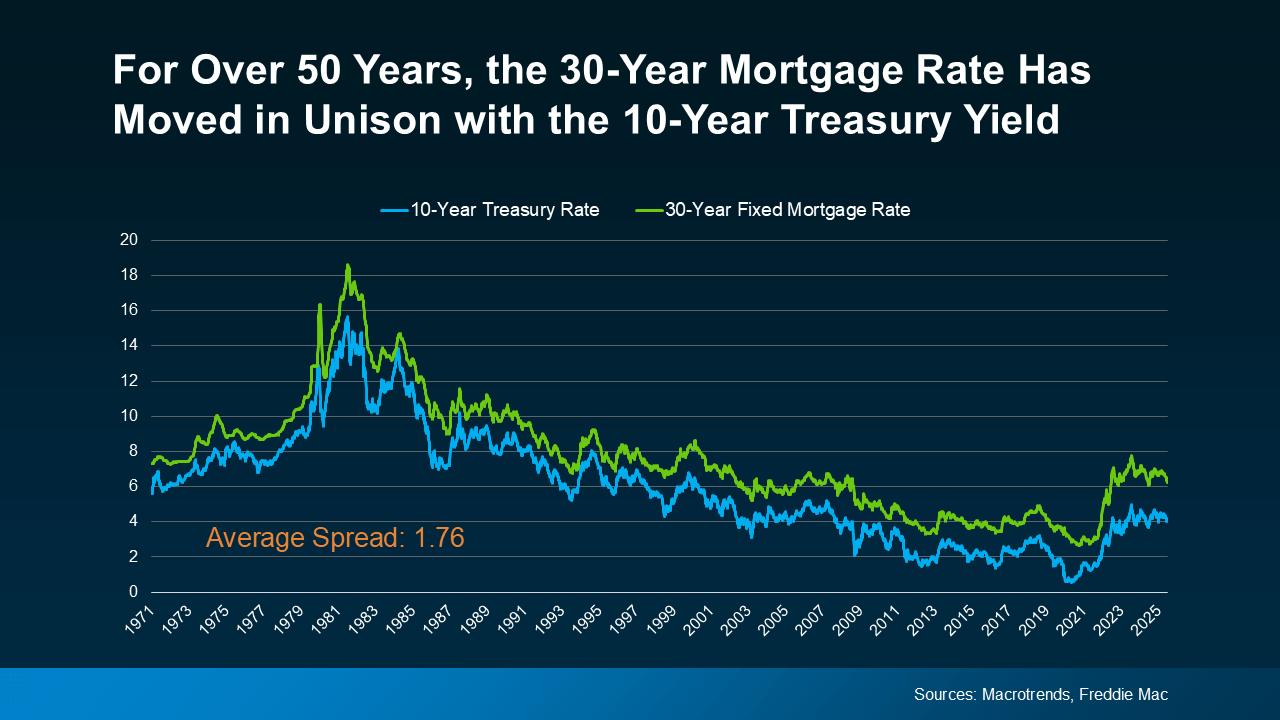 When the treasury yield climbs, mortgage rates tend to follow. And when the yield falls, mortgage rates typically come down.
It’s been a predictable pattern for over 50 years. So predictable, that there’s a number experts consider normal for the gap between the two. It’s known as the spread, and it usually averages about 1.76 percentage points, or what you sometimes hear as 176 basis points.
The Spread Is Shrinking
Over the past couple of years, though, that spread has been much wider than normal. Why? Think of the spread as a measure of fear in the market. When there’s lingering uncertainty in the economy, the gap widens beyond its usual norm. That’s one of the reasons why mortgage rates have been unusually high over the past few years.
But here’s a sign for optimism. Even though there’s still some lingering uncertainty related to the economy, that spread is starting to shrink as the path forward is becoming clearer (see graph below):
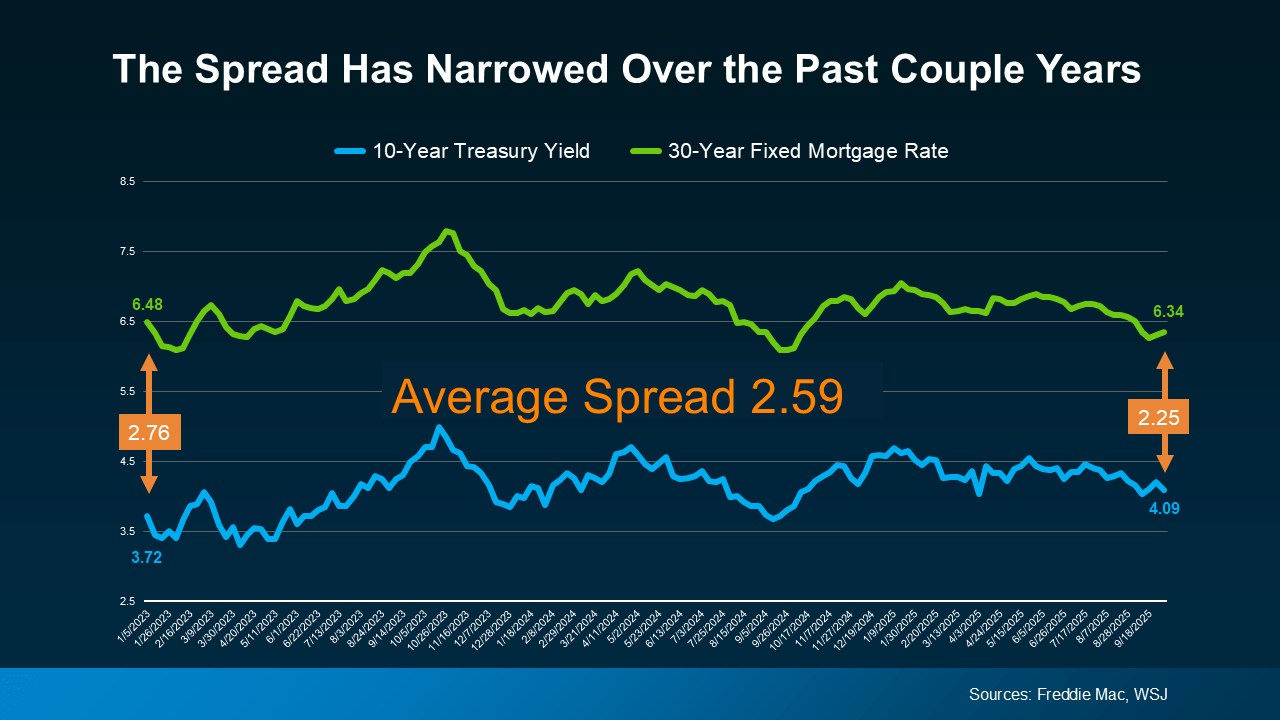 And that opens the door for mortgage rates to come down even more. As a recent article from Redfin explains:
“A lower mortgage spread equals lower mortgage rates. If the spread continues to decline, mortgage rates could fall more than they already have.”
The 10-Year Treasury Yield Is Expected To Decline
It’s not just the spread, though. The 10-year treasury yield itself is also forecast to come down in the months ahead. So, when you combine a lower yield with a narrowing spread, you have two key forces potentially pushing mortgage rates down going into next year.
This long-term relationship is a big reason why you see experts currently projecting mortgage rates will ease, with a fringe possibility they’ll hit the upper 5s toward the end of next year.
Here’s how it works. Take the 10-year treasury yield, which is sitting at about 4.09% at the time this article is being written, and then add the average spread of 1.76%. From there, you’d expect mortgage rates to be around 5.85% (see graph below):
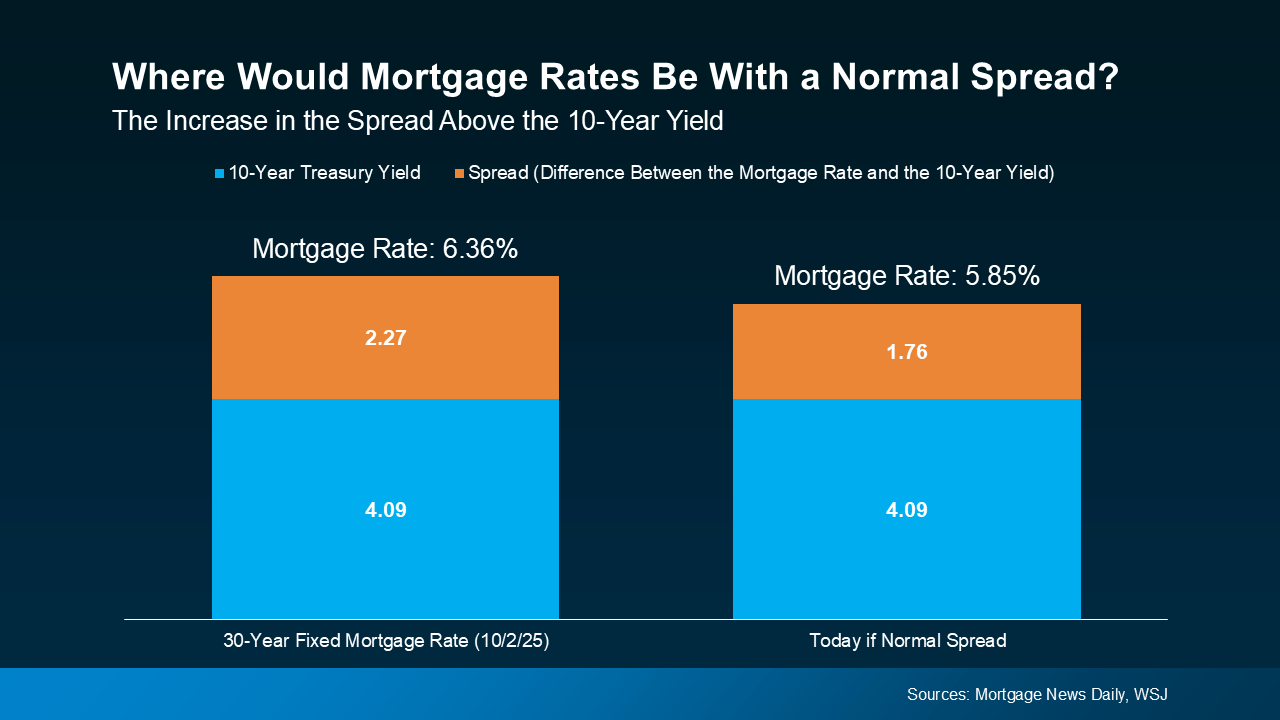 But remember, all of that can change as the economy shifts. And know for certain that there will be ups and downs along the way.
How these dynamics play out will depend on where the economy, the job market, inflation, and more go from here. But the 2026 outlook is currently expected to be a gradual mortgage rate decline. And as of now, things are starting to move in the right direction.
Bottom Line
Keeping up with all of these shifts can feel overwhelming. That’s why having an experienced agent or lender on your side matters. They’ll do the heavy lifting for you.
If you want real-time updates on mortgage rates, let’s connect so you have someone to keep you in the loop and help you plan your next move.

by Denise Olivares-Molina | Sep 23, 2025 | Pricing, Real Estate 2025, Seller, Sellers, Selling A Home, Selling Myths, Selling Tips, Weekly
Want to know something important you probably don’t have a professional check for you nearly as often as you should? Spoiler alert: it’s the value of your home.
Because here’s the reality. Your house is likely the biggest financial asset you have. And if you’ve lived in it for a few years or more, chances are it’s been quietly building wealth for you in the background – even if you haven’t been keeping tabs on it.
You might be surprised by just how much it’s grown, even as the market has shifted over the past few months.
What Is Home Equity?
That hidden wealth in your home is called equity. It’s the difference between what your house is worth today and what you still owe on your mortgage. Your equity grows over time as home values rise and as you make your monthly payments. Here’s an example to help you really understand how the math works.
Let’s say your house is now worth $500,000, and you have $200,000 left to pay off on your loan. That means you have $300,000 in equity. And that’s right in line with what the typical homeowner has right now.
According to Cotality, the average homeowner with a mortgage has about $302,000 in equity.
Why You Probably Have More Than You Think
Here are the two main reasons homeowners like you have near record amounts of equity right now:
1. Significant Home Price Growth. According to the Federal Housing Finance Agency (FHFA),home prices have jumped by nearly 54% nationwide over the last five years (see map below):
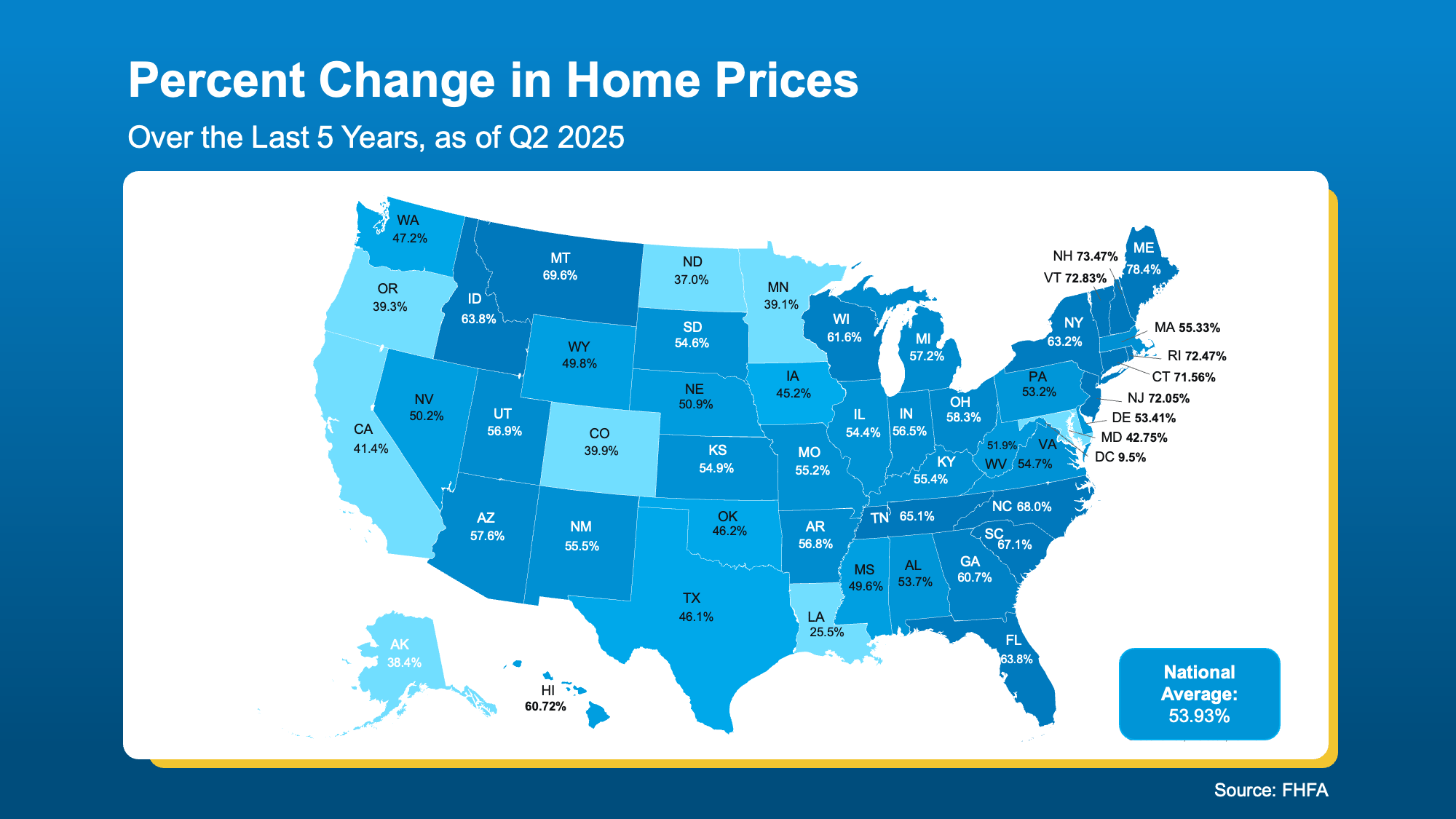 This means your house is likely worth much more now than when you first bought it, thanks to how much prices have climbed over time. And if you’re worried because you’ve heard prices are flattening or even coming down in some markets, just know if you’ve been in your house for a few years (or more) you very likely have enough equity to sell and still come out ahead.
2. People Are Living in Their Homes Longer. Data from the National Association of Realtors (NAR), shows the average homeowner stays in their home for about 10 years now (see graph below):
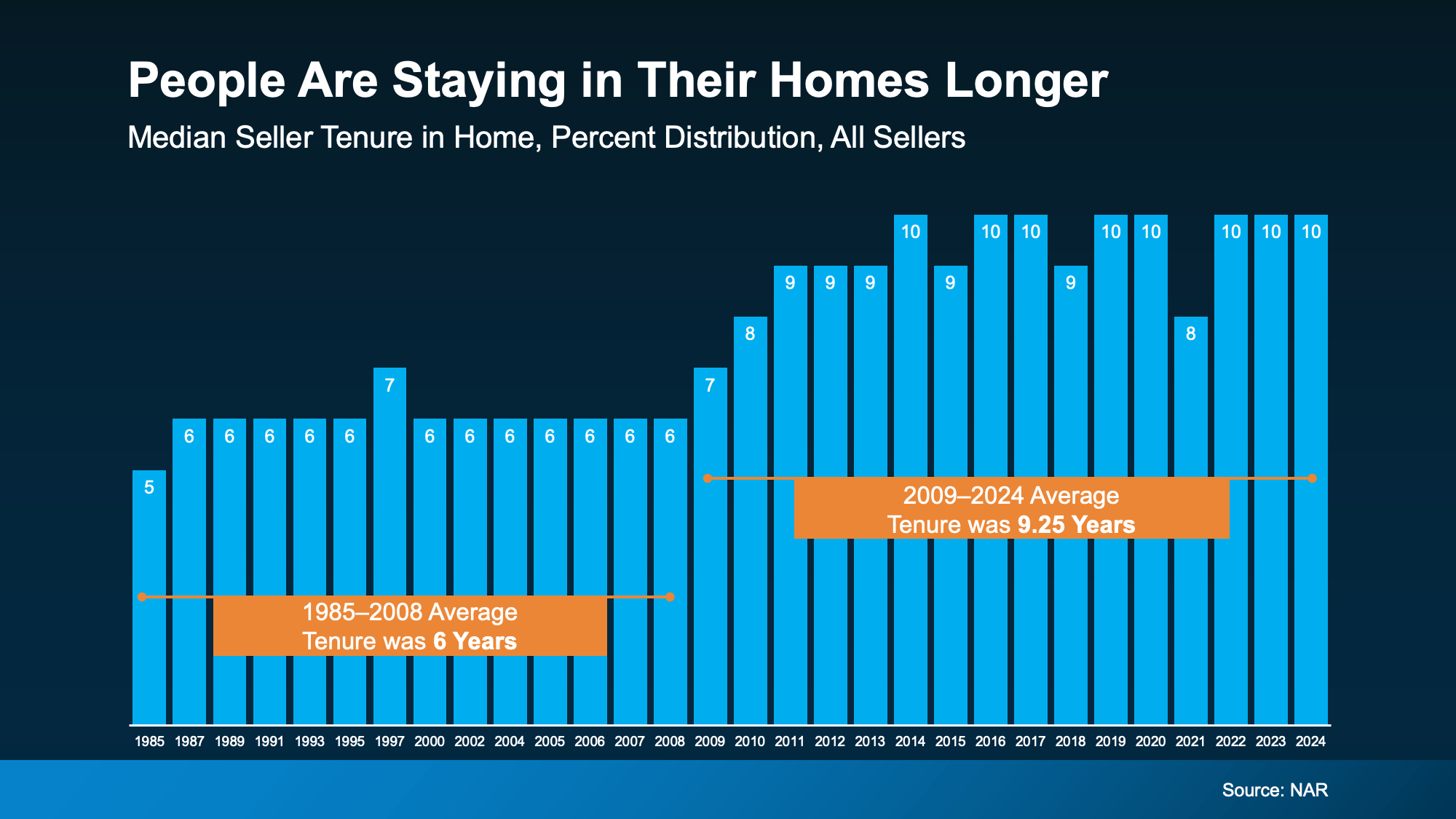 That’s longer than it used to be. And over that decade? You’ve built equity just by making your mortgage payments and riding the wave of rising home values. Because the financial side of homeownership is about playing the long game, not worrying about little ups and downs in the market here and there. And over time, that means you’re winning.
So, if you’re one of those people who’s been in their home for a bit, here’s how much the behind-the-scenes price growth has helped you out. According to NAR:
“Over the past decade, the typical homeowner has accumulated $201,600 in wealth solely from price appreciation.”
What Could You Actually Do with That Equity?
Your equity isn’t just a number. It’s a tool you can use to unlock your next big move. Depending on your goals, you could:
- Use it to help buy your next home. Your equity could help you cover the down payment on your next home. In some cases, it might even mean you can buy your next house in all cash.
- Renovate your current house to better suit your life now. And, if you’re strategic about your projects, they could add even more value to your home if you do sell later on.
- Start the business you’ve always dreamed of. Your equity could be exactly what you need for startup costs, equipment, software, or marketing. And that could help increase your earning potential, so you’re getting yet another financial boost.
Bottom Line
Chances are, your house is worth quite a bit right now. If you’re curious about the value of your home, let’s connect. We’ll run the numbers and give you a professional equity assessment report, so you know what you’re working with and where you can go from here.
Thank You For Reading
Denise Olivares-Molina
