
by Denise Olivares-Molina | Sep 8, 2026 | Single Family | Sold

$325,000
Sold
Opportunity awaits at 37 Adams St! This 3-bedroom single-family home has sustained fire damage and is ready for its next chapter. Great opportunity for contractors, investors, or buyers looking for a renovation project. Property is being sold strictly AS-IS. Buyer and buyer’s agent to perform all due diligence.

by Denise Olivares-Molina | Sep 4, 2026 | Single Family | Sold

$589,000
Sold
Welcome to this classic New England home bursting with character located on a wonderfully wooded lot. This property offers 9 spacious rooms, 4 bedrooms, a finished 3rd floor and detached 2 car garage. The 1st floor features a traditional layout centered around a large kitchen and eat-in area, highlighted by a stunning fireplace. Off the kitchen, you will find a classic dining room and living room complete along with a second fireplace. Hardwood floors flow seamlessly throughout the home, enhancing the historic charm. The main hardwood staircase leads to the 2nd level, which hosts 4 comfortable bedrooms and a full bath. The primary bedroom serves as a private retreat, offering its own cozy fireplace and extra closet space. Off the 4th bedroom, a unique 2nd staircase leads to a finished 3rd floor, which provides versatile bonus space perfect for a home office or recreation room. An excellent commuter location with quick access to Route 213 and nearby shopping centers.

by Denise Olivares-Molina | Sep 3, 2026 | Single Family | Sold

$550,000
Sold
Welcome to this charming Cape-style home. A standout feature of this property is its owned solar panel system, providing free electricity and car charging. With this system you can say goodbye to your electric bill. Enjoy sustainable living without sacrificing comfort. Inside, the heart of the home is the open-concept kitchen and dining room, perfect for everyday living and effortless entertaining. The large first floor bedroom and full bath offer flexibility and utility. Set on a beautifully maintained fenced-in lot with both front and back yards where you can relax or entertain on the patio, in the electrified gazebo for movie night or enjoy the private green space. Located close to the Andover line—with low Lawrence property taxes—this home offers unbeatable convenience with quick access to I-93 and I-495, making commuting and travel a breeze. A wonderful blend of charm, efficiency, and location.
by Denise Olivares-Molina | Sep 3, 2026 | Uncategorized
The real estate market is always changing. Shifts in technology, buyer expectations, financing conditions, marketing strategies, and competition can create new challenges and opportunities for real estate professionals.
In this environment, personal development is more than a professional goal. Building knowledge, communication skills, confidence, organization, and adaptability can help real estate professionals respond to change and provide consistent service.
Why Personal Development Matters in Real Estate
Real estate professionals manage many responsibilities. They communicate with clients, coordinate transactions, market properties, review information, negotiate terms, and keep up with changing market conditions.
Developing stronger professional skills can make these responsibilities easier to manage. Continuous learning can also help professionals identify areas where they can improve and build better habits.
Stay Current With Market Knowledge
Market knowledge is an important part of professional development. Real estate professionals should make an effort to understand current trends, financing conditions, inventory levels, pricing activity, and other relevant market information.
This does not mean trying to predict every market movement. Instead, it means staying informed enough to explain current conditions clearly and provide useful information.
Regular learning through industry resources, market reports, training, and professional education can support better decision-making.
Strengthen Communication Skills
Clear communication can make a significant difference in real estate. Clients may have questions about pricing, financing, contracts, timelines, and other parts of a transaction.
Strong communication involves more than speaking clearly. It also includes listening carefully, asking useful questions, setting expectations, and explaining complex information in an understandable way.
Improving these skills can help create smoother interactions and reduce misunderstandings.
Improve Time Management
Real estate professionals often manage multiple priorities at once. Appointments, calls, follow-ups, marketing activities, paperwork, and transaction deadlines can quickly fill a schedule.
Better time management can help professionals focus on important tasks without losing track of smaller responsibilities.
Using calendars, task management systems, scheduling tools, and structured daily routines can make it easier to stay organized.
Embrace Technology
Technology continues to influence how real estate professionals work. Digital marketing, customer relationship management systems, virtual meetings, transaction platforms, artificial intelligence tools, and automation can all support business operations.
Personal development includes learning how to use these tools effectively.
The goal is not to adopt every new technology. Instead, identify tools that can save time, improve organization, strengthen communication, or enhance the client experience.
Build Better Financial Awareness
Understanding business finances is another valuable area of development. Real estate professionals should have a clear picture of income, expenses, marketing costs, taxes, and cash flow.
Better financial awareness can support more thoughtful business decisions and help professionals prepare for changes in transaction volume.
Developing good financial habits can also contribute to long-term business stability.
Learn From Every Transaction
Every transaction can provide an opportunity to learn. Reviewing completed transactions can help identify what worked well and what could be improved.
Consider asking questions such as:
What part of the process went smoothly?
Where did delays occur?
Was communication clear?
Could any task have been handled more efficiently?
What should be done differently next time?
A habit of reviewing experiences can turn everyday work into ongoing professional development.
Build Confidence Through Preparation
Confidence often comes from preparation. Staying informed, practicing communication, understanding processes, and organizing daily responsibilities can make it easier to handle unexpected situations.
Confidence does not mean having every answer immediately. It means being prepared to find accurate information, communicate clearly, and take the appropriate next step.
Create a Long-Term Growth Mindset
Personal development is not a one-time project. Skills and knowledge need to evolve as the real estate industry changes.
Set realistic professional goals and review your progress regularly. Focus on areas that can have a meaningful impact on your work, whether that means improving communication, learning new technology, strengthening business operations, or expanding market knowledge.
Small improvements made consistently can have a significant impact over time.
Keep Growing With the Market
Today’s real estate market requires professionals to remain adaptable and informed. Personal development can help build the skills needed to navigate changing conditions while maintaining a strong focus on service and professionalism.
By investing in knowledge, communication, organization, technology, and continuous learning, real estate professionals can build stronger habits and create a more sustainable approach to their careers.

by Denise Olivares-Molina | Sep 1, 2026 | Weekly
Una encuesta reciente de Talker Research pidió a los estadounidenses que eligieran una palabra para describir cómo han sentido el 2026 hasta ahora. ¿La ganadora? Estresante. Y, honestamente, han pasado muchas cosas.
Por eso, es comprensible si has estado posponiendo la compra o venta de una casa hasta que las cosas se calmen. Pero puede que estés esperando algo que ya ocurrió. Mientras todo lo demás ha parecido inestable, el mercado inmobiliario se ha convertido en uno de los más sólidos. Veamos los datos.
Los precios de las viviendas se han estabilizado
Después de años de rápidos aumentos, los datos de la Asociación Nacional de Agentes Inmobiliarios (NAR, por sus siglas en inglés) muestran que los precios de las viviendas se han mantenido notablemente estables durante los últimos 4 años (ver gráfico a continuación):
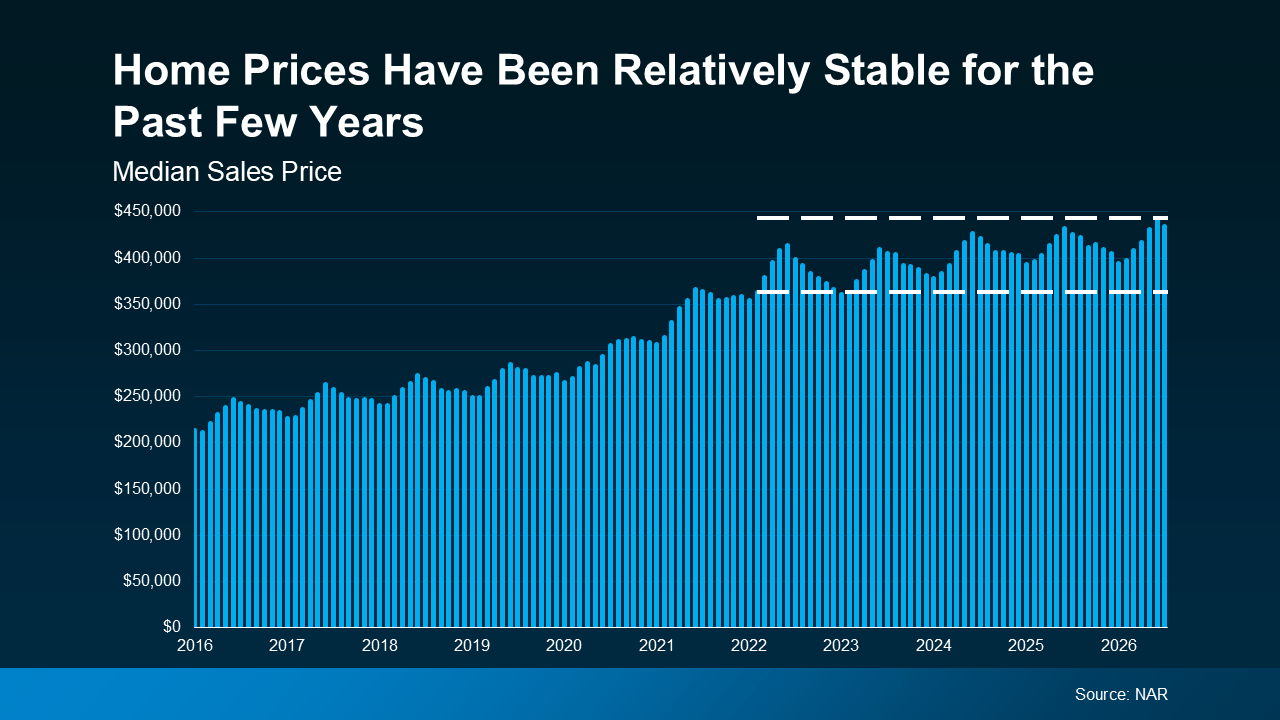
Y los expertos dicen que eso es exactamente lo que se puede esperar de cara al futuro. Como explica Selma Hepp, Economista Jefe de Cotality:
“En 2026, esperamos que los precios de las viviendas se mantengan mayormente estables, con una modesta apreciación a nivel nacional”.
Sin oscilaciones bruscas. Solo un crecimiento lento y constante. Ese es el reflejo de un mercado saludable. Por supuesto, ese ritmo puede variar un poco dependiendo de dónde vivas, pero a nivel nacional, un crecimiento constante como este hace que sea más fácil planificar tu presupuesto, ya sea que estés comprando o vendiendo.
La oferta de viviendas en venta se ha nivelado
Durante años, la oferta de viviendas en venta fue un blanco móvil. Cayó rápidamente durante la pandemia y, desde entonces, ha estado aumentando de manera bastante predecible. Ahora, ese ritmo de crecimiento se ha desacelerado. Según Realtor.com, el inventario actual está muy cerca de los niveles en los que se encontraba para esta misma época el año pasado (ver gráfico a continuación):
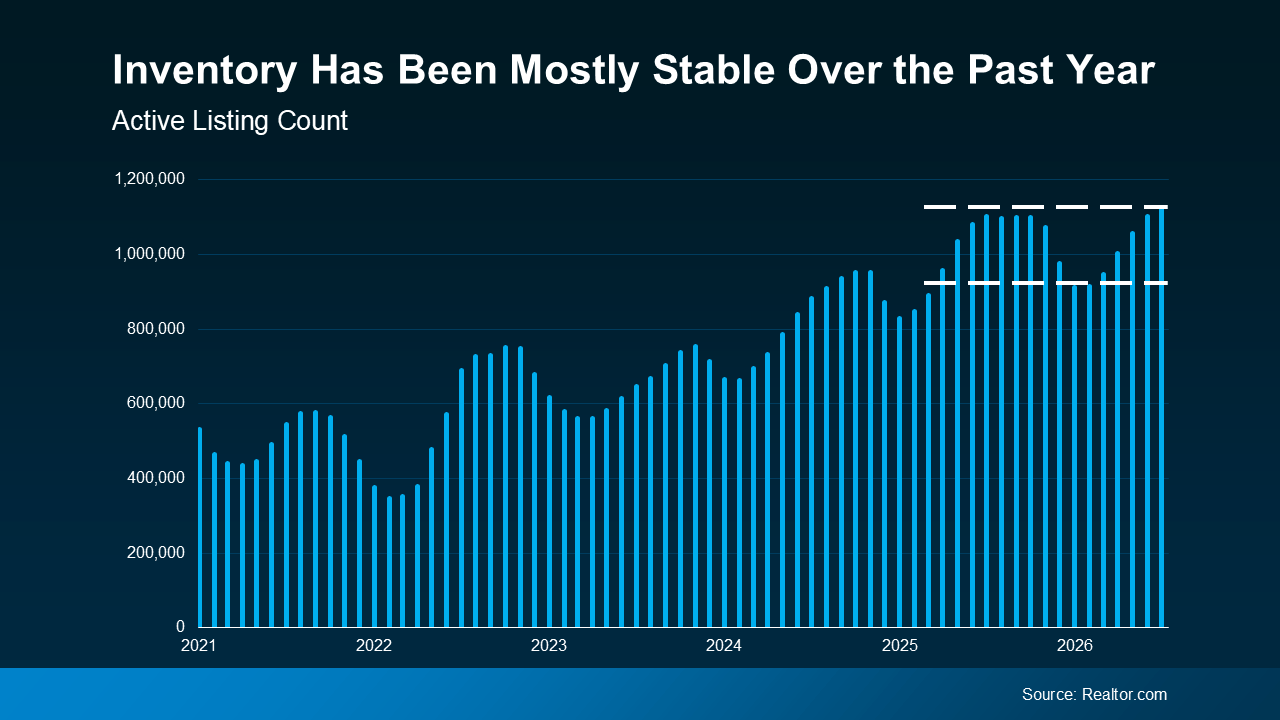
Esto es de gran ayuda sin importar en qué lado de la transacción te encuentres. Cuando la cantidad de casas en venta no cambia mucho, sabes a qué te enfrentas: cuántas opciones tendrás como comprador y cuánta competencia enfrentarás como vendedor.
Las tasas hipotecarias encontraron su rango
Es cierto, las tasas subieron drásticamente en el 2022. Pero desde entonces, los datos de Freddie Mac muestran que se han mantenido entre el 6 % y el 7 % durante la mayor parte de los últimos 3 años aproximadamente (ver gráfico a continuación):
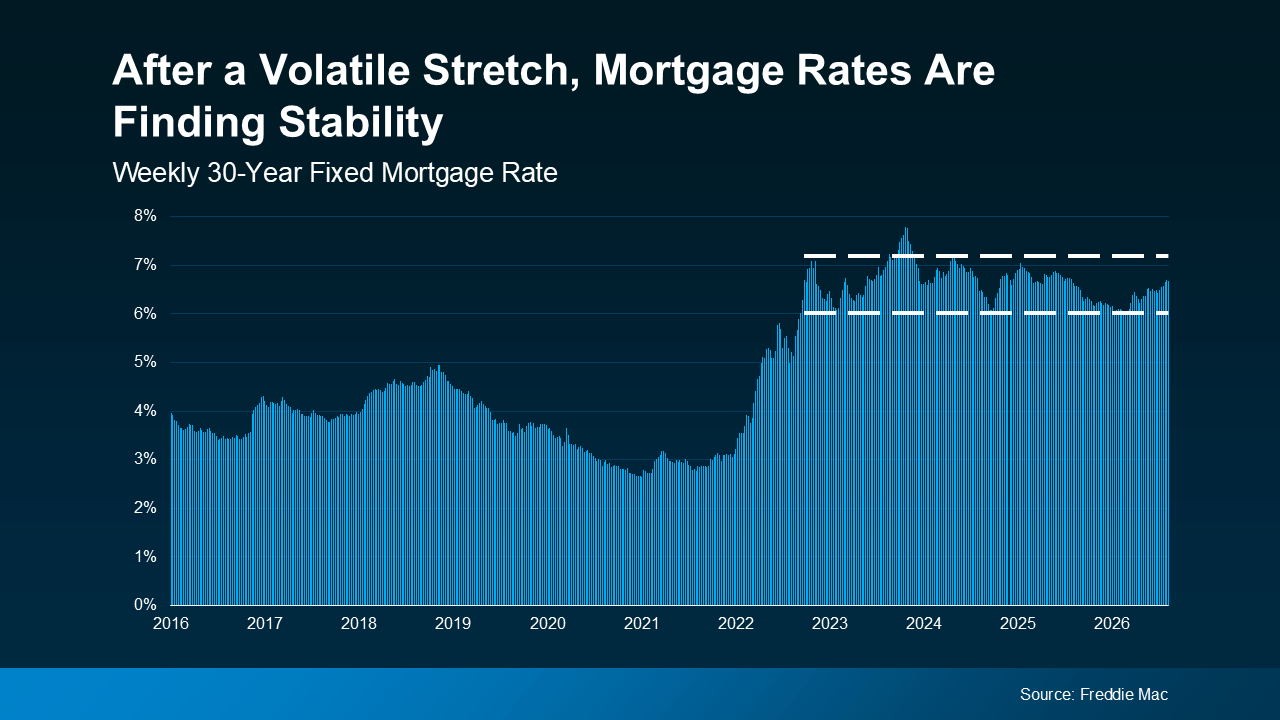
Sí, hubo un breve pico por encima de ese umbral, pero en general, las tasas se han mantenido en ese rango durante un buen tiempo. Esa previsibilidad es de gran ayuda cuando estás planeando mudarte.
Y ahora que esto parece ser una tendencia a más largo plazo, la gente lo ha aceptado como la nueva normalidad. Los compradores se sienten cómodos comprando dentro de ese rango y los vendedores se sienten igual de cómodos poniendo sus propiedades a la venta con esas condiciones.
Esa comodidad es importante porque cuando ambas partes saben qué esperar, siguen tomando acción. En otras palabras, el mercado no está congelado esperando que algo cambie; se está moviendo con calma.
En conclusión
El resto del mundo puede sentirse impredecible en este momento, pero el mercado inmobiliario no tiene por qué serlo. Los precios, el inventario y las tasas han encontrado un terreno sólido.
Si la estabilidad es lo que estabas esperando, ya está aquí. Conectémonos si quieres hablar sobre lo que esto significa para tu próxima mudanza.
Gracias por leer
Denise Olivares-Molina

by Denise Olivares-Molina | Sep 1, 2026 | 2026 Housing Market, 2026 Mortgage Rate, Advice for Sellers, Affordability, For Sellers, Forecasts, Homeowner Information, Housing Market, Housing Market Insights, Housing Market Shifts, Housing Market Updates, Mortgage Rates, Protect Your Investment, Real Estate Finances
A recent survey from Talker Research asked Americans to pick one word to describe how 2026 has felt so far. The winner? Stressful. And honestly, there’s been a lot going on.
So, it’s understandable if you’ve been putting off buying or selling a home until things settle down. But you may be waiting on something that’s already happened. While everything else has felt shaky, the housing market has become one of the steadiest things out there. Look at the data.
Home Prices Have Leveled Out
After years of fast increases, data from the National Association of Realtors (NAR) shows home prices have been remarkably steady for the past 4 years (see graph below):
And experts say that’s what to expect going forward, too. As Selma Hepp, Chief Economist at Cotality, explains:
“In 2026, we expect home prices to remain broadly stable, with modest appreciation at a national level.”
No wild swings. Just slow, steady growth. That’s a healthy market. Of course, that pace can vary a bit depending on where you live. But nationally, steady growth like this makes it easier to plan your budget, whether you’re buying or selling.
The Supply of Homes for Sale Has Steadied
For years, the supply of homes for sale was a moving target. It dropped fast during the pandemic and has been climbing pretty reliably ever since. Now, that pace of growth has slowed down. According to Realtor.com, inventory today is very close to where it was this time last year (see graph below):
That’s helpful no matter which side you’re on. When the number of homes for sale isn’t changing much, you know what you’re walking into – how many options you’ll have as a buyer, and how much competition you’ll face as a seller.
Mortgage Rates Found Their Range
Yes, rates jumped dramatically back in 2022. But since then, Freddie Mac data shows they’ve stayed between 6% and 7% for the better part of the last 3 or so years (see graph below):
Yes, there was one brief spike above that threshold, but overall, rates have stayed in that range for a while now. That predictability helps when you’re planning a move.
And now that this seems to be a longer-term trend, people have accepted it as the new normal. Buyers have gotten comfortable purchasing in that range, and sellers have gotten just as comfortable listing in it.
That comfort’s important because when both sides know what to expect, they keep making moves. In other words, the market isn’t frozen waiting for something to change. It’s moving calmly.
Bottom Line
The rest of the world may feel unpredictable right now, but the housing market doesn’t have to. Prices, inventory, and rates have all found solid ground.
If stability is what you’ve been waiting for, it’s already here. Let’s connect if you want to talk through what that means for your move.
Thank You For Reading
Denise Olivares-Molina

by Denise Olivares-Molina | Sep 1, 2026 | Weekly
Últimamente, los titulares han planteado una idea llamativa sobre aprovechar tu 401(k) para cubrir el pago inicial de una casa. Tal vez hayas escuchado los rumores y te hayas preguntado si ese dinero podría ayudarte a conseguir una casa más rápido, especialmente con lo difícil que está la asequibilidad de las viviendas.
Esto es lo que necesitas recordar. Retirar fondos de tus ahorros para la jubilación es una decisión importante, así que tómate el tiempo para evaluar todas tus opciones primero y asegúrate de hablar con un experto financiero antes de hacer cualquier cosa.
Por qué echar mano de un 401(k) puede resultar tentador
Los datos de Empower muestran que muchos estadounidenses han acumulado considerables ahorros para la jubilación. La cantidad media de un 401(k) para cualquier persona entre los 40 y 60 años es de seis cifras (ver gráfico a continuación):

Y cuando tienes una buena cantidad ahorrada y la casa de tus sueños está justo ahí, utilizar ese dinero puede parecer una decisión fácil.
Pero echar mano de tus ahorros para la jubilación para comprar una casa podría costarte una multa y ser un retroceso para tus finanzas en el futuro. Por eso es una buena idea explorar primero otras opciones para tu pago inicial. Como dice Redfin:
“Si tienes dificultades para ahorrar lo suficiente para un pago inicial, es posible que te preguntes si recurrir a tu 401(k) es la opción correcta. Si bien es posible, hacerlo conlleva riesgos significativos, como multas por retiro anticipado y la pérdida de crecimiento de la inversión”.
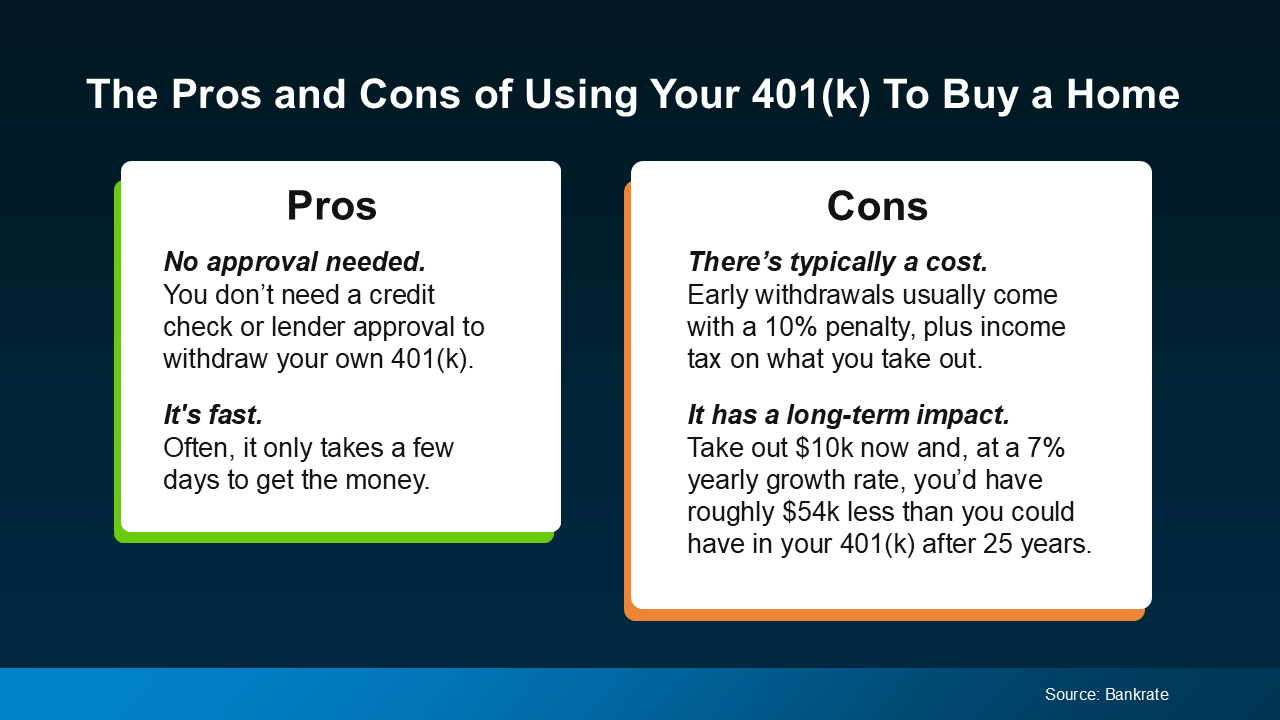
Antes de decidirte, pide a un asesor financiero que te ayude a comparar las ventajas frente a los riesgos. Bankrate señala algunos de cada uno (ver imagen):
Otras opciones que vale la pena explorar primero
Tu 401(k) no es la única forma de financiar la compra de una casa. Redfin describe algunas otras opciones que puedes investigar antes de decidir qué hacer:
-
Préstamos con pago inicial bajo o sin pago inicial: Los préstamos de la FHA, por ejemplo, permiten a los compradores calificados dar un pago inicial de tan solo el 3.5% del precio de la casa, dependiendo de sus puntajes de crédito.
-
Programas de asistencia para el pago inicial: Muchos programas nacionales y locales pueden ayudar a reducir lo que pagas para tu pago inicial o costos de cierre.
Haz un plan antes de dar el paso
Sin importar qué camino tomes, habla primero con un experto financiero. Los compradores que salen adelante construyen un plan sólido con los profesionales adecuados antes de comenzar su viaje hacia la propiedad de vivienda. Como lo expresa NerdWallet:
“Incluso si estás convencido de que un préstamo de tu 401(k) es el camino a seguir, es importante comprender los riesgos desde el principio”.
En conclusión
La asequibilidad es definitivamente un desafío, pero eso no significa que recurrir a tu 401(k) sea tu única opción si quieres comprar.
Si estás considerando usar tus ahorros del 401(k) para un pago inicial, evalúa todas tus opciones y habla con un asesor financiero de confianza antes de tomar cualquier decisión. Ellos te ayudarán a crear un plan que se ajuste a tus objetivos y a tu presupuesto.
Gracia Por Leer
Denise Olivares-Molina

by Denise Olivares-Molina | Sep 1, 2026 | 2026 Housing Market, Advice for Buyers, Agent Value, Buyer Tips, Buyers, Buying A Home, Buying Myths, Buying Tips, First-Time Buyers, First-Time Investors, For Buyers, Home Prices, Housing Market, Housing Market Insights, Housing Market Shifts, Housing Market Updates, Real Estate Finances, Real Estate Market, Real Estate Market 2026, Real Estate Myths, Real Estate Tips, Weekly
Lately, headlines have floated an eye-catching idea about tapping into your 401(k) to cover a down payment on a home. Maybe you’ve caught the buzz and wondered whether that money could get you into a home faster, especially with affordability as tough as it is.
Here’s what you need to remember. Pulling from your retirement savings is a big decision, so take time to weigh all your options first and be sure to talk with a financial expert before you do anything.
Why Dipping into a 401(k) Can Be Tempting
Data from Empower shows many Americans have built up considerable retirement savings. The median 401(k) amount for anyone in their 40s-60s is six figures (see graph below):
And when you’ve got a good chunk saved and your dream home is right there, reaching for it can feel like an easy call.
But dipping into your retirement savings to buy a home could cost you a penalty and set back your finances later on. That’s why it’s a good idea to explore other options for your down payment first. As Redfin says:
“If you’re struggling to save enough for a down payment, you may be wondering if tapping into your 401(k) is the right option. While it’s possible, doing so comes with significant risks, like early withdrawal penalties and lost investment growth.“
Before you decide, have a financial advisor help you compare the upsides to the risks. Bankrate points to a few of each (see visual):
Other Options Worth Exploring First
Your 401(k) isn’t the only way to finance a home purchase. Redfin outlines a few other options to look into before you decide what to do:
-
Low and No-Down Payment Loans: FHA loans, for example, allow qualified buyers to put down as little as 3.5% of the home’s price, depending on their credit scores.
-
Down Payment Assistance Programs: Many national and local programs can help reduce what you pay toward your down payment or closing costs.
Make a Plan Before You Make a Move
No matter which route you take, talk with a financial expert first. The buyers who come out ahead build a solid plan with the right professionals before starting their journey to homeownership. As NerdWallet puts it:
“Even if you’re convinced a 401(k) loan is the way to go, it’s important to understand the risks at the outset.“
Bottom Line
Affordability is definitely a challenge, but that doesn’t mean tapping your 401(k) is your only way in if you want to buy.
If you’re considering using your 401(k) savings for a down payment, weigh all your options and talk with a trusted financial advisor before you make any decisions. They’ll help you make a plan to fit your goals and your budget.
Thank You For Reading
Denise Olivares-Molina

by Denise Olivares-Molina | Aug 31, 2026 | Multi Family | Sold

$795,000
Sold
Turnkey Investment or Owner-Occupant Dream! Welcome to your remodeled 7-Bedroom Two-Unit Home in Haverhill,MA! Offering a perfect blend of beautiful finishes and outstanding income potential. Both units boast brand-new kitchens featuring stainless steel appliances, modern cabinetry, quartz counter tops and kitchen islands. The bathrooms have been remodeled with awesome fixtures, new ceramic floors along with modern lighting. The recent upgrades include new flooring throughout, updated electrical , updated plumbing systems, on demand and space saving heating systems, updated vinyl windows and doors, new main roof and a new spacious deck overlooking an expansive fenced yard ensuring a worry-free living experience for years to come. Are you seeking a low-maintenance or to comfortably live with no updates to do? Take this opportunity to own this home. This is THE ONE!

by Denise Olivares-Molina | Aug 31, 2026 | OPEN HOUSE | Single Family | Active
 OPEN HOUSE: Tue, Sep 01, 2026 05:30 PM – 07:00 PM
$659,900
Wake Up to Ocean Breezes and Breathtaking Sunset Views! Have you been waiting for the perfect opportunity to make your beach side lifestyle dreams a reality, or searching for an income-producing asset in one of the North Shore’s most vibrant seaside communities? Look no further than this incredible single-family cottage style coastal home in Salisbury MA, positioned directly across the street from Beach Access 6, where your toes can be in the sand and Atlantic waves in just seconds, no hunting for parking or loading up the car required! This enviable location offers a stunning dual-perspective coastal experience, allowing you to spend your mornings soaking in fresh salt air by the ocean and your evenings relaxing to sweeping, picturesque views of the tide marsh and vibrant sunsets stretching across the horizon. Featuring 3 bedrooms and 2 bathrooms, one recently updated, a spacious living room that flows into the dining room and enclosed porch, this sun drenched home provides a layout is designed for seamless everyday living, weekend getaways, or high-volume seasonal hosting, all complemented by rare off-street parking for approximately 5 vehicles, an indispensable luxury for a beach property. Beyond being the ultimate personal sanctuary, this property presents a high-potential investment opportunity in a thriving seaside market known for its active short-term rental activity, famous boardwalk, dining, and live entertainment. Whether you are seeking a primary residence, a seasonal getaway, or a high-demand investment, this coastal gem delivers endless possibilities. Are you ready to stop dreaming about life at the beach and start living it? Schedule your private showing today and step into your ultimate seaside vision!

by Denise Olivares-Molina | Aug 31, 2026 | Single Family | Extended

$565,000
Extended
Experience the ultimate in one-level living with this transformed residence. This home has undergone a makeover, along with the updated driveway you have a move in ready feel with everyday functionality. At the heart of the house, you’ll find an open-concept layout with a generous living room area that flows seamlessly into a brand-new kitchen, featuring quartz counters, new cabinets, new appliances and ample prep space. The interior provides plenty of natural light creating a bright and sun-drenched atmosphere throughout. Your new home also offers a remodeled bathroom and 3 bedrooms! Step through the garage—which offers generous storage and a dedicated workspace and bonus access directly onto the deck, perfect for outdoor entertaining. Outside, the level, fenced-in yard provides an oasis for relaxation or play. Here is your chance to turn this house into a HOME! The ONE is here for you..
by Denise Olivares-Molina | Aug 27, 2026 | Uncategorized
New construction continues to play an important role in the real estate market. New homes can add inventory, give buyers more choices, and influence how builders, sellers, and buyers respond to changing market conditions.
Understanding the role of new construction can help buyers and sellers make more informed real estate decisions.
New Construction Adds Housing Inventory
One of the most direct ways new construction affects the real estate market is by adding new homes.
When builders complete new properties, buyers may have more options to consider. Additional inventory can also affect competition among existing homes for sale.
The impact can vary by market because construction activity depends on factors such as land availability, building costs, financing conditions, and buyer demand.
Builders Respond to Market Demand
New construction often reflects current market conditions.
When demand is strong, builders may increase construction activity if economic conditions and available resources support it. When demand slows, builders may adjust the pace of new projects.
This makes new construction an important indicator to watch when evaluating overall housing market conditions.
New Homes Can Offer Modern Features
Newly built homes may include current design trends, modern appliances, energy-efficient systems, and updated construction materials.
Some buyers may value the opportunity to purchase a home with fewer immediate renovation needs.
However, buyers should still review the home’s specifications, warranties, included features, and potential additional costs before making a decision.
New Construction Can Affect Existing Home Sales
New homes and existing homes often compete for the same pool of buyers.
When builders offer incentives, financing options, upgrades, or price adjustments, existing homeowners may need to consider how their property compares.
This does not mean existing homes cannot compete. Location, lot size, established landscaping, renovations, unique features, and other property characteristics can all influence buyer decisions.
Construction Costs Can Influence Home Prices
The cost of building a home can affect the price of new construction.
Materials, labor, land, permits, financing, insurance, and other expenses can all contribute to development costs.
Changes in these expenses may influence how builders price new homes and how quickly new projects move forward.
Interest Rates Matter
Mortgage rates can influence both new construction and buyer demand.
When borrowing costs are higher, some buyers may adjust their budgets or delay purchasing. Builders may also face higher financing costs for land acquisition and construction.
When financing conditions become more favorable, demand may improve, potentially supporting additional construction activity.
New Construction and Market Competition
New construction can increase competition in a local housing market.
Buyers may compare a new home with an existing property based on price, size, condition, features, location, estimated maintenance costs, and available incentives.
For sellers of existing homes, understanding these comparisons can help with pricing and marketing strategy.
What Buyers Should Consider
Buying new construction can offer several potential advantages, but it is important to look beyond the model home.
Before purchasing, buyers should consider:
- The base price versus the final price
- Builder upgrades and options
- Estimated property taxes and insurance
- Homeowners association fees, if applicable
- Construction timelines
- Builder warranties
- Community rules and fees
- Expected maintenance requirements
- Financing options and incentives
- The property’s location and surrounding development
A careful review can help buyers understand the full cost and value of the purchase.
What Sellers Should Consider
Homeowners selling an existing property should pay attention to new construction in their market.
Researching nearby new developments can provide useful information about competing inventory, pricing, features, and buyer expectations.
A well-presented existing home can still stand out by highlighting its condition, improvements, established features, and other objective characteristics.
The Bottom Line
New construction is an important part of the real estate market. It can increase housing inventory, create competition, introduce new features, and respond to changes in buyer demand and economic conditions.
For buyers, comparing new and existing homes can help identify the best fit for their budget and goals. For sellers, understanding nearby construction activity can provide valuable market context.
Watching new construction trends can help both buyers and sellers make more informed real estate decisions.
by Denise Olivares-Molina | Aug 25, 2026 | Uncategorized
Buying a home is an exciting milestone, but it also comes with important financial decisions. Whether you are purchasing your first home or looking for your next property, preparation can make the process easier and more manageable.
From understanding your budget to comparing properties, taking the right steps early can help you make a confident home-buying decision.
Start With Your Budget
Before looking at homes, determine how much you can comfortably afford.
Consider more than the purchase price. Your budget should also account for mortgage payments, property taxes, homeowners insurance, maintenance, utilities, and potential closing costs.
A realistic budget can help you focus on homes that fit your financial plans.
Get Pre-Approved for a Mortgage
A mortgage pre-approval can give you a clearer idea of your potential borrowing range.
Lenders typically review factors such as income, credit history, debts, and assets when evaluating a mortgage application. A pre-approval can also help you understand your estimated monthly payment before you begin making offers.
Keep in mind that a pre-approval is not a guarantee of final loan approval.
Think About Your Long-Term Goals
A home should fit more than your needs today.
Consider how long you expect to stay in the property and whether the home could continue to work for you as your circumstances change.
Think about features such as the number of bedrooms, workspace needs, storage, outdoor space, maintenance requirements, and overall layout.
Research the Property and Area
Once you find a home you like, take time to research the property.
Review available information about the home’s condition, age, major systems, property taxes, insurance considerations, and any applicable homeowners association fees or rules.
You can also research nearby transportation, shopping, recreation, schools, public services, and other amenities that are important to you.
Look Beyond the Listing Price
The listing price is only one part of the cost of buying a home.
Ask about potential repairs, maintenance, insurance, taxes, closing costs, and other expenses. A home with a lower purchase price may not always have the lowest overall cost of ownership.
Understanding the full financial picture can help you compare properties more effectively.
Schedule a Home Inspection
A professional home inspection can provide valuable information about the property’s condition.
An inspection may identify concerns involving the roof, foundation, plumbing, electrical systems, heating and cooling equipment, or other components.
The inspection does not guarantee that a home will have no problems, but it can help you better understand the property before completing the purchase.
Keep Some Savings Available
It can be tempting to use most of your available funds toward the down payment and closing costs.
However, keeping an emergency fund can be helpful after you move in. Unexpected repairs, maintenance needs, moving expenses, or other costs can arise.
Planning for these expenses can provide greater financial flexibility.
Take Your Time With the Decision
Buying a home is a significant commitment. Avoid making a decision based only on excitement or pressure.
Compare properties, review your financing options, ask questions, and consider how each home fits your budget and long-term plans.
The goal is not simply to find a home you like. It is to find a property that makes sense for your overall financial and lifestyle goals.
Work With the Right Professionals
A real estate professional can help you understand the buying process, compare properties, prepare offers, and navigate the transaction.
Mortgage professionals, inspectors, insurance providers, attorneys, and other qualified professionals may also play important roles depending on the transaction and local requirements.
Having the right team can help you move through the process with greater clarity.
The Bottom Line
A successful home purchase starts with preparation. Establishing a realistic budget, understanding financing, researching properties, and planning for future expenses can help you make a more informed decision.
If you are thinking about buying a home, taking the time to prepare now can make the journey smoother and help you move forward with confidence.
by Denise Olivares-Molina | Aug 21, 2026 | Uncategorized
Real estate decisions can have a major impact on your finances, lifestyle, and long-term plans. Whether you are buying your first home, selling a property, or simply exploring your options, having a clear strategy can make the process easier to manage.
The real estate market can change over time, but some basic principles remain useful. Understanding your budget, researching the market, preparing your property, and making informed decisions can help you move forward with greater confidence.
1. Know Your Budget
Before looking at homes, determine what you can comfortably afford. Consider your income, savings, monthly expenses, mortgage payment, property taxes, insurance, maintenance, and other homeownership costs.
A realistic budget can help you focus on properties that fit your financial situation rather than simply choosing the highest purchase price you may qualify for.
2. Get Your Financing Ready
If you are planning to buy, getting pre-approved for a mortgage can help you understand your potential borrowing range and prepare for the purchase process.
Compare loan options, interest rates, fees, and terms carefully. Understanding the full cost of financing can help you make a more informed decision.
3. Research the Local Market
Real estate conditions can vary significantly from one location to another. Look at recent sales, available inventory, asking prices, and other local market factors before making a decision.
Understanding local conditions can help buyers set realistic expectations and help sellers develop a more informed pricing strategy.
4. Look Beyond the Purchase Price
The cost of a home includes more than the sale price. Buyers should consider property taxes, insurance, utilities, maintenance, potential repairs, and other ongoing expenses.
A home with a lower purchase price may not always have the lowest overall cost. Looking at the bigger financial picture can help you compare properties more effectively.
5. Prioritize the Home’s Condition
Before purchasing a property, pay attention to its overall condition. A professional home inspection can help identify potential issues involving major systems and components.
Understanding the condition of the property can help you plan for repairs and evaluate whether the home fits your budget and expectations.
6. Avoid Unnecessary Renovations
If you are selling your home, you may not need to complete a major renovation before listing. Simple improvements such as decluttering, cleaning, fresh paint, improved lighting, and basic maintenance can make a noticeable difference.
Focus on improvements that address visible issues and help present the property in a clean and well-maintained condition.
7. Price Your Home Carefully
Pricing is one of the most important parts of a successful home sale. A price that is too high can reduce buyer interest, while pricing based on current market conditions can help attract serious attention.
Review comparable properties and current market activity when determining a listing strategy. A real estate professional can also provide a comparative market analysis to help you understand local pricing.
8. Make Your Listing Stand Out
Most buyers begin their home search online, so strong presentation matters. Clear descriptions, accurate information, and high-quality property photography can help potential buyers understand what a home offers.
Focus on objective property features and avoid descriptions that suggest preferences for particular types of people or households. Keeping marketing focused on the property and its features also supports Fair Housing compliance.
9. Think About Your Long-Term Goals
A real estate decision should fit more than your immediate needs. Consider how a property could support your financial and lifestyle goals over time.
For buyers, this may mean considering future maintenance, affordability, and flexibility. For sellers, it may mean thinking about timing, equity, and the next stage of their plans.
10. Work With the Right Professionals
Real estate transactions involve many details, including contracts, financing, inspections, disclosures, negotiations, and closing requirements.
Working with qualified professionals can help you understand the process and make informed decisions. Depending on your situation, this may include a real estate professional, lender, inspector, attorney, tax professional, or other appropriate advisor.
Final Thoughts
Successful real estate decisions start with preparation. Knowing your budget, understanding the local market, evaluating property conditions, and thinking about long-term costs can help you avoid unnecessary surprises.
Whether you are buying, selling, or simply planning, taking the time to understand your options can help you make decisions with greater clarity and confidence.
by Denise Olivares-Molina | Aug 20, 2026 | Uncategorized
Real estate is one of the biggest financial decisions many people make. Whether you are buying a home, selling a property, or preparing for your next move, small cost-saving decisions can make a meaningful difference.
Saving money in real estate is not always about choosing the cheapest option. It is about understanding your expenses, planning ahead, comparing choices, and avoiding unnecessary costs.
Start With a Realistic Budget
A clear budget is one of the most important steps in a real estate transaction. Buyers should consider more than the purchase price. Monthly mortgage payments, property taxes, insurance, maintenance, utilities, and closing costs can all affect the overall cost of homeownership.
Sellers should also create a realistic estimate of their selling expenses. Preparing for potential repairs, marketing costs, closing expenses, and moving costs can help prevent unexpected financial pressure.
Compare Mortgage Options
For buyers, financing can significantly impact the total cost of purchasing a home. Comparing available mortgage options, interest rates, loan terms, and associated fees can help you understand the true cost of borrowing.
A slightly different interest rate or loan structure can affect monthly payments and the amount of interest paid over time. It is important to review the full terms of a loan rather than focus on a single number.
Avoid Unnecessary Home Improvements
If you are preparing to sell, you may not need to complete a major renovation. Some improvements can provide a noticeable difference without requiring a large investment.
Cleaning, decluttering, improving lighting, touching up paint, and addressing minor maintenance issues can help present a home in its best condition. Before starting an expensive project, consider whether the improvement is likely to provide enough value to justify the cost.
Plan for Closing Costs
Closing costs can include several expenses associated with completing a real estate transaction. Buyers and sellers may have different costs depending on the transaction, location, financing, and terms of the agreement.
Understanding these expenses early can make budgeting easier. Ask for a detailed estimate of expected costs and review the numbers carefully before making financial commitments.
Keep Maintenance Costs in Mind
A property’s purchase price is only one part of the long-term financial picture. Maintenance and repairs can become significant expenses, especially when a property has aging systems or deferred maintenance.
Before purchasing a home, consider the condition and expected lifespan of major components such as the roof, heating and cooling system, plumbing, electrical systems, windows, and appliances. Understanding potential future costs can help you make a more informed decision.
Consider Energy Efficiency
Energy-efficient features may help reduce ongoing household expenses. Depending on the property, improvements such as efficient appliances, insulation, windows, lighting, and heating and cooling systems may lower energy use.
When comparing homes, consider both the purchase price and potential operating costs. A home with reasonable ongoing expenses may provide better long-term value than a property that appears less expensive initially.
Price a Home Carefully
For sellers, pricing a property appropriately from the beginning can help avoid unnecessary costs associated with a prolonged listing. An accurate pricing strategy can attract more qualified buyers and reduce the need for repeated price adjustments.
Pricing should be based on relevant market data, property condition, location, and current buyer demand. A real estate professional can help provide a market analysis and explain the factors that influence a property’s value.
Think About Timing and Negotiation
Timing can affect the costs and opportunities involved in a real estate transaction. Buyers may benefit from carefully evaluating available properties and negotiating based on the property’s condition and market circumstances.
Sellers can also benefit from understanding current buyer expectations and preparing the property before listing. Good preparation can create a stronger position during negotiations.
Work With the Right Professionals
Trying to save money by avoiding professional guidance can sometimes create additional costs. Real estate transactions involve contracts, financing, inspections, disclosures, taxes, and other important details.
Working with qualified professionals can help you understand the process, identify potential issues, and make informed decisions. The right support can be especially valuable when a transaction involves complex financial or property considerations.
Focus on Long-Term Value
The lowest upfront cost is not always the best financial choice. A property with fewer immediate expenses may require more maintenance later, while a slightly higher initial investment may provide better efficiency, functionality, or condition.
Think beyond the transaction itself. Consider how a decision could affect your monthly expenses, maintenance needs, resale potential, and overall financial goals.
Final Thoughts
Cost-saving in real estate starts with planning. Whether you are buying or selling, understanding the full range of expenses can help you avoid surprises and make more confident decisions.
Create a realistic budget, compare financing options, prioritize practical improvements, review closing costs, and consider long-term expenses. Small decisions made carefully can add up to meaningful savings throughout the real estate process.
by Denise Olivares-Molina | Aug 13, 2026 | Uncategorized
If you’ve been trying to make sense of 2026 mortgage rate predictions, you’re not alone. It seems that everyone wants to know whether rates are going up, down, or staying the same.
Headlines can make the market sound chaotic, and experts often disagree. But mortgage rates don’t have to feel mysterious. When explained in real-world terms, most homeowners find the picture far more manageable.
Why Mortgage Rates Move
Rates respond to inflation, the broader economy, Federal Reserve policy, bond market activity, and jobs data. These forces push and pull rates over time, not overnight, so big swings are unusual. Today’s market is settling into a more stable, slower-moving pattern, which helps with planning.
What 2026 Looks Like
No one can predict exact numbers, but one theme is emerging: rates will likely move gently, not dramatically. That generally means no massive spikes, no sudden collapses, and more gradual change.
For move-up buyers and sellers, that environment can be ideal. You don’t have to time the market perfectly; you just need a rate that works for your long-term plans and budget.
Why Stability Matters More Than the Lowest Rate
The perfect rate isn’t the lowest, but it is the most stable one you can live with comfortably. Stability helps you budget, avoid surprises, plan, reduce stress, and make decisions without fear.
How Rate Trends Affect Move-Up Buyers
- Your current rate matters less than your next chapter. Many homeowners feel stuck because their current rate is lower than today’s. But when a home no longer fits, the cost of staying can outweigh the cost of moving.
- You don’t need to wait for rates to “get good.” Rates often improve slowly, and waiting for perfection can mean missing the right home.
- Small changes can open new opportunities. A minor dip can improve affordability, and a small increase often doesn’t ruin buying power, especially when you use built-up equity.
Should You Wait for Rates to Drop?
It depends on your life, not the headlines. If your home isn’t serving you, if you want more stability, or if you’re ready for your next chapter, waiting may not bring the clarity you’re hoping for.
If you ever want a pressure-free breakdown of what today’s rates mean for your budget and plans, I’m here to help with no obligations, just guidance.
by Denise Olivares-Molina | Aug 13, 2026 | Uncategorized
Running a business comes with opportunities, but it also comes with risks. From unexpected property damage to lawsuits, cyber threats, and business interruptions, the right protection strategies can help reduce financial stress and keep your business moving forward.
A strong business protection plan starts with understanding your risks and preparing for the unexpected.
1. Identify Your Business Risks
Every business faces different risks. A retail store may be concerned about customer injuries, while a professional service business may face errors and omissions claims.
Start by identifying the risks related to your industry, employees, property, customers, and daily operations. Understanding these risks can help you choose the right protection.
2. Review Your Business Insurance
Business insurance can help protect your company from unexpected financial losses.
Depending on your business, coverage may include:
-
General liability insurance
-
Commercial property insurance
-
Workers’ compensation
-
Professional liability insurance
-
Business interruption insurance
-
Cyber liability insurance
Your coverage should reflect the size, structure, and risks of your business. Review your policies regularly as your company grows or changes.
3. Protect Your Business Property
Your building, equipment, inventory, technology, and other assets can represent a significant investment.
Maintain proper security systems, perform regular inspections, and keep important equipment in good condition. These simple steps can help reduce the chance of costly damage or disruptions.
4. Prepare for Business Interruptions
Unexpected events can temporarily stop normal operations. Severe weather, equipment failure, property damage, or other emergencies can affect revenue and customer service.
Create a business continuity plan that explains how your company will communicate with employees and customers, access important records, and continue essential operations during a disruption.
5. Strengthen Cybersecurity
Cyber threats are an increasing concern for businesses of all sizes.
Use strong passwords, multi-factor authentication, secure backups, employee training, and updated software to reduce cybersecurity risks. Businesses that collect customer or financial information should take extra care to protect sensitive data.
6. Protect Important Business Documents
Keep copies of important financial, legal, insurance, employee, and customer records in secure locations.
Digital backups can provide an additional layer of protection if physical documents are lost or damaged. Regularly review your records to ensure important information is up to date.
The Bottom Line
Business protection is about more than insurance. It involves preparing for financial, operational, legal, property, and cybersecurity risks.
By identifying potential threats, reviewing insurance coverage, protecting assets, and creating a continuity plan, business owners can build greater resilience and protect their long-term goals.
A proactive approach today can make it easier to respond to unexpected challenges.
by Denise Olivares-Molina | Aug 11, 2026 | Uncategorized
Real estate investing can be a powerful way to build long-term wealth and create additional income. Whether you are a first-time investor or looking to expand your portfolio, having a clear strategy can help you make more confident decisions.
Successful real estate investing is not only about buying property. It requires careful research, realistic financial planning, and an understanding of the local market.
1. Choose the Right Investment Strategy
There are several ways to invest in real estate. Investors may purchase rental properties, fix and sell homes, invest in commercial properties, or explore real estate investment trusts (REITs).
The right strategy depends on your budget, financial goals, risk tolerance, and how actively you want to manage the investment.
2. Research the Local Market
Location can have a major impact on an investment property’s potential.
Before buying, research home prices, rental demand, employment growth, neighborhood development, property taxes, and nearby amenities. Areas with strong demand and desirable features may offer better opportunities for long-term growth.
3. Understand Your Cash Flow
A property should make financial sense before you purchase it.
Calculate expected rental income and compare it with expenses such as:
-
Mortgage payments
-
Property taxes
-
Insurance
-
Maintenance
-
Property management
-
HOA fees
-
Vacancies
Understanding your potential cash flow can help you avoid unexpected financial pressure.
4. Consider Long-Term Appreciation
Rental income is only one part of a real estate investment. Property appreciation can also contribute to long-term wealth.
While no investment guarantees future growth, properties in areas with strong job opportunities, population growth, infrastructure improvements, and desirable amenities may have greater potential for appreciation.
5. Do Not Overlook Risk
Every investment carries risk, and real estate is no exception.
Changes in property values, vacancies, maintenance costs, interest rates, and local market conditions can affect your returns. Keeping an emergency fund and avoiding excessive debt can help protect your investment during challenging periods.
6. Think Beyond the Purchase Price
The purchase price is only one part of the investment.
Closing costs, repairs, financing expenses, taxes, insurance, and ongoing maintenance can significantly affect your total investment. Reviewing all costs before making an offer can give you a clearer picture of the property’s potential.
The Bottom Line
Real estate investing can offer opportunities for income, diversification, and long-term wealth building. However, successful investing starts with research and a realistic financial plan.
Whether you are considering your first rental property or expanding an existing portfolio, focus on properties that fit your goals and budget. Taking the time to understand the numbers and the local market can help you make smarter investment decisions.
by Denise Olivares-Molina | Aug 6, 2026 | Uncategorized
August is the perfect time to prepare your home for the changing seasons. While summer may still be in full swing, tackling a few maintenance projects now can help prevent expensive repairs later and make your home safer, more efficient, and ready for fall.
Start with the Roof and Gutters
Summer storms, heat, and strong sunlight can take a toll on your roof. Inspect it from the ground for missing shingles, damaged flashing, or fallen branches. Inside, look for water stains or signs of leaks in the attic.
At the same time, clean gutters and downspouts to ensure rainwater flows away from your home’s foundation. Proper drainage helps reduce the risk of water damage and basement moisture.
Check for Moisture Problems
Basements, crawl spaces, and utility rooms are common places for hidden moisture. Look for damp walls, musty odors, peeling paint, or signs of mold. Catching moisture issues early can help prevent structural damage and improve indoor air quality.
If you notice ongoing leaks or standing water, consider contacting a qualified professional before the problem worsens.
Prepare Your Heating System
Before cooler temperatures arrive, schedule a heating system inspection. Servicing your furnace or heat pump early can help avoid emergency repairs during the busy fall season.
Homeowners should also replace HVAC filters, clear debris from outdoor units, and make sure vents are not blocked by furniture or storage.
Test Safety Devices
Smoke detectors and carbon monoxide alarms are essential for every home. Test each unit, replace batteries if needed, and check the manufacturer’s recommended replacement date.
Don’t forget to inspect your dryer vent as well. Removing lint buildup improves efficiency and helps reduce the risk of fire.
Seal Air Leaks and Inspect Windows
Check caulking and weatherstripping around doors and windows for cracks or gaps. Replacing worn seals helps improve energy efficiency and keeps drafts out as temperatures begin to cool.
Clean window tracks, repair damaged screens, and ensure every window opens, closes, and locks properly.
Tidy the Yard and Outdoor Spaces
Trim shrubs and tree branches away from the roof, siding, and outdoor equipment. Overgrown vegetation can trap moisture, encourage pests, and damage your home’s exterior.
Inspect decks, patios, walkways, and railings for loose boards, cracked surfaces, or uneven steps. Making small repairs now can improve both safety and curb appeal.
Organize Before Fall Arrives
Late summer is an excellent time to clean and organize the garage or storage area. Dispose of unwanted materials properly and store seasonal tools where they’ll be easy to access.
Review your emergency supplies as well. Replace expired items, check flashlights and batteries, and make sure your household is prepared for storms or unexpected power outages.
The Bottom Line
A few hours of home maintenance in August can help protect your property throughout the cooler months. By inspecting your roof, cleaning gutters, servicing your heating system, checking safety devices, and addressing small repairs now, you can avoid larger problems later.
Regular maintenance not only keeps your home in excellent condition but also helps preserve its value over time.
Thinking About Selling Your Home?
A well-maintained home makes a strong first impression. If you’re planning to sell in the coming months, I can help you identify the maintenance and curb appeal improvements that matter most to today’s buyers. A simple pre-listing review can help your home stand out and attract more interest when it hits the market.
by Denise Olivares-Molina | Aug 6, 2026 | Uncategorized
Late summer often brings a change in routine. Vacations are winding down, school schedules are returning, and many households are looking for meals that are fresh, satisfying, and easy to prepare.
This one-pan lemon-herb chicken with summer vegetables checks all those boxes. Tender chicken roasts alongside zucchini, bell peppers, tomatoes, and red onion in a bright mixture of lemon, garlic, olive oil, and herbs. Everything cooks together on a single sheet pan, which keeps preparation simple and cleanup refreshingly manageable.
The recipe is also highly adaptable. Chicken breasts or thighs both work well, and the vegetables can be adjusted based on what is available at the grocery store, farmers market, or in the refrigerator. Serve the finished dish on its own or pair it with rice, potatoes, pasta, quinoa, or crusty bread.
One-Pan Lemon-Herb Chicken with Summer Vegetables
Servings: 4
Preparation time: 20 minutes
Cooking time: 25–35 minutes
Total time: Approximately 50 minutes
Ingredients
For the chicken and vegetables
-
4 boneless, skinless chicken breasts or 6 boneless, skinless chicken thighs
-
2 medium zucchini, sliced into thick half-moons
-
2 bell peppers, cut into one-inch pieces
-
1 pint cherry or grape tomatoes
-
1 small red onion, cut into wedges
-
3 tablespoons olive oil
-
1 large lemon
-
3 garlic cloves, minced
-
1 teaspoon dried oregano
-
1 teaspoon dried thyme
-
½ teaspoon dried rosemary
-
1 teaspoon kosher salt
-
½ teaspoon freshly ground black pepper
-
¼ teaspoon red pepper flakes, optional
-
2 tablespoons chopped fresh parsley
-
Fresh basil or additional herbs for serving, optional
Step 1: Prepare the Oven and Pan
Preheat the oven to 425°F. Line a large, rimmed sheet pan with parchment paper or lightly coat it with cooking spray.
A large pan is important because the ingredients need enough room to roast. If the chicken and vegetables are crowded too closely together, they may steam instead of developing lightly browned edges.
For a smaller oven or apartment kitchen, divide the ingredients between two smaller pans. Rotate the pans halfway through cooking so everything roasts evenly.
Step 2: Make the Lemon-Herb Mixture
Zest the lemon into a small bowl, then squeeze in approximately three tablespoons of lemon juice.
Add the olive oil, minced garlic, oregano, thyme, rosemary, salt, black pepper, and optional red pepper flakes. Whisk until the ingredients are well combined.
The lemon zest adds concentrated citrus flavor without making the dish overly acidic. Garlic and herbs give the chicken and vegetables a savory, Mediterranean-inspired finish.
Step 3: Season the Chicken
Pat the chicken dry with paper towels. Drying the surface helps the seasoning adhere and encourages better browning.
Place the chicken in a bowl or directly on the prepared sheet pan. Pour approximately one-third of the lemon-herb mixture over it, turning each piece to coat both sides.
If using large chicken breasts, pound them to a relatively even thickness or slice them horizontally into thinner cutlets. This helps them cook more evenly and reduces the chance that the outside will dry out before the center is done.
Step 4: Prepare the Vegetables
Place the zucchini, bell peppers, tomatoes, and red onion in a large bowl. Pour the remaining lemon-herb mixture over the vegetables and toss gently until everything is evenly coated.
Spread the vegetables around the chicken in a single layer. Position the tomatoes with some space between them so they roast and soften without releasing too much liquid in one area.
Try to cut the vegetables into similarly sized pieces. Smaller pieces cook more quickly, while overly large pieces may remain firm after the chicken is done.
Step 5: Roast Until Fully Cooked
Roast the chicken and vegetables for approximately 25 to 35 minutes.
Boneless chicken thighs may need closer to 30 or 35 minutes, while thin chicken breasts may cook more quickly. The exact time will depend on the size and thickness of the pieces.
Chicken is safely cooked when the thickest part reaches an internal temperature of 165°F, as measured with a food thermometer. Remove thinner pieces from the pan earlier if necessary and allow thicker pieces to continue cooking.
For additional browning, place the pan under the broiler for one or two minutes at the end. Watch it closely, as the vegetables and garlic can darken quickly.
Step 6: Rest and Serve
Allow the chicken to rest for approximately five minutes before slicing. This helps retain its juices.
Sprinkle the finished dish with chopped parsley, fresh basil, or other herbs. Add another squeeze of lemon juice just before serving for a brighter flavor.
Spoon the roasted vegetables and pan juices over or alongside the chicken.
What to Serve with Lemon-Herb Chicken
This dish is substantial enough to serve on its own, especially for a lighter summer dinner. It also pairs well with:
-
Brown or white rice
-
Couscous
-
Quinoa
-
Roasted or mashed potatoes
-
Orzo or another small pasta
-
Warm pita bread
-
Crusty French or Italian bread
-
A simple green salad
For an easy family-style meal, place the chicken and vegetables on a large platter and serve with bread for soaking up the lemony pan juices.
Ingredient Substitutions
This recipe is designed to be flexible.
Chicken: Use bone-in chicken thighs, chicken tenderloins, turkey cutlets, salmon, or a firm white fish. Cooking times will vary, so use a thermometer and monitor seafood closely.
Zucchini: Substitute yellow squash, eggplant, green beans, asparagus, or broccoli.
Bell peppers: Use poblano peppers, sweet mini peppers, mushrooms, or additional tomatoes.
Red onion: Substitute yellow onion, shallots, or thickly sliced scallions.
Fresh herbs: Parsley, basil, dill, thyme, chives, and oregano all work well.
Avoid adding very dense vegetables, such as raw carrots or large potato pieces, unless they are partially cooked first. They usually require more time than the chicken and softer summer vegetables.
Vegetarian Version
For a meat-free option, replace the chicken with drained chickpeas, extra-firm tofu, or thick slices of halloumi cheese.
To prepare tofu, press out excess moisture, cut it into cubes, and toss it with the lemon-herb mixture. Roast it with the vegetables until the edges are golden.
Chickpeas may be added directly to the pan after being drained, rinsed, and dried. They become lightly crisp as they roast and add protein and texture.
Halloumi cooks more quickly than chicken, so add it during the final 10 to 15 minutes.
Meal-Prep Tips
This recipe works well for preparing lunches or dinners in advance.
Divide the cooked chicken and vegetables among airtight containers and add rice, quinoa, or another grain. Store the containers in the refrigerator for up to three or four days.
Keep fresh herbs and lemon wedges separate and add them after reheating. This restores some of the bright, fresh flavor that can soften during storage.
To reheat, microwave individual portions until hot or warm them in a covered skillet over medium-low heat. Add a splash of water or broth if the chicken appears dry.
How to Avoid Dry Chicken
Overcooking is the most common reason chicken breasts become dry. A few simple steps can help:
-
Use pieces of similar size and thickness.
-
Check the internal temperature early.
-
Remove each piece when it reaches 165°F.
-
Let the chicken rest before slicing.
-
Spoon the pan juices over the meat when serving.
Chicken thighs are naturally more forgiving and may be the better choice for cooks who prefer richer flavor or plan to reheat leftovers.
A Simple Dinner for the End of Summer
One-pan lemon-herb chicken with summer vegetables combines fresh seasonal ingredients with the convenience of a sheet-pan meal. The recipe requires limited preparation, creates very little cleanup, and can be adjusted to suit different tastes, diets, and household sizes.
It is an especially practical choice during the busy transition from summer into fall. With colorful vegetables, bright citrus, and familiar herbs, this dependable meal feels fresh enough for warm weather while still offering the comfort of a satisfying roasted dinner.
